
The aramid fiber vs carbon fiber decision is not a contest with one winner; it is a choice between two failure philosophies. Carbon fiber takes load and refuses to deflect, failing suddenly when its strain limit arrives. Aramid fiber bends, stretches and absorbs energy, then refuses to be machined c
Introduction
The aramid fiber vs carbon fiber decision is not a contest with one winner; it is a choice between two failure philosophies. Carbon fiber takes load and refuses to deflect, failing suddenly when its strain limit arrives. Aramid fiber bends, stretches and absorbs energy, then refuses to be machined cleanly. Getting this pairing right is what separates a structure that survives an impact from one that survives a spreadsheet.
This guide compares aramid fiber vs carbon fiber on density, stiffness, impact behavior, moisture response and manufacturability, then shows how to read a carbon fiber data sheet so the numbers on paper match the part in your hand, where aramid dominates in impact zones, and why the carbon flash vs carbon fiber finish question matters when you specify a visible part.
Aramid Fiber vs Carbon Fiber: Head to Head Data
Both are polymer fibers reinforced in a resin matrix, but their stiffness-to-weight and damage behavior differ enough that swapping one for the other changes the design, not just the bill of materials.
| Property | Aramid (Kevlar-class) | Carbon (T700-class) | Design consequence |
|---|---|---|---|
| Density | 1.44 g/cm3 | 1.55-1.60 g/cm3 | Carbon laminate is about 8% heavier per volume |
| Tensile modulus | 70-90 GPa | 230-300 GPa | Carbon is 3x stiffer, aramid stretches visibly |
| Elongation at break | 2.5-3.5% | 1.2-1.8% | Aramid absorbs energy before failing |
| Impact strength | Excellent | Good to brittle | Aramid fails gracefully, carbon chips and delaminates |
| Moisture uptake | 4-6% by weight | 0.1-0.4% | Aramid loses matrix bond in humid service |
| Machinability | Poor, fibers fray | Good with sharp tooling | Aramid needs scoring and peel-ply, not routing |
Read the modulus row against the elongation row: the same gap that makes carbon efficient in a stiff structure makes it unforgiving in an impact, and the same stretch that saves an aramid part in a drop test is what makes it useless as a precision spar.
Processing follows the same split. Carbon laminates bond well to structural epoxy after a light scuff and degrease, while aramid needs a primer or a mechanical key because its smooth filaments resist adhesive wetting; drilling aramid without a backing block produces a fringe of fuzz that has to be trimmed before the part fits.
Where Aramid Wins: Impact and Ballistic Zones
Aramid's value shows up wherever energy has to go somewhere. In ballistic panels, helmet shells, drone arm breakaways and luggage shells, the fiber stretches and converts kinetic energy into heat and deformation instead of shattering into fragments.
- Ballistic and protective layers: aramid cloth stops fragments by spreading the load across many fibers that all elongate together.
- Impact zones on hybrids: a carbon laminate with an aramid backing ply resists edge strikes that would chip a pure carbon part.
- Vibration damping: aramid structures lose more energy per cycle, so they quiet a housing faster than an all-carbon shell.
- Wear surfaces: where a part rubs against another, aramid's toughness prevents the tiny delamination cracks that start as fretting damage.
The trade is stiffness: an aramid-only panel deflects under the same load where carbon stays flat, so designers use aramid where energy is the currency and carbon where geometry is the currency.
Carbon Fiber Data Sheet: How to Read One
A carbon fiber data sheet answers a different question than an aramid sheet: aramid numbers describe how much energy a part survives, carbon numbers describe how little it moves under load. Misreading which one you are holding is how projects end up specifying the wrong fiber.
Check four lines: the resin system used for the quoted values, because epoxy and vinyl ester numbers are not interchangeable; the fiber volume fraction, which sets whether the modulus applies to your layup; the direction the properties run, since a unidirectional sheet says nothing about transverse strength; and the test standard, because tensile values measured per ISO and per ASTM differ by more than the tolerance you are arguing about with your customer.
Carbon Flash vs Carbon Fiber: Finish and Form
The carbon flash vs carbon fiber question usually appears in cosmetic specification rather than structural design, but it changes how the material must be processed. A flash finish is a thin decorative layer, often a printed or lightly woven film, that looks like exposed weave without carrying structural load, while true carbon fiber parts are the laminate itself.
- On visible panels: flash gives a consistent pattern across large areas where real weave repeats would need careful bookmatching.
- On structural parts: only the laminate counts, so specify fiber grade and layup and treat finish as a separate line item.
- On repair work: aramid patches under a carbon cosmetic ply hide the repair while restoring impact resistance, a common trick on drone arms and fairings.
Frequently Asked Questions
Is aramid fiber vs carbon fiber a matter of replacing one with the other?
No, and hybrid layups are the normal answer: carbon plies carry the stiffness, an aramid ply or two handle impact and edge damage. Replacing carbon with aramid across the board cuts stiffness threefold, while replacing aramid with carbon removes the energy absorption that made the part safe.
Why does aramid perform badly when exposed to moisture?
Aramid fibers absorb several percent of their weight in water, which plasticizes the fiber-matrix interface and drops the compressive strength of the layup. Seal the edges, keep the part out of standing water, and prefer carbon in continuously humid service.
What should a carbon fiber data sheet state for a drone arm?
Ask for tensile and flexural modulus in the layup direction, ultimate strain, the resin system and the impact result if the part sees hard landings. If the sheet omits resin or direction, treat the numbers as marketing until the supplier confirms them for your orientation.
Conclusion
Aramid fiber vs carbon fiber resolves into a simple rule: carbon where geometry and stiffness decide performance, aramid where impact energy decides survival, and hybrids where both matter. Read the data sheet against your load case rather than against your budget, and specify finish separately from structure.
YongXian supplies carbon and aramid laminates, tubes and CNC-cut blanks, including hybrid layups tuned for impact zones. Browse our carbon fiber range or contact our engineering team with your load case and geometry.
Part of topic
Related Articles
- Carbon Fiber Tubes Material Properties: Modulus, Strength and Density Reference
- Carbon Flash vs Carbon Fiber: Paint Finish or Real Composite?
- Carbon Fiber Rod vs Steel Rod: Weight, Stiffness and Cost
- Carbon Fiber Plate vs FR4: When Composite Wins
- Carbon Fiber Skid Plate vs Aluminum: Off-Road Protection Compared
- Carbon Fiber vs Aluminum Drone Frames: Weight, Cost and Crash Data
Interested in Our Products?
Contact our team for competitive pricing and technical specifications.
Get a QuoteRelated Products

Round Carbon Fiber Tube — 3K Plain Weave T700
Standard round carbon fiber tube manufactured from Toray T700 grade fiber with 3K plain weave. Offers balanced strength and stiffness for general industrial applications including robotics, automation, sports equipment, and aerospace structures.
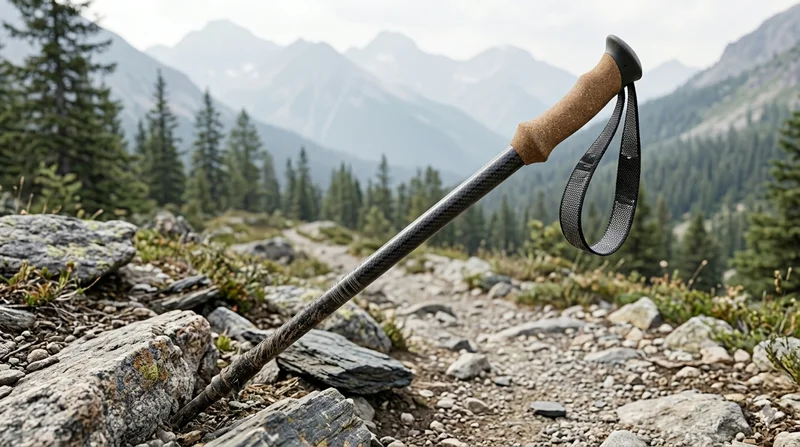
Carbon Fiber Trekking Pole
Lightweight carbon fiber trekking pole manufactured from high-grade carbon fiber tube. Weighs only 160g per pole while providing superior shock absorption and durability for hiking, trail running, and backpacking.

Carbon Fiber Pickleball Paddle
High-performance pickleball paddle with Toray T700 carbon fiber face and polypropylene honeycomb core. Delivers excellent power-to-weight ratio, spin generation, and vibration dampening for competitive play.

Square Carbon Fiber Tube — 3K Twill T700
Square cross-section carbon fiber tube manufactured with 3K twill weave for torsional strength. Preferred for structural frames, trusses, and support columns where rectangular geometry offers design flexibility.

Round Carbon Fiber Tube — UD Unidirectional T700
Unidirectional (UD) round tube with all fibers aligned axially for maximum longitudinal stiffness. Ideal for applications requiring high bending rigidity with minimal weight, such as shafts, struts, and structural reinforcements.