
Carbon fiber tubes material properties decide whether a design survives its first load cycle or fails at a fraction of the predicted force. The same outer diameter can mean a 40 GPa modulus tube or a 150 GPa tube depending on fiber grade, fiber orientation and how the tube was made, and the wrong as
Introduction
Carbon fiber tubes material properties decide whether a design survives its first load cycle or fails at a fraction of the predicted force. The same outer diameter can mean a 40 GPa modulus tube or a 150 GPa tube depending on fiber grade, fiber orientation and how the tube was made, and the wrong assumption costs a program weeks of redesign. This reference collects the numbers engineers actually quote, explains how to read them off a carbon fiber data sheet, and shows why pultruded vs wrapped carbon fiber are not interchangeable despite looking identical from the outside.
Use it as a working table during early design, then confirm every critical value against the laminate schedule and test certificate from your actual supplier, because layup sequence, fiber volume fraction and cure cycle all shift the published figures.
Carbon Fiber Tubes Material Properties: The Numbers That Matter
Four properties cover most structural screening decisions for a carbon fiber tube. Tensile modulus tells you stiffness per unit strain, tensile strength sets the failure envelope, density sets the mass budget, and coefficient of thermal expansion tells you how much the part grows or shrinks with temperature. The table below uses typical ranges for unidirectional carbon fiber tubes cured in autoclave, based on standard-modulus T300-class fiber at 55 to 60 percent fiber volume.
| Property | Typical range | Unit | What shifts it |
|---|---|---|---|
| Tensile modulus, axial | 70 to 150 | GPa | Fiber grade, winding angle, fiber volume |
| Tensile strength, axial | 1200 to 2200 | MPa | Fiber grade, void content, surface finish |
| Compressive strength | 600 to 1200 | MPa | Matrix system, fiber-matrix adhesion |
| Density | 1.50 to 1.65 | g/cm3 | Fiber volume, resin type |
| Thermal expansion, axial | -0.5 to +1.0 | 10-6/K | Layup symmetry, fiber orientation |
| Thermal expansion, hoop | +15 to +30 | 10-6/K | Hoop layer content |
Axial modulus near 150 GPa belongs to high-modulus or intermediate-modulus fibers laid up close to zero degrees; standard-modulus tubes usually land between 70 and 100 GPa. Hoop-direction thermal expansion is an order of magnitude larger than axial because the fibers restrain expansion along their length but not across it, which is why thin-walled tubes under thermal cycling often show delamination at the ends.
Carbon Fiber Data Sheet: How to Read It Without Getting Lost
A credible carbon fiber data sheet separates measured laminate values from fiber-only values, and states the test method next to each number. Look for the following lines before accepting any quote.
- Fiber grade and tow size: Named grade such as T300, T700 or T800, with tow size in K. Unnamed high-strength claims cannot be compared.
- Fiber volume fraction: Aerial weight and resin content together give fiber volume, usually stated as a percentage with tolerance.
- Test standard: Tensile and compressive values should reference ASTM D3039 or ISO 527 for tension and ASTM D6641 or ISO 14126 for compression.
- Void content: Below 1 percent is good autoclave practice; above 2 percent cuts compressive strength measurably.
- Conditioning: Dry-as-cured, hot-wet, or both. Hot-wet values can be 10 to 20 percent lower than dry ones for epoxy systems.
Numbers without a test standard are marketing figures, and mixing laminate values with fiber-only values in the same table is the most common way a data sheet overstates performance.
Pultruded vs Wrapped Carbon Fiber: Same Material, Different Behavior
Pultruded and wrapped carbon fiber tubes look similar from the outside, but the fiber architecture is fundamentally different and so are the mechanical results.
| Aspect | Pultruded tube | Filament-wound tube |
|---|---|---|
| Fiber orientation | Almost all axial (0 degrees) | Helical, mixed angles |
| Axial tensile modulus | 100 to 150 GPa | 70 to 110 GPa |
| Hoop strength | Low, limited by matrix | High, tailored by wind angle |
| Best use | Beams, masts, arms in pure bending | Pressure vessels, bicycle frames, shafts |
| Wall thickness control | Uniform, thin possible | Builds up with each layer |
Choosing between pultruded vs wrapped carbon fiber is a load-path question, not a price question. If the dominant load is axial tension or bending, pultruded wins on stiffness per gram. If the tube sees internal pressure, torsion or point loads from a clamp, wrapped construction distributes those loads into the fibers instead of into the matrix.
Carbon Fiber Tube Custom Specs: What to Specify Before You Order
When a project calls for a carbon fiber tube custom profile, write the requirements in laminate terms, not just dimensions. Outer diameter, inner diameter and length define the envelope, but the following lines define performance and should appear in the purchase specification.
- Layup schedule: Number of plies, angle of each ply, and total thickness. A 0/90 balanced layup behaves very different from a 0/90 with extra hoop plies.
- Fiber grade: T300 class for general structural work, T700 for higher strength, high-modulus grades when stiffness governs.
- End finish: Machined square, bonded end caps, or co-cured fittings. Specify tolerance on squareness and concentricity.
- Surface: Peel ply finish for secondary bonding, or painted and polished for appearance parts.
Share the load case with your supplier and ask for the laminate schedule used in their calculation, then compare it against the property table above. A tube that meets diameter tolerance but misses the modulus target will still fail the structure.
Frequently Asked Questions
Are carbon fiber tubes stronger than aluminum tubes of the same size?
In tension and bending, yes by a wide margin: a typical pultruded carbon tube shows axial tensile strength of 1200 MPa or more against roughly 310 MPa for 6061-T6 aluminum, at about one sixth the density. In compression and under point crush loads the gap narrows, because carbon fiber compressive strength is limited by matrix support rather than by fiber strength.
How do I choose between pultruded and filament-wound carbon fiber tube?
Match the fiber architecture to the load path. Pure axial tension or bending favors pultruded construction for higher axial modulus. Internal pressure, torsion or clamp loads favor filament-wound construction because the helical fibers carry those loads directly instead of relying on the matrix.
What is a realistic density range for a structural carbon fiber tube?
Expect 1.50 to 1.65 g/cm3 for standard epoxy carbon tubes, compared with 2.70 g/cm3 for aluminum and 7.85 g/cm3 for steel. The variation comes from fiber volume fraction and resin type, not from the fiber itself.
Conclusion
Carbon fiber tubes material properties are set by fiber grade, layup and manufacturing method, not by the outer diameter stamped on the drawing. Read every data sheet against test standards, decide between pultruded vs wrapped carbon fiber from the load path, and write custom tube specifications in laminate terms before you request a quote.
YongXian supplies pultruded and filament-wound carbon fiber tubes to custom specifications, with laminate schedules and test data available on request. Browse our carbon fiber tube range or send us your tube specification for a quotation.
Part of topic
Related Articles
- Carbon Flash vs Carbon Fiber: Paint Finish or Real Composite?
- Aramid Fiber vs Carbon Fiber: Toughness vs Stiffness Compared
- Carbon Fiber Rod vs Steel Rod: Weight, Stiffness and Cost
- Carbon Fiber Plate vs FR4: When Composite Wins
- Carbon Fiber Skid Plate vs Aluminum: Off-Road Protection Compared
- Carbon Fiber vs Aluminum Drone Frames: Weight, Cost and Crash Data
Interested in Our Products?
Contact our team for competitive pricing and technical specifications.
Get a QuoteRelated Products

Round Carbon Fiber Tube — 3K Plain Weave T700
Standard round carbon fiber tube manufactured from Toray T700 grade fiber with 3K plain weave. Offers balanced strength and stiffness for general industrial applications including robotics, automation, sports equipment, and aerospace structures.
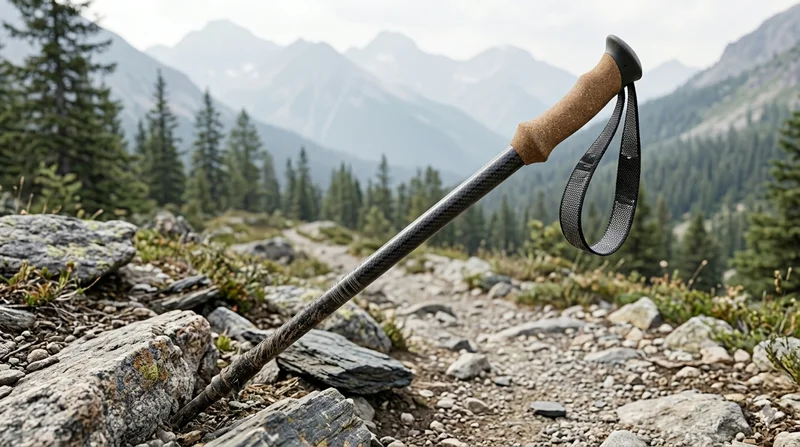
Carbon Fiber Trekking Pole
Lightweight carbon fiber trekking pole manufactured from high-grade carbon fiber tube. Weighs only 160g per pole while providing superior shock absorption and durability for hiking, trail running, and backpacking.

Carbon Fiber Pickleball Paddle
High-performance pickleball paddle with Toray T700 carbon fiber face and polypropylene honeycomb core. Delivers excellent power-to-weight ratio, spin generation, and vibration dampening for competitive play.

Square Carbon Fiber Tube — 3K Twill T700
Square cross-section carbon fiber tube manufactured with 3K twill weave for torsional strength. Preferred for structural frames, trusses, and support columns where rectangular geometry offers design flexibility.

Round Carbon Fiber Tube — 3K Twill
Lightweight and ultra-stiff round tubes ideal for drone frames, robotics, and structural applications.