
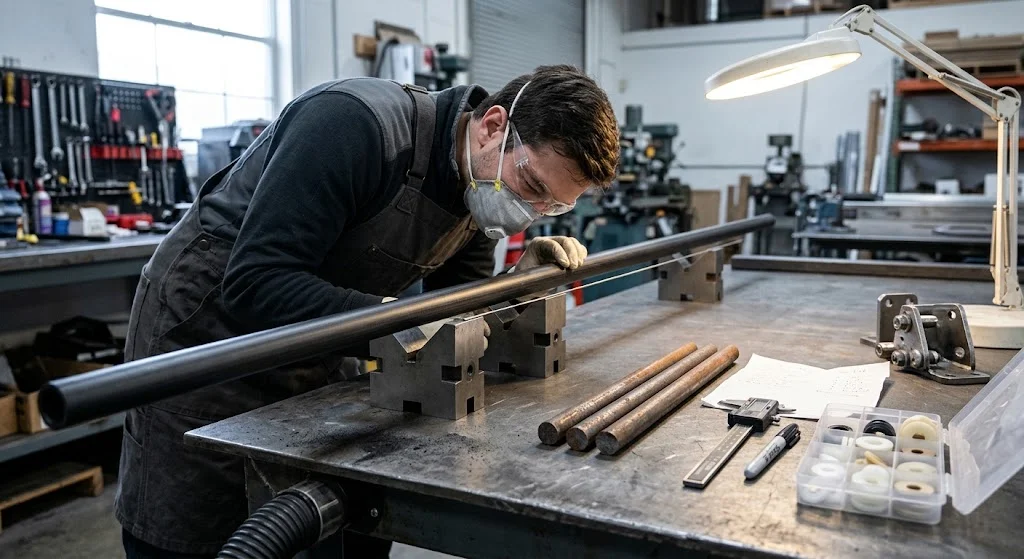
The carbon fiber rod vs steel decision shows up in braces, shafts, antenna masts, robotics links and workshop jigs — anywhere a straight member has to carry load without becoming a dead weight. A solid steel rod is cheap, weldable and forgiving; a carbon rod of the same stiffness weighs about a fift
Introduction
The carbon fiber rod vs steel decision shows up in braces, shafts, antenna masts, robotics links and workshop jigs — anywhere a straight member has to carry load without becoming a dead weight. A solid steel rod is cheap, weldable and forgiving; a carbon rod of the same stiffness weighs about a fifth as much and will not rust, but it fails suddenly instead of bending, and it punishes point loads and notched clamps. This guide compares carbon fiber rod vs steel across the numbers that matter, then works through how to bend carbon fiber rod, when a carbon fiber custom rod is worth specifying, and how flat parts like carbon fiber plate vs fr4 fit into the same build.
Carbon Fiber Rod vs Steel: Head-to-Head Data
The comparison is not "which is stronger" — steel wins on raw tensile strength every time. What matters is stiffness per kilogram, fatigue behavior, and what happens at the moment of overload. Carbon delivers roughly nine times the specific stiffness of mild steel, and in a long, slender member that translates directly into less sag and less vibration.
| Property | Carbon fiber rod (pultruded) | Steel rod (mild / 304) | Practical consequence |
|---|---|---|---|
| Density | 1.55-1.60 g/cm3 | 7.85 g/cm3 | Same length at roughly one fifth the weight |
| Tensile strength | 600-1200 MPa | 400-550 MPa | Carbon is competitive even in absolute terms |
| Elastic modulus | 45-70 GPa | 190-210 GPa | Steel wins absolute stiffness; carbon wins per gram |
| Failure mode | Sudden snap, no warning | Yields, bends visibly first | Design steel for overload, carbon for margin |
| Corrosion | Inert, needs edge sealing | Rusts unless coated or stainless | Wet and marine sites favor carbon |
| Typical cost, 10 mm rod | $8-25 per meter | $1-4 per meter | Carbon premium buys mass and stiffness only |
Read the failure row before the price row: a steel rod announces its overload with a bend you can see, while a carbon rod lets go all at once. Every design using carbon therefore needs either a generous safety factor or a mechanical stop that catches the load before the rod reaches its limit.
How to Bend Carbon Fiber Rod Without Cracking It
You cannot bend a pultruded carbon rod the way you bend a steel one — it has fibers running along its length, and a tight radius simply snaps them. Gentle, large-radius forming is possible with controlled heat on some thermoset systems, but most builders should treat carbon rod as a straight-only component and design the joints instead.
- Minimum bend radius: keep it above 20 times the rod diameter; tighter radii crush fibers on the inside of the bend.
- Heat forming: only if the resin system allows it, uniform heating near 80-100 C, and never localized with a torch.
- Better alternative: use two rods with an offset fishplate joint, which keeps every fiber in pure tension or compression.
- After any bend attempt: inspect for white bands — crushed fibers show as pale rings before the rod lets go.
Carbon Fiber Custom Rod: Sourcing and Sizing
Off-the-shelf tubes cover diameters from 3 to 30 mm, but real projects usually need specific wall thickness, drilled ends or a non-round cross-section. That is where a carbon fiber custom rod order makes sense: specify fiber type, wall tolerance, end finish and straightness class, and the pultruder or mandrel-winding shop delivers something a hardware store cannot. Straightness matters more than people expect — a 1 m rod held to 0.2 mm/m keeps optical rigs and 3D printers in calibration, while a cheap rod wandering 1 mm fights every adjustment.
- State the load direction: rods loaded in compression need higher buckling margin and often a larger diameter.
- End treatment: bonded metal inserts, threaded brass sleeves or cross-drilled holes — decide before production, not after.
- Batch consistency: ask for one layup across the whole order so stiffness does not vary piece to piece.
Carbon Fiber Plate vs FR4: Flat Parts in the Same Build
Most assemblies that use rods also need flat brackets, and there the choice flips to carbon fiber plate vs fr4. FR4 glass-epoxy is cheaper, electrically insulating and easy to machine; carbon plate is stiffer per millimetre and far lighter. Use FR4 for insulating standoffs and low-load covers, carbon plate where the bracket must not flex, and never let bare aluminum sit against either without an isolating washer — galvanic corrosion is the classic failure in mixed carbon, glass and metal structures.
Frequently Asked Questions
Is a carbon fiber rod vs steel rod swap always a drop-in upgrade?
No. The geometry fits, but the behavior changes: carbon does not bend before breaking, conducts electricity differently and expands less with heat. Swap only after checking overload protection, electrical isolation and thermal movement; a blind swap usually trades a bendable part for a snapping one.
How do I join a carbon rod to a steel bracket safely?
Bolt through an embedded or bonded metal insert with a nylon washer against the carbon, torque moderately and re-check after the first heat cycle. Avoid clamping steel directly onto the rod, avoid adhesive joints loaded in peel, and never weld near carbon — the heat and fumes damage the matrix.
Can carbon fiber rod be repaired after it cracks?
Not reliably in structural use. A cracked pultruded rod has lost fiber continuity, and a sleeve patch restores appearance more than strength. Replace the rod and fix the cause — usually an oversized clamp, a sharp bend or an unexpected side load.
Conclusion
The carbon fiber rod vs steel rod choice follows the load case: steel for cheap, tough, weldable members that must show overload before failing; carbon for long, light, stiff spans where grams and sag both matter. Design joints rather than bends, isolate mixed metals, and treat every carbon part as precision hardware that rewards careful margins.
YongXian supplies carbon fiber rod, tube and plate in standard and custom sections, straightened and cut to length. Browse our carbon fiber range or contact our engineering team with your diameter, tolerance and volume requirements.
Part of topic
Related Articles
- Carbon Fiber Plate vs FR4: When Composite Wins
- Carbon Fiber Skid Plate vs Aluminum: Off-Road Protection Compared
- Carbon Fiber vs Aluminum Drone Frames: Weight, Cost and Crash Data
- Pultruded vs Roll Wrapped Carbon Fiber: A Buyer Guide
- Pultruded vs Wrapped Carbon Fiber: Performance and Cost
- How to Cut Carbon Fiber Rods Cleanly: Tools, Dust Safety, and Tolerances
Interested in Our Products?
Contact our team for competitive pricing and technical specifications.
Get a QuoteRelated Products

Round Carbon Fiber Tube — 3K Plain Weave T700
Standard round carbon fiber tube manufactured from Toray T700 grade fiber with 3K plain weave. Offers balanced strength and stiffness for general industrial applications including robotics, automation, sports equipment, and aerospace structures.
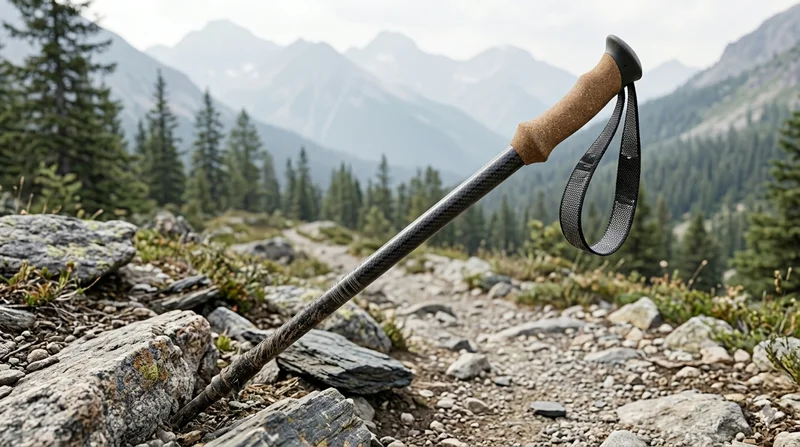
Carbon Fiber Trekking Pole
Lightweight carbon fiber trekking pole manufactured from high-grade carbon fiber tube. Weighs only 160g per pole while providing superior shock absorption and durability for hiking, trail running, and backpacking.

Carbon Fiber Pickleball Paddle
High-performance pickleball paddle with Toray T700 carbon fiber face and polypropylene honeycomb core. Delivers excellent power-to-weight ratio, spin generation, and vibration dampening for competitive play.

Square Carbon Fiber Tube — 3K Twill T700
Square cross-section carbon fiber tube manufactured with 3K twill weave for torsional strength. Preferred for structural frames, trusses, and support columns where rectangular geometry offers design flexibility.

Round Carbon Fiber Tube — 3K Twill
Lightweight and ultra-stiff round tubes ideal for drone frames, robotics, and structural applications.