
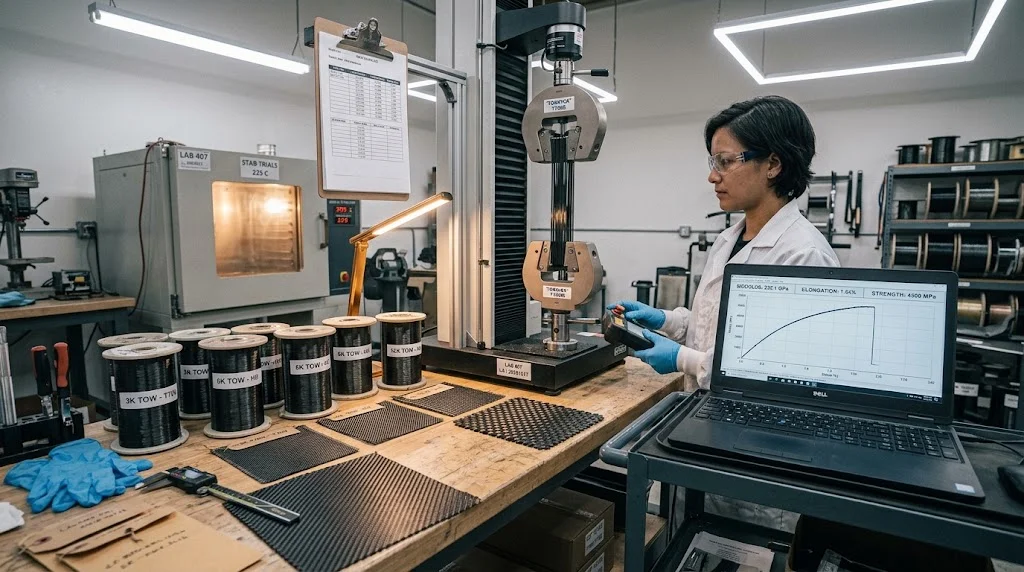
High performance carbon fiber is not one material but a family of grades that trade elongation against stiffness at a price. Standard-modulus tow does most of the work in industry; intermediate-modulus (IM) and high-modulus (HM) grades are specified where a structure is mass-limited or stiffness-cri
Introduction
High performance carbon fiber is not one material but a family of grades that trade elongation against stiffness at a price. Standard-modulus tow does most of the work in industry; intermediate-modulus (IM) and high-modulus (HM) grades are specified where a structure is mass-limited or stiffness-critical, and the choice between them changes both the design and the invoice. This guide sets out the grade landscape with real numbers, shows how to read a carbon fiber data sheet without being misled by headline figures, and explains where the carbon fiber raw material cost actually comes from.
We also settle a question buyers ask constantly: what changes between 3K carbon fiber and the wider tow sizes that cheaper panels use — and when that difference matters for the part in front of you.
What Makes High Performance Carbon Fiber Different
Grades are separated by precursor quality, stretching during stabilization, and graphitization temperature. The practical result is the property set below — representative values for commercial fibers, to be checked against each manufacturer's current sheet.
| Grade family | Tensile strength (GPa) | Tensile modulus (GPa) | Elongation at break (%) | Typical application | Relative fiber cost |
|---|---|---|---|---|---|
| Standard modulus (SM), T300-class | 3.5-4.0 | 230-240 | 1.5-1.7 | General structures, sporting goods, panels | 1.0x |
| Intermediate modulus (IM), T700/T800-class | 4.9-5.9 | 230-300 | 1.6-2.0 | Pressure vessels, aerospace primary, high-load rods | 1.4-2.0x |
| High tensile / high strength | 6.0-7.0 | 260-300 | 2.0-2.2 | Tension-dominated members, cables, straps | 2.0-3.0x |
| High modulus (HM), M40J-class | 2.7-3.0 | 370-400 | 0.7-0.9 | Satellite structures, antenna booms, tooling | 3.0-5.0x |
| Ultra-high modulus (UHM), M60J-class | 2.4-2.8 | 550-640 | 0.4-0.6 | Spacecraft bus structures, optical benches | 6-12x |
Read the elongation column before the modulus column. High modulus fiber breaks at under 1% strain — it is stiffer and far more brittle than standard tow, and it fails without warning. That is why HM and UHM grades appear in stiffness-driven, low-impact structures and almost never in anything that takes hits.
Selecting High Performance Carbon Fiber Grades for Demanding Loads
The decision follows the load path, not the grade name:
- Strength-governed design: Choose IM or high-tensile grades. Going from T300-class to T700-class raises allowable tensile stress by roughly 30-50% at the same fiber volume fraction, which lets you reduce wall thickness and save mass — the fiber costs more per kilogram but the part costs less per newton carried.
- Stiffness-governed design: Modulus buys deflection control, not strength. If your structure fails on sag or aeroelastic flutter rather than rupture, HM grades can halve the deflection at equal mass. If it fails on rupture, HM fiber's lower strength and elongation make the part worse, not better.
- Dynamic and damping-critical: IM fiber with higher elongation tolerates vibration cycling and impact energy better than HM. Robotics arms, drive shafts and anything seeing reversed load should stay in the IM family unless stiffness absolutely dominates.
- Thermal stability: HM and UHM fibers have negative axial thermal expansion, which is used deliberately in dimensionally stable mirrors, antenna booms and metrology structures — but the same property makes the laminate sensitive to cure shrinkage mismatch.
The overspecification trap is real: quoting HM fiber for a strength-limited part doubles the material bill while lowering the failure strain. Specify the grade after the failure mode is fixed, never before.
Reading a Carbon Fiber Data Sheet
Marketing sheets reward the reader who knows which numbers are comparable:
- Tensile strength and modulus: Always confirm the test method (commonly ASTM D3039 or ISO 527 for tows) and whether values are per filament, per tow, or converted to the composite. A fiber-level number cannot be compared directly against a laminate-level quote.
- Coefficient of variation (CV): The strength CV of 3-6% sounds like trivia until a design uses allowable stress minus three sigma — there, a 6% CV costs more allowable than an entire grade upgrade. Ask for the CV, not only the mean.
- Elongation: The single best predictor of impact tolerance. Below 1.0% the fiber behaves like glass in tension: strong, but unforgiving.
- Sizing and finish: The data sheet's sizing chemistry must match your matrix. An epoxy-compatible 63 C sizing will not bond reliably to vinyl ester or polyamide, and no strength figure compensates for a bad interface.
- Tow size and filament count: 3K, 6K, 12K — the K is thousands of filaments per tow. It changes areal weight, drape and surface appearance, not the fiber grade itself.
Carbon Fiber Raw Material and Precursor Economics
Roughly 50-60% of the cost of high performance carbon fiber sits in the precursor, and the precursor is where grades diverge:
- PAN-based fiber dominates over 90% of the market. Higher-grade fibers start from higher-purity, higher-tenacity PAN with tighter molecular alignment, and each step up the ladder — spinning, drawing, stabilization, carbonization, graphitization — adds energy and yield loss.
- Pitch-based fiber is the route to HM and UHM modulus. It is produced in far lower volume, which is why a 400 GPa fiber costs three to five times a 240 GPa fiber despite similar raw material chemistry.
- Yield and price behavior: Convert roughly 1.8-2.0 kg of PAN precursor into 1 kg of carbon fiber; energy and yield, not fiber market volume alone, set the floor. That is also why standard-modulus prices move less than headline demand suggests, while IM and HM prices move with aerospace and space programs.
For procurement: treat a big gap between two quotations at the same stated grade as a signal to ask for the data sheet, the CV and the sizing — not as room for negotiation on a like-for-like material.
3K Carbon Fiber Versus Larger Tow
The 3K carbon fiber question is about fabric, not fiber grade. A 3K tow holds about 3,000 filaments; 12K holds about 12,000. Both can be standard modulus or IM. What changes with tow size:
- Surface and weave: 3K gives a fine, legible weave that reads well under clear coat — the reason it dominates visible bodywork and model parts. 12K shows a coarser pattern and is chosen where appearance is secondary to cost.
- Drape and conformability: Smaller tows conform to tight radii with fewer wrinkles, which matters on compound curves and inside mould corners; larger tows bridge more and want higher compaction pressure.
- Handling and throughput: Larger tow is faster to lay up and cheaper per square metre, with slightly higher risk of void entrapment in tight geometry. For flat plates and simple panels the difference is mostly cost.
So the honest answer to "3K versus carbon fiber" comparisons is that they are not comparable categories: pick the grade from the load path, then pick the tow size from the geometry and the surface you want.
Frequently Asked Questions
Is high performance carbon fiber always better than standard modulus?
No. It is better only where the design is limited by strength or stiffness per gram. IM grades genuinely improve strength-driven parts; HM grades improve stiffness-driven parts and actively worsen impact-driven ones, because elongation drops below 1%. Standard modulus is the correct answer for the majority of structures that do not have a mass budget forcing the upgrade.
How do I compare two carbon fiber data sheets fairly?
Match the test standard, the reported basis (filament, tow, or composite), the sizing chemistry to your matrix, and the coefficient of variation — not just the mean strength. Then compare elongation and modulus against your actual failure mode. Two sheets that both quote 4.9 GPa tensile strength with different CVs and different sizings are not offering the same material.
Does 3K carbon fiber mean a higher grade than 12K?
No. K refers to filament count per tow, not to performance. A 3K standard-modulus fabric and a 12K standard-modulus fabric have the same fiber grade; the 3K costs more because it drapes better, looks finer and is produced in lower throughput. Choose 3K where surface quality and tight radii matter, 12K where cost per square metre governs.
Conclusion
High performance carbon fiber is a set of trade-offs made explicit: IM buys strength, HM buys stiffness and spends elongation to pay for it, and UHM buys dimensional stability at a multiple of the price. Read the data sheet for CV, elongation and sizing before the headline strength, fix the failure mode before naming the grade, and treat tow size as a fabric decision rather than a quality one — that sequence keeps the expensive fiber pointed at the load that actually needs it.
We supply standard, IM and selected high-modulus fibers in 3K, 6K and 12K forms as fabric, tube, plate and cut parts: browse our carbon fiber products for stock materials, or contact our engineering team with your load case, allowable targets and annual volume — we will return grade options with their data sheets, tolerances and delivered pricing.
Part of topic
Related Articles
- Filament Wound Carbon Fiber Tubes vs Roll Wrapped: Manufacturing and Selection
- Carbon Fiber Plate Bambu Printer Guide: Bed Compatibility and Surface Prep
- Carbon Fiber Sheet Cutting Service: CNC Routed Parts and Tolerances
- Carbon Fiber Build Plate: 3D Printer Bed Materials Compared
- Pultruded Carbon Fiber: Continuous Profiles and Their Mechanical Limits
- Carbon Fiber Tube Connector: Joining Methods and Hardware
Interested in Our Products?
Contact our team for competitive pricing and technical specifications.
Get a QuoteRelated Products

Round Carbon Fiber Tube — 3K Plain Weave T700
Standard round carbon fiber tube manufactured from Toray T700 grade fiber with 3K plain weave. Offers balanced strength and stiffness for general industrial applications including robotics, automation, sports equipment, and aerospace structures.
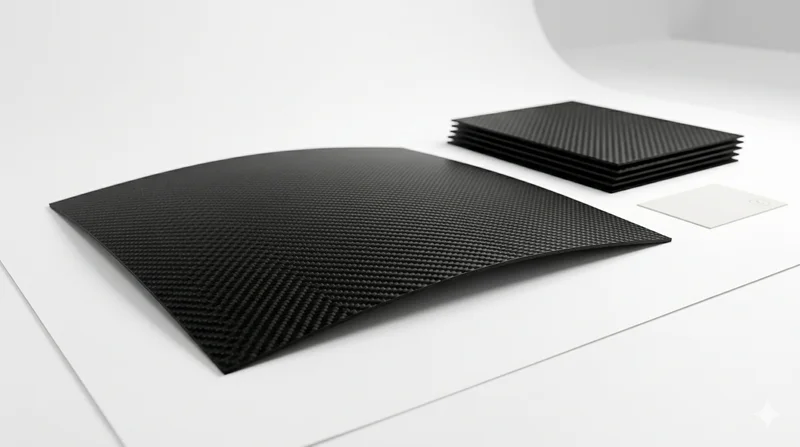
Carbon Fiber Plate — 3K Twill T700 1.5mm
Thin 1.5mm carbon fiber plate with 3K twill weave surface. Lightweight and stiff, commonly used for covers, panels, drone bodies, and applications requiring a premium aesthetic appearance.

Carbon Fiber Pickleball Paddle
High-performance pickleball paddle with Toray T700 carbon fiber face and polypropylene honeycomb core. Delivers excellent power-to-weight ratio, spin generation, and vibration dampening for competitive play.

Square Carbon Fiber Tube — 3K Twill T700
Square cross-section carbon fiber tube manufactured with 3K twill weave for torsional strength. Preferred for structural frames, trusses, and support columns where rectangular geometry offers design flexibility.
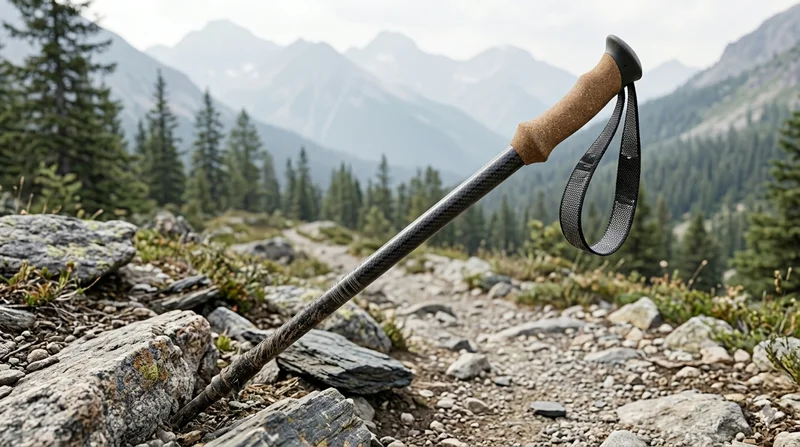
Carbon Fiber Trekking Pole
Lightweight carbon fiber trekking pole manufactured from high-grade carbon fiber tube. Weighs only 160g per pole while providing superior shock absorption and durability for hiking, trail running, and backpacking.