
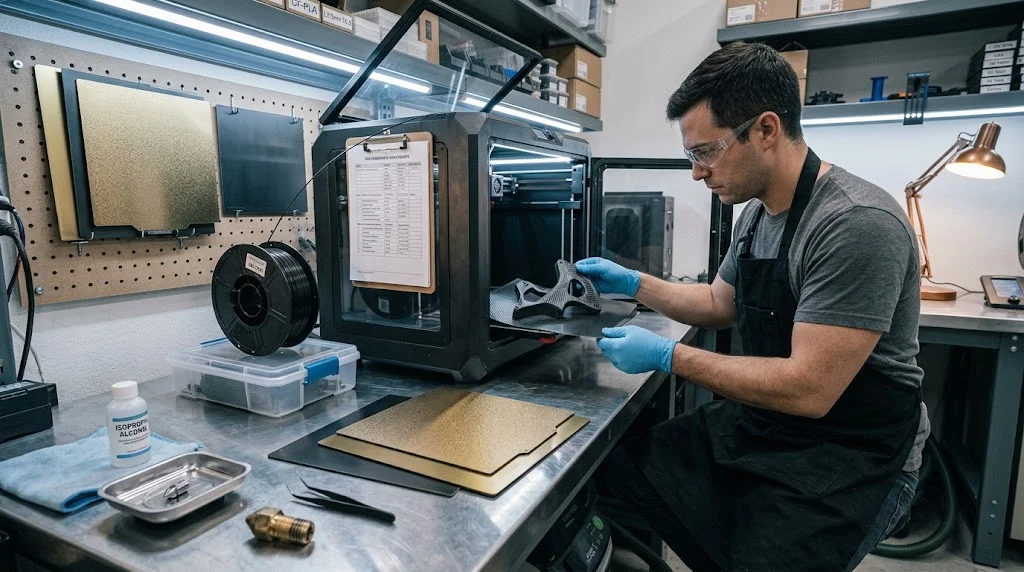
The carbon fiber plate bambu owners end up buying is rarely the one they first searched for. The phrase covers two purchases at once: a carbon fiber build plate — the textured spring-steel sheet that sits on the Bambu Lab magnetic bed — and the question of printing carbon fiber filled filaments on t
Introduction
The carbon fiber plate bambu owners end up buying is rarely the one they first searched for. The phrase covers two purchases at once: a carbon fiber build plate — the textured spring-steel sheet that sits on the Bambu Lab magnetic bed — and the question of printing carbon fiber filled filaments on that plate without destroying the coating or the first layer. Conflate the two and you get parts that release beautifully but warp in the middle, or parts that grip perfectly until the plate comes off the bed and takes the coating with it.
This article separates the two decisions. It lists which plate dimensions fit which Bambu Lab printer, explains what the carbon fiber texture actually does for adhesion, walks through nozzle and plate pairings for engineering filaments such as Prusament PETG Carbon Fiber and Prusament PC Carbon Fiber, and ends with a surface preparation routine you can run in ten minutes a week.
What a Carbon Fiber Plate for Bambu Printers Actually Is
A carbon fiber build plate is not a slab of carbon fiber laminate. It is a 0.5-0.8 mm spring-steel sheet, laser-cut to the model's footprint, with a coating sprayed or rolled onto one or both faces. The "carbon fiber" in the name refers to the woven twill texture pressed into that coating:
- Mechanical keying: The woven micro-texture gives the extruded first layer valleys to bite into, raising green strength enough to resist corner lifting during cooldown — the failure mode that ruins ASA and ABS prints.
- Release: The same texture reduces contact area once the part is cool, so PLA and PETG parts pop off with a flex of the sheet instead of a scraper that gouges the coating.
Underneath, the sheet is magnetic — it snaps onto the heated bed and is held by magnets and two alignment notches at the rear. Because the sheet flexes as a unit, warping stress is relieved as the part cools, which is why a flexible carbon fiber build plate outperforms glass for large flat parts. What it does not do is stiffen the printer: frame rigidity and belt tension still govern dimensional accuracy.
Carbon Fiber Plate Bambu Bed Compatibility by Model
Bambu Lab does not use one universal plate. Each machine family takes its own footprint, and a sheet that is even 5 mm undersized will shift under the nozzle during travel moves. Fit the plate to the model first, then choose the surface:
| Model | Build volume | Plate footprint | Stock surface | Notes |
|---|---|---|---|---|
| A1 mini | 180 x 180 x 180 mm | 180 x 180 mm | Textured PEI | Smallest sheet; no enclosure, so ASA/PC parts need a draft shield |
| A1 | 256 x 256 x 256 mm | 256 x 256 mm | Textured PEI | Same footprint as P1/X1 family, different rear notch — verify before reusing an old sheet |
| P1P / P1S | 256 x 256 x 256 mm | 256 x 256 mm | Textured PEI | RFID-tagged sheets auto-load the matching print profile |
| X1C / X1E | 256 x 256 x 256 mm | 256 x 256 mm | Textured PEI | Enclosed; engineering plates for PC-CF and PA-CF run here most |
| H2D | 270 x 270 x 300 mm | 270 x 270 mm | Textured PEI | Largest footprint; bed mesh is calibrated per plate |
Third-party sheets advertise "universal" fit and rarely mean it. Three details decide whether an aftermarket carbon fiber build plate behaves: the rear notch geometry, the coating thickness (cheap 0.3 mm sheets flex differently under the nozzle and show ghosting), and the RFID tag — without it you must select the plate type manually in the device tab before every print, or first-layer height will be wrong from the start.
Printing Carbon Fiber Filaments on the Plate
Carbon fiber filled filaments are abrasive, and the plate choice changes with the polymer:
- PLA-CF / PETG-CF (including Prusament PETG Carbon Fiber): Textured PEI, no glue on a clean sheet, bed at 60-70 C for PLA and 70-80 C for PETG. Hardened steel nozzle at 0.4 mm minimum; a 0.6 mm nozzle prints CF grades with far less clogging.
- PC-CF (including Prusament PC Carbon Fiber): Engineering plate or a thin glue film, bed at 100-110 C, enclosure required. This grade wants a dry spool and a high-temperature flow path — pair it accordingly.
- PA-CF (nylon with carbon fiber): Engineering plate with glue as release agent, bed at 80-100 C, always printed dry. Nylon absorbs moisture overnight and a wet spool prints as stringing, not as strength.
- ASA / ABS blends: Textured PEI with glue if the room is cool, bed at 100 C, enclosure mandatory to stop corner lift on parts over 150 mm.
Two rules cut across every row. Never run carbon fiber filament through a brass nozzle: the fibers will open a 0.4 mm brass orifice to 0.5-0.6 mm within a few hundred grams, and the leak that forms puts a bead of plastic on your carbon fiber plate. And glue stick is not an adhesive for PLA — on CF grades that weld themselves to PEI, a thin even film is a release agent that stops the plate from tearing its own coating off with the part.
Carbon Fiber Plate Bambu Surface Prep Routine
Most "the plate stopped sticking" reports are contamination, not wear:
- Every 5-10 prints: Wash the sheet in warm water with a drop of dish soap, rinse, air-dry. Oils from fingertips are the number-one cause of patchy first layers, and they are invisible.
- Between prints: Let the plate cool to room temperature before removing the part. Flexing a hot sheet fatigues the steel and warps its flatness out of spec.
- After PA-CF and PC-CF: Remove glue residue with warm water and a plastic scraper — never a metal blade, which scores the coating and creates permanent non-stick islands.
- Storage and replacement: Store flat, not leaning. Plan on a new sheet after roughly 500-1000 prints, or sooner if the twill texture flakes or dulls — it costs a fraction of a failed overnight job.
Isopropyl alcohol works as a between-print degreaser on textured PEI, but it leaves residue in the weave over time; soap and water remain the baseline that restores full adhesion.
Adhesion Problems and Fixes
When a print fails on the plate, the symptom points at one of five causes:
| Symptom | Likely cause | Fix |
|---|---|---|
| First layer will not stick in patches | Fingerprint oil or glue residue | Wash with soap and water; dry hands before handling the sheet |
| Corners lift on ASA/ABS mid-print | Cool ambient air or bed temperature too low | Enclosure on, bed at 100 C, brim of 5-8 mm |
| Part welds itself to the plate | Too much bare contact area (PETG, PA-CF) | Thin uniform glue film as separator; cool fully before flexing |
| Rough, inconsistent first layer with CF filament | Worn brass nozzle or partial clog | Fit hardened steel or 0.6 mm nozzle; dry the spool |
| Ghost lines or height variance across the bed | Wrong plate selected / skipped calibration | Select exact plate type, re-run leveling and first-layer scan |
Work the table top to bottom — four of the five failures cost nothing to fix, and none are solved by buying a different plate.
Frequently Asked Questions
Is a carbon fiber plate actually better than the stock textured PEI sheet on a Bambu printer?
It depends on which surface you mean. A genuine carbon fiber build plate and a stock textured PEI sheet use the same spring-steel base and differ mainly in coating pattern and thickness, so print quality differences are small once calibration is correct. Where the aftermarket carbon fiber plate earns its money is durability: a thicker coating survives more glue-and-scraper cycles and more PA-CF prints before it starts flaking. If your stock sheet is new you will not see a difference; if it is scored and dull, replacing it with a quality sheet of the correct footprint restores adhesion immediately.
Do I need glue for Prusament PETG Carbon Fiber and Prusament PC Carbon Fiber?
Not for PETG Carbon Fiber on clean textured PEI — it releases on its own once cool, and glue only makes removal harder. For PC Carbon Fiber, yes: use the engineering plate or a thin glue film, run the bed at 100-110 C in an enclosure, and keep the filament dry. In the PC and PA cases the glue is a release agent preventing the hot polymer from bonding into the coating, not an adhesive helping it stick.
Will carbon fiber filament ruin my plate or my nozzle faster?
The nozzle, yes — carbon fiber is abrasive and brass wears out within a few hundred grams of CF material. The plate itself is not attacked by the filament, but it suffers when a worn nozzle leaks plastic and forces you to scrape. Fit a hardened steel nozzle, 0.6 mm is the forgiving choice for CF, and the plate will comfortably outlive it.
How do I know a third-party plate fits my printer?
Check three things against your machine: the exact footprint (180, 256 or 270 mm square), the rear alignment notch position, and whether an RFID tag is included for profile auto-detection. Then run bed leveling and a first-layer print before judging adhesion. A plate that passes those checks behaves like an original; anything else is a lottery.
Conclusion
A carbon fiber plate for a Bambu printer is a fit question first, a surface question second, and a filament question third. Match the footprint to the model, match the coating to the polymer — textured PEI for PLA-CF and PETG-CF, engineering plate or glue film for PA-CF and PC-CF — and hold a hardened nozzle against the abrasive fiber. Everything else is cleaning: a ten-minute wash that fixes more failed-plate reports than any hardware swap.
For carbon fiber plates, engineering sheets and the CF filaments discussed above, browse our carbon fiber products and plate range. If you are sizing a plate or matching a filament to a machine, contact our engineering team with your model and material — we will reply with a specific pairing instead of a general rule.
Part of topic
Related Articles
- High Performance Carbon Fiber: IM and HM Grades for Demanding Loads
- Filament Wound Carbon Fiber Tubes vs Roll Wrapped: Manufacturing and Selection
- Carbon Fiber Sheet Cutting Service: CNC Routed Parts and Tolerances
- Carbon Fiber Build Plate: 3D Printer Bed Materials Compared
- Pultruded Carbon Fiber: Continuous Profiles and Their Mechanical Limits
- Carbon Fiber Tube Connector: Joining Methods and Hardware
Interested in Our Products?
Contact our team for competitive pricing and technical specifications.
Get a QuoteRelated Products

Round Carbon Fiber Tube — 3K Plain Weave T700
Standard round carbon fiber tube manufactured from Toray T700 grade fiber with 3K plain weave. Offers balanced strength and stiffness for general industrial applications including robotics, automation, sports equipment, and aerospace structures.
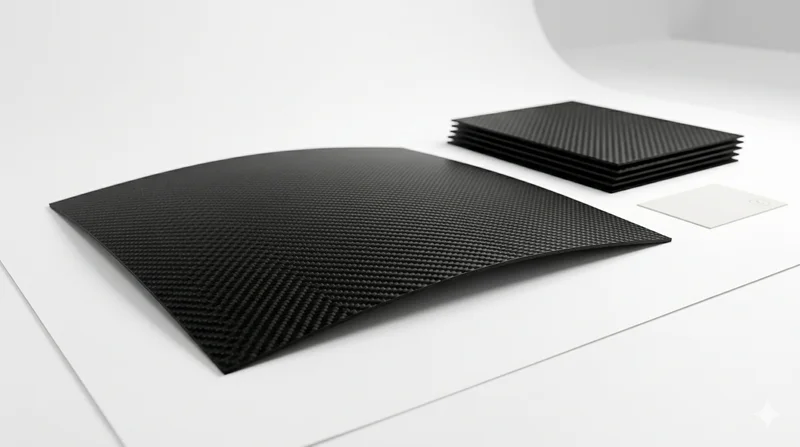
Carbon Fiber Plate — 3K Twill T700 1.5mm
Thin 1.5mm carbon fiber plate with 3K twill weave surface. Lightweight and stiff, commonly used for covers, panels, drone bodies, and applications requiring a premium aesthetic appearance.

Carbon Fiber Pickleball Paddle
High-performance pickleball paddle with Toray T700 carbon fiber face and polypropylene honeycomb core. Delivers excellent power-to-weight ratio, spin generation, and vibration dampening for competitive play.

Square Carbon Fiber Tube — 3K Twill T700
Square cross-section carbon fiber tube manufactured with 3K twill weave for torsional strength. Preferred for structural frames, trusses, and support columns where rectangular geometry offers design flexibility.
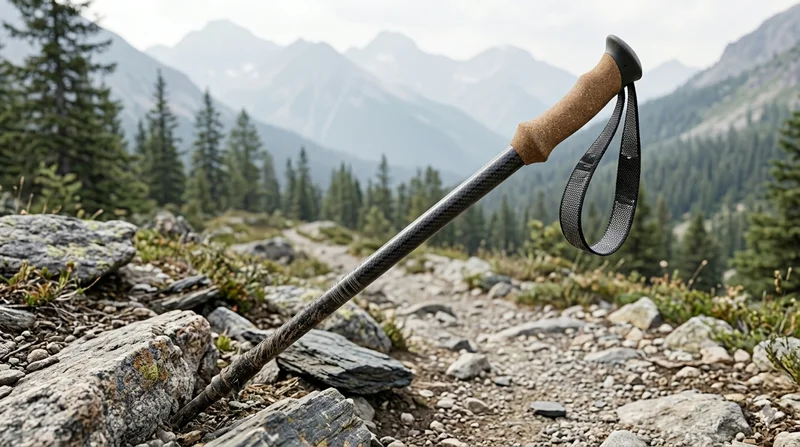
Carbon Fiber Trekking Pole
Lightweight carbon fiber trekking pole manufactured from high-grade carbon fiber tube. Weighs only 160g per pole while providing superior shock absorption and durability for hiking, trail running, and backpacking.