
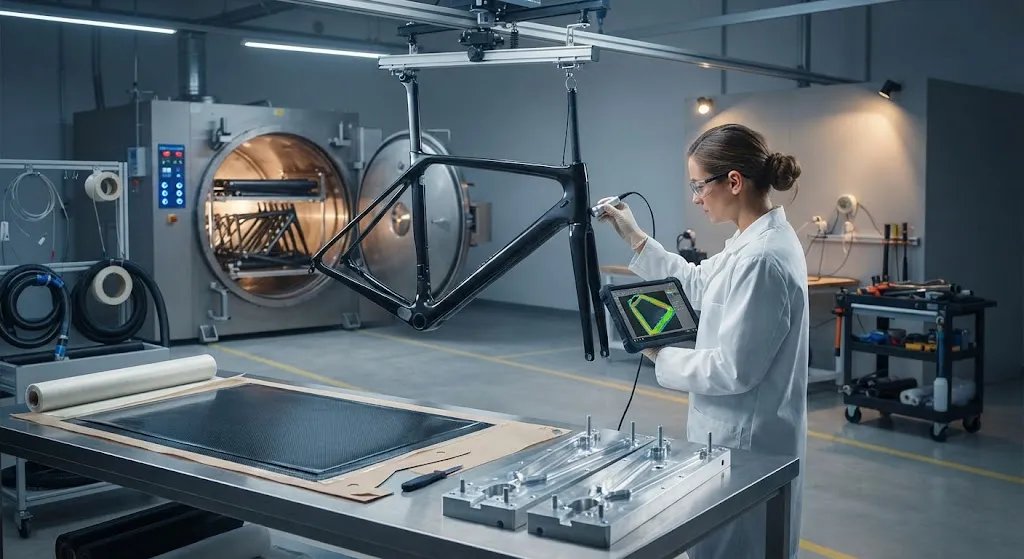
The modern racing bicycle is one of the most refined applications of carbon fiber composites in consumer products. A top-tier road frame weighs under 800 grams while delivering the lateral stiffness needed for sprint power transfer and the vertical compliance required for all-day comfort over...
Introduction
The modern racing bicycle is one of the most refined applications of carbon fiber composites in consumer products. A top-tier road frame weighs under 800 grams while delivering the lateral stiffness needed for sprint power transfer and the vertical compliance required for all-day comfort over 200-kilometer stages. This performance envelope is achieved not simply by choosing carbon fiber over metal, but through meticulous engineering of tube geometry, ply orientation, fiber grade selection, and resin chemistry. Understanding these decisions is essential for frame designers, procurement engineers, and cycling industry buyers evaluating material suppliers and manufacturing partners.
This article explains the structural engineering principles behind high-performance carbon fiber bicycle frames, compares the material systems used across price tiers, and reviews the manufacturing processes that determine final frame quality and consistency.
Frame Architecture and Tube Shaping
Carbon fiber bicycle frames are not monolithic structures. Each tube is manufactured separately and bonded into lugs or monocoque junctions, allowing engineers to vary wall thickness, fiber orientation, and tube cross-section along the length of the frame. The key design variables include:
- Top tube: Typically ovalized or rectangular in cross-section to resist vertical bending under rider weight while maintaining lateral stiffness for steering precision. Wall thickness ranges from 0.4 millimeters at the center to 1.2 millimeters at the head tube junction.
- Down tube: The largest-diameter tube, often oversized to 50-60 millimeters, carrying the highest bending loads during pedaling. Unidirectional carbon plies are oriented at 0 degrees along the tube axis for maximum longitudinal stiffness.
- Seat tube: Engineered for vertical compliance to absorb road vibration, with thinner walls and sometimes a split or Kamm-tail profile that allows controlled flex without compromising pedaling efficiency.
- Chain stays and seat stays:
- Head tube and bottom bracket: These junction zones use localized reinforcement with additional unidirectional plies or woven fabric layers to manage the stress concentrations from fork steerer and crankset interfaces.
The tube-to-lug bonding method allows different carbon grades and layup schedules in each tube, enabling frame makers to tune ride characteristics without redesigning the entire structure. Modern monocoque frames, by contrast, use bladder-molded one-piece construction for the front triangle, achieving smoother load paths and lower weight at higher tooling cost.
Material Systems Across Price Tiers
The carbon fiber material system chosen for a frame determines its weight, stiffness, impact resistance, and cost. The table below compares the material specifications used at different performance tiers:
| Specification | Entry-Level (300-500 USD) | Mid-Range (1000-3000 USD) | Elite Racing (5000+ USD) |
|---|---|---|---|
| Fiber modulus | Standard modulus (230 GPa) | Intermediate modulus (290-320 GPa) | High modulus (380-530 GPa) |
| Fiber tensile strength | 3,500-4,000 MPa | 4,500-5,500 MPa | 6,000-7,000 MPa |
| Resin system | Toughened epoxy, Tg 120C | High-Tg epoxy, Tg 150C | Modified epoxy or Toughened epoxy, Tg 170C+ |
| Ply count (down tube) | 12-16 plies | 18-24 plies | 24-32 plies (variable density) |
| Frame weight (size 56) | 1,100-1,400 g | 850-1,050 g | 680-800 g |
| Typical fiber source | Domestic T300-grade | Toray T700 or equivalent | Toray T800/T1100, Hexcel IM7, or SGL M46J |
| Impact resistance (drop test) | High (thick walls) | Moderate | Lower (thin walls, requires careful handling) |
Elite frames often mix high-modulus fibers in the down tube and head tube for stiffness with intermediate-modulus fibers in the seat stays for compliance. This hybrid layup strategy optimizes the frame globally rather than using a single fiber grade throughout.
Layup Engineering and Fiber Orientation
The orientation of carbon fiber plies within a tube determines its stiffness characteristics. A typical racing frame uses the following ply distribution:
- 0-degree plies (axial): 40-50% of the layup. These fibers carry the primary bending and torsional loads, providing longitudinal stiffness and pedaling efficiency.
- 45-degree plies (bias): 25-35% of the layup. These fibers resist torsional loads and distribute stress across the tube, preventing localized failure at stress concentrations.
- 90-degree plies (hoop): 10-20% of the layup. These fibers resist radial loads from tire pressure and impact, and prevent tube ovalization under clamping forces.
- Woven fabric layers: 5-15% of the layup, typically at the outermost and innermost plies. Woven fabric improves surface finish, impact resistance, and handling during manufacturing.
Ply drop zones, where the number of plies reduces along the tube length, are engineered to avoid stress concentrations that could initiate delamination. The transition zone typically extends 30-50 millimeters with staggered ply termination, and finite element analysis validates that no single ply drop creates a critical stress riser.
Manufacturing Processes
High-performance bicycle frames are produced using two primary manufacturing methods, each with distinct advantages:
- Monocoque bladder molding: Prepreg carbon fiber sheets are laid into a two-piece aluminum mold with an internal inflatable bladder. The bladder pressurizes the laminate against the mold walls during cure, achieving high consolidation and surface quality. This method produces the lightest and stiffest frames but requires expensive tooling and is limited to simpler tube geometries.
- Tube-to-lug bonding: Individual tubes are roll-wrapped or filament-wound, cured, and then bonded into carbon or aluminum lugs using structural epoxy adhesive. This method allows frame builders to mix tube profiles and carbon grades, and is favored by custom and small-batch manufacturers for its flexibility.
- Automated fiber placement (AFP): Emerging in high-end production, AFP machines place individual tows of carbon fiber with computer-controlled orientation, enabling variable-angle tow steering and optimized fiber paths that traditional hand layup cannot achieve.
Cure cycles typically involve ramping to 120-135 degrees Celsius at 2-3 degrees per minute, holding for 60-90 minutes under 4-6 bar pressure, and controlled cool-down. Post-cure at 150-180 degrees for 2-4 hours further increases glass transition temperature and stabilizes the resin matrix.
Quality Control and Testing
Bicycle frame quality assurance combines destructive and non-destructive testing methods:
- Ultrasonic inspection: A-scan and C-scan methods detect delaminations, voids, and porosity in tube walls and junction zones. Acceptance criteria typically require void content below 2% by volume.
- Static load testing: Frames are tested to failure under simulated pedaling loads, with minimum failure loads specified by ISO 4210 and EN 14781 standards. Elite frames typically exceed the standard requirements by 30-50%.
- Fatigue testing: Cyclic loading at 100,000-300,000 cycles simulates years of riding, verifying that no delamination growth or stiffness degradation occurs below the fatigue limit.
- Impact testing: Standardized drop tests with specified energy levels verify that the frame can survive real-world crashes without catastrophic failure.
Frequently Asked Questions
What makes carbon fiber superior to aluminum for racing bicycle frames?
Carbon fiber offers three fundamental advantages. First, the specific stiffness (stiffness divided by density) of carbon fiber composites is roughly three times that of aluminum alloy, allowing frame tubes to be larger in diameter for stiffness while remaining lighter overall. Second, carbon fiber can be oriented in specific directions, meaning engineers can make a frame stiff where pedaling loads require it and compliant where comfort demands it, anisotropic tuning impossible with isotropic metals. Third, carbon fiber frames can be produced as one-piece monocoque structures with no welds, eliminating the heat-affected zones that are the weakest point in aluminum frames. The practical result is a frame that transfers more pedaling energy to the rear wheel while weighing 30-40% less than an equivalent aluminum frame.
How do frame manufacturers prevent catastrophic failure in carbon fiber structures?
Modern carbon fiber frames use multiple strategies to prevent catastrophic failure. Toughened epoxy resin systems improve impact resistance by 40-60% compared to standard epoxies. Hybrid layups combine high-modulus fibers for stiffness with high-strain fibers for damage tolerance. Wall thickness is increased in impact-prone areas like the down tube and chain stays. Some manufacturers incorporate woven fabric outer layers that arrest crack propagation. Additionally, rigorous testing protocols including impact, fatigue, and static overload tests validate that the frame fails progressively rather than catastrophically, giving riders warning before total structural collapse.
What is the typical lifespan of a carbon fiber racing bicycle frame?
Under normal riding conditions and assuming no crash damage, a well-manufactured carbon fiber frame has a fatigue life exceeding 500,000 kilometers, far exceeding the typical usage of even professional riders. The resin matrix is the life-limiting component, not the carbon fibers themselves. Frames should be inspected for cracks, delamination, or paint damage after any significant impact. Most manufacturers offer lifetime warranties against manufacturing defects for original owners, reflecting the inherent durability of properly engineered carbon fiber structures.
Conclusion
Carbon fiber reinforced polymer frames represent the pinnacle of bicycle frame engineering, combining ultra-light weight with directional stiffness tuning and fatigue resistance that no metal alloy can match. The engineering decisions from fiber grade selection through ply orientation to cure cycle optimization directly determine whether a frame delivers professional-level performance or merely approximates it. As manufacturing automation advances with automated fiber placement and out-of-autoclave processing, the performance gap between mass-produced and hand-built frames continues to narrow.
For frame manufacturers and cycling industry buyers evaluating carbon fiber material supply, the critical factors are fiber consistency, resin system certification, and supplier quality documentation. Explore our carbon fiber fabric and prepreg range, including intermediate and high-modulus grades optimized for bicycle frame applications, or contact our technical team to discuss material specifications and volume pricing for your frame program.
Part of topic
Related Articles
- Carbon Fiber Mooring for Floating Offshore Wind: Fatigue and Corrosion in Deep Water
- Carbon Fiber Bicycle Frame Optimization: Layup Design and Manufacturing for Competitive Racing
- Carbon Fiber CFRP Retrofit for Infrastructure: Bridge and Building Seismic Strengthening
- Carbon Fiber Medical Imaging Equipment: Lightweight Gantry and Couch Structures for MRI/CT
- Carbon Fiber EV Battery Enclosures: Crash Safety and Electromagnetic Shielding Design
- Carbon Fiber Structures for Low-Altitude Economy: UAV Airframes and eVTOL Components
Interested in Our Products?
Contact our team for competitive pricing and technical specifications.
Get a QuoteRelated Products
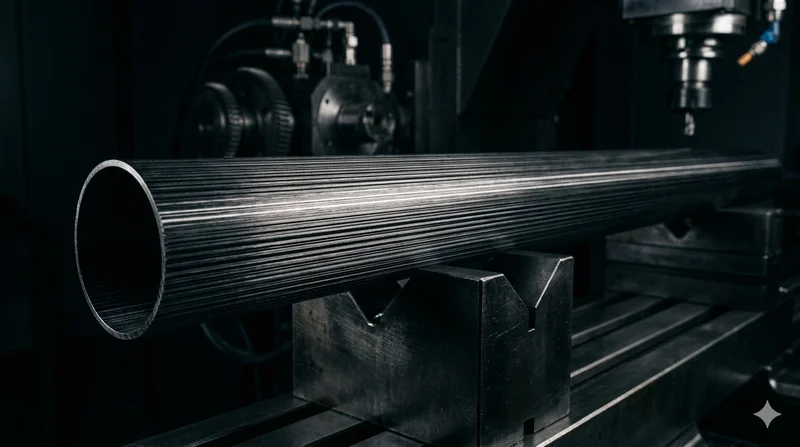
Round Carbon Fiber Tube — UD Unidirectional T700
Unidirectional (UD) round tube with all fibers aligned axially for maximum longitudinal stiffness. Ideal for applications requiring high bending rigidity with minimal weight, such as shafts, struts, and structural reinforcements.
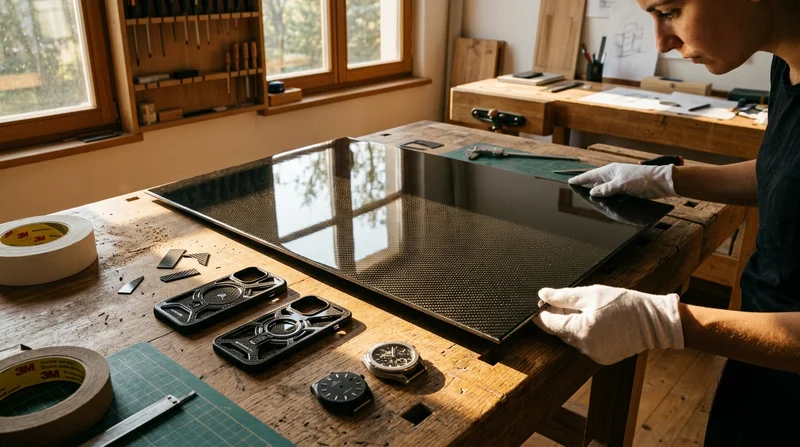
Carbon Fiber Plate — High-Gloss Decorative
High-gloss decorative carbon fiber plate with a mirror-like surface finish. The glossy coating enhances the visible 3K twill weave, creating a premium aesthetic for consumer-facing applications. Lightweight yet stiff, available in thin gauges for easy cutting and forming.
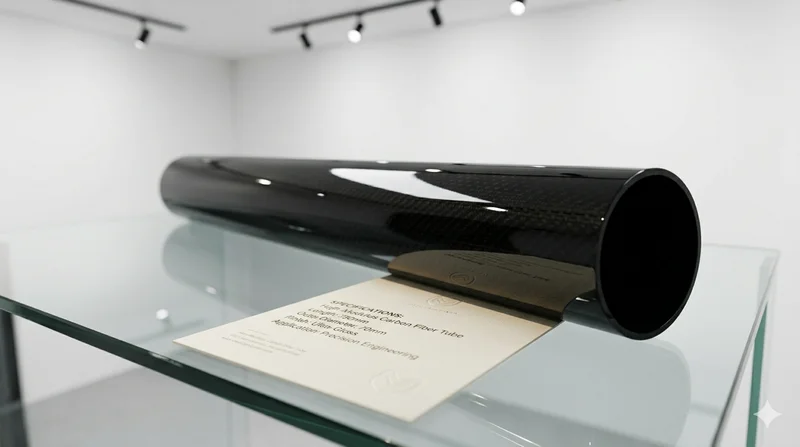
High Modulus Round Carbon Fiber Tube — M40
High modulus round tube manufactured with M40 grade fiber (tensile modulus 400 GPa). Designed for applications where maximum stiffness-to-weight ratio is critical, such as optical systems, precision machinery, and aerospace structures.