
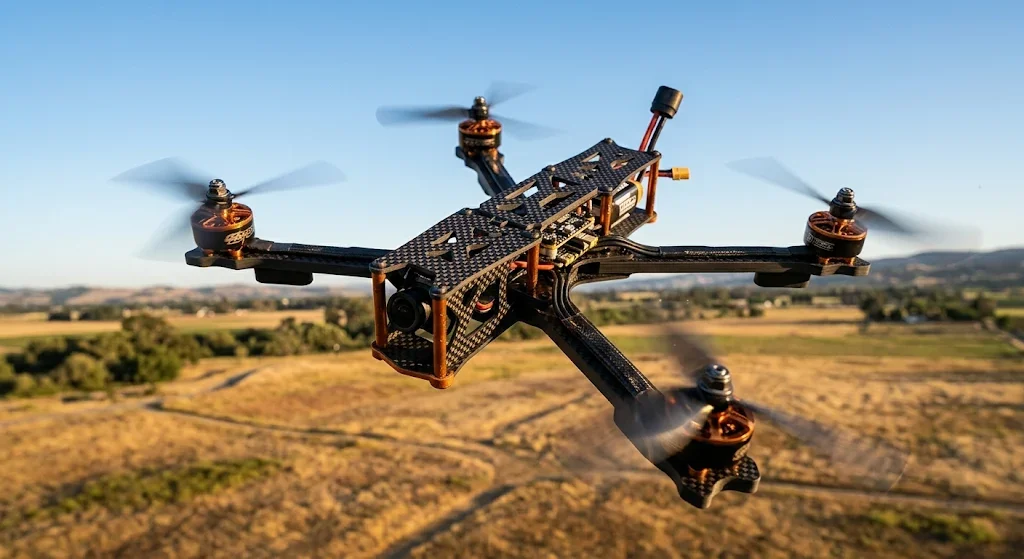
Carbon fiber drones have become a standard choice in racing, industrial inspection, mapping, and custom UAV development because the airframe must be light, stiff, and predictable under vibration. Carbon fiber reinforced structures help designers reduce mass without giving up rigidity, which supports
Why Carbon Fiber Drones Are Common
Carbon fiber drones have become a standard choice in racing, industrial inspection, mapping, and custom UAV development because the airframe must be light, stiff, and predictable under vibration. Carbon fiber reinforced structures help designers reduce mass without giving up rigidity, which supports efficient propulsion and stable sensor performance. In practice, carbon fiber drones are not defined by a single material part. They often combine carbon plates, arms, tubes, and molded components with aluminum inserts, plastic mounts, and electronic systems. The value of carbon fiber appears when the structure improves thrust-to-weight ratio, limits flex during aggressive maneuvers, and protects payload alignment. Understanding where carbon helps, and where it adds cost, is essential for making sound design decisions.
Airframe Design Considerations
The airframe is the most visible application of composites in carbon fiber drones. Arms and center plates carry motor loads, landing shocks, and torsional forces from propellers. A stiff arm can improve flight response, but stiffness alone is not enough; the structure must also tolerate crashes, clamp loads, and repeated assembly. Designers often choose between cut plates, tubes, and hybrid layouts depending on production volume and mission profile.
| Airframe Element | Typical Carbon Form | Main Benefit | Design Watchpoint |
|---|---|---|---|
| Motor arms | Plate or tube | Low mass and high bending stiffness | Crash damage at mounts and fastener holes |
| Center frame | Flat laminate plate | Rigid base for electronics and battery | Vibration isolation and stack height |
| Landing gear | Tubes or molded parts | Strength with controlled weight | Impact energy absorption |
| Payload boom | Tube or custom profile | Stable support for cameras or sensors | Deflection under payload and wind |
Payload Requirements and Trade-Offs
Payload is often the reason a drone exists, whether it carries a camera, LiDAR unit, delivery mechanism, or inspection sensor. For carbon fiber drones, payload planning should start with total system mass, center of gravity, and vibration sensitivity. A lighter composite frame can free mass budget for batteries or sensors, but the airframe must remain stiff enough to keep the payload pointed in the intended direction. Excess flex in arms or booms can degrade image quality, mapping accuracy, or gimbal performance.
Mounting details matter as much as material choice. Hard mounting a sensitive sensor to a very stiff carbon plate may transmit motor vibration more directly than expected. In many builds, the best result comes from combining a rigid carbon structure with tuned isolators, careful cable routing, and balanced propulsion. The goal is not maximum stiffness everywhere; it is controlled stiffness where it supports flight and payload performance.
Cost Impact Across the Lifecycle
The cost impact of carbon fiber drones appears in several layers. Raw material and fabrication can be higher than for plastics or simple metal parts, especially for low volumes or custom geometries. Cutting, machining, and finishing carbon composites also require suitable tools and dust control. However, the lifecycle view can be different. A lighter frame may improve endurance or allow a smaller battery for the same mission, and a stiff structure may reduce tuning time or improve data quality for payload-driven operations.
- Build cost: influenced by material grade, part complexity, tooling, and labor.
- Performance cost: weight savings can translate into flight time or payload capacity.
- Maintenance cost: damaged carbon parts may need replacement rather than simple reshaping.
- Risk cost: poor joint design can waste the benefits of premium materials.
For teams evaluating carbon fiber drones, the right question is not whether carbon is always cheaper. It is whether the composite structure reduces total mission cost by improving efficiency, reliability, or data value.
Durability, Repair, and Safety Notes
Carbon composites are strong and stiff, but they do not behave like ductile metals. After a hard crash, damage may include delamination, fiber breakage, or hidden cracks around holes and clamps. Visual inspection should focus on fastener areas, arm roots, and any point where loads concentrate. If a structural part is compromised, replacement is often safer than improvising a repair on a critical flight component. During fabrication or repair, control carbon dust and use appropriate protective equipment because fine particles can be harmful.
Frequently Asked Questions
Do carbon fiber drones always fly longer than other drones?
Not always. Carbon fiber drones can reduce structural weight, which may improve endurance, but flight time also depends on motors, propellers, battery, payload, and aerodynamics. If the composite frame is overbuilt or poorly integrated with the propulsion system, the weight advantage may be smaller than expected.
Is carbon fiber the best choice for every UAV airframe?
No. Carbon fiber is excellent for stiffness and weight, but some applications benefit from materials that absorb impact differently, cost less to mold, or simplify repairs. The best choice depends on mission requirements, production volume, crash risk, and how the payload interacts with vibration and frame flex.
How does payload size affect carbon fiber drone design?
Larger or more sensitive payloads increase the need for stiffness, careful mass distribution, and vibration control. The frame may require thicker arms, different geometry, or isolation mounts. In carbon fiber drones, payload planning should be integrated early so the structure supports sensor stability without unnecessary weight.
Conclusion
Carbon fiber drones succeed when composite structures are used with clear intent: reduce weight, control stiffness, and support payload performance without ignoring cost and maintainability. The strongest results come from matching airframe layout, joints, and vibration management to the mission. To explore composite materials and custom structural solutions for UAV programs, view YongXian products or contact our engineering team.
Related Articles
- Carbon Fiber Rods for Fishing: Blank Selection for Builders
- Carbon Fiber Toe Plates: Rocker Design in Footwear
- Best Carbon Fiber Rod: Application-Based Picks
- The Crust Carbon Fiber: What the Term Means in Searches
- Carbon Fiber Rod for Drone: Spars, Arms, and Sizing
- Remote Control Blue Carbon Fiber Drones: Frames, Finishes, and Buying
Interested in Our Products?
Contact our team for competitive pricing and technical specifications.
Get a QuoteRelated Products

Round Carbon Fiber Tube — 3K Plain Weave T700
Standard round carbon fiber tube manufactured from Toray T700 grade fiber with 3K plain weave. Offers balanced strength and stiffness for general industrial applications including robotics, automation, sports equipment, and aerospace structures.

Square Carbon Fiber Tube — 3K Twill T700
Square cross-section carbon fiber tube manufactured with 3K twill weave for torsional strength. Preferred for structural frames, trusses, and support columns where rectangular geometry offers design flexibility.

Round Carbon Fiber Tube — 3K Twill
Lightweight and ultra-stiff round tubes ideal for drone frames, robotics, and structural applications.
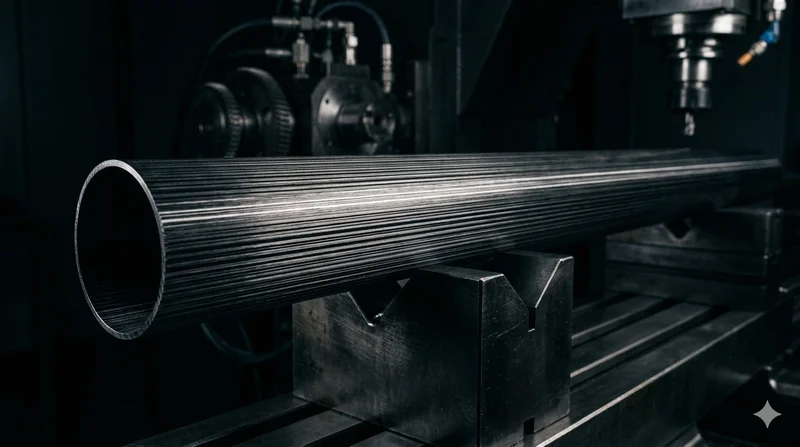
Round Carbon Fiber Tube — UD Unidirectional T700
Unidirectional (UD) round tube with all fibers aligned axially for maximum longitudinal stiffness. Ideal for applications requiring high bending rigidity with minimal weight, such as shafts, struts, and structural reinforcements.
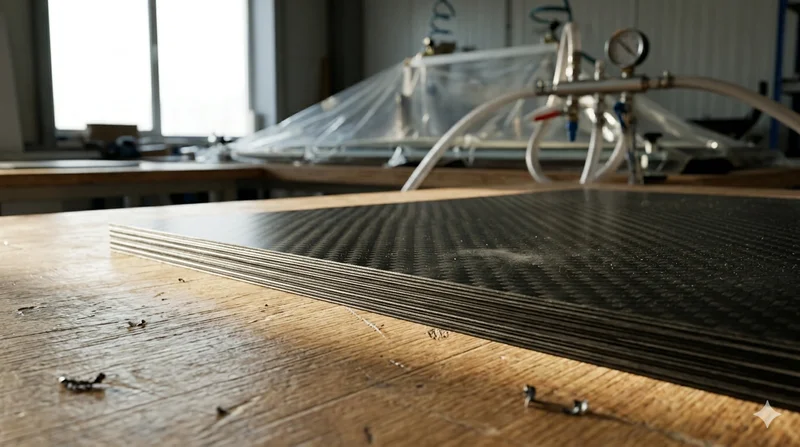
Carbon Fiber Plate — 3K Twill T700 3.0mm
Medium-thickness 3.0mm carbon fiber plate offering significantly higher load capacity while maintaining attractive 3K twill finish. Suitable for structural brackets, reinforcement plates, and load-bearing panels.