
If you are searching for the best carbon fiber rod, the right answer depends on the job. A rod that works well in a lightweight drone frame may be a poor choice for a repair brace, a robotics linkage, or a precision alignment tool. To choose the best carbon fiber rod, start with the load case: tensi
How to Choose the Best Carbon Fiber Rod
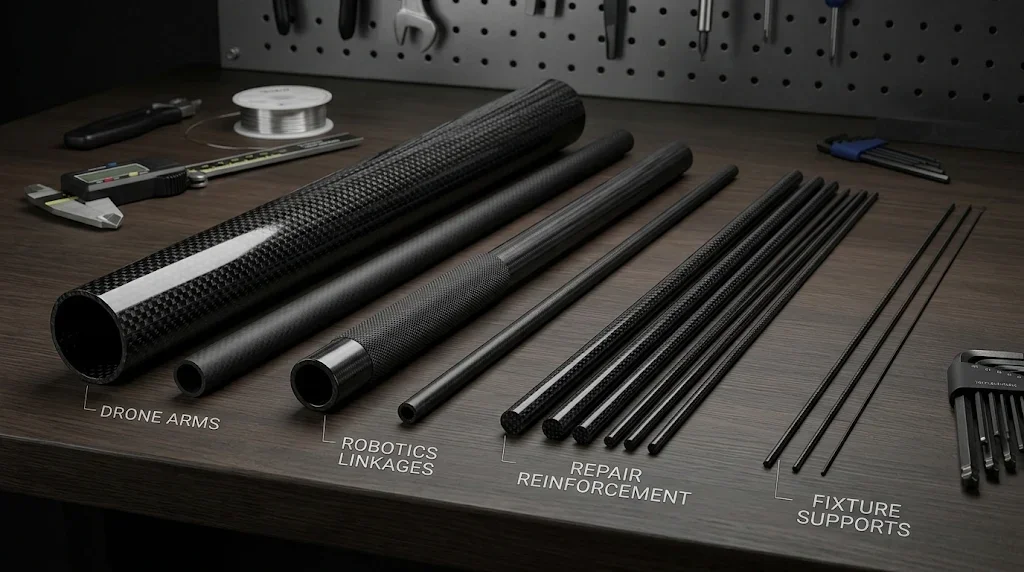
If you are searching for the best carbon fiber rod, the right answer depends on the job. A rod that works well in a lightweight drone frame may be a poor choice for a repair brace, a robotics linkage, or a precision alignment tool. To choose the best carbon fiber rod, start with the load case: tension, compression, bending, or vibration. Then consider diameter, wall thickness if comparing tubes, fiber orientation, manufacturing method, and how you will connect the rod to other parts. Carbon fiber offers an excellent stiffness-to-weight ratio, but selection mistakes usually happen when buyers focus only on diameter or price. A practical decision balances stiffness, impact tolerance, straightness, surface finish, and the joining method you can execute reliably.
Application-Based Picks
| Application | Recommended Rod Type | Why It Works | What to Check |
|---|---|---|---|
| RC aircraft and drones | Small-diameter pultruded or roll-wrapped rod | Good stiffness with low mass for arms, spars, and braces | Straightness, weight consistency, and bonding area |
| Robotics and automation | Precision straight rod with controlled diameter | Stable motion members and lightweight supports | Tolerance, end machining, and joint design |
| Kites, tents, and hobby frames | Impact-tolerant rod or tube alternative | Handles repeated flex better when correctly sized | Flex profile and replacement availability |
| Repair and reinforcement | Larger diameter solid rod or matched laminate | Adds stiffness to cracked or weak areas | Surface prep, adhesive choice, and load direction |
| Prototyping and fixtures | General-purpose rod with easy cut/finish | Fast iteration for jigs, guides, and supports | Cut quality, dust control, and mounting hardware |
Pultruded vs Roll-Wrapped Rods
Manufacturing method affects performance. Pultruded rods typically have fibers aligned mainly along the length, which can provide strong axial stiffness and consistent properties for many straight members. Roll-wrapped products, more common in tubes but also relevant in carbon composite forms, can offer tailored fiber orientations for specific bending or torsional needs. When comparing the best carbon fiber rod options, ask the supplier about fiber direction, resin system, and quality control. A rod with excellent axial stiffness may still be vulnerable if the joint introduces peel forces or if the application involves side impacts.
Key Specifications to Compare
- Diameter and tolerance: Small changes affect bending stiffness and fit in sleeves or hubs.
- Straightness: Critical for linkages, guides, and rotating assemblies.
- Surface finish: Smooth surfaces can ease bonding or sliding; rougher surfaces may need preparation.
- Length and cut method: Use proper abrasive cutting and control dust; carbon dust is hazardous.
- End connections: Plan for inserts, clamps, bonded sleeves, or drilled fixtures as appropriate.
Do not assume that the largest diameter is always the best carbon fiber rod choice. Oversizing can add unnecessary cost and may create brittle failure behavior at poorly designed joints. In many designs, a slightly smaller rod paired with better end fittings and correct load alignment performs more reliably.
Buying and Handling Tips
When sourcing rods, request clear specifications rather than relying on generic labels. Confirm the actual diameter, length tolerance, and intended use. For small-batch projects, test one rod under realistic loads before committing to a full build. During handling, protect rods from point impacts and avoid crushing them in clamps. If you need to drill or slot a carbon rod, use sharp tools, support the area, and seal exposed fibers if the environment may introduce moisture or abrasion.
For adhesive bonding, surface preparation matters. Light abrasion, solvent cleaning compatible with the resin system, and a suitable structural adhesive can improve joint reliability. Mechanical joints should distribute load over a larger area instead of concentrating stress at a single hole. The best carbon fiber rod in theory can fail early if the connection is weak.
Common Mistakes to Avoid
- Selecting by diameter only without considering bending length and support spacing.
- Ignoring joint design, which often limits performance more than the rod itself.
- Using metalworking habits without dust control and proper cutting tools.
- Assuming all carbon rods have the same fiber orientation or resin quality.
- Skipping a fit and load test for safety-critical or repetitive-use parts.
Frequently Asked Questions
What makes the best carbon fiber rod for drone frames?
For drone frames, the best carbon fiber rod usually balances low weight, straightness, and enough bending stiffness for the arm length and motor load. Consistent diameter helps with mounts and clamps, while reliable bonding surfaces improve repairability. Always validate the choice with flight loads and vibration in mind, not only static stiffness.
Is a thicker rod always stronger in practice?
A thicker rod generally increases bending stiffness, but practical strength depends on how the rod is supported and connected. Poorly designed holes, clamps, or adhesive joints can fail before the rod reaches its material potential. The best option is the rod size that fits the load path, joint design, and weight target together.
Can I cut carbon fiber rods with ordinary workshop tools?
You can cut them with appropriate abrasive tools, but you should control dust carefully and wear suitable protection. Carbon dust should not be inhaled, and fine particles can affect equipment. After cutting, inspect the end for splintering and finish it so the rod seats properly in its mount or sleeve.
Conclusion
The best carbon fiber rod is the one matched to your load case, connection method, and tolerance needs. Compare manufacturing type, straightness, diameter, and handling requirements before buying, and test a sample when the application is critical. If your project moves beyond standard rods into custom composite profiles or production parts, browse YongXian solutions or contact us for application support.
Related Articles
- Carbon Fiber Rods for Fishing: Blank Selection for Builders
- Carbon Fiber Toe Plates: Rocker Design in Footwear
- Carbon Fiber Drones (carbon fiber drones): Airframes, Payloads, and Cost Impact
- The Crust Carbon Fiber: What the Term Means in Searches
- Carbon Fiber Rod for Drone: Spars, Arms, and Sizing
- Remote Control Blue Carbon Fiber Drones: Frames, Finishes, and Buying
Interested in Our Products?
Contact our team for competitive pricing and technical specifications.
Get a QuoteRelated Products

Round Carbon Fiber Tube — 3K Plain Weave T700
Standard round carbon fiber tube manufactured from Toray T700 grade fiber with 3K plain weave. Offers balanced strength and stiffness for general industrial applications including robotics, automation, sports equipment, and aerospace structures.

Square Carbon Fiber Tube — 3K Twill T700
Square cross-section carbon fiber tube manufactured with 3K twill weave for torsional strength. Preferred for structural frames, trusses, and support columns where rectangular geometry offers design flexibility.

Carbon Fiber Plate — 3K Twill T700 3.0mm
Medium-thickness 3.0mm carbon fiber plate offering significantly higher load capacity while maintaining attractive 3K twill finish. Suitable for structural brackets, reinforcement plates, and load-bearing panels.
Carbon Fiber Plate — 3K Twill T700 1.5mm
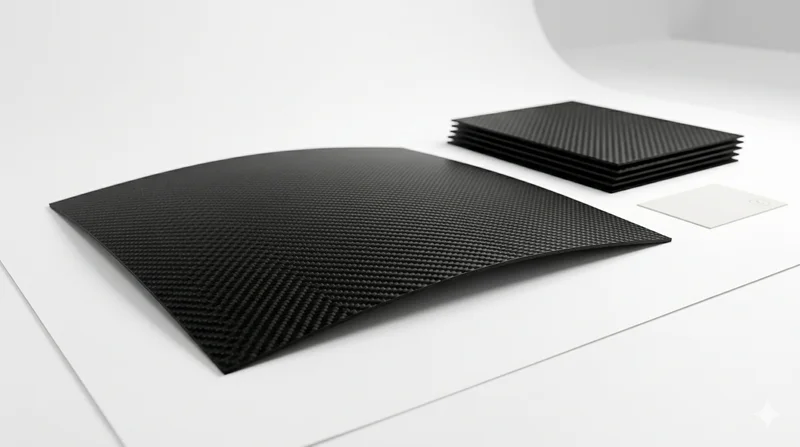
Thin 1.5mm carbon fiber plate with 3K twill weave surface. Lightweight and stiff, commonly used for covers, panels, drone bodies, and applications requiring a premium aesthetic appearance.
High Modulus Round Carbon Fiber Tube — M40
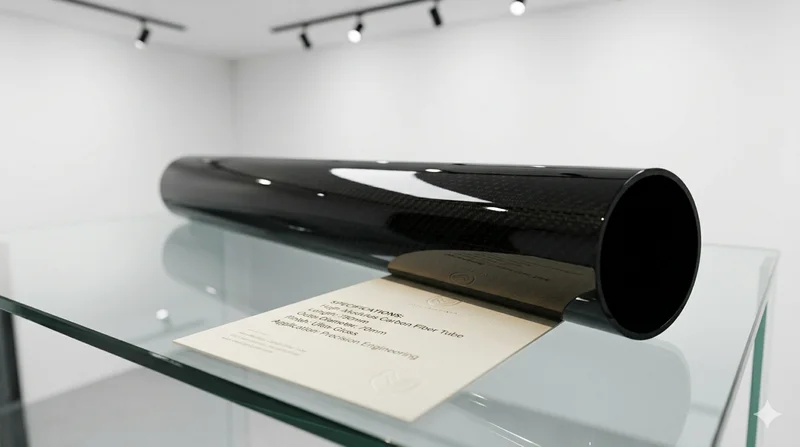
High modulus round tube manufactured with M40 grade fiber (tensile modulus 400 GPa). Designed for applications where maximum stiffness-to-weight ratio is critical, such as optical systems, precision machinery, and aerospace structures.