
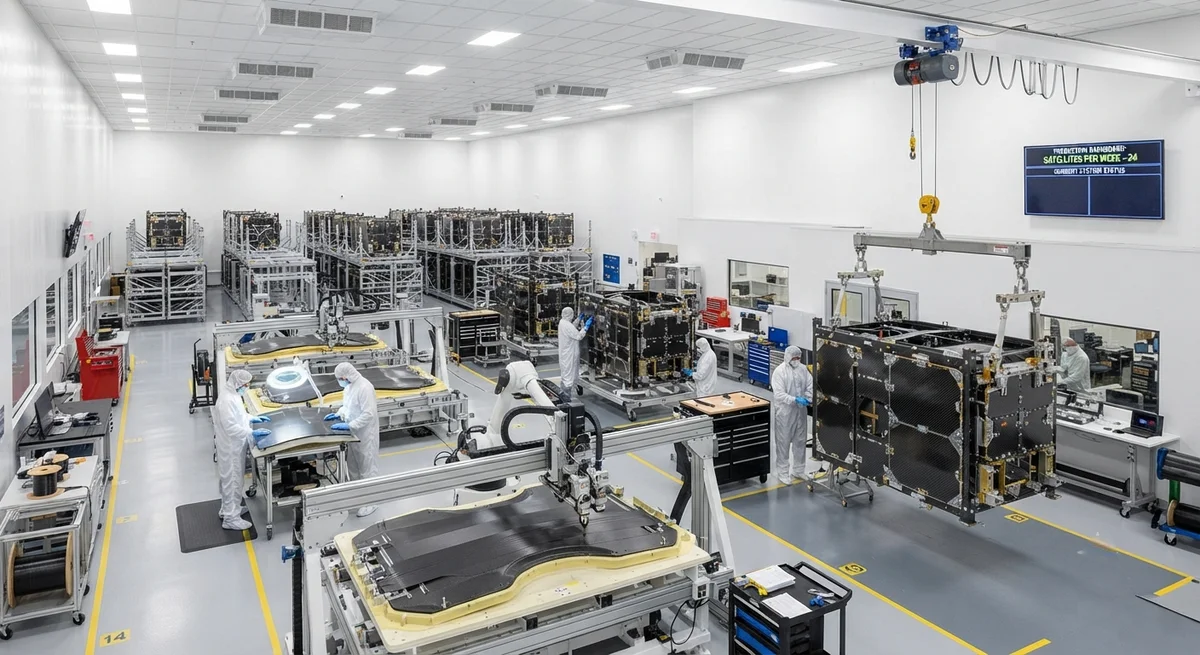
Discover how carbon fiber composites enable large-scale satellite constellation manufacturing for Starlink, Kuiper, and NewSpace operators through lightweight structures and high-volume production.
Introduction: The NewSpace Manufacturing Revolution
The satellite industry is undergoing a transformation unprecedented in scale since the dawn of the Space Age. Traditional satellite manufacturing — characterized by bespoke, handcrafted spacecraft built one at a time over years-long development cycles — is being disrupted by the NewSpace paradigm, which demands satellites built like smartphones: by the thousands, on assembly lines, at fraction of the traditional cost. At the center of this revolution is carbon fiber reinforced polymer (CFRP), the material that makes these ambitious constellation programs physically and economically viable. From SpaceX's Starlink constellation, which as of mid-2026 has deployed over 6,500 operational satellites, to Amazon's Project Kuiper and its planned 3,200-satellite constellation, carbon fiber composites provide the essential combination of ultralight weight, dimensional stability across extreme thermal gradients, and high-volume manufacturability that satellite constellations demand. This article examines how carbon fiber has become the enabling material for the NewSpace manufacturing revolution, analyzing the material science, production processes, supply chain dynamics, and competitive landscape that are shaping the future of space-based communications infrastructure.
Why Carbon Fiber Dominates Satellite Structures
The choice of carbon fiber for satellite constellation manufacturing is driven by three fundamental requirements that no other material system satisfies simultaneously. First, launch cost is directly proportional to mass — with current launch prices of $1,500–3,000 per kilogram to low Earth orbit (LEO) via Falcon 9 and similar vehicles, every kilogram of satellite mass carries a substantial price tag. A typical Starlink v2 satellite weighs approximately 1,250 kg, while smaller form-factor constellation satellites range from 150 to 500 kg. Carbon fiber structures achieve 40–60% weight reduction compared to aluminum equivalents, translating directly into launch cost savings of hundreds of thousands of dollars per satellite. Second, satellite structures must maintain precise dimensional stability across temperature swings of ±150°C as they transition from Earth's shadow to direct sunlight every 90 minutes. Carbon fiber's near-zero coefficient of thermal expansion (CTE) — typically −0.5 to +0.5 ppm/°C in the fiber direction — ensures that antenna reflectors, optical benches, and solar array substrates maintain their precise geometry regardless of thermal cycling. Third, the ability to produce large numbers of identical, high-quality composite structures through automated processes is essential for constellations requiring thousands of satellites.
Material and Performance Comparison for Satellite Structures
| Parameter | Carbon Fiber (M55J/Epoxy) | Aluminum (7075-T6) | Titanium (Ti-6Al-4V) | Beryllium (AlBeMet) |
|---|---|---|---|---|
| Density (g/cm³) | 1.63 | 2.81 | 4.43 | 2.07 |
| Specific Stiffness (GPa·cm³/g) | 190–230 | 26 | 25 | 92 |
| CTE (ppm/°C) | −0.5 to +0.5 | 23.2 | 9.0 | 13.9 |
| Outgassing (TML %) | <0.1% (space-grade) | <0.01% | <0.01% | <0.01% |
| Radiation Resistance | Good (matrix-dependent) | Excellent | Excellent | Excellent |
| Thermal Conductivity (W/m·K) | 50–150 (pitch-based fiber) | 130 | 7.2 | 210 |
| Material Cost ($/kg) | $200–800 (space-grade) | $30–60 | $200–400 | $2,000–5,000 |
| Weight for Bus Structure (150 kg sat) | 8–12 kg | 18–25 kg | 28–35 kg | 12–16 kg |
| Fabrication Cycle (hrs per structure) | 4–8 (autoclave) | 8–16 (machining) | 16–40 (machining) | 20–40 (HIP + machining) |
| High-Volume Suitability | Excellent (AFP/ATL) | Moderate | Poor | Poor |
Starlink: Carbon Fiber at Constellation Scale
SpaceX's Starlink constellation is the most prominent example of carbon fiber-enabled satellite mass production. Each Starlink satellite features a carbon fiber composite bus structure — the primary structural framework — that houses propulsion systems, avionics, and payload electronics. The flat-panel design, which allows efficient packing in the Falcon 9 payload fairing, is manufactured using high-modulus carbon fiber prepreg materials laid up by automated fiber placement (AFP) machines and cured in large autoclaves at SpaceX's Redmond, Washington and Austin, Texas facilities. The solar array substrates are also carbon fiber composite structures, providing a rigid, thermally stable platform for the photovoltaic cells. SpaceX has developed proprietary high-rate manufacturing processes that enable production of approximately 40–60 satellites per week at peak capacity, a rate that the company has achieved through vertical integration of carbon fiber production, automated layup, and rapid cure cycles. The carbon fiber structures represent approximately 15–20% of the total satellite mass but account for a disproportionately large share of the structural cost savings due to the weight reduction enabling more satellites per launch.
Project Kuiper and Other Constellation Programs
Amazon's Project Kuiper, which received FCC approval for its 3,236-satellite constellation in 2020, has invested heavily in carbon fiber composite manufacturing infrastructure at its Kennewick, Washington and Kirkland, Washington facilities. Kuiper's satellite design employs a carbon fiber central cylinder structure that serves as the primary load-bearing element, onto which subsystems are mounted during final assembly. Amazon has partnered with several carbon fiber materials suppliers, including Toray Advanced Composites and Solvay, to develop space-qualified prepreg materials optimized for high-rate production. Other constellation programs, including Telesat's Lightspeed (188 satellites), Eutelsat OneWeb's expanded constellation (now over 900 satellites planned), and China's GuoWang (national satellite internet project with over 13,000 planned satellites), all rely extensively on carbon fiber composite structures. The Chinese program in particular has driven significant investment in domestic carbon fiber production capacity for space applications, with companies including Zhongfu Shenying and Weihai Guangwei expanding their aerospace-grade fiber lines to meet demand.
Manufacturing Processes for High-Volume Satellite Production
- Automated Fiber Placement (AFP): Robotic heads lay down multiple prepreg tows simultaneously at rates of 15–30 kg/hour, enabling complex curvatures and variable thickness without material waste. AFP is the primary process for Starlink and Kuiper satellite bus structures.
- Automated Tape Laying (ATL): Wider tape formats (75–300 mm) are laid down at higher rates (30–60 kg/hour) for flat or gently curved panels such as solar array substrates and antenna reflectors.
- Rapid Curing and Out-of-Autoclave Processing: Fast-cure epoxy systems (15–60 minute cure cycles) combined with heated tooling and vacuum bag-only processing enable production rates impossible with traditional autoclave cycles measured in hours. Quickstep and similar fluid-heated curing technologies are being adopted for constellation-scale production.
- Precision Machining and Assembly: Near-net-shape composite structures are machined to final tolerances using 5-axis CNC with diamond tooling, followed by automated inspection with laser profilometry and CT scanning for internal defect detection.
Thermal Management in the Space Environment
One of the unique challenges of satellite constellation design is thermal management in the vacuum of space. Unlike terrestrial applications where convective cooling is available, satellites must radiate all excess heat to deep space through thermal radiation alone. Carbon fiber composites play a dual role in satellite thermal management. High-conductivity pitch-based carbon fibers (thermal conductivity up to 800 W/m·K) are used in thermal doublers and radiator panels to spread heat from high-power components. Conversely, low-conductivity standard modulus fibers are used in thermal isolation brackets to minimize parasitic heat transfer between warm electronics and cold structures. Carbon fiber's ability to be tailored with specific thermal properties — from highly conductive to highly insulative — by selecting appropriate fiber types and layup sequences makes it uniquely suited to the thermal demands of satellite design. Many constellation satellites also incorporate carbon fiber composite facesheets bonded to aluminum honeycomb cores, creating sandwich panels that combine the low CTE and high stiffness of carbon fiber with the thermal conductivity and EMI shielding of the metallic core.
Supply Chain and Cost Considerations
The scale of satellite constellation programs has fundamentally altered the carbon fiber aerospace supply chain. Before the NewSpace era, space-grade carbon fiber was a low-volume, high-cost material, with annual consumption measured in tens of metric tons and prices ranging from $500–2,000/kg for qualified materials. The constellation boom has created demand for thousands of metric tons annually, driving significant cost reductions through volume purchasing and process optimization. SpaceX alone consumed an estimated 400–600 metric tons of carbon fiber in 2025 for Starlink production, and Amazon's Kuiper program is projected to add another 200–300 metric tons annually at full production. This volume has enabled constellation operators to negotiate prices in the $80–200/kg range for standard modulus aerospace-grade carbon fiber — still substantially higher than automotive-grade ($18–45/kg) but dramatically lower than traditional space-grade pricing. The supply chain is dominated by Toray Industries, Hexcel Corporation, Solvay, and Mitsubishi Chemical Carbon Fiber and Composites, all of which have invested in dedicated satellite-grade production lines with the rigorous traceability and quality control systems required for space flight certification.
Future Trends: Next-Generation Materials and Processes
Several emerging technologies promise to further reduce the cost and increase the performance of carbon fiber satellite structures. Recycled carbon fiber — produced from end-of-life aerospace components and manufacturing scrap — is being qualified for non-critical satellite structures, potentially reducing material costs by 30–50%. Thermoplastic composite systems, which can be formed and welded in seconds rather than the hours required for thermoset cure cycles, are being developed for satellite mass production, with PEEK and PEKK-based systems demonstrating space-qualified properties. Additive manufacturing of continuous carbon fiber composites is also advancing, enabling the production of optimized lattice structures and integrated fittings that eliminate secondary bonding operations. As the number of planned constellation satellites exceeds 100,000 across all announced programs, the demand for carbon fiber in space applications is projected to reach 12,000–18,000 metric tons annually by 2030, representing one of the fastest-growing segments of the carbon fiber market.
Frequently Asked Questions
Why is carbon fiber preferred over aluminum for satellite structures?
Carbon fiber offers 40–60% weight reduction compared to aluminum, near-zero thermal expansion for dimensional stability in orbit, and superior specific stiffness. These properties directly reduce launch costs and improve satellite performance, making carbon fiber the preferred material despite higher material costs.
How many Starlink satellites use carbon fiber construction?
All Starlink satellites in the v1.5, v2, and v2 Mini variants use carbon fiber composite bus structures and solar array substrates. As of mid-2026, over 6,500 Starlink satellites have been manufactured with carbon fiber primary structures.
What type of carbon fiber is used in satellites?
Satellite manufacturers typically use high-modulus (300–400 GPa) PAN-based carbon fiber in epoxy matrix systems. For thermal management applications, pitch-based fibers with thermal conductivity exceeding 600 W/m·K are also employed.
Can recycled carbon fiber be used in satellites?
Recycled carbon fiber is currently being qualified for non-structural and secondary structural applications in satellites. Primary load-bearing structures still require virgin fiber to meet strict spaceflight material traceability and certification requirements.
Part of topic
Related Articles
- Carbon Fiber Mooring for Floating Offshore Wind: Fatigue and Corrosion in Deep Water
- Carbon Fiber Bicycle Frame Optimization: Layup Design and Manufacturing for Competitive Racing
- Carbon Fiber CFRP Retrofit for Infrastructure: Bridge and Building Seismic Strengthening
- Carbon Fiber Medical Imaging Equipment: Lightweight Gantry and Couch Structures for MRI/CT
- Carbon Fiber EV Battery Enclosures: Crash Safety and Electromagnetic Shielding Design
- Carbon Fiber Structures for Low-Altitude Economy: UAV Airframes and eVTOL Components
Interested in Our Products?
Contact our team for competitive pricing and technical specifications.
Get a QuoteRelated Products

Carbon Fiber Plate — 3K Twill T700 1.5mm
Thin 1.5mm carbon fiber plate with 3K twill weave surface. Lightweight and stiff, commonly used for covers, panels, drone bodies, and applications requiring a premium aesthetic appearance.
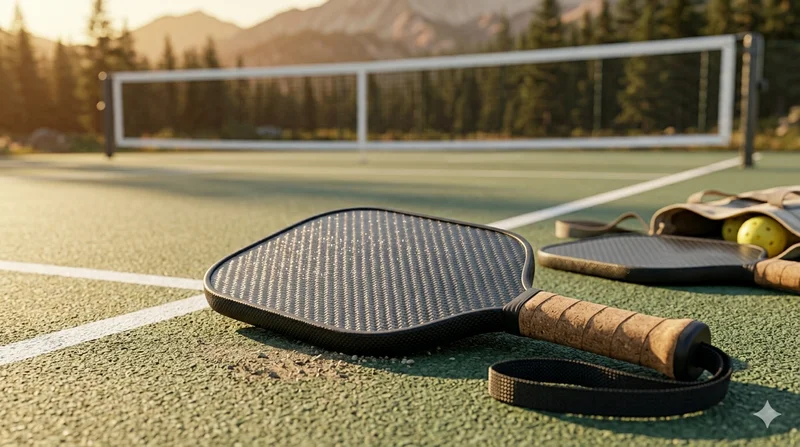
Carbon Fiber Pickleball Paddle
High-performance pickleball paddle with Toray T700 carbon fiber face and polypropylene honeycomb core. Delivers excellent power-to-weight ratio, spin generation, and vibration dampening for competitive play.
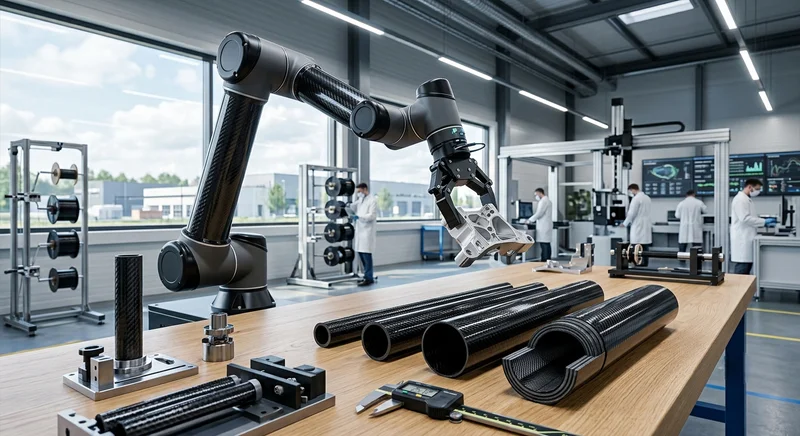
Carbon Fiber Robotic Arm Tube — High-Stiffness Lightweight Replacement
Precision-wound carbon fiber tubes for robotic arm links, replacing steel or aluminum in collaborative robots (cobots) and industrial manipulators. Achieve 3× the specific stiffness of aluminum with significant weight reduction, enabling faster acceleration and higher payload capacity.
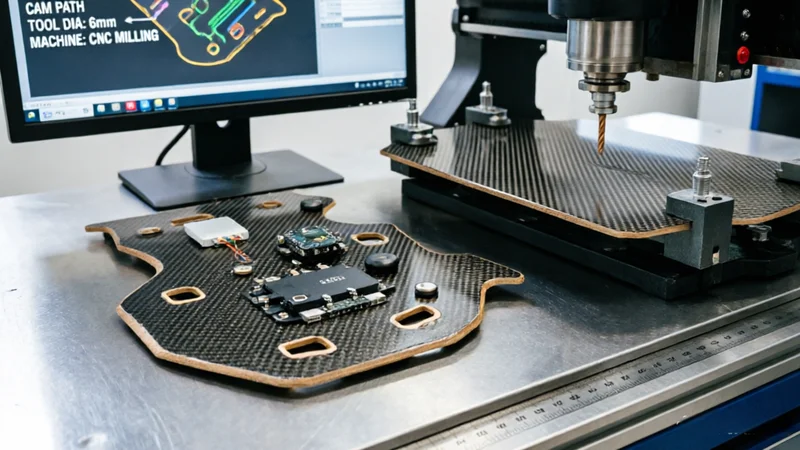
Carbon Fiber Drone Frame Base Plate — 3K Twill T700
CNC-machined carbon fiber base plates for drone frame assemblies. Cut from 3K twill weave T700 prepreg with precision CNC routing. Pre-drilled mounting patterns compatible with common flight controller and power distribution board layouts. Available in 1.5mm to 5mm thickness.
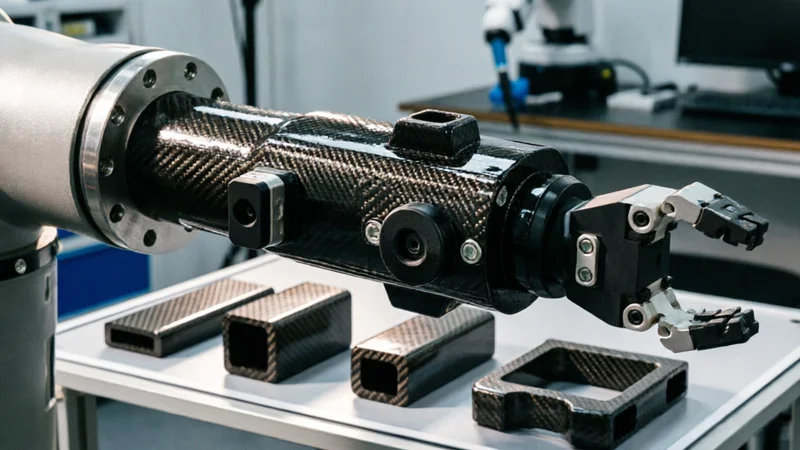
Carbon Fiber Robot End Effector Link — Custom Shape & Sensor Integration
Custom-shaped carbon fiber end effector links for robotic arms. Designed for automation integrators and research labs requiring lightweight, rigid connections between the robot wrist and gripper/tool. Can incorporate sensor mounting bosses, cable routing channels, and quick-change interfaces.