
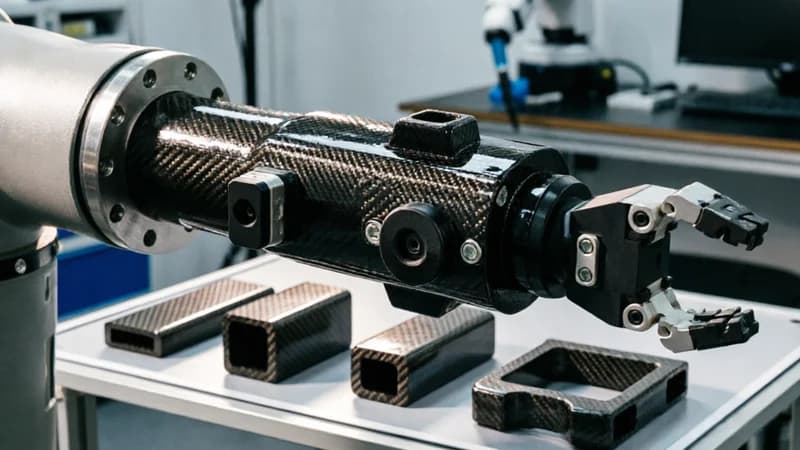
Carbon Fiber Robot End Effector Link — Custom Shape & Sensor Integration
Custom-shaped carbon fiber end effector links for robotic arms. Designed for automation integrators and research labs requiring lightweight, rigid connections between the robot wrist and gripper/tool. Can incorporate sensor mounting bosses, cable routing channels, and quick-change interfaces.
Key Features
Applications
Specifications
- Material
- T700 / T800 / IM7 Carbon Fiber
- Fabrication
- Prepreg Layup + CNC Trim + Bonding
- Max Dimensions
- 500 × 300 × 150 mm
- Interface
- Custom — UR / ABB / Fanuc / KUKA Compatible
- Temperature Range
- -40°C to +150°C
Usually respond within 24 hours
Frequently Asked Questions
What is the minimum order quantity for carbon fiber products?
What color and finish options are available?
What is the typical lead time?
Related Articles
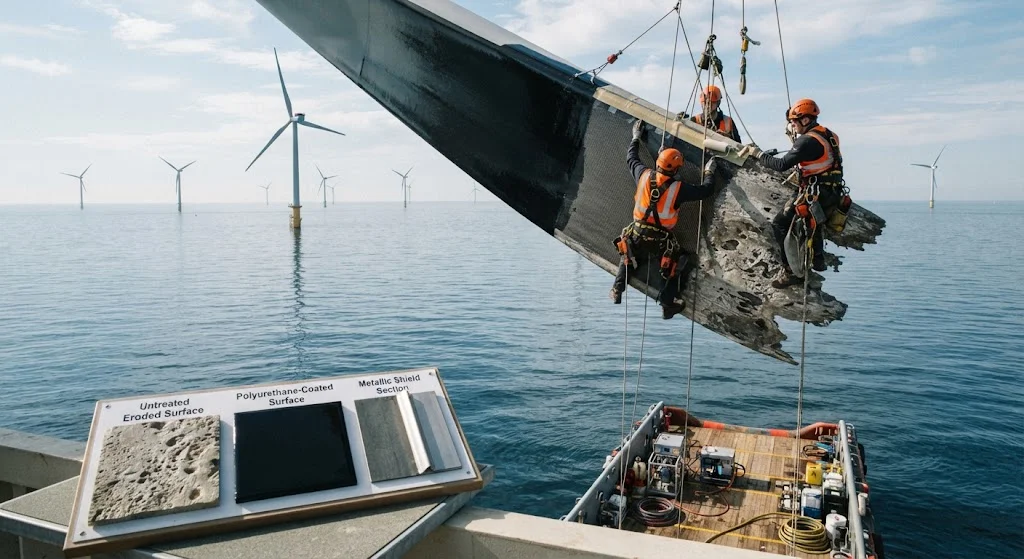
Wind Turbine Blade Leading Edge Protection 2026: Polyurethane, Tape, and Metallic Shield Solutions
Leading edge erosion has emerged as one of the most significant maintenance challenges for wind turbine blades, particularly in offshore and coastal installations where blades are exposed to rain, hail, salt spray, and airborne particulates at high rotational speeds. The leading edge of
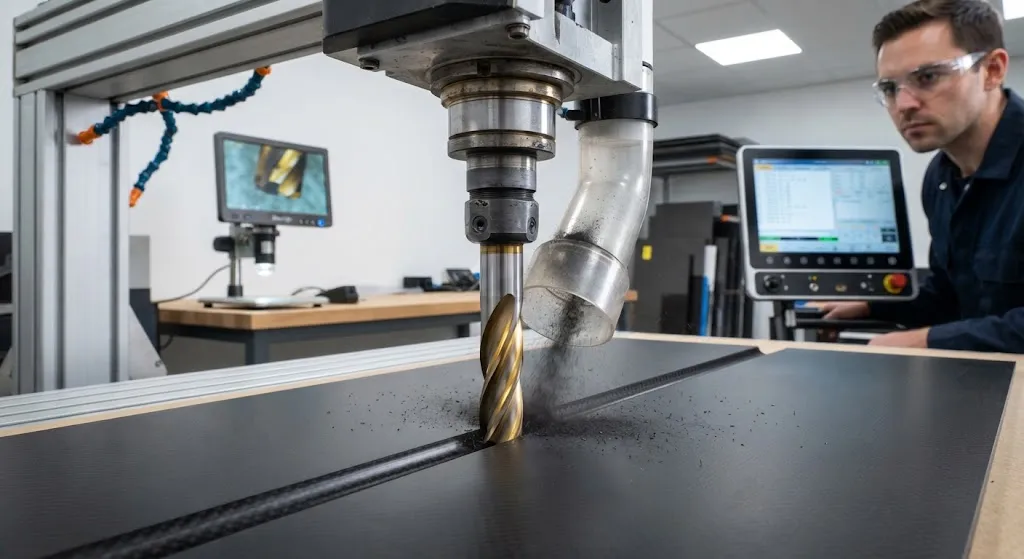
Machining Carbide Tool Wear: CFRP Cutting Tool Life and Surface Quality
Machining carbon fiber reinforced polymer composites differs fundamentally from metal cutting. CFRP's heterogeneous structure — hard, abrasive carbon fibers embedded in a relatively soft polymer matrix — creates a two-phase cutting environment where tool wear mechanisms, chip formation,
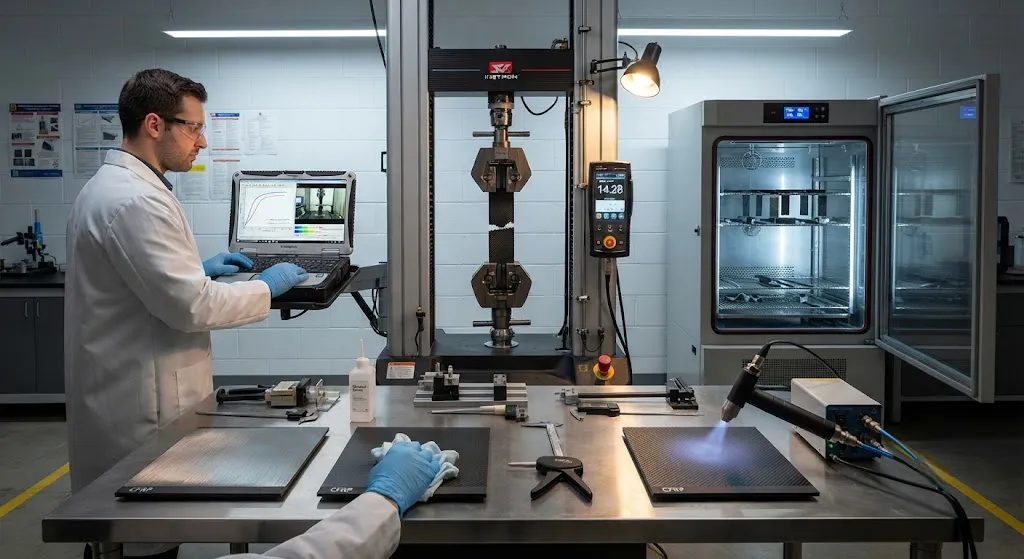
Adhesive Bonding Structural Joint: CFRP Bonded Connection Design and Testing
Structural adhesive bonding has become a primary joining method for carbon fiber reinforced polymer composites in aerospace, automotive, and wind energy applications. Unlike mechanical fasteners, which require drilled holes that interrupt fiber continuity and create stress concentrations, adhesive...
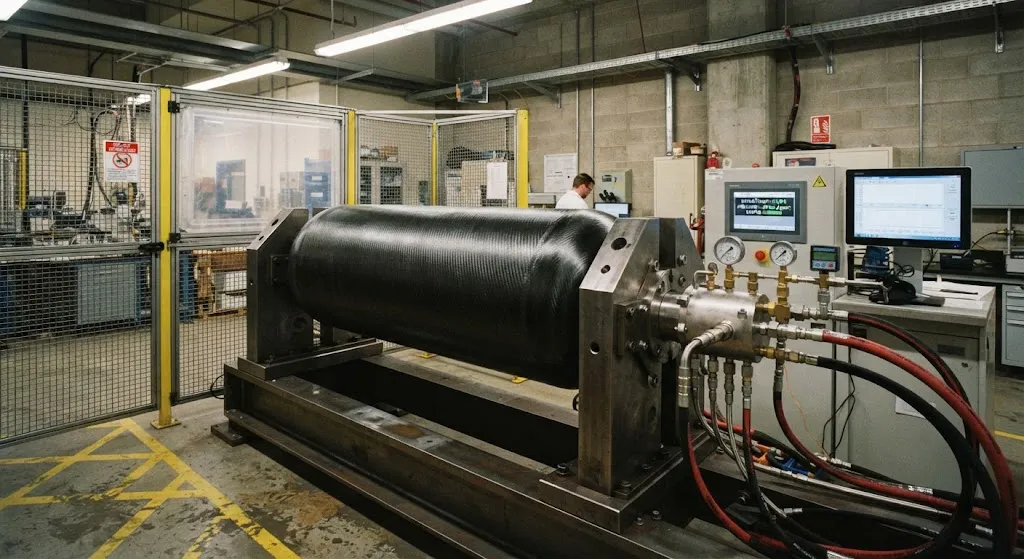
Type IV Hydrogen Tank Fatigue Testing: ISO 11439 Evolution and 300k Cycle Validation
A hydrogen fuel cell vehicle must carry 350 to 700 bar of compressed gas inside a vessel that survives the full service life of the vehicle without a single structural failure, while remaining as light as possible. That combination — extreme pressure, extreme safety consequence, and ext
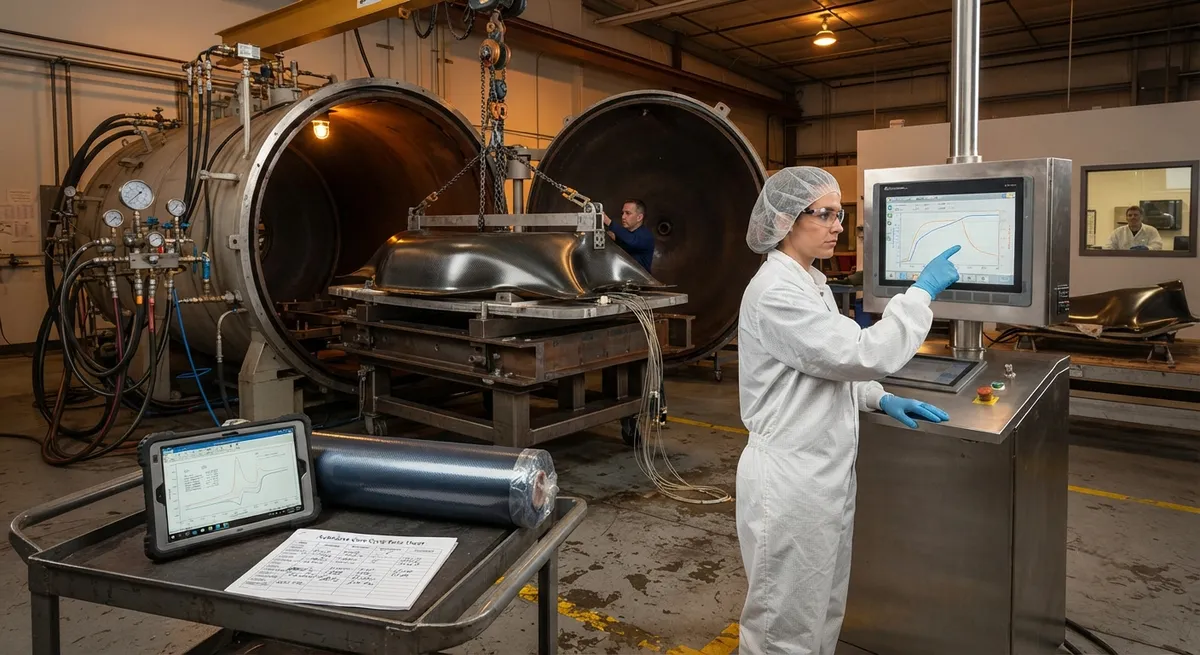
Autoclave Cure Cycle Optimization: Energy Reduction and Throughput Improvement
The autoclave remains the gold standard for producing high-quality carbon fiber composite parts, particularly for aerospace and defense applications where void content below 1% and consistent mechanical properties are non-negotiable. However, autoclave processing is energy-intensive and
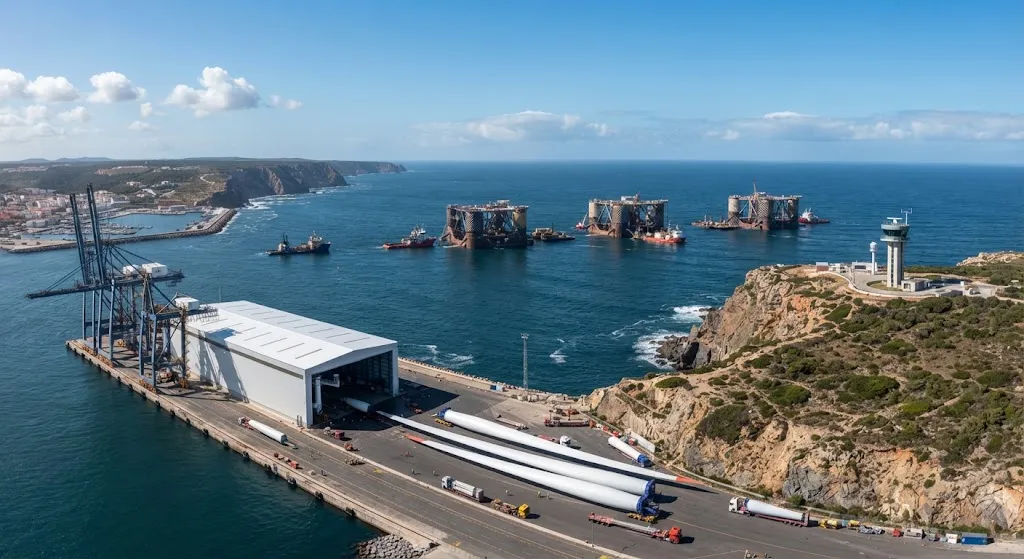
Iberia Peninsula Wind Market: Spain and Portugal Offshore Wind Development
The Iberia Peninsula — Spain and Portugal — is experiencing a wind energy development cycle that will fundamentally reshape European offshore wind geography. While the North Sea has dominated European offshore wind investment for two decades, the Atlantic-facing coasts of Spain and Port