
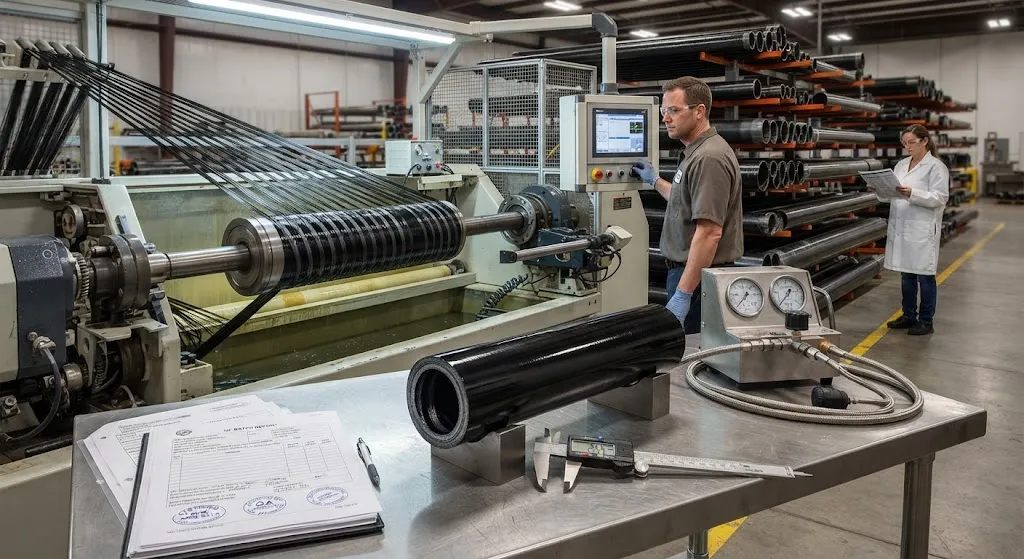
Filament wound epoxy tubes standards exist because a composite pipe is only as trustworthy as the specification it was built to. A filament wound epoxy tube carries pressure, resists corrosion, and often supports its own weight across long spans, so the industry has developed a layered set of norms
Introduction
Filament wound epoxy tubes standards exist because a composite pipe is only as trustworthy as the specification it was built to. A filament wound epoxy tube carries pressure, resists corrosion, and often supports its own weight across long spans, so the industry has developed a layered set of norms — international ISO standards, national ASTM and ASME documents, and application-specific requirements from oil and gas, water, and chemical sectors — that define how these tubes are designed, tested, and documented. Understanding which filament wound epoxy tubes standards apply to a project is the difference between a compliant procurement and a costly field failure.
This article maps the standards landscape for filament wound epoxy tubes, details the FW tube ISO standard and companion norms, explains what an epoxy tube specification must contain, and walks through the composite tube compliance process that buyers should expect from a qualified manufacturer.
Filament Wound Epoxy Tubes Standards: The Norms Landscape
The standards that govern filament wound epoxy tubes fall into three tiers, and a compliant product usually references all three:
- International ISO standards: Define the product classes, design methods, and test procedures for glass-fiber-reinforced and carbon-fiber-reinforced piping systems.
- National standards (ASTM, ASME): Add material test methods, pressure design rules, and installation requirements for the North American market.
- Sector requirements: Oil and gas operators, water utilities, and chemical plants impose additional qualifications, such as fire performance or cyclic-fatigue limits, on top of the base standards.
The most relevant norms for a buyer of epoxy tubes are ISO 14692 for petroleum and natural gas applications, ASTM D2996 for filament-wound reinforced thermosetting resin pipe, ASME B31.3 for process piping, and EN 13923 for filament-wound FRP pressure vessels. A manufacturer that can cite these documents by name and clause is a manufacturer that has done the compliance work.
FW Tube ISO Standard: ISO 14692 and Companion Norms
ISO 14692 is the FW tube ISO standard that matters most for oil and gas service. It is a multi-part document covering materials, design, manufacture, and installation of GRP piping systems, and it is notable for introducing a qualification framework based on design categories rather than a single pressure rating. The design temperature and pressure, the fluid service, and the cyclic loading profile determine the required pipe class, and each class carries its own testing and inspection requirements.
| Standard | Scope | Key Requirement |
|---|---|---|
| ISO 14692 | GRP piping for petroleum and natural gas | Design categories, hydrostatic and cyclic qualification |
| ASTM D2996 | Filament-wound thermosetting resin pipe | Standard specification with burst, stiffness, and liner tests |
| ASME B31.3 | Process piping | Pressure design and materials for chemical plants |
| EN 13923 | Filament-wound FRP pressure vessels | Design by winding pattern, proof and cyclic testing |
| ASTM D2992 | Hydrostatic design basis for FRP pipe | Long-term regression testing at elevated temperature |
For a carbon fiber or hybrid tube, the same framework applies, but the manufacturer must also validate the higher modulus and lower strain-to-failure against the design basis. The filament winding process — winding angle, tension, and resin content — is the single largest source of property variation, which is why the standards insist on traceable process records rather than relying on material data sheets alone.
Epoxy Tube Specification: What a Compliant Document Must Contain
An epoxy tube specification is the contract between buyer and manufacturer, and it should contain far more than an outer diameter and a pressure rating. A complete specification covers the following:
- Geometry and tolerances: Outer and inner diameter, wall thickness, length, straightness, and ovality limits.
- Material system: Fiber type and grade, resin system and glass transition temperature, fiber volume fraction, and liner requirements if any.
- Winding parameters: Helical winding angle, hoop-to-helical layer ratio, and cure cycle, which together set the axial-to-hoop strength ratio.
- Pressure and temperature envelope: Design pressure, design temperature, and the cyclic or sustained loading profile from the applicable standard.
- Testing requirements: Burst pressure, hydrostatic proof, stiffness, and any non-destructive examination the application demands.
- Quality records: Batch traceability, cure data, test certificates, and a declaration of conformity to the cited standards.
Buyers should treat any specification that omits the winding angle or the glass transition temperature with suspicion, because those two numbers control whether the tube will hold its rating at operating temperature and under directional loading.
Composite Tube Compliance: Testing, Certification, and Documentation
Composite tube compliance is demonstrated through a defined sequence of qualification and production testing. Qualification testing — burst pressure, long-term hydrostatic regression, cyclic fatigue, and environmental exposure — is performed once on a representative sample and establishes the design basis. Production testing, in contrast, is performed on every batch or every tube, depending on the standard and the service class, and typically includes dimensional checks, a proof pressure test, and verification of the cure state.
Documentation is where many procurements fail. A compliant supplier delivers a complete file for each tube: the batch record linking raw material lots to the finished part, the cure cycle trace, the hydrostatic test report, and a certificate of conformity naming the standards and clauses met. For oil and gas and chemical projects, this file is often a contractual deliverable, and a gap in it can delay commissioning even when the hardware is sound.
Independent third-party verification closes the loop. Many operators require that qualification testing be witnessed or witnessed by an accredited body, and that the manufacturing facility hold a quality system certification such as ISO 9001. A filament wound epoxy tube that has been designed to the standard, tested to the standard, and documented to the standard is a product whose behavior is predictable — and predictability is the entire point of standards.
Frequently Asked Questions
Which filament wound epoxy tubes standards apply to my project?
The answer depends on the industry and service. For oil and gas piping, ISO 14692 is the governing FW tube ISO standard, often supplemented by ASME B31.3 for the piping system. For general industrial and water service, ASTM D2996 and ASTM D2992 cover the specification and the long-term hydrostatic design basis. Pressure vessels built by filament winding are covered by EN 13923. When in doubt, ask the manufacturer which standards they design and test to, and request the specific clauses in writing.
What is the difference between hoop and helical winding in a composite tube?
Hoop windings are laid at near-90 degrees to the tube axis and carry the circumferential stress from internal pressure. Helical windings are laid at a lower angle, typically 45-65 degrees, and provide axial strength and stiffness. The ratio between the two layers sets the tube's behavior under combined pressure and axial load: a higher helical content increases axial capacity and bending resistance but reduces the maximum hoop stress the tube can sustain. The winding schedule in the specification must therefore match the actual load case, not a generic catalog value.
How is a filament wound epoxy tube qualified for pressure service?
Qualification starts with burst testing of representative samples to establish the short-term strength, followed by long-term hydrostatic regression testing per ASTM D2992 or the equivalent ISO method, which extrapolates the 50-year design basis from elevated-temperature tests. Cyclic fatigue testing covers pressure fluctuations, and environmental testing verifies resistance to the actual fluid. The results feed a design category per ISO 14692 or a design factor per the applicable national standard, and the qualified design is then locked by production testing on every manufactured tube.
Conclusion
Filament wound epoxy tubes standards turn an engineered product into a predictable one. The FW tube ISO standard, national ASTM and ASME norms, and sector requirements define how these tubes are designed, tested, and documented, and an epoxy tube specification that captures geometry, material, winding schedule, and quality records protects both buyer and manufacturer. For engineers, the practical result is a procurement that can be verified, audited, and defended — and a tube that performs as specified for decades.
When you need filament wound epoxy tubes built to a recognized standard, review our composite tube and pipe capabilities or contact our engineering team with your design pressure, temperature, and service fluid, and we will map the applicable standards and qualification plan for your project.
Related Articles
- Carbon Fibre Sheet Supplier UK: Sourcing Options and Specification Checklist
- Carbon Fiber Sheets Near Me Suppliers: Local Stock vs Factory Direct
- Carbon Fiber Dealers Near Me: What a Good Dealer Actually Adds
- Carbon Fiber Supplies Near Me: Local Sourcing Without Compromising Spec
- Carbon Fiber for Sale: Online Platforms and Direct Sales Channel Comparison
- Carbon Fibre Suppliers UK: Post-Brexit Supply Chain Reorganization
Interested in Custom Carbon Fiber Products?
Contact our team for competitive pricing and technical specifications.
Get a QuoteRelated Products
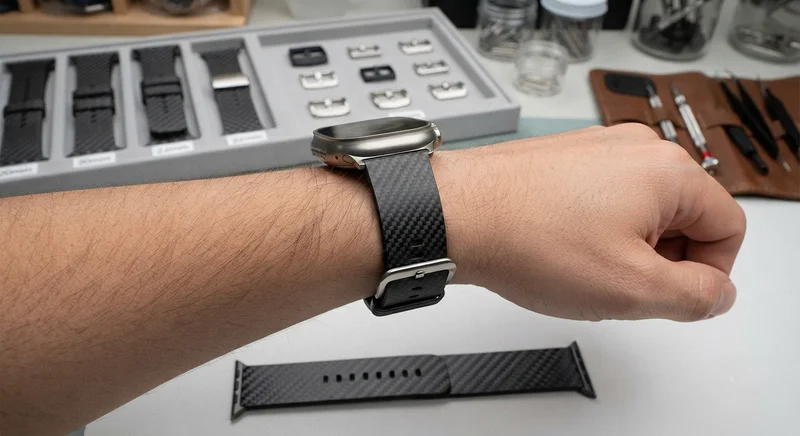
Carbon Fiber Watch Strap — 20mm/22mm Quick-Release
Premium carbon fiber watch strap with quick-release spring bars. Woven from T700 3K twill prepreg with a flexible resin system that conforms to the wrist. Available in 20mm and 22mm lug widths, compatible with Apple Watch, Samsung Galaxy Watch, Garmin, and traditional mechanical watches. Features a stainless steel buckle and carbon fiber keepers. The natural weave pattern makes each strap unique.
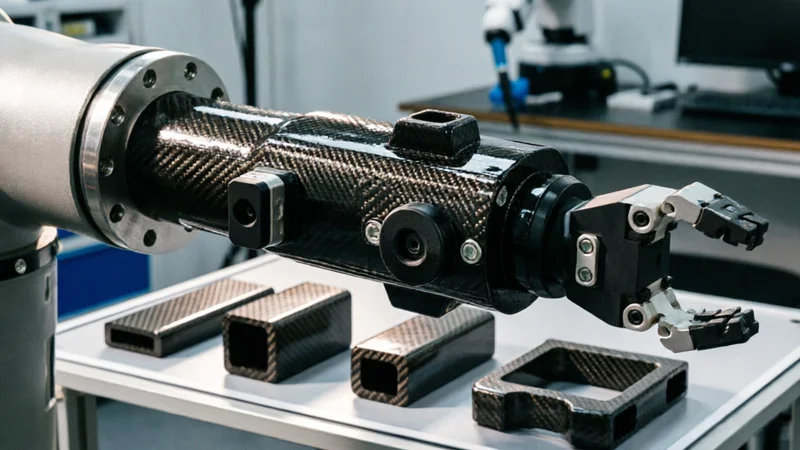
Carbon Fiber Robot End Effector Link — Custom Shape & Sensor Integration
Custom-shaped carbon fiber end effector links for robotic arms. Designed for automation integrators and research labs requiring lightweight, rigid connections between the robot wrist and gripper/tool. Can incorporate sensor mounting bosses, cable routing channels, and quick-change interfaces.

Custom Carbon Fiber Musical Instrument Parts
Carbon fiber components for musical instrument manufacturing offering superior dimensional stability, low weight, and consistent acoustic properties. We produce carbon fiber bows, guitar necks, violin chin rests, drum shells, and wind instrument bodies. Carbon fiber instruments are immune to humidity changes and temperature fluctuations that affect wooden instruments.
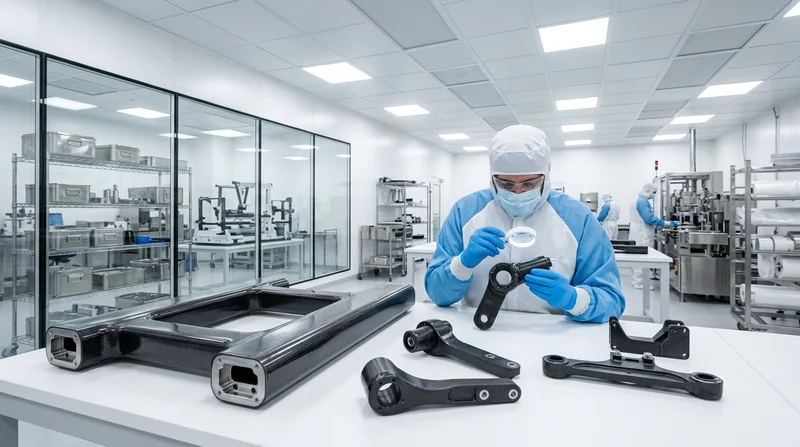
Custom Carbon Fiber Medical Device Components
Medical-grade carbon fiber components manufactured for imaging equipment, surgical instruments, and patient support systems. Carbon fiber's radiolucency (X-ray transparency) and high strength-to-weight ratio make it ideal for CT scanner beds, wheelchair frames, surgical robot arms, and MRI-compatible accessories. Biocompatible resin systems available.
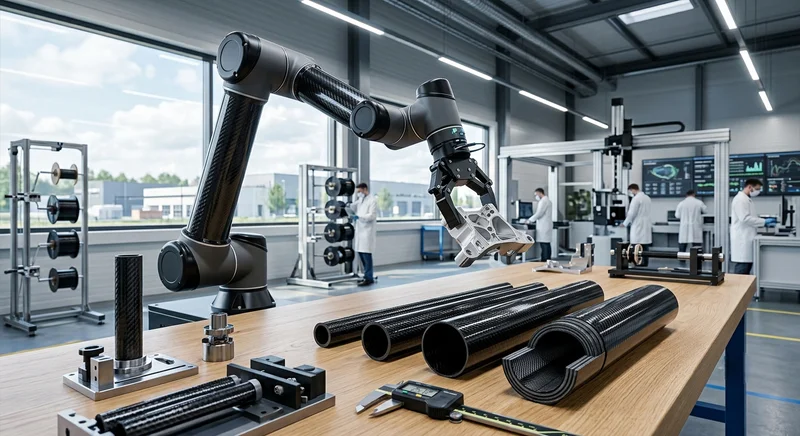
Carbon Fiber Robotic Arm Tube — High-Stiffness Lightweight Replacement
Precision-wound carbon fiber tubes for robotic arm links, replacing steel or aluminum in collaborative robots (cobots) and industrial manipulators. Achieve 3× the specific stiffness of aluminum with significant weight reduction, enabling faster acceleration and higher payload capacity.