
A carbon fiber composite resin mill is the plant where solid resin is made and reduced to a usable form — flake, granulate or powder — before a fabricator turns it into prepreg, molding compound or a coated tow. Buyers often treat the mill as a commodity link in the chain, then discover that particl
Introduction
A carbon fiber composite resin mill is the plant where solid resin is made and reduced to a usable form — flake, granulate or powder — before a fabricator turns it into prepreg, molding compound or a coated tow. Buyers often treat the mill as a commodity link in the chain, then discover that particle size distribution and heat history decide whether the powder coats evenly or scorches on the roll. This guide sets out how to qualify one.
Qualification is mostly a matter of matching claims to evidence. A mill can be excellent without expensive certifications, and it can be weak while holding a certificate that covers only warehousing, so the audit has to look at the process itself.
Carbon Fiber Composite Resin Mill: What the Plant Actually Does
Solid epoxy arrives as flake with a defined softening point, usually between 80 and 120 degrees, and the mill grinds it to a target particle size. For powder coating and tow prepreg, a median particle size around 20 to 40 micrometres is common, with a narrow span between the tenth and ninetieth percentile. Grinding generates heat, and too much heat raises the softening point through partial advance of the resin, which then flows differently in your process even though the certificate still reads correctly.
So the first questions are mechanical: what mill type, what cooling, what classification, and how is particle size verified? A plant that answers with a sieve number only is describing a coarse check. Laser diffraction gives a full distribution curve, and a serious mill runs it on every batch or at least every few batches per grade.
| Supplier claim | Evidence that supports it | Weight |
|---|---|---|
| Consistent particle size | Laser diffraction curves for three lots, with span values | High |
| Controlled heat history | Grinding outlet temperature log and softening point per lot | High |
| Certified quality system | Certificate plus audit scope naming the resin line | Medium |
| Aerospace or automotive approval | Customer approvals and process audit reports, not a logo | High |
| Large capacity | Reactor list, utility capacity, and current committed load | Medium |
Weigh evidence rather than count certificates. One temperature log with real variation is worth more than three logos, because it shows the mill measures what it controls.
Carbon Fiber Composite Resin Supplier Mill versus Trader
Much of the resin sold online never touches the seller's equipment. Distinguishing a mill from a trader takes three questions and one document check.
- Who owns the reactor? Ask for the reactor number and the batch record header; a trader cannot produce either for a grade it did not make.
- Is the batch record sequential? Gaps in numbering usually mean toll manufacturing at a third site, which is acceptable only if that site is named and audited.
- Does the certificate change with the lot? Reused certificate numbers across shipments are the clearest sign of repackaging.
- Can they grind to your specification? A trader can forward the request, but only a mill can tell you the achievable span and the yield loss.
Toll manufacturing is normal in this industry and not a defect. The defect is hiding it, because the qualification you performed then applies to the wrong building.
Carbon Fiber Composite Resin Production: Permits, Dust and Emissions
Powder resin is a combustible dust, and grinding it concentrates the hazard. A mill that handles this well will show you its dust hazard analysis, its extraction and grounding scheme, and its housekeeping routine without being asked. If the answers are vague, the risk is not theoretical: a primary explosion in a mill room has lifted secondary dust throughout a plant.
Solvent use matters for solvent-borne grades. Ask about recovery or abatement, the permitted volatile organic compound limit, and the last inspection result. For water-based and solvent-free grades the questions shift to wastewater and solid waste, but the principle is the same: permits should match the process actually running, not the process described in the sales deck.
Environmental management certification helps, but read the scope and the date. A certificate issued for an older building, before a new grinding line was installed, tells you little about the line you are buying from.
Continuity: The Checks Buyers Skip
A qualified mill that stops shipping is worse than an unqualified one, because you have already built your process around its material. Four continuity checks belong in every qualification file.
| Check | What to ask for | Why it matters |
|---|---|---|
| Utilization | Committed load as a share of usable capacity | Above roughly 85 percent, your allocation is at risk |
| Single point of failure | Number of reactors and mills per grade | One mill means one breakdown from a stop |
| Raw material cover | Weeks of inventory and named suppliers | Epoxy feedstock tightness hits small buyers first |
| Second site | Any qualified alternate plant | Fire, flood or permit action has no substitute |
Ask also for the last two years of delivery performance, not a promise. On-time-in-full percentage by month reveals more about a mill than any statement about customer focus.
Auditing the Mill Without a Big Team
A two-person audit is enough if it is structured. Spend the first hour on documents: batch records, particle size data, deviation log, and the permit file. Spend the second hour on the floor, following one batch from raw material to packed pallet and asking the operator what happens when a test fails. The third hour belongs to the retained samples, because a mill that cannot find last year's sample cannot investigate a complaint.
Close the audit with a written specification attached to the purchase order: median particle size and span, softening point range, moisture limit, packaging, and the certificate requirements per lot. A specification that lives only in email is not a control.
Frequently Asked Questions
Does a resin mill only sell powder?
No. Many mills sell flake, granulate and powder from the same reactor, and some also compound with hardener or toughener. The process step changes the equipment and the qualification, so confirm which form you are buying and which line produced it.
How should I verify particle size?
Request laser diffraction data for three lots, with the tenth, fiftieth and ninetieth percentile and the span. Then confirm by running your own dispersion trial. A sieve result alone hides the fine fraction, and the fine fraction is what causes dusting and inconsistent film weight.
What are the red flags in a mill audit?
No reactor on site, batch numbers that do not sequence, one certificate reused across shipments, no retained samples older than a few months, and a dust hazard analysis nobody can locate. Any one of these deserves an explanation; two together should end the qualification.
Conclusion
Qualifying a carbon fiber composite resin mill comes down to matching claims with process evidence: reactor ownership, particle size control, heat history, permits and continuity. Do that before the first order and the material you receive will behave the way the certificate says it will.
YongXian operates carbon fiber composite resin production with documented grinding control, retained samples and lot-level certificates. Browse our composite materials or send your particle size and softening point specification for a quotation.
Related Articles
- Carbon Fiber Composite Mold Maker: Tooling for OEM Programs
- Carbon Fiber Composite Hardener Supplier: Curing Agents for Epoxy Systems
- Carbon Fiber Composite Resin Manufacturer: Capacity, Chemistry and Scale-Up
- Carbon Fiber Composite Resin Supplier: Epoxy, Hardeners and Supply Terms
- Carbon Fiber Sheets in South Africa: Import and Stock Guide
- How Much Is Carbon Fiber Fabric: Price per Square Meter
Interested in Our Products?
Contact our team for competitive pricing and technical specifications.
Get a QuoteRelated Products

Custom Carbon Fiber Bicycle Frame
Full-custom carbon fiber bicycle frame manufactured to your geometry specifications. We produce road, gravel, mountain, and track frames using high-modulus carbon fiber layups optimized for each riding discipline. Monocoque construction with internal cable routing, available with disc or rim brake mounts.

Round Carbon Fiber Tube — 3K Plain Weave T700
Standard round carbon fiber tube manufactured from Toray T700 grade fiber with 3K plain weave. Offers balanced strength and stiffness for general industrial applications including robotics, automation, sports equipment, and aerospace structures.

Carbon Fiber Pickleball Paddle
High-performance pickleball paddle with Toray T700 carbon fiber face and polypropylene honeycomb core. Delivers excellent power-to-weight ratio, spin generation, and vibration dampening for competitive play.

Carbon Fiber Plate — 3K Twill T700 3.0mm
Medium-thickness 3.0mm carbon fiber plate offering significantly higher load capacity while maintaining attractive 3K twill finish. Suitable for structural brackets, reinforcement plates, and load-bearing panels.
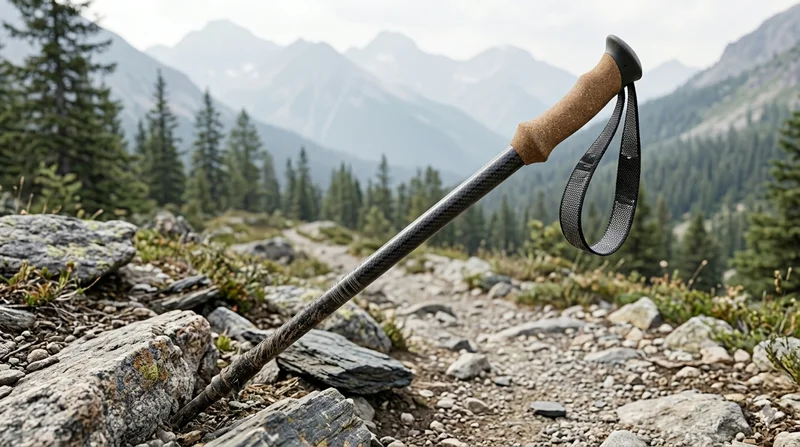
Carbon Fiber Trekking Pole
Lightweight carbon fiber trekking pole manufactured from high-grade carbon fiber tube. Weighs only 160g per pole while providing superior shock absorption and durability for hiking, trail running, and backpacking.