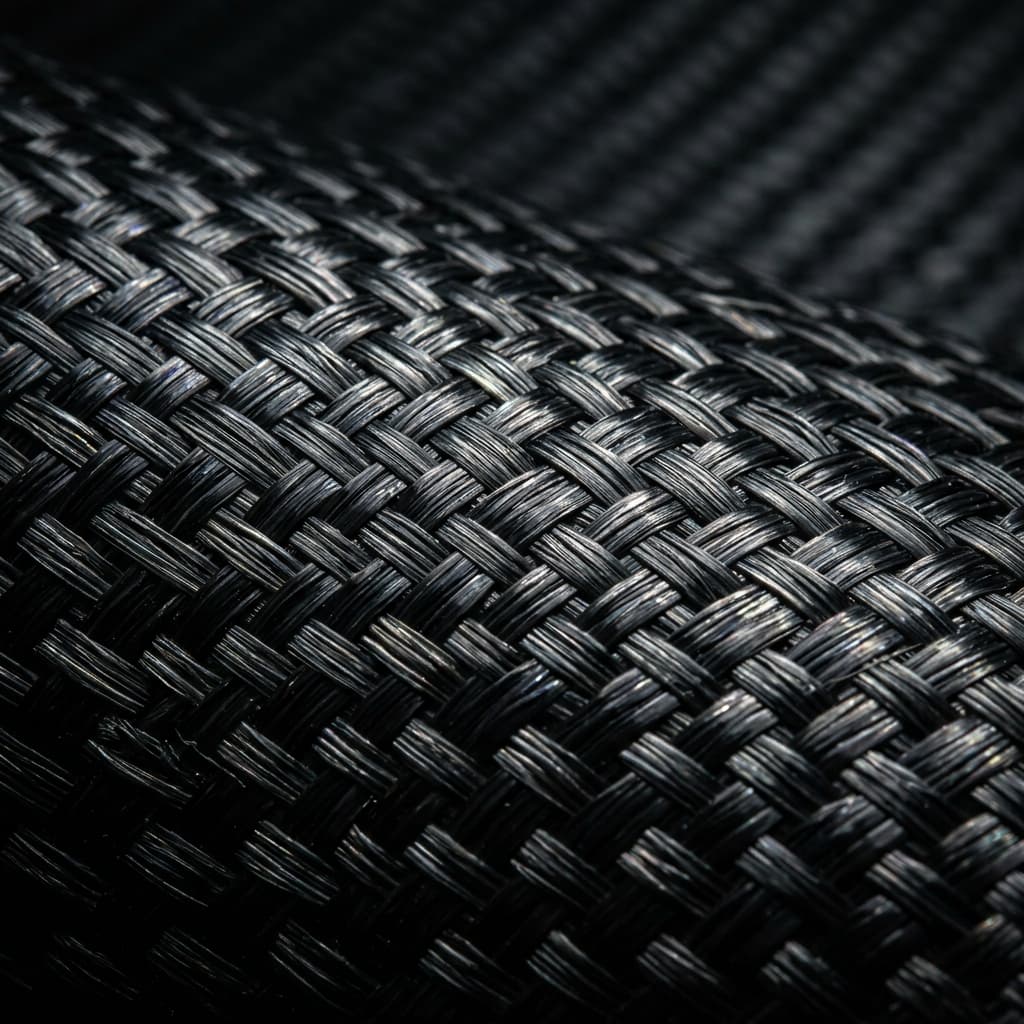
A carbon fiber composite resin manufacturer is judged on one number that never appears on a datasheet: how much of the promised grade it can actually deliver, month after month, at the same epoxy equivalent weight. Nameplate capacity and usable capacity are different things, and the gap between them
Introduction
A carbon fiber composite resin manufacturer is judged on one number that never appears on a datasheet: how much of the promised grade it can actually deliver, month after month, at the same epoxy equivalent weight. Nameplate capacity and usable capacity are different things, and the gap between them is where delivery promises go to die. This guide explains how to read a plant's real capacity and how to secure it.
The same logic applies whether you buy a tonne a year of aerospace epoxy or a hundred tonnes of infusion resin: understand the reactor, the changeover penalty and the quality records before you sign a supply agreement.
Carbon Fiber Composite Resin Manufacturer: How Capacity Is Really Measured
Nameplate capacity is arithmetic: reactor volume multiplied by batch yield, batches per day and operating days. A 20 cubic metre reactor making a 12 tonne batch twice a day for 300 days gives 7,200 tonnes a year on paper. Usable capacity is lower, because every grade change costs four to eight hours of cleaning, filtration and first-batch testing, and packing lines often run slower than reactors.
Ask for four figures: number of reactors and their volumes, typical batch size per grade, changeover time between grades, and the share of capacity already committed to contract customers. A manufacturer who can quote all four is managing a plant; one who quotes only the annual total is quoting a brochure.
| Plant tier | Typical reactor and batch | Lead time | Best fit | Main risk |
|---|---|---|---|---|
| Pilot and speciality | 0.5-5 cubic metres, 200-2,000 kg | 6-12 weeks | Development, aerospace small volume | Little redundancy if one reactor stops |
| Mid-size | 5-20 cubic metres, 5-12 tonnes | 4-8 weeks | Structural laminates, automotive tier two | Changeover scheduling in busy quarters |
| Large | 20-40 cubic metres, semi-continuous | 8-14 weeks | Commodity infusion, pipe, wind | Minimum order thresholds, grade rigidity |
| Integrated | Resin, hardener and prepreg trains | 6-10 weeks | One-stop qualification | Narrower hardener choice |
Note that resin capacity and hardener capacity are separate. A plant able to polymerize 30,000 tonnes of epoxy a year may blend only 2,000 tonnes of custom hardener, and your order can be blocked by the smaller line. Ask which line your grade actually runs on.
Reactor Trains and Batch Size: Why Scale-Up Changes the Product
A formulation qualified in a 500 kg pilot reactor does not automatically behave in a 12 tonne batch. Heat removal scales with surface area while reaction heat scales with volume, so a larger batch runs hotter, and the epoxy equivalent weight distribution can shift. Good manufacturers re-qualify at each scale with three consecutive batches and a full property panel before they release commercial volume.
Batch size also sets your minimum order. If the smallest economic batch on the line is 8 tonnes and you need 2 tonnes, you will either pay for the difference or be moved to a smaller reactor with longer scheduling. Neither is dishonest, but both should be visible in the quotation rather than discovered at the first delivery.
Carbon Fiber Composite Resin US Manufacturer: Audit Points That Matter
A plant audit is not a certificate check. Walk the floor and ask for records that a good manufacturer keeps without being prompted.
- Incoming raw material records for epichlorohydrin, bisphenol A and hardener amines, with supplier lot numbers that link forward to finished batches.
- Reaction logs showing temperature profile, vacuum, addition rate and the actual endpoint, not a reconstructed summary.
- Control charts for epoxy equivalent weight and viscosity, because a chart with real variation tells you more than a certificate with perfect numbers.
- Retained samples held for at least 24 months, so a field failure two years later can still be investigated.
- Deviation and corrective action records, including the ones that were closed, since how a plant handles a bad batch predicts your next year.
Certification status matters, but read the scope. ISO 9001 covering blending and warehousing says nothing about reactor control. IATF 16949 or AS9100D with the resin line inside the scope is a much stronger signal, and the audit report should name the process, not just the site.
Quality Control That Proves Lot Consistency
Four measurements carry most of the weight, and each one maps to a failure your process will feel.
| Test | Method | Typical release window | What a drift causes |
|---|---|---|---|
| Epoxy equivalent weight | ASTM D1652 | Plus or minus 5 grams per equivalent | Wrong hardener weight, undercure |
| Viscosity at 25 degrees | ASTM D2196 | Within 15 percent of nominal | Poor wet-out, dry spots in infusion |
| Gel time at set mass | ASTM D2471 | Declared window at 25 degrees | Short pot life, scrap in the mixing room |
| Amine value of hardener | ASTM D2074 | Plus or minus 3 percent | Off-ratio mix that still looks cured |
Ask how often the manufacturer runs a full panel versus a reduced release test. A reduced panel every batch with a full panel quarterly is normal and acceptable, provided the retained samples exist. What is not acceptable is a certificate copied forward from an earlier lot with only the date changed.
Scale-Up, Lead Time and Capacity Booking
Capacity is not bought at the moment of the purchase order. In a tight epoxy market it is booked six to twelve months ahead with a rolling forecast and a minimum take-or-pay volume. In a soft market the same agreement costs you flexibility. Either way, the conversation should cover four items: annual volume by grade, a six-month rolling forecast, safety stock held at the plant, and a second qualified site.
Lead time then splits into three parts: raw material availability, scheduling slot, and quality release. Raw materials are the volatile one, since bisphenol A and epichlorohydrin prices move with energy and plant outages. A manufacturer who tracks its own supplier contracts and tells you the exposure honestly is easier to plan around than one who promises a fixed price for a year.
Frequently Asked Questions
What annual volume justifies a dedicated production batch?
Roughly 5 to 10 tonnes per grade per year on a mid-size line. Below that, the cleaning and first-batch testing cost dominates and you are better served by a standard grade or a smaller reactor. Above it, a dedicated batch schedule usually pays for itself within two or three campaigns.
How long does first article qualification take?
Eight to twelve weeks is realistic: three consecutive lots, full property testing, a neat resin cast, and laminate trials at your shop. Compressing it to four weeks usually means skipping the third lot, which removes the only evidence that the process is repeatable rather than lucky.
Can a manufacturer match another supplier's resin?
Usually yes, if you provide the technical datasheet, a certificate of analysis, and a cured neat resin sample for thermal analysis. Expect two or three iterations and a final side-by-side laminate test. Reverse engineering a formulation without the sample is guesswork, and the first difference you notice will be in fracture toughness.
Conclusion
Choosing a carbon fiber composite resin manufacturer is a capacity decision as much as a chemistry decision. Read the reactor list, the changeover penalty and the control charts, book capacity with a rolling forecast, and keep a second qualified site. The chemistry can be copied; the discipline behind a repeatable batch cannot.
YongXian operates carbon fiber composite resin manufacturing with documented batch control, retained samples and export-ready certificates. Browse our composite materials or share your annual volume and cure schedule for a capacity quotation.
Part of topic
Related Articles
- Carbon Fiber Composite Mold Maker: Tooling for OEM Programs
- Carbon Fiber Composite Hardener Supplier: Curing Agents for Epoxy Systems
- Carbon Fiber Composite Resin Mill: A Buyer Qualification Guide
- Carbon Fiber Composite Resin Supplier: Epoxy, Hardeners and Supply Terms
- Carbon Fiber Sheets in South Africa: Import and Stock Guide
- How Much Is Carbon Fiber Fabric: Price per Square Meter
Interested in Our Products?
Contact our team for competitive pricing and technical specifications.
Get a QuoteRelated Products

Custom Carbon Fiber Bicycle Frame
Full-custom carbon fiber bicycle frame manufactured to your geometry specifications. We produce road, gravel, mountain, and track frames using high-modulus carbon fiber layups optimized for each riding discipline. Monocoque construction with internal cable routing, available with disc or rim brake mounts.
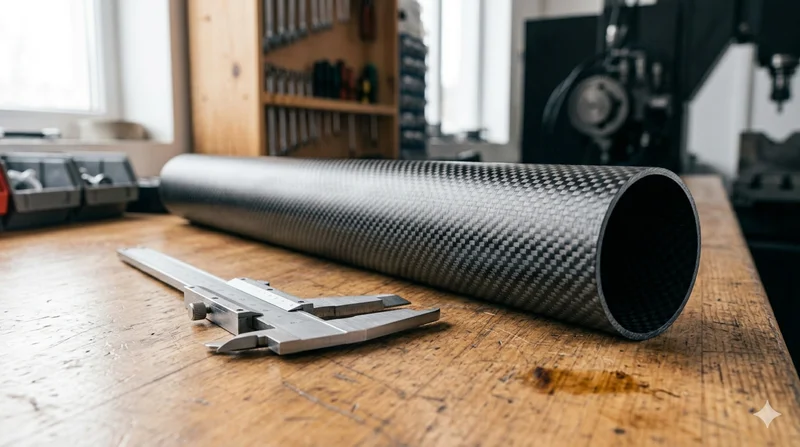
Round Carbon Fiber Tube — 3K Plain Weave T700
Standard round carbon fiber tube manufactured from Toray T700 grade fiber with 3K plain weave. Offers balanced strength and stiffness for general industrial applications including robotics, automation, sports equipment, and aerospace structures.
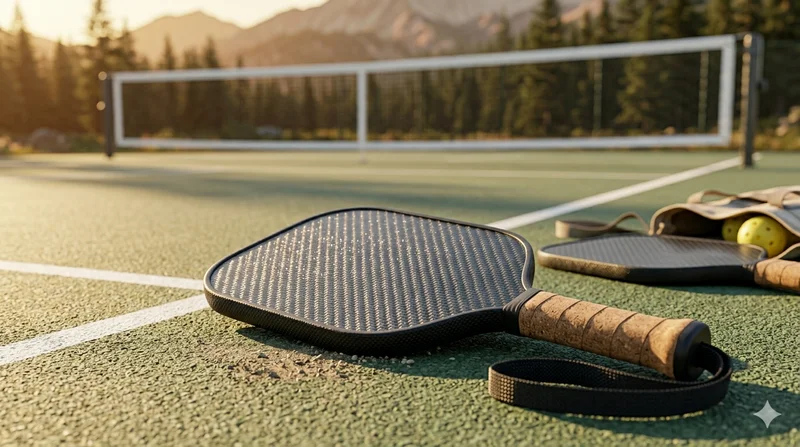
Carbon Fiber Pickleball Paddle
High-performance pickleball paddle with Toray T700 carbon fiber face and polypropylene honeycomb core. Delivers excellent power-to-weight ratio, spin generation, and vibration dampening for competitive play.
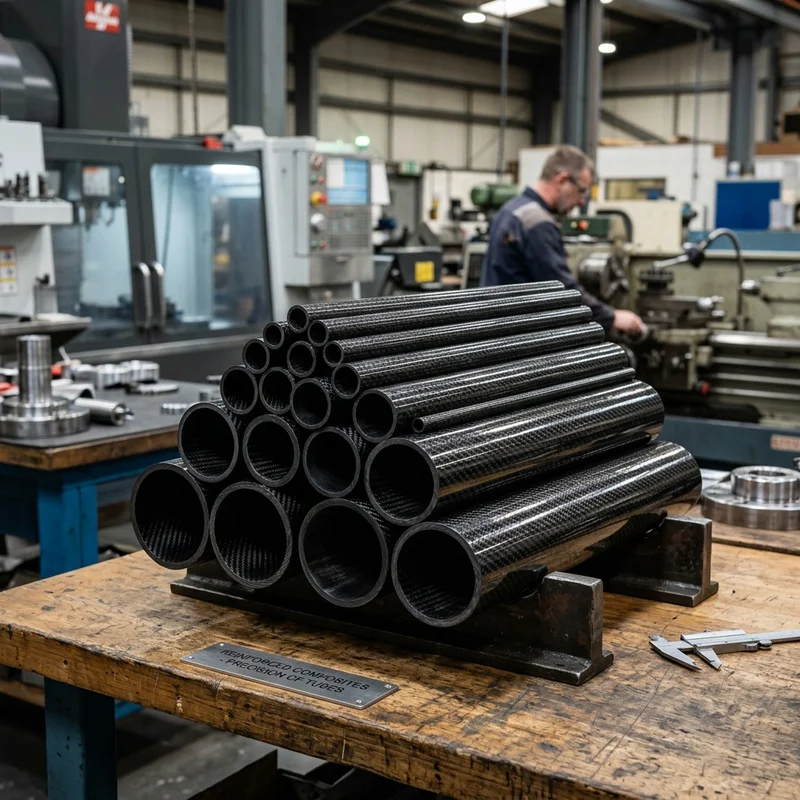
Round Carbon Fiber Tube — 3K Twill
Lightweight and ultra-stiff round tubes ideal for drone frames, robotics, and structural applications.
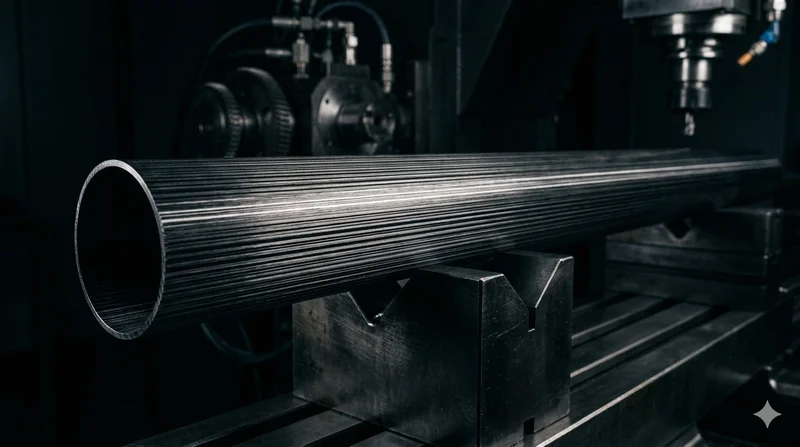
Round Carbon Fiber Tube — UD Unidirectional T700
Unidirectional (UD) round tube with all fibers aligned axially for maximum longitudinal stiffness. Ideal for applications requiring high bending rigidity with minimal weight, such as shafts, struts, and structural reinforcements.