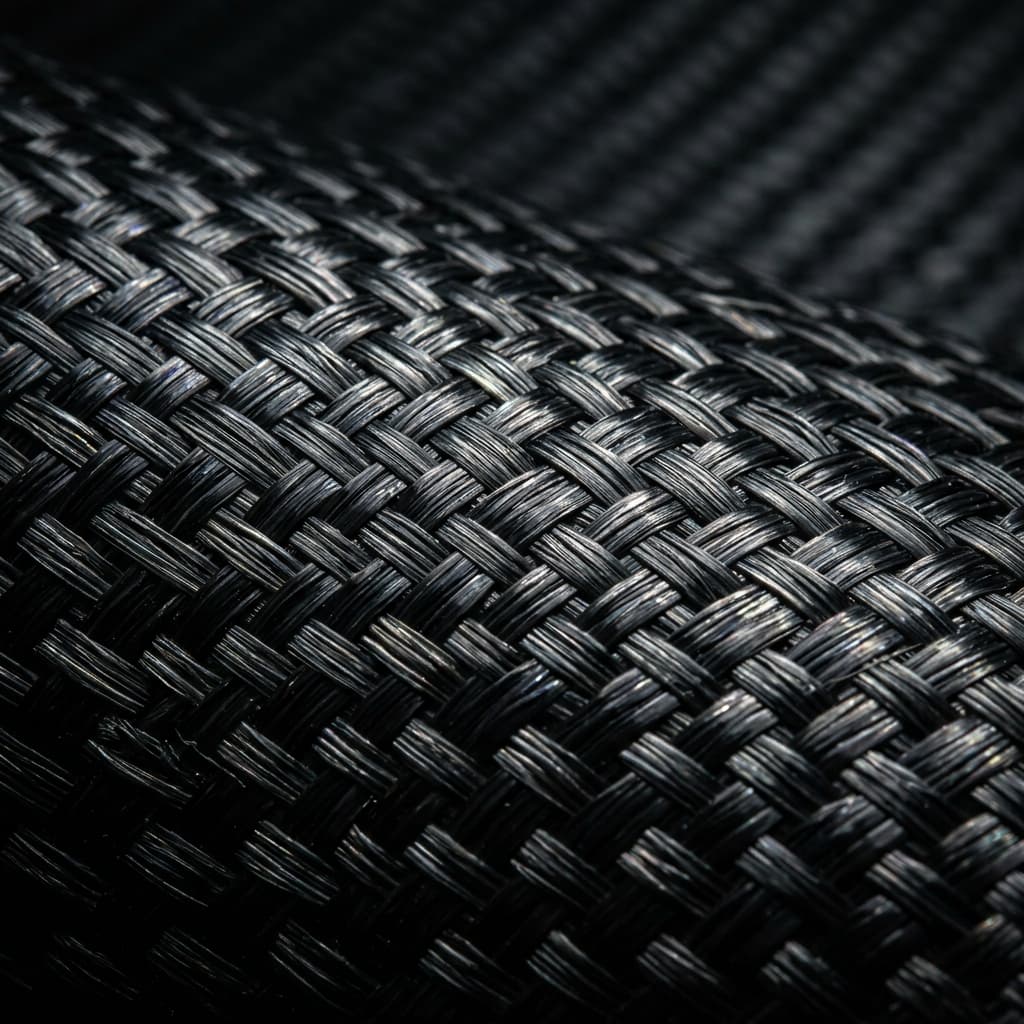
A carbon fiber composite hardener supplier decides more about your laminate than the carbon fiber itself. The same epoxy backbone cured with the wrong amine ratio can drop its glass transition by 40 degrees Celsius, and no incoming certificate will flag the problem until parts start to creep in serv
Introduction
A carbon fiber composite hardener supplier decides more about your laminate than the carbon fiber itself. The same epoxy backbone cured with the wrong amine ratio can drop its glass transition by 40 degrees Celsius, and no incoming certificate will flag the problem until parts start to creep in service. This guide explains what curing agents actually do, how to tell a formulator from a repackager, and which numbers to demand before the first pail arrives.
It also covers the paperwork, packaging and ordering terms that matter in production, so procurement and the shop floor are reading the same specification.
Curing Agent Chemistry: Amines, Anhydrides and Phenolics
Hardeners fall into three broad families. Aliphatic polyamines such as triethylenetetramine cure fast at room temperature with a short pot life and a moderate glass transition of 60 to 80 degrees Celsius. Aromatic amines such as diaminodiphenyl sulfone need heat, give longer working times, and reach 150 to 180 degrees. Anhydrides such as methyl tetrahydrophthalic anhydride cure with low shrinkage and high electrical resistance but demand careful stoichiometry and often a catalyst. Phenolic hardeners release water during cure and are chosen for fire performance rather than toughness.
The supplier must publish the equivalent weight of the hardener and the epoxy equivalent of the resin so the mix ratio can be calculated, not guessed. A ratio off by five percent shifts the crosslink density enough to move the glass transition by 15 to 25 degrees.
| Hardener family | Typical mix ratio | Cure schedule | Best fit | Watch-out |
|---|---|---|---|---|
| Aliphatic polyamine | 100:30 to 100:50 by weight | 24 hours at room temperature | Hand layup, adhesives | Short pot life, amine blush on humid days |
| Aromatic amine (DDS) | 100:26 to 100:33 | 120 degrees for 2 hours, then 180 degrees post-cure | Structural aerospace parts | Needs heat, slow room-temperature gel |
| Anhydride (MTHPA) | 100:80 to 100:110 | 120 degrees for 1 hour, then 160 degrees | Electrical potting, large tools | Moisture sensitivity, catalyst required |
| Phenolic | Resin to hardener by formulation | 150 degrees under pressure | Rail and interior panels | Water released, dark cured color |
| Latent (dicyandiamide) | 100:4 to 100:8 | Prepreg B-staging at 120 degrees | Prepreg, one-part adhesives | Shelf life depends on storage temperature |
Pick the family from the service temperature and the process, then make the supplier prove the window with measured numbers rather than datasheet adjectives.
What a Carbon Fiber Composite Hardener Supplier Actually Controls
A hardener is not a commodity liquid. Quality lives in four control points that only the producer can document.
- Equivalent weight consistency: a drift of more than 2 grams per equivalent changes the stoichiometric dosage and must be caught on the certificate of analysis.
- Moisture content: anhydrides hydrolyze in storage; water above 0.1 percent consumes cure sites and weakens the network.
- Color and purity: oxidized aromatic amines darken and cure brittle; a color specification is a real acceptance criterion.
- Additive package: accelerators, inhibitors and fillers are part of the product, not optional extras you can ignore between lots.
Ask who polymerized or purified the base material. A carbon fiber composite hardener supplier who owns the synthesis can reformulate for your cure schedule; one who only blends and repackages cannot.
Carbon Fiber Composite Hardener Manufacturer: Formulator or Repackager
The market mixes four roles under one word. A manufacturer runs reactors and controls synthesis. A formulator owns a recipe built on purchased intermediates. A blender adjusts ratios and additives. A repackager splits bulk into pails. When a batch drifts, only the first two can trace the cause.
| Role | Owns | Typical lead time | Right question to ask |
|---|---|---|---|
| Manufacturer | Synthesis and purification | 6 to 10 weeks for custom grades | Which reactor made this lot? |
| Formulator | Recipe and additive package | 4 to 8 weeks | Can you adjust ratio for my cure? |
| Blender | Batching and filtration | 2 to 4 weeks | Who supplied the base amine? |
| Repackager | Only packaging | Days from stock | Can I see the original producer COA? |
A carbon fiber composite hardener manufacturer that also makes the resin shortens the compatibility chain but narrows your choice. Decide which trade you prefer before the trial order.
Qualification Checks for a Carbon Fiber Composite Hardener US Supplier
Run three lots side by side before you approve anyone. Measure what your process feels, not what is easy in a laboratory.
- Mix ratio verification: calculate parts hardener per hundred resin from equivalent weights, then confirm with gel time at production mass.
- Neat resin cast: tensile, flexural and glass transition by DSC on a cast made with the lot you received.
- Moisture check: Karl Fischer titration on anhydride grades, or a closed-container weight check on amines stored over winter.
- Laminate panel: one standard panel per lot, tested for interlaminar shear so the fiber-matrix interface is included in the gate.
Storage matters as much as testing. Keep hardeners sealed, rotate stock first in first out, and record the production date on every drum. A hardener left through a humid summer can fail a specification that it passed at the factory.
Documentation, Packaging and Ordering Terms
Paperwork is part of the product. A drum without a lot-matched certificate is an unverified material.
| Document | What it proves | What to check |
|---|---|---|
| Technical datasheet | Nominal equivalent weight and cure window | Revision date and test method behind each number |
| Certificate of analysis | Measured values for this lot | Lot number matches the pail, not a template |
| Safety datasheet | Hazards and transport class | Current GHS revision and UN number |
| Restricted substance declaration | REACH and RoHS status | Declaration date and list version used |
Packaging drives cost: 5 kg and 20 kg pails suit a development shop, 200 kg drums suit a line, and intermediate bulk containers only pay above roughly 10 tonnes per order. Standard grades usually start near 100 kg with two to four weeks from stock; a custom ratio needs six to ten weeks including qualification. Incoterms, sample policy and residual liability belong in the purchase order, not in an email that nobody files.
Frequently Asked Questions
Can I substitute one hardener for another in the same resin?
No. The mix ratio, cure schedule and glass transition are properties of the resin-hardener pair. Swapping an aliphatic amine for an anhydride changes stoichiometry, reactivity and moisture sensitivity at once. Any substitution needs a new qualification panel and a revised datasheet, not a purchasing decision alone.
What is a reasonable minimum order and lead time?
Stocked standard grades often ship from 100 kg in two to four weeks. Custom equivalent weights or blended packages start near 500 kg and take six to ten weeks because the batch must be made, tested against three lots and released by quality. Quotes in days usually mean repackaged stock.
How do I store hardeners in a humid climate?
Seal drums after every draw, keep nitrogen blanket on anhydride grades if you open them repeatedly, store between 15 and 25 degrees Celsius, and rotate stock so the oldest lot is used first. Record the production date on the label; expiry dates alone hide how long a drum has been sitting in a warehouse.
Conclusion
The right carbon fiber composite hardener supplier sells a controlled chemistry — equivalent weight, moisture limit, additive package and the records that prove lot-to-lot stability — rather than a pail with a ratio printed on the lid. Test three lots, match the hardener family to your cure schedule, and keep every certificate with the batch record.
YongXian supplies carbon fiber composite hardener systems with matched resins, lot-level certificates and export documentation. Browse our composite materials or send your resin, cure schedule and annual volume for a quotation.
Part of topic
Related Articles
- Carbon Fiber Composite Mold Maker: Tooling for OEM Programs
- Carbon Fiber Composite Resin Mill: A Buyer Qualification Guide
- Carbon Fiber Composite Resin Manufacturer: Capacity, Chemistry and Scale-Up
- Carbon Fiber Composite Resin Supplier: Epoxy, Hardeners and Supply Terms
- Carbon Fiber Sheets in South Africa: Import and Stock Guide
- How Much Is Carbon Fiber Fabric: Price per Square Meter
Interested in Our Products?
Contact our team for competitive pricing and technical specifications.
Get a QuoteRelated Products

Custom Carbon Fiber Bicycle Frame
Full-custom carbon fiber bicycle frame manufactured to your geometry specifications. We produce road, gravel, mountain, and track frames using high-modulus carbon fiber layups optimized for each riding discipline. Monocoque construction with internal cable routing, available with disc or rim brake mounts.
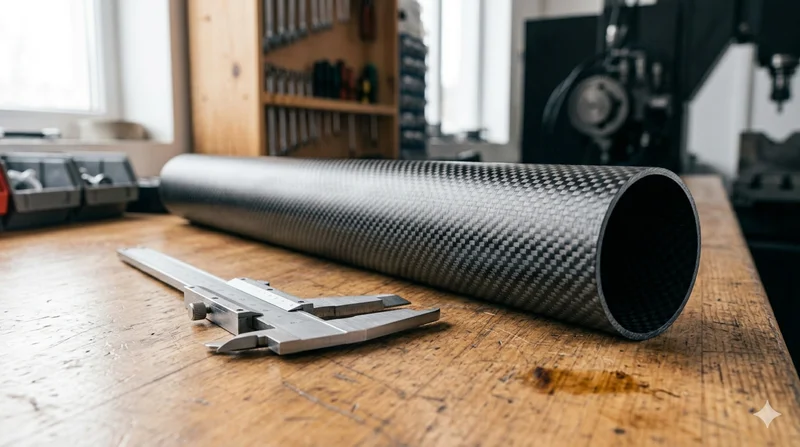
Round Carbon Fiber Tube — 3K Plain Weave T700
Standard round carbon fiber tube manufactured from Toray T700 grade fiber with 3K plain weave. Offers balanced strength and stiffness for general industrial applications including robotics, automation, sports equipment, and aerospace structures.
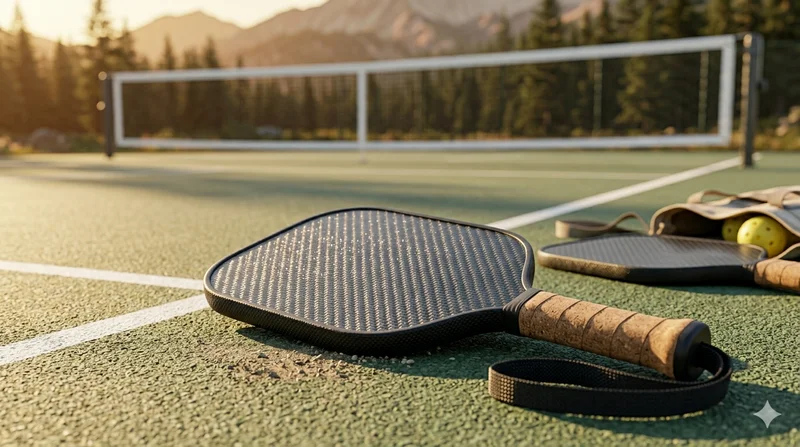
Carbon Fiber Pickleball Paddle
High-performance pickleball paddle with Toray T700 carbon fiber face and polypropylene honeycomb core. Delivers excellent power-to-weight ratio, spin generation, and vibration dampening for competitive play.
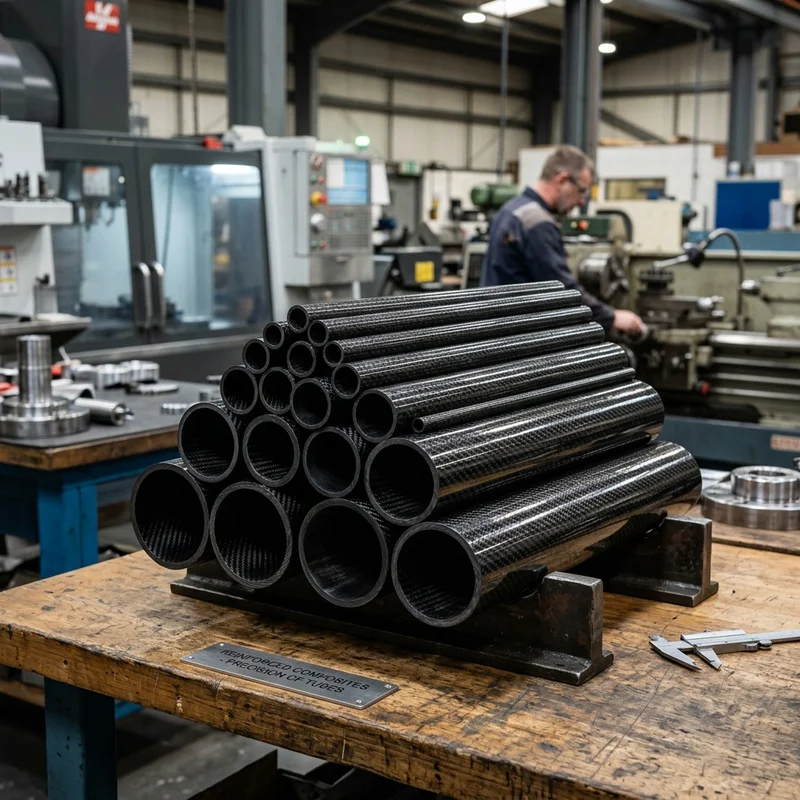
Round Carbon Fiber Tube — 3K Twill
Lightweight and ultra-stiff round tubes ideal for drone frames, robotics, and structural applications.
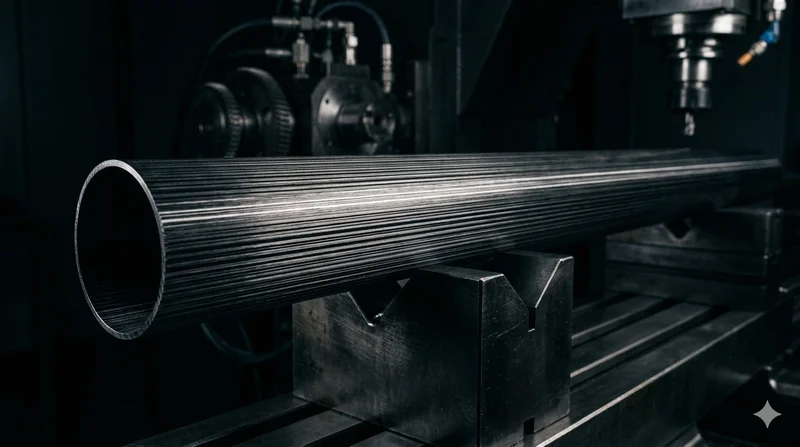
Round Carbon Fiber Tube — UD Unidirectional T700
Unidirectional (UD) round tube with all fibers aligned axially for maximum longitudinal stiffness. Ideal for applications requiring high bending rigidity with minimal weight, such as shafts, struts, and structural reinforcements.