A carbon fiber composite resin supplier is not a chemical warehouse with drums on a shelf. Every laminate inherits the supplier's control over epoxy equivalent weight, hardener stoichiometry and moisture — three variables that decide whether a 2 mm panel cures to a 130 degrees Celsius glass transiti
Introduction
A carbon fiber composite resin supplier is not a chemical warehouse with drums on a shelf. Every laminate inherits the supplier's control over epoxy equivalent weight, hardener stoichiometry and moisture — three variables that decide whether a 2 mm panel cures to a 130 degrees Celsius glass transition or a brittle 95 degrees one. This guide covers what to buy, what to test, and what to put in writing before the first drum arrives.
It also explains the difference between a formulator who owns the recipe and a repackager who buys finished resin, because that difference shows up in lot consistency long before it shows up on an invoice.
Carbon Fiber Composite Resin Supplier: What You Are Actually Buying
Two-part epoxy is sold as resin plus hardener, but performance lives in the pair. A standard liquid diglycidyl ether of bisphenol A has an epoxy equivalent weight of 180 to 190 grams per equivalent and a viscosity near 10,000 mPa·s at 25 degrees Celsius — far too thick for infusion. The supplier blends reactive diluent, adds toughening rubber and selects a hardener so the mixed system lands at 200 to 400 mPa·s. The mix ratio, often 100:30 by weight for a polyamine, belongs to that formulation and does not transfer to another product.
Ask for the process window as numbers: mixed viscosity at your workshop temperature, gel time at the mass you actually mix, exotherm peak at your thickest section, and the cure schedule that reaches the quoted glass transition. A datasheet paragraph is not an answer.
| System | Mixed viscosity at 25 degrees | Typical glass transition | Best fit | Watch-out |
|---|---|---|---|---|
| Standard epoxy with polyamine | 250-400 mPa·s | 80-110 degrees Celsius | General laminates, tooling | Low toughness, strong exotherm in thick sections |
| Toughened epoxy | 300-600 mPa·s | 110-140 degrees Celsius | Structural parts, automotive | Higher price, slight modulus loss |
| High-temperature epoxy with DDS | 400-900 mPa·s | 180-200 degrees Celsius | Aerospace, engine bays | Needs a 180 degrees cure and a long post-cure |
| Vinyl ester | 200-350 mPa·s | Heat deflection 100-110 degrees | Marine, chemical tanks | Styrene emission, cure shrinkage |
| Phenolic | 300-800 mPa·s | High char yield | Rail and aviation fire performance | Water released during cure, dark color |
The table is a starting point, not a menu. A toughened system that lifts fracture toughness by 60 percent may cost twice as much per kilogram and lose a few GPa of modulus, which is the right trade for a suspension arm and the wrong one for a cosmetic panel.
Matching Viscosity and Cure to Your Process
Infusion needs low viscosity held for the whole fill time, so a system that gels in 40 minutes at 25 degrees is useless on a 3 m part. Resin transfer molding runs faster and hotter and tolerates 100 to 300 mPa·s. Hand layup can take 500 to 1,000 mPa·s. Prepreg resin is a different animal: a 10,000 mPa·s film at room temperature that flows only when heated. Buying one resin for all four processes is how shops end up with dry patches and exotherm burns.
The cure schedule matters as much as the chemistry. A 120 degrees hold for 90 minutes followed by 150 degrees for two hours is common for structural epoxy. Skipping the post-cure can leave the glass transition 30 to 40 degrees below the quoted value, and the part will creep in service while every incoming certificate still looks correct.
Carbon Fiber Composite Resin Manufacturer: Formulator or Repackager
Many companies called suppliers never polymerize anything. They buy base resin, blend additives, filter it and fill drums. That is legitimate work, but the buyer should know which link of the chain they are talking to, because the answers to a quality problem are different.
- Formulator: owns the recipe, controls epoxy equivalent weight by lot, can reformulate for your cure schedule and can trace a defect to a raw material batch.
- Blender: controls the additive package and mixing, depends on the base resin producer for backbone consistency, and is usually faster on small custom orders.
- Repackager: splits bulk into pails, adds no chemistry, and is the weakest link when a batch drifts.
- Integrated manufacturer: makes both resin and hardener, which shortens the compatibility chain but narrows your hardener choice.
Ask one direct question: who polymerized the base resin in this drum, and can I see that producer's certificate? A supplier who answers clearly is worth a trial order.
Qualification Checks for a Carbon Fiber Composite Resin US Supplier
Run three lots side by side before you approve anyone. Measure what matters for your process, not what is easy to measure in a laboratory.
- Epoxy equivalent weight by ASTM D1652, compared with the certificate; a drift of more than 5 grams per equivalent changes the stoichiometric hardener weight.
- Viscosity at your workshop temperature rather than at 25 degrees; a cold workshop can double it.
- Gel time at production mass, because a 200 g cup test understates the exotherm of a 5 kg mix.
- Neat resin cast tested for tensile, flexural and glass transition by DSC; this is the only check that catches a hardener that is off-ratio but still cures.
Confirm fiber sizing compatibility as well. An epoxy-sized carbon fiber bonds well to epoxy and poorly to vinyl ester unless the sizing is matched, and no amount of resin testing reveals that mismatch until the laminate fails at the interface.
Documentation, Packaging and Commercial Terms
Paperwork is part of the product. A drum without a lot-matched certificate is an unverified material, whatever the label says.
| Document | What it proves | What to check |
|---|---|---|
| Technical datasheet | Nominal properties and process window | Revision date and the test method behind each number |
| Certificate of analysis | Measured values for this lot | Lot number matches the drum, not a template |
| Safety datasheet | Hazards and transport class | Current GHS revision and UN number |
| Compliance declaration | Restricted substance status | Declaration date and the SVHC list version used |
Packaging drives handling cost: 20 kg pails suit a small shop, 200 kg drums and 1,000 kg intermediate bulk containers suit a production line, and bulk tankers only make sense above roughly 20 tonnes per delivery. Shelf life is typically 12 months at 15 to 25 degrees, and hardeners are often shorter, so ask for the production date rather than only the expiry date.
Store resin indoors, keep drums closed against moisture, and rotate stock so the oldest lot is used first. A drum left through a cold winter can crystallize, and although gentle warming restores it, the supplier should give you the recovery procedure instead of letting a laminator guess.
Frequently Asked Questions
What is the practical difference between a resin supplier and a resin manufacturer?
A manufacturer polymerizes the base resin and controls its molecular weight distribution. A supplier may only blend, filter and repackage. For a stable process the difference rarely matters; when a batch drifts, only the manufacturer can trace the cause back to raw materials. Ask for the reactor owner's certificate before you assume either role.
What minimum order and lead time should I expect?
Standard products usually start at 200 kg with two to four weeks from stock. A custom formulation starts near one tonne because the reactor must be cleaned and the batch tested, and takes six to ten weeks including three qualification lots. Anything quoted in days is probably repackaged stock.
How do I verify that the hardener ratio is correct?
Calculate it from the certificate: hardener parts per hundred resin equals the hardener equivalent weight multiplied by 100 and divided by the epoxy equivalent weight. Then confirm by gel time at production mass and by a neat resin cast. If the measured gel time sits inside the declared window and the cast reaches the quoted glass transition, the ratio is right.
Conclusion
The right carbon fiber composite resin supplier sells a qualified system — backbone, hardener, additives and the records that prove lot-to-lot control — rather than a drum with a strength claim. Test three lots, match the viscosity window to your process, and keep every certificate with the batch record.
YongXian supplies carbon fiber composite resin systems with matched hardeners, lot-level certificates and export documentation. Browse our composite materials or send your process, cure schedule and annual volume for a quotation.
Part of topic
Related Articles
- Carbon Fiber Composite Mold Maker: Tooling for OEM Programs
- Carbon Fiber Composite Hardener Supplier: Curing Agents for Epoxy Systems
- Carbon Fiber Composite Resin Mill: A Buyer Qualification Guide
- Carbon Fiber Composite Resin Manufacturer: Capacity, Chemistry and Scale-Up
- Carbon Fiber Sheets in South Africa: Import and Stock Guide
- How Much Is Carbon Fiber Fabric: Price per Square Meter
Interested in Our Products?
Contact our team for competitive pricing and technical specifications.
Get a QuoteRelated Products

Custom Carbon Fiber Bicycle Frame
Full-custom carbon fiber bicycle frame manufactured to your geometry specifications. We produce road, gravel, mountain, and track frames using high-modulus carbon fiber layups optimized for each riding discipline. Monocoque construction with internal cable routing, available with disc or rim brake mounts.
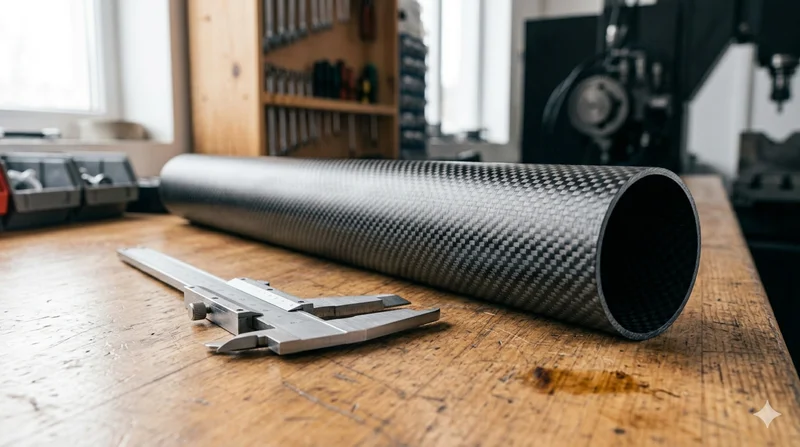
Round Carbon Fiber Tube — 3K Plain Weave T700
Standard round carbon fiber tube manufactured from Toray T700 grade fiber with 3K plain weave. Offers balanced strength and stiffness for general industrial applications including robotics, automation, sports equipment, and aerospace structures.
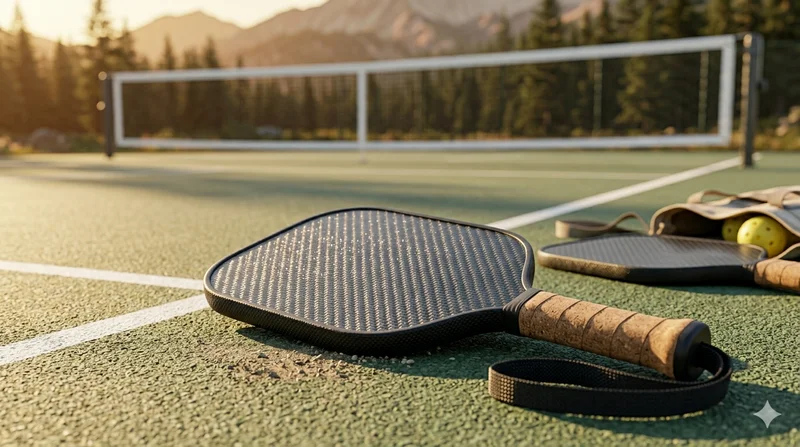
Carbon Fiber Pickleball Paddle
High-performance pickleball paddle with Toray T700 carbon fiber face and polypropylene honeycomb core. Delivers excellent power-to-weight ratio, spin generation, and vibration dampening for competitive play.
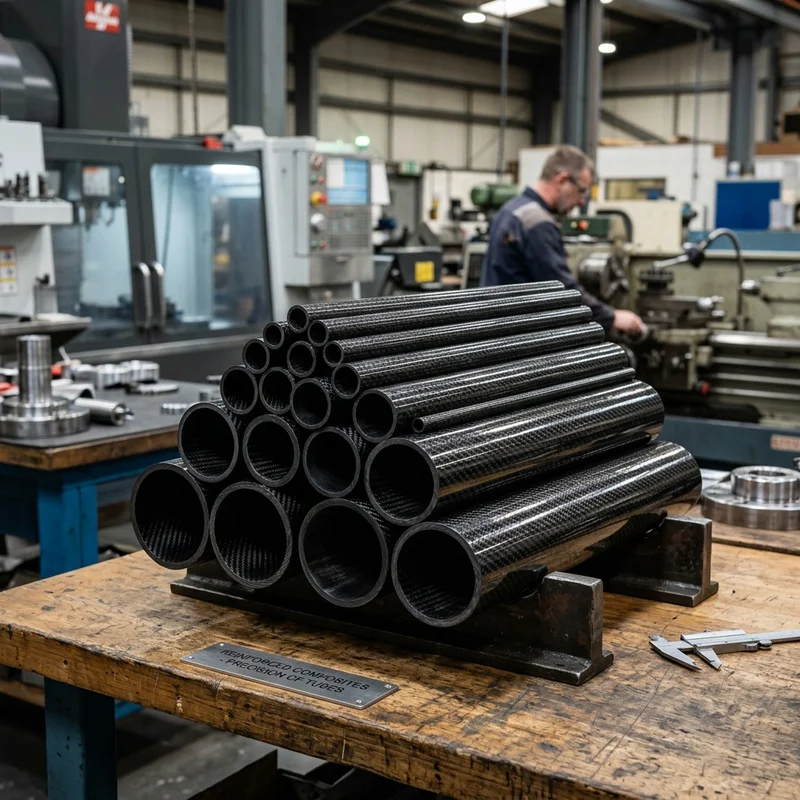
Round Carbon Fiber Tube — 3K Twill
Lightweight and ultra-stiff round tubes ideal for drone frames, robotics, and structural applications.
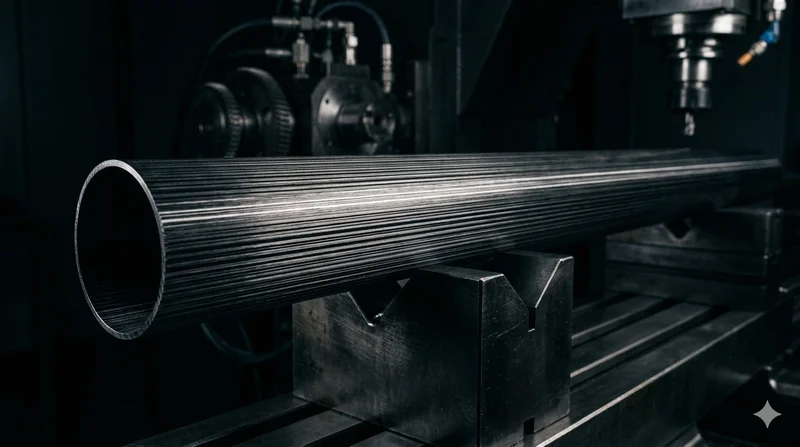
Round Carbon Fiber Tube — UD Unidirectional T700
Unidirectional (UD) round tube with all fibers aligned axially for maximum longitudinal stiffness. Ideal for applications requiring high bending rigidity with minimal weight, such as shafts, struts, and structural reinforcements.