
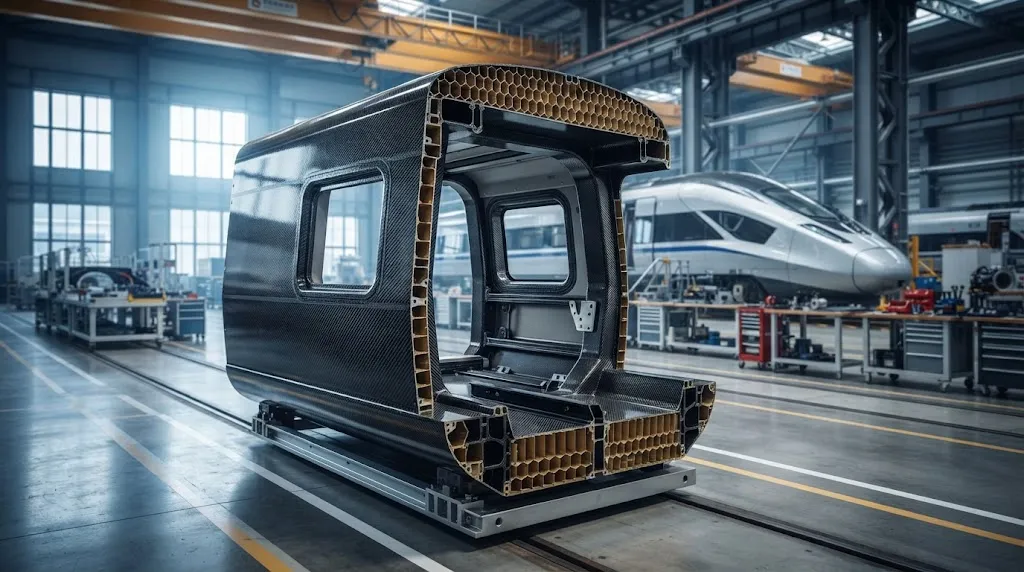
High-speed rail networks are expanding globally, with over 56,000 km of operational lines and 35,000 km under construction as of 2026. China leads with 42,000 km of 350 km/h service, followed by Europe, Japan, and emerging networks in Southeast Asia, the Middle East, and North America.
Introduction
High-speed rail networks are expanding globally, with over 56,000 km of operational lines and 35,000 km under construction as of 2026. China leads with 42,000 km of 350 km/h service, followed by Europe, Japan, and emerging networks in Southeast Asia, the Middle East, and North America. As train speeds increase to 350-400 km/h and beyond, aerodynamic drag dominates energy consumption — increasing with the cube of velocity — making weight reduction a primary engineering objective.
Aluminum alloy car bodies have dominated high-speed rail construction since the 1990s, offering good specific strength, mature fabrication processes, and established supply chains. However, aluminum reaches practical weight limits at 350+ km/h: a typical 8-car aluminum trainset weighs 380-450 tons, with car body structures accounting for 45-55% of total weight. CFRP car body structures offer 30-50% weight reduction in the structural shell, reducing trainset weight by 8-12 tons and delivering measurable benefits in energy consumption, acceleration performance, track loading, and braking distance.
This article examines the CFRP material systems, structural designs, manufacturing processes, and safety compliance requirements for high-speed rail car body applications, with specific attention to the engineering tradeoffs that determine whether CFRP delivers net economic benefit compared to optimized aluminum solutions.
Material Systems for Rail Car Body Structures
CFRP car body structures for high-speed rail must satisfy competing requirements: high specific stiffness for aerodynamic load resistance, impact energy absorption for crashworthiness, fire safety compliance, and 30+ year fatigue life. The material systems addressing these requirements include:
| Material System | Application | Specific Stiffness | Crash Energy Absorption | Fire Rating |
|---|---|---|---|---|
| CFRP unidirectional/5-harness satin laminate | Car body shell, roof, side walls | 85-110 GPa/(g/cm3) | 25-40 kJ/kg | EN 45545-2 HL2 |
| CFRP honeycomb sandwich panel | Floor, roof panels | 120-180 GPa/(g/cm3) | 15-25 kJ/kg | EN 45545-2 HL2 |
| CFRP/aluminum hybrid structure | Side walls, end caps | 65-90 GPa/(g/cm3) | 30-50 kJ/kg | EN 45545-2 HL2 |
| CFRP with thermoplastic matrix (PEEK/PA) | Crash energy absorbers | 50-70 GPa/(g/cm3) | 40-60 kJ/kg | EN 45545-2 HL1 |
| Aluminum alloy 6005A-T6 (reference) | Car body shell (current practice) | 26 GPa/(g/cm3) | 20-35 kJ/kg | EN 45545-2 HL2 |
Weight Reduction and Energy Benefits
The weight reduction benefit of CFRP car bodies follows a cascading effect: lighter car body structure enables lighter bogies, smaller braking systems, reduced track loading, and lower energy consumption. Quantitative analysis of an 8-car 350 km/h trainset reveals:
Direct weight savings: CFRP car body shell replaces aluminum with 30-50% weight reduction in the structural shell. For a typical trainset with 120-160 tons of car body structure, CFRP reduces this by 36-80 tons. However, practical constraints (connection details, fire protection layers, interior mounting) reduce net savings to 8-12 tons per trainset.
Energy consumption reduction: At 350 km/h, aerodynamic drag accounts for 75-80% of traction energy, with rolling resistance contributing 10-12% and auxiliary loads 10-15%. Weight reduction primarily benefits rolling resistance and acceleration energy. Net energy reduction of 15-25% per train-km is achievable with 8-12 ton weight reduction, depending on service profile (acceleration frequency, top speed, gradient).
Track loading reduction: CFRP car bodies reduce axle loads from 17-18 tons (aluminum) to 14-16 tons, enabling reduced rail and track maintenance costs estimated at EUR 500-1,500 per train-year.
Acceleration improvement: Lighter trainsets achieve equivalent acceleration with smaller traction motors, reducing traction system cost by 8-15% and enabling energy recovery during braking.
Crash Energy Management
High-speed rail crashworthiness requirements represent the most significant engineering challenge for CFRP car bodies. EN 15227 (Railway applications — Crashworthiness requirements for rail vehicles) specifies minimum crash energy absorption of 2.5 MJ for 350 km/h trainsets, achieved through controlled deformation of designated crush zones at the trainset ends.
CFRP crash energy absorbers outperform aluminum on a specific energy absorption basis: CFRP tubes absorb 25-60 kJ/kg versus 20-35 kJ/kg for aluminum, enabling 30-50% weight reduction in crush zones. However, CFRP energy absorption behavior is more sensitive to loading rate, fiber orientation, and boundary conditions than aluminum, requiring extensive component-level and full-scale crash testing to validate numerical predictions.
The CFRP car body design must also manage the transition between the rigid passenger compartment and the deformable crush zone, ensuring that energy absorption occurs in the designated zones without compromising passenger space integrity. This typically requires a CFRP/aluminum hybrid structure with CFRP crush initiators and aluminum transition sections, adding manufacturing complexity but achieving 25-40% weight reduction in the crash system compared to all-aluminum designs.
Fire Safety Compliance
EN 45545-2 (Fire protection on railway vehicles — Part 2: Fire behavior requirements for materials and components) classifies materials into hazard levels HL1-HL3 based on train operation type. High-speed trains operating in tunnels require HL2 compliance, which mandates:
For CFRP materials, fire safety compliance requires careful resin system selection. Standard epoxy resins produce high heat release rates and toxic smoke, failing HL2 requirements without modification. Phenolic-modified epoxies, phosphorus-containing epoxy systems, and ceramic-filled prepregs achieve HL2 compliance while maintaining 80-95% of the mechanical properties of standard aerospace epoxies. These fire-safe resin systems add 10-20% to material cost but are essential for rail applications.
The fire safety challenge extends beyond material selection to structural design: CFRP car bodies must maintain structural integrity during fire exposure for sufficient time to enable passenger evacuation (typically 15-30 minutes). This requires fire-resistant insulation layers, intumescent coatings, and structural redundancy that add weight and cost, partially offsetting the CFRP weight advantage.
Manufacturing Challenges
CFRP car body structures for high-speed rail present unique manufacturing challenges due to their size (25 meter single car), structural complexity, and production rate requirements (20-40 car bodies per year for major programs).
Autoclave processing: Aerospace-grade CFRP with optimal fiber volume fraction (55-60%) and void content (<1%) requires autoclave curing at 180°C and 6-7 bar pressure. However, rail car body dimensions (25m x 3.2m x 2.8m) exceed most autoclave capacities, requiring either segmentation (5-8 sections per car body bonded together) or out-of-autoclave (OoA) processing. Segmentation adds 15-25% to structural weight through overlap joints and adhesive bonds.
Out-of-autoclave processing: Vacuum bag-only (VBO) prepregs and resin transfer molding (RTM) enable large single-piece CFRP structures without autoclave constraints. VBO prepregs achieve 55-65% fiber volume fraction with <2% void content — adequate for most rail structural requirements but 5-10% lower mechanical properties than autoclave-cured equivalents. The production rate advantage (no autoclave scheduling) makes OoA processing attractive for high-volume rail programs.
Joining technology: CFRP car bodies require reliable joining methods for structural assembly. Adhesive bonding provides continuous load transfer but requires surface preparation and environmental protection. Mechanical fastening (bolts, rivets) enables disassembly for maintenance but introduces stress concentrations that reduce fatigue life. Hybrid adhesive/bolted joints offer the best balance, with fatigue life exceeding 10 million cycles at design loads.
Cost Analysis and Market Outlook
The economic case for CFRP car bodies depends on the balance between material cost premium and operational savings over the 30-year service life. Current CFRP car body structures cost EUR 80-150 per kg installed, compared to EUR 15-30 per kg for aluminum alloy — a 5-8x cost premium. However, the 8-12 ton weight reduction generates operational savings of:
Energy savings: EUR 3,000-8,000 per train-year at EUR 0.15-0.25 per kWh electricity, depending on service profile.
Track maintenance reduction: EUR 500-1,500 per train-year from reduced axle loads.
Traction system savings: EUR 200,000-500,000 per trainset from smaller motors and reduced braking system requirements.
Lifecycle cost analysis: Over 30 years, CFRP car body operational savings total EUR 110,000-290,000 per ton of weight reduced, compared to CFRP material cost premium of EUR 600-1,200 per ton installed. The lifecycle cost crossover depends on energy prices, utilization rates, and discount rates, but generally favors CFRP for trains operating >300,000 km per year at speeds >320 km/h.
The global high-speed rail CFRP market is projected to reach EUR 2.8-4.2 billion by 2030, driven by new-build programs in China, India, Southeast Asia, and the Middle East, plus fleet renewal in Europe and Japan. CFRP content per trainset is projected to increase from 2-5% (current) to 12-18% by 2030, with full CFRP car bodies entering service by 2032-2035.
What is the fatigue life of CFRP car body structures compared to aluminum?
CFRP car body structures demonstrate superior fatigue performance compared to aluminum alloy, with fatigue limits (stress amplitude at 10 million cycles) of 60-70% of static strength for CFRP versus 30-40% for aluminum alloy 6005A-T6. For a typical high-speed train car body experiencing 10 million load cycles over 30 years, CFRP structures maintain 85-95% of initial stiffness and strength, while aluminum structures may show 5-15% degradation requiring inspection and potential reinforcement. The fatigue advantage of CFRP is particularly significant at welded joints in aluminum structures, where fatigue strength drops to 20-30% of base material — a limitation that CFRP adhesive bonds do not share.
How does CFRP car body weight compare to aluminum across different train configurations?
For an 8-car 350 km/h trainset, aluminum alloy car bodies typically weigh 180-220 tons (structure only), while CFRP car bodies weigh 100-140 tons — a 35-45% reduction. The weight savings concentrate in the car body shell (roof, side walls, floor structure) rather than end caps and underframe, which typically remain aluminum for crash energy management and interface compatibility. For 16-car configurations used on some Chinese and Japanese lines, CFRP weight savings scale proportionally, reaching 16-24 tons per trainset. EMU (electric multiple unit) configurations benefit more from CFRP weight reduction than locomotive-hauled configurations, because lighter car bodies directly reduce traction energy consumption throughout the train.
What are the main barriers to CFRP adoption in high-speed rail?
Four primary barriers limit CFRP adoption: (1) cost — CFRP car bodies cost 5-8x more per kg than aluminum, requiring lifecycle cost justification that depends on utilization rates and energy prices; (2) manufacturing rate — current CFRP production rates of 5-10 car bodies per month per production line fall short of the 20-40 per month required for major rail programs; (3) fire safety — achieving EN 45545-2 HL2 compliance with CFRP materials requires specialized resin systems and structural protection, adding cost and weight; and (4) maintenance infrastructure — rail operators lack experience with CFRP repair and inspection, creating adoption resistance. These barriers are being addressed through out-of-autoclave manufacturing, fire-safe resin development, and operator training programs, with full commercial CFRP car bodies expected by 2032-2035.
Conclusion
CFRP car body structures offer transformative weight reduction for high-speed rail, with 8-12 tons per trainset enabling 15-25% energy savings, reduced track loading, and improved acceleration. The engineering challenges — crash energy management at 2.5 MJ, EN 45545-2 fire compliance, and 30-year fatigue life — are addressable through hybrid CFRP/aluminum designs, fire-safe resin systems, and validated structural analysis. Manufacturing barriers around cost and production rate are being reduced through out-of-autoclave processing and design-for-manufacturing optimization.
The lifecycle cost case for CFRP car bodies strengthens as train speeds increase, utilization rates rise, and energy costs escalate. For rail operators and OEMs evaluating next-generation high-speed platforms, CFRP car body structures represent a strategic investment in operational efficiency and competitive positioning. Explore our carbon fiber fabric and reinforcement portfolio for rail-grade CFRP materials, or contact our engineering team to discuss material specifications for your high-speed rail program.
Part of topic
Related Articles
- Carbon Fiber Mooring for Floating Offshore Wind: Fatigue and Corrosion in Deep Water
- Carbon Fiber Bicycle Frame Optimization: Layup Design and Manufacturing for Competitive Racing
- Carbon Fiber CFRP Retrofit for Infrastructure: Bridge and Building Seismic Strengthening
- Carbon Fiber Medical Imaging Equipment: Lightweight Gantry and Couch Structures for MRI/CT
- Carbon Fiber EV Battery Enclosures: Crash Safety and Electromagnetic Shielding Design
- Carbon Fiber Structures for Low-Altitude Economy: UAV Airframes and eVTOL Components
Interested in Our Products?
Contact our team for competitive pricing and technical specifications.
Get a QuoteRelated Products
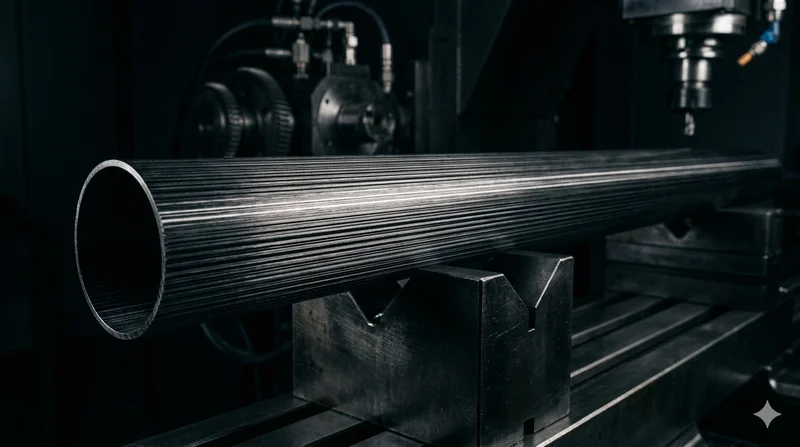
Round Carbon Fiber Tube — UD Unidirectional T700
Unidirectional (UD) round tube with all fibers aligned axially for maximum longitudinal stiffness. Ideal for applications requiring high bending rigidity with minimal weight, such as shafts, struts, and structural reinforcements.

Carbon Fiber Plate — High-Gloss Decorative
High-gloss decorative carbon fiber plate with a mirror-like surface finish. The glossy coating enhances the visible 3K twill weave, creating a premium aesthetic for consumer-facing applications. Lightweight yet stiff, available in thin gauges for easy cutting and forming.
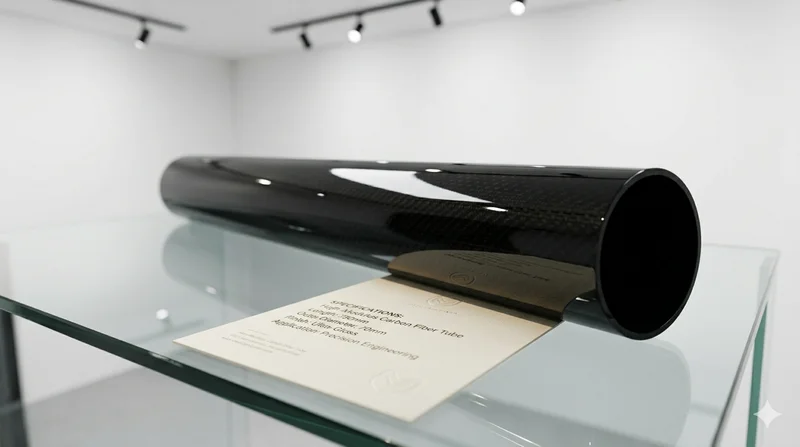
High Modulus Round Carbon Fiber Tube — M40
High modulus round tube manufactured with M40 grade fiber (tensile modulus 400 GPa). Designed for applications where maximum stiffness-to-weight ratio is critical, such as optical systems, precision machinery, and aerospace structures.