
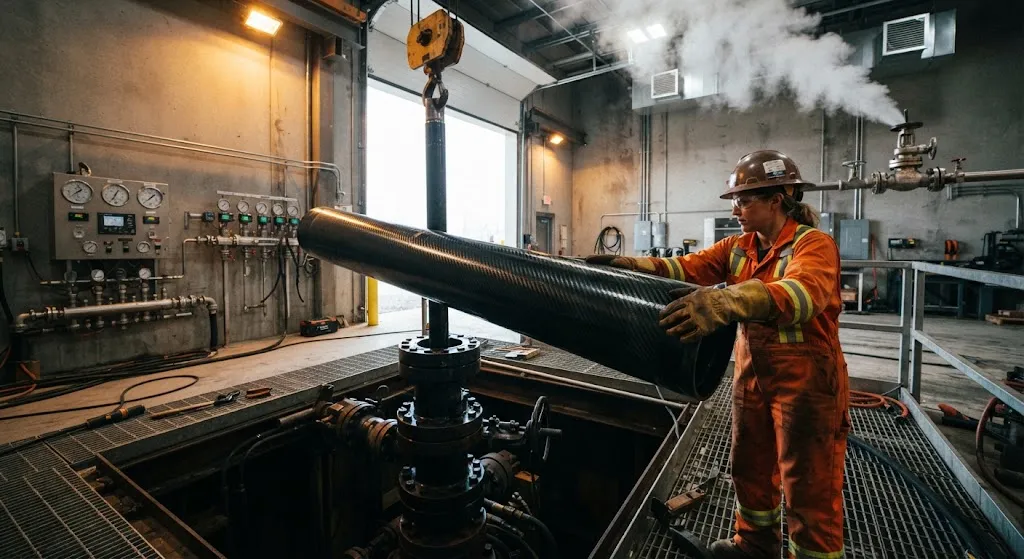
Geothermal energy is one of the fastest-growing renewable energy sectors, with global installed capacity projected to exceed 25 GW by 2030. As drilling depths increase to access higher-temperature reservoirs, the demands on wellbore tubing become increasingly severe. Traditional steel g
Introduction
Geothermal energy is one of the fastest-growing renewable energy sectors, with global installed capacity projected to exceed 25 GW by 2030. As drilling depths increase to access higher-temperature reservoirs, the demands on wellbore tubing become increasingly severe. Traditional steel geothermal pipes face three fundamental limitations at depth: corrosion from hydrogen sulfide and brine, thermal degradation of protective coatings, and excessive weight that increases drilling costs. Carbon fiber reinforced polymer (CFRP) composite pipes offer a compelling alternative that simultaneously addresses all three challenges.
For geothermal operators, the value proposition is straightforward: CFRP pipes weigh 60-70% less than equivalent steel tubing, eliminating the need for heavy-duty surface handling equipment and reducing wellhead structural requirements. More importantly, the inherent corrosion resistance of polymer matrix composites eliminates the costly chemical inhibition programs and frequent workovers that plague steel geothermal completions. This article explains how composite geothermal pipes are designed, what material systems withstand sustained high-temperature exposure, and the operational economics that make CFRP competitive in deep geothermal applications.
Design Requirements for Geothermal Service
Geothermal composite pipes must satisfy three simultaneous engineering demands that push material performance to its limits:
- High-temperature resistance: Geothermal fluids range from 150°C in moderate systems to 350°C+ in enhanced geothermal systems (EGS). The pipe material must maintain structural integrity and burst pressure rating at sustained operating temperatures for 20-30 year service life.
- Pressure containment: Production tubing must withstand internal pressures from 100-300 bar depending on well depth and reservoir pressure, with safety factors of 2.0-2.5x required by most regulatory frameworks.
- Corrosion immunity: Geothermal brines contain hydrogen sulfide (H₂S), carbon dioxide (CO₂), chloride ions at concentrations up to 150,000 ppm, and suspended silica particles that cause erosive wear. Steel tubing requires continuous chemical inhibition costing $15-40 per meter per year.
CFRP Material Systems for High-Temperature Geothermal Pipes
The resin matrix selection is the critical design decision for geothermal composite pipes. Standard epoxy systems degrade above 150°C, but several high-temperature resin systems now enable composite pipes for the full geothermal temperature range:
| Resin System | Max Continuous Temperature | Pressure Rating (Class 3) | Typical Wall Thickness | Relative Cost Index |
|---|---|---|---|---|
| Bismaleimide (BMI) | 230°C | 200 bar | 8-12 mm | 1.0x |
| Polyimide (PMR-15) | 315°C | 250 bar | 10-14 mm | 1.4x |
| Cyanate Ester | 250°C | 220 bar | 9-13 mm | 1.2x |
| High-T Epoxy (TGDDM) | 180°C | 180 bar | 8-11 mm | 0.7x |
| PEEK (thermoplastic) | 260°C | 280 bar | 6-10 mm | 1.8x |
The CFRP layup typically combines high-strength carbon fiber (T700S or equivalent) with hoop-wound and helical layers. Hoop layers at 85-90° fiber angle provide burst pressure resistance, while helical layers at 15-25° carry axial loads from wellhead weight and thermal expansion. Filament winding is the dominant manufacturing process, producing pipes with fiber volume fractions of 55-65% and minimum void content below 2%.
Performance Advantages Over Steel Tubing
The operational benefits of CFRP geothermal pipes extend well beyond simple weight reduction:
- Weight reduction: CFRP pipes weigh 15-25 kg/m compared to 45-75 kg/m for equivalent steel tubing, reducing crane capacity requirements and enabling longer continuous runs per joint.
- Corrosion elimination: Composite pipes are immune to H₂S and CO₂ corrosion, eliminating chemical inhibition costs of $15-40/m/year and reducing workover frequency from every 3-5 years to planned 20+ year intervals.
- Thermal insulation: CFRP thermal conductivity of 0.5-1.5 W/m·K (vs 50 W/m·K for steel) reduces heat loss in production tubing, maintaining higher fluid temperatures at surface and improving power plant efficiency by 2-4%.
- Hydraulic efficiency: Smooth inner surfaces (Ra 1-3 μm) reduce friction losses by 15-25% compared to corroded steel, increasing production flow rates without additional pumping energy.
Economic Analysis for Deep Geothermal Wells
Life-cycle cost analysis consistently demonstrates that CFRP geothermal pipes achieve cost parity with steel within 5-8 years of operation, primarily through elimination of inhibition chemicals and workover costs:
| Cost Category | Steel Tubing (per well, 20-yr) | CFRP Tubing (per well, 20-yr) | Savings |
|---|---|---|---|
| Material and installation | $280,000 | $420,000 | -$140,000 |
| Chemical inhibition | $320,000 | $0 | $320,000 |
| Scheduled workovers | $480,000 | $60,000 | $420,000 |
| Unplanned repairs | $180,000 | $20,000 | $160,000 |
| Heat retention value | $0 | $95,000 | $95,000 |
| Total 20-year cost | $1,260,000 | $595,000 | $665,000 (53%) |
Installation and Field Performance
CFRP geothermal pipes are installed using modified conventional drilling equipment with adapted handling tools for composite materials. Key installation considerations include avoiding point loads and impact damage during running, using compatible thread compounds, and torque management for premium connections. Several pilot projects in Iceland, New Zealand, and the western United States have demonstrated 3-5 year performance with no measurable degradation in burst strength or pressure integrity, validating the long-term durability of high-temperature composite systems in geothermal service.
Frequently Asked Questions
What is the maximum depth rating for CFRP geothermal pipes?
Current CFRP geothermal pipe systems are rated for depths up to 4,000 meters in production service, with experimental designs tested to 5,000 meters in laboratory conditions. The depth limitation is governed by the combined effects of hydrostatic pressure, axial load from tubing weight, and thermal degradation of the resin matrix at elevated bottomhole temperatures. For depths beyond 3,500 meters in high-temperature wells (>250°C), polyimide or PEEK resin systems are required to maintain adequate strength retention over 20-year service life.
How do CFRP pipes handle thermal cycling during well startup and shutdown?
Thermal cycling is a critical design consideration because the differential thermal expansion between carbon fiber (CTE near zero) and the resin matrix (CTE 20-40 × 10⁻⁶/°C) creates interlaminar stresses. High-temperature resin systems are formulated with controlled toughness to accommodate these stresses. Field data from Icelandic geothermal wells show no measurable strength degradation after 5,000+ thermal cycles over 3 years. The thermoplastic PEEK option offers superior thermal cycling resistance because its semi-crystalline structure accommodates strain without microcracking.
Are CFRP geothermal pipes compatible with existing wellhead and completion equipment?
CFRP geothermal pipes are manufactured with steel or titanium alloy end fittings that mate with standard API 5B or premium threaded connections. The composite section is bonded or shrunk onto the metallic end fittings using validated joint designs that transfer axial loads and seal pressure. This hybrid approach allows CFRP tubing to be run with existing wellhead, BOP, and completion equipment without modification, minimizing the operational transition cost for geothermal operators.
Conclusion
CFRP composite geothermal pipes represent a mature technology that solves the fundamental corrosion and weight limitations of steel tubing in deep geothermal wells. The 60-70% weight reduction, elimination of chemical inhibition costs, and 20+ year maintenance-free service life combine to deliver 50%+ life-cycle cost savings compared to conventional steel completions. As geothermal drilling pushes to greater depths and higher temperatures, composite pipes will become the standard completion material for the industry.
For geothermal operators evaluating composite tubing options, material selection must consider the specific temperature profile, brine chemistry, and pressure requirements of each well. Explore our high-temperature carbon fiber composite solutions, including filament-wound pipe and custom layup configurations for geothermal applications, or contact our engineering team to discuss material qualification for your drilling program.
Part of topic
Related Articles
- Carbon Fiber Mooring for Floating Offshore Wind: Fatigue and Corrosion in Deep Water
- Carbon Fiber Bicycle Frame Optimization: Layup Design and Manufacturing for Competitive Racing
- Carbon Fiber CFRP Retrofit for Infrastructure: Bridge and Building Seismic Strengthening
- Carbon Fiber Medical Imaging Equipment: Lightweight Gantry and Couch Structures for MRI/CT
- Carbon Fiber EV Battery Enclosures: Crash Safety and Electromagnetic Shielding Design
- Carbon Fiber Structures for Low-Altitude Economy: UAV Airframes and eVTOL Components
Interested in Our Products?
Contact our team for competitive pricing and technical specifications.
Get a QuoteRelated Products
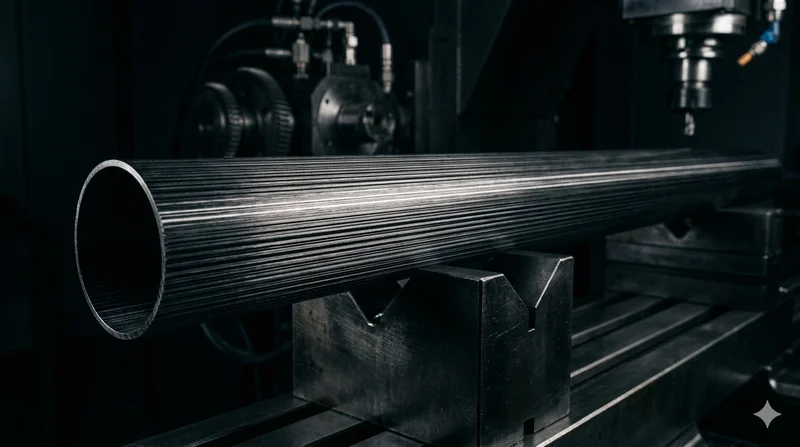
Round Carbon Fiber Tube — UD Unidirectional T700
Unidirectional (UD) round tube with all fibers aligned axially for maximum longitudinal stiffness. Ideal for applications requiring high bending rigidity with minimal weight, such as shafts, struts, and structural reinforcements.
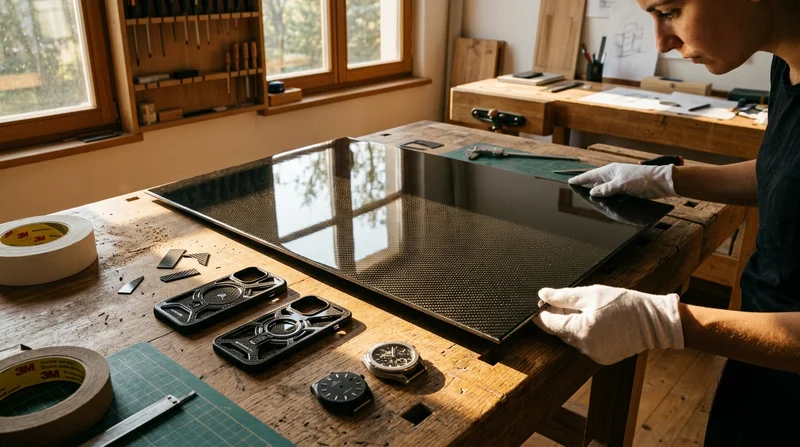
Carbon Fiber Plate — High-Gloss Decorative
High-gloss decorative carbon fiber plate with a mirror-like surface finish. The glossy coating enhances the visible 3K twill weave, creating a premium aesthetic for consumer-facing applications. Lightweight yet stiff, available in thin gauges for easy cutting and forming.
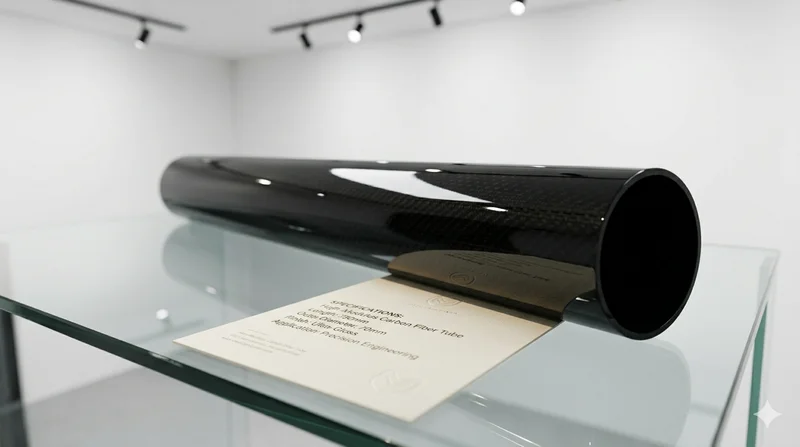
High Modulus Round Carbon Fiber Tube — M40
High modulus round tube manufactured with M40 grade fiber (tensile modulus 400 GPa). Designed for applications where maximum stiffness-to-weight ratio is critical, such as optical systems, precision machinery, and aerospace structures.