
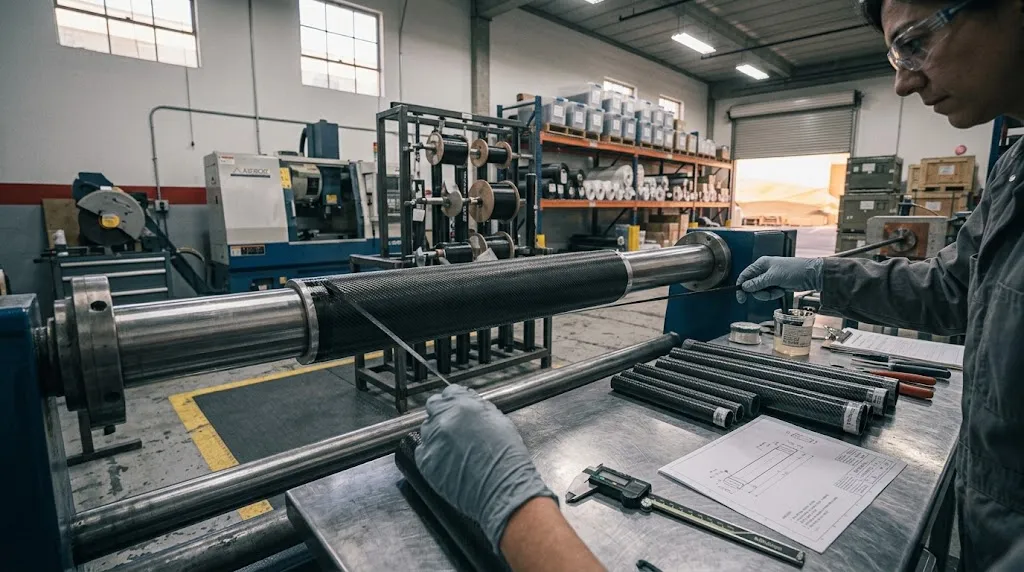
Most projects that outgrow standard stock tubing eventually face a carbon fiber tube custom order: an outside diameter no catalog carries, a wall thickness tuned to a specific bending load, or a cut length that eliminates waste on a production line. Ordering custom is not simply sending a drawing to
Introduction
Most projects that outgrow standard stock tubing eventually face a carbon fiber tube custom order: an outside diameter no catalog carries, a wall thickness tuned to a specific bending load, or a cut length that eliminates waste on a production line. Ordering custom is not simply sending a drawing to a factory. The quote you receive depends on which manufacturing method can hold your tolerances, how fiber orientation is specified, and how many pieces justify new tooling. This guide walks buyers through the three numbers that drive every quote, compares roll-wrapped, pultruded and filament-wound processes, explains what shapes the carbon fiber round tubes price range, and shows how to qualify a carbon fibre tube supplier before the first purchase order is signed.
Why a Carbon Fiber Tube Custom Order Beats Stock Sizes
Stock tubes cover a narrow band of outside diameters, typically 6-30 mm with walls of 1-3 mm. That band fits hobby frames and light brackets, but it fails fast in engineered assemblies. A robot arm needs a specific second moment of area to hit a deflection target; a driveshaft tube needs helical fiber angles for torsion; a telescoping pole set needs OD and ID held so two sections slide without play. In each case the geometry is the design, not an input you can adjust around a catalog.
Custom orders also remove hidden costs. Buying 2 m stock tubes to machine 1.4 m parts wastes material and spindle time. Specifying a custom length carbon fiber tube at net length shifts the cutting to the factory, where it is done once with a controlled square-cut fixture. For programs above roughly 50 pieces per year, tooling amortization and factory cutting routinely beat the combined price of stock, scrap and secondary operations.
- Geometry freedom: OD from about 3 mm to 300 mm, walls from 0.3 mm to 10 mm, depending on process, with fiber architectures matched to the load path.
- Tolerance control: Critical dimensions can be held to the class the application needs instead of accepting whatever stock allows.
- Net-length supply: Tubes arrive cut, squared and deburred, reducing in-house operations.
- Traceability: Production lots tie back to fiber grade, cure cycle and inspection records for regulated industries.
OD, Wall Thickness and Tolerance: The Numbers That Set the Quote
Every quotation starts with three numbers. Get them right on the RFQ and pricing converges in one round; leave them vague and you will iterate for weeks. Tolerance capability varies strongly by manufacturing method, so match the process to the requirement before comparing prices:
| Dimension | Typical Capability | Notes |
|---|---|---|
| Outside diameter | 3-300 mm | Pultrusion covers small constant sections; roll-wrapping and filament winding cover mid to large diameters. |
| Wall thickness | 0.3-10 mm | Thin walls below 0.5 mm need careful layup; thick walls above 5 mm add cure and void-control risk. |
| OD tolerance | ±0.1 mm to ±1.0 mm | Pultruded tubes reach ±0.1-0.2 mm; roll-wrapped ±0.2-0.5 mm; filament-wound ±0.5-1.0 mm. |
| ID tolerance | ±0.15 mm to ±1.0 mm | ID is molded on the mandrel for roll-wrapped tubes and is often tighter than free-standing wound tubes. |
| Cut length | ±0.5 mm typical | Square-cut fixtures hold ends within 0.2-0.5 mm of perpendicular. |
| Straightness | 0.5-1.0 mm per 1000 mm | Long thin tubes relax slightly after mandrel release; specify if the tube rides in linear bearings. |
Two practical rules keep RFQs honest. First, tolerance drives method: asking for ±0.1 mm on a 200 mm filament-wound pipe pushes you back to roll-wrapping or post-machining, and the price reflects it. Second, tighten only what the assembly needs. A camera mast rarely needs better than ±0.5 mm on OD; a precision sleeve might need ±0.1 mm on ID and a mirror surface inside. Each tightened tolerance removes processes from the shortlist and raises unit cost.
Manufacturing Methods: Roll-Wrapped, Pultruded and Filament-Wound Tubes
The same outer geometry can be produced by three mainstream processes with very different cost, tolerance and mechanical profiles. Choosing before you request quotes prevents the classic mistake of comparing a pultrusion price against a roll-wrapped build and concluding the supplier is inflating margins.
| Aspect | Roll-Wrapped | Pultruded | Filament-Wound |
|---|---|---|---|
| Fiber architecture | UD tapes at 0/±45/90; balanced layups | Almost pure 0° with minimal hoop | Hoop and helical winds; angle set per layer |
| Best OD range | 8-150 mm | 3-50 mm, constant section | 25-300 mm and above |
| Torsion performance | Excellent with ±45 plies | Weak without hoop layers | Excellent; winding angle tuned to torque |
| Surface finish | Smooth outer skin from the mandrel | Consistent, slightly matte | Ridged surface unless post-sanded |
| Tooling cost | Mandrel set per OD | Low-cost die per section | Mandrel per OD, larger machines |
| Typical MOQ | 10-50 pcs | 50-500 pcs | 10-100 pcs |
Roll-wrapping dominates precision structural tubes because the mandrel controls both OD and ID and the layup can be engineered ply by ply. Pultrusion wins on price at volume for constant cross-sections and offers the tightest OD tolerances, but the 0°-dominated architecture performs poorly under torsion and bending in the hoop direction. Filament winding is the default for large-diameter pressure-critical and torsion-critical tubes where winding angles are part of the design.
Carbon Fiber Tube Custom Pricing: What Drives Cost
The carbon fiber round tubes price band for custom work is wide because quotes bundle material, process, tooling and inspection. Understanding the drivers lets buyers trade specifications for cost without weakening the design:
- Fiber grade: Standard-modulus T300-class fiber is the baseline; T700-class adds roughly 15-20 percent tensile strength at a moderate price step; high-modulus grades cost several times more and are rarely justified outside aerospace and metrology.
- Layup complexity: A single-orientation layup is cheapest; adding ±45 and 90 degree plies adds material handling and inspection time but delivers torsional and crush performance.
- Tooling amortization: New mandrels or dies are one-time costs spread across the order. Consolidating similar ODs into one supplier keeps tooling spend low.
- Tolerance class: Each step tighter than the process default adds fixture work, measurement frequency and scrap risk.
- Volume and length: Longer continuous tubes reduce end operations per meter; batch size determines whether cure cycles run once or repeat.
As a working reference, custom roll-wrapped tubes in standard-modulus fiber commonly land in the single-digit to low-double-digit USD per meter range at 50-piece lots, while pultruded sections at 500-plus pieces sit lower. Treat these as orientation bands only; your RFQ with explicit tolerances will return real numbers.
How to Qualify a Carbon Fibre Tube Supplier
A quote is only as good as the process behind it. Before committing to a carbon fibre tube supplier, run a short qualification pass that tests capability rather than marketing claims:
- Process documentation: Ask which method they propose for your geometry and why. A credible supplier explains the tradeoff between tolerance and fiber architecture in plain terms.
- Inspection plan: Request the measurement method for OD, wall and runout, plus whether reports ship with the lot or only on request.
- Sample policy: First-article samples with a dimension report cost little and expose fixture problems before tooling is committed.
- Material traceability: Confirm fiber grade, resin system and cure documentation are recorded per lot, especially for structural or regulated use.
- Capacity match: Verify annual volume fits their line without crowding, and ask how they handle rush reorders at the same tolerance.
Suppliers who answer these five points with specifics, not slogans, are the ones who deliver repeatable tubes. Those who evade inspection questions usually price the variance into your rework budget later.
Frequently Asked Questions
What is the minimum order quantity for custom carbon fiber tubes?
Most roll-wrapped programs start at 10-50 pieces because mandrels must be prepared and a cure cycle scheduled. Pultrusion can start lower if a matching die exists, but new dies usually require 50 pieces or more to justify setup. Prototype quantities of 1-5 pieces are possible through CNC-machined stock plate or short-run layups at a higher unit price.
Can suppliers match a sample tube I send them?
Yes, if you provide dimensions, wall thickness, fiber orientation intent and the load case. A physical sample accelerates reverse engineering, but without the original layup record the supplier rebuilds the tube from measured geometry and mechanical targets. Expect the rebuilt tube to match dimensions tightly and stiffness within a few percent, with exact strength dependent on the reconstructed layup.
How do I specify fiber orientation without an engineering drawing?
Describe the dominant load: pure bending favors 0 degree plies with surface 90 degree wrap for crush; torsion needs ±45 degree layers; combined loads use quasi-isotropic stacks. Suppliers translate these descriptions into ply schedules and will propose changes if your intent conflicts with manufacturability. If stiffness targets exist in numbers, share them; a supplier can back-calculate the layup from required bending or torsional rigidity.
What lead time should I plan for a first order?
Two to four weeks is typical for roll-wrapped tubes when tooling exists for your OD; add one to two weeks if new mandrels are required. Pultrusion lead time depends on die availability. Filament-wound large diameters often run three to five weeks including cure and inspection. Confirm the schedule includes the first-article report, not just cure completion.
Conclusion
A carbon fiber tube custom order succeeds when the RFQ leads with precise OD, wall thickness and tolerance classes, names the manufacturing method those tolerances require, and is placed with a supplier who documents process and inspection. Match architecture to load, tighten only the dimensions the assembly needs, and qualify capability with a first-article sample before scaling volume. Done this way, custom tubes arrive at net length, hold their geometry across lots, and cost less than the stock-plus-scrap workflow they replace.
YongXian manufactures roll-wrapped, pultruded and filament-wound carbon fiber tubes to custom specifications with inspection reports per lot. Browse our carbon fiber tube range or contact our engineering team with your OD, wall thickness, tolerance and annual volume for a quote.
Part of topic
Related Articles
- How to Choose a Carbon Fiber Drone Manufacturer
- Carbon Fiber Plate Custom: CNC Cutting, Nesting and Thickness Selection
- How to Read a Carbon Fiber Supplier Pricing Sheet
- Carbon Fiber Sheet 4x8: Large-Format Panels for Tooling and Construction
- Carbon Fiber Tubes USA: Domestic Suppliers and Lead Times
- Carbon Fiber Rod Supplier: Pultruded vs Roll-Wrapped Quality Comparison
Interested in Our Products?
Contact our team for competitive pricing and technical specifications.
Get a QuoteRelated Products

Round Carbon Fiber Tube — 3K Plain Weave T700
Standard round carbon fiber tube manufactured from Toray T700 grade fiber with 3K plain weave. Offers balanced strength and stiffness for general industrial applications including robotics, automation, sports equipment, and aerospace structures.

Square Carbon Fiber Tube — 3K Twill T700
Square cross-section carbon fiber tube manufactured with 3K twill weave for torsional strength. Preferred for structural frames, trusses, and support columns where rectangular geometry offers design flexibility.

Carbon Fiber Pickleball Paddle
High-performance pickleball paddle with Toray T700 carbon fiber face and polypropylene honeycomb core. Delivers excellent power-to-weight ratio, spin generation, and vibration dampening for competitive play.
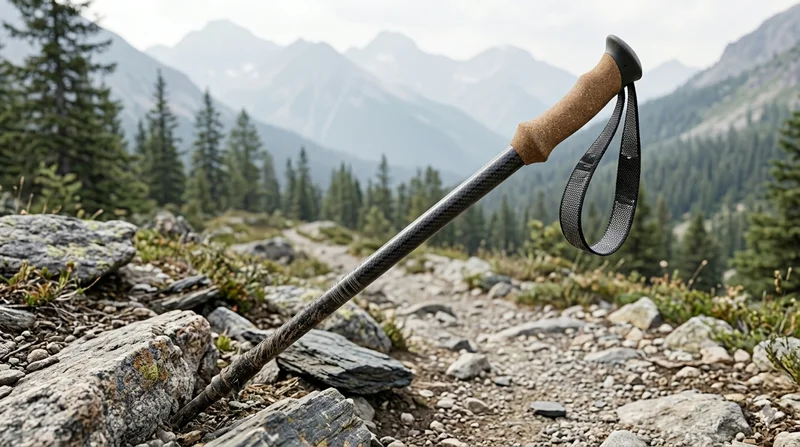
Carbon Fiber Trekking Pole
Lightweight carbon fiber trekking pole manufactured from high-grade carbon fiber tube. Weighs only 160g per pole while providing superior shock absorption and durability for hiking, trail running, and backpacking.

Round Carbon Fiber Tube — 3K Twill
Lightweight and ultra-stiff round tubes ideal for drone frames, robotics, and structural applications.