

Introduction A carbon fiber data sheet is the primary technical document for material selection — yet it is routinely misread, misquoted, and used to compare grades that were tested under different conditions. Understanding what each value actually measures, which test method produced it, and how ma
Introduction
A carbon fiber data sheet is the primary technical document for material selection — yet it is routinely misread, misquoted, and used to compare grades that were tested under different conditions. Understanding what each value actually measures, which test method produced it, and how marketing language can obscure real performance differences is essential for engineers specifying carbon fiber for structural applications and for procurement teams evaluating supplier claims. This guide walks through the key properties on a typical carbon fiber data sheet, explains the test methods behind the numbers, and provides a framework for comparing grades from Toray, Hexcel, SGL, and Chinese manufacturers on a consistent, like-for-like basis.
By the end, you will be able to read a tensile strength figure and know whether it describes dry fiber tow, impregnated single-tow, or cured laminate properties — three very different numbers that are frequently presented without qualification in sales materials.
Key Properties on a Carbon Fiber Data Sheet
Every serious carbon fiber data sheet reports four core mechanical properties, each measured under standardized conditions:
- Tensile strength (σ): The maximum stress a fiber or tow sustains before breaking, measured in MPa (or GPa for high-modulus grades). Values range from ~3,500 MPa for standard-modulus grades like T300 to 6,500+ MPa for intermediate-modulus grades like T800S. Critically, tensile strength is reported for one of three material states: (1) dry single-tow bundle, (2) impregnated single-tow with defined fiber volume, or (3) multi-directional cured laminate. Dry tow values run 10-15% higher than impregnated values at equivalent fiber volume because the resin contributes matrix shear transfer but dilutes the axial fiber fraction.
- Tensile modulus (E): The stiffness of the fiber — slope of the stress-strain curve in the elastic region, reported in GPa. Standard modulus: 230-260 GPa (T300, T700). Intermediate modulus: 290-320 GPa (T800, IM7). High modulus: 380-600+ GPa (M40J, M60J). Modulus is far less sensitive to test method than tensile strength, making it the more reliable figure for cross-manufacturer comparison.
- Elongation at break (ε): The strain at failure, expressed as a percentage. Calculated as tensile strength divided by tensile modulus (ε = σ/E). Standard-modulus fibers: 1.5-1.8%. Intermediate modulus: 1.9-2.1%. High modulus: 0.5-0.7%. Higher elongation generally means better damage tolerance and energy absorption in a composite structure.
- Fiber density (ρ): Measured in g/cm³, typically 1.76-1.80 for PAN-based carbon fiber. Density is used to convert between weight-based and volume-based property expressions and to calculate fiber volume fraction in a laminate.
Additional properties — thermal conductivity, electrical resistivity, and coefficient of thermal expansion — appear on data sheets for high-modulus and pitch-based grades used in aerospace and electronics applications.
Test Methods That Change the Numbers
The same carbon fiber can yield tensile strength values differing by 15-20% depending on which test method and specimen preparation protocol was used. Data sheets that omit test method references should be treated with caution:
| Test Standard | What It Measures | Typical Result (T700) | Notes |
|---|---|---|---|
| ASTM D3039 (tensile, composite) | Cured unidirectional laminate, 0° direction | 2,400-2,600 MPa at Vf 60% | Most common for published grade comparisons |
| ASTM D4018 (tensile, tow) | Single impregnated tow, defined Vf | 2,600-2,800 MPa at Vf 55% | Used by Toray for standard grade reporting |
| BS ISO 10618 (tensile, single fiber) | Individual filament | 3,500-3,900 MPa | Highest values; not directly usable for design |
| ASTM D3171 (fiber volume) | Acid digestion of cured laminate | Vf 55-62% typical | Confirms whether quoted properties assume realistic Vf |
A manufacturer quoting 4,900 MPa tensile strength for a grade is likely reporting single-filament values (ISO 10618), not the 2,500-2,700 MPa you can design with in a 60% Vf unidirectional laminate. Always ask which test method produced the headline number — and which fiber volume fraction was assumed.
Comparing Grades Across Manufacturers
When evaluating whether a Chinese T700-equivalent fiber performs like Toray T700 or Hexcel AS4, compare on these normalized criteria rather than marketing labels:
- Fiber density: A quick sanity check — large deviations (>2%) from the nominal grade suggest different PAN precursor or stabilization conditions.
- Tensile strength at consistent Vf: Request values at 60% Vf (ASTM D3039) or 55% Vf (D4018) with the test method stated. Differences of 5-8% between suppliers are within normal lot-to-lot variation; 15%+ gaps warrant investigation.
- Modulus stability: High-modulus grades (HM, M-series) should report modulus within ±5 GPa of nominal. Wide scatter indicates inconsistent graphitization temperature control.
- Surface treatment and sizing: Data sheets should specify whether fibers are unsized, epoxy-sized, or sized for a specific matrix family. Un-sized fibers will underperform in laminate form despite matching dry-tow mechanical values.
- Lot traceability: Production-grade data sheets reference specific production lots, not generic "typical values" alone. Request lot-specific certificates for structural applications.
For procurement teams: the cheapest fiber meeting tensile and modulus specs may still fail on sizing compatibility, lot consistency, or moisture uptake. Include a qualification coupon test (ASTM D3039 on your specific laminate stack) before releasing any alternative grade to production.
Frequently Asked Questions
Why does the tensile strength on a marketing sheet differ from the data sheet?
Marketing sheets often quote single-filament or best-case laboratory values without test method qualification, while technical data sheets report design-usable values at specified fiber volume fractions with referenced test standards. A 4,900 MPa single-filament strength can legitimately coexist with a 2,500 MPa laminate design allowable — they measure different things. Always cross-reference the test method before comparing numbers across documents.
What fiber volume fraction should I use for structural design calculations?
For prepreg-based aerospace laminates, 58-60% Vf is standard. For resin-infused structural components, 50-55% Vf is realistic. Never design against data sheet values that assume 100% fiber or unattainable Vf — request properties at your actual process capability, or run ASTM D3171 acid digestion on process control coupons to confirm achieved Vf before locking design allowables.
How do I compare a standard-modulus and intermediate-modulus grade for a given application?
Compare elongation at break and compression-after-impact (CAI) strength alongside tensile values. A higher-modulus intermediate grade (e.g., T800 vs T700) gains 15-20% stiffness and 10-15% tensile strength but typically loses 10-15% in strain-to-failure. For impact-dominated structures (wing skins, boat hulls), the higher-strain standard grade may outperform; for stiffness-critical applications (robot arms, satellite structures), the intermediate grade wins on specific stiffness.
Conclusion
Reading a carbon fiber data sheet correctly means knowing what each property measures, which test method produced the number, and what fiber volume fraction was assumed — three pieces of context that marketing materials routinely omit. Tensile strength varies 15-20% with test method; modulus is more reliable for cross-grade comparison; elongation governs damage tolerance in impact-critical designs. When comparing grades across manufacturers, normalize to consistent test standards and Vf values, and qualify any alternative with coupon-level testing before production release. The data sheet is your primary technical contract with the material supplier — read it with the same rigor you would apply to a structural analysis report.
For engineers and procurement teams seeking carbon fiber with fully documented data sheets, lot traceability, and application-specific technical support, explore our carbon fiber product range or contact our technical sales team to discuss grade selection, test method references, and qualification sampling for your program.
Part of topic
Related Articles
- Filament Wound Carbon Fiber Tube: Custom Diameter and Wall Thickness Options
- Pultruded Carbon Fiber Rod: Structural Data Every Designer Should Check
- High Performance Carbon Fiber: IM and HM Grades for Demanding Loads
- Filament Wound Carbon Fiber Tubes vs Roll Wrapped: Manufacturing and Selection
- Carbon Fiber Plate Bambu Printer Guide: Bed Compatibility and Surface Prep
- Carbon Fiber Sheet Cutting Service: CNC Routed Parts and Tolerances
Interested in Our Products?
Contact our team for competitive pricing and technical specifications.
Get a QuoteRelated Products

Round Carbon Fiber Tube — 3K Plain Weave T700
Standard round carbon fiber tube manufactured from Toray T700 grade fiber with 3K plain weave. Offers balanced strength and stiffness for general industrial applications including robotics, automation, sports equipment, and aerospace structures.

Square Carbon Fiber Tube — 3K Twill T700
Square cross-section carbon fiber tube manufactured with 3K twill weave for torsional strength. Preferred for structural frames, trusses, and support columns where rectangular geometry offers design flexibility.
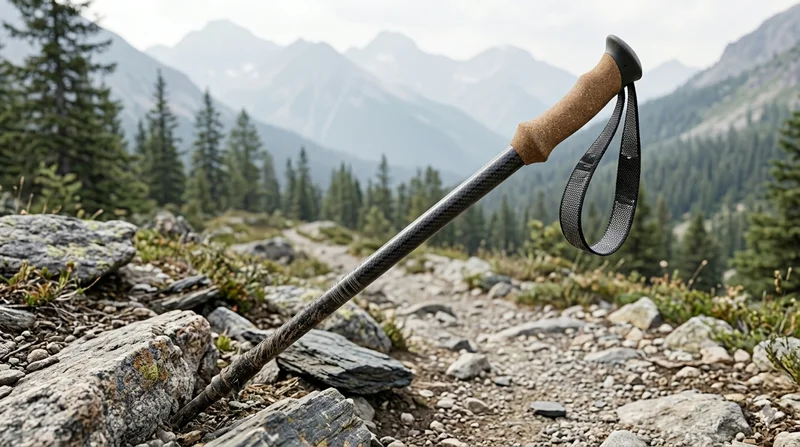
Carbon Fiber Trekking Pole
Lightweight carbon fiber trekking pole manufactured from high-grade carbon fiber tube. Weighs only 160g per pole while providing superior shock absorption and durability for hiking, trail running, and backpacking.

Carbon Fiber Pickleball Paddle
High-performance pickleball paddle with Toray T700 carbon fiber face and polypropylene honeycomb core. Delivers excellent power-to-weight ratio, spin generation, and vibration dampening for competitive play.

Round Carbon Fiber Tube — 3K Twill
Lightweight and ultra-stiff round tubes ideal for drone frames, robotics, and structural applications.