
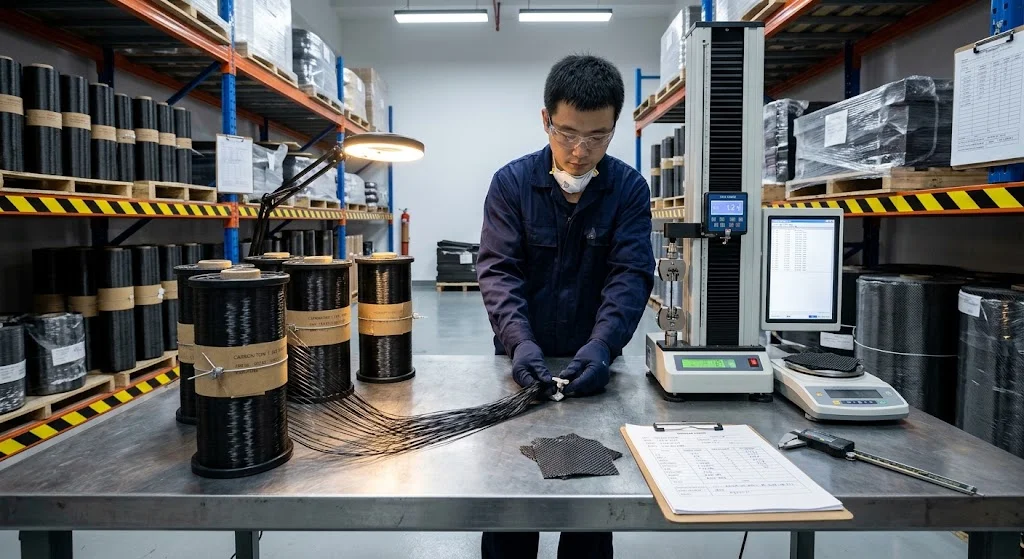
The price of carbon fibre in 2026 is not one number — it is a ladder that runs from roughly $12-16 per kilogram for Chinese standard-modulus industrial tow to well past $100 per kilogram for aerospace-qualified material, with fabric, prepreg and finished plate adding their own premiums on top. Buyer
Introduction
The price of carbon fibre in 2026 is not one number — it is a ladder that runs from roughly $12-16 per kilogram for Chinese standard-modulus industrial tow to well past $100 per kilogram for aerospace-qualified material, with fabric, prepreg and finished plate adding their own premiums on top. Buyers who quote "carbon fiber is $20 a kilo" are usually quoting one rung of that ladder and getting a surprise at quotation stage.
This article sets out global price of carbon fibre benchmarks by grade and format, converts them to the price of carbon fiber per kg and per pound figures used in real purchase orders, explains the carbon fiber sheets price premium, and breaks down the forces — precursor cost, order volume, region and duties — that decide where any given quote lands.
Price of Carbon Fibre in 2026: What Moved
Three forces set the 2026 range. First, PAN precursor — roughly 50-60% of tow cost — tracked acrylonitrile prices that stayed elevated on energy costs. Second, Chinese capacity growth kept the standard-modulus segment competitive while Japanese and American producers held pricing on qualified aerospace grades. Third, demand from wind, pressure vessels and EV structures pulled mid-modulus volume up, narrowing discounts on 12K and 24K tows at large volumes.
| Grade / format | Price per kg (USD) | Price per pound (USD) | Typical use |
|---|---|---|---|
| Standard modulus, 12K/24K tow, China, volume | $12-16 | $5.4-7.3 | Sporting goods, general laminates, ribs |
| Standard modulus tow, Japan / US, industrial | $22-32 | $10-14.5 | Automotive, pressure vessels, certified parts |
| Intermediate modulus (T700-class and above) | $35-55 | $16-25 | Drone structures, cycling, industrial robotics |
| Aerospace-qualified tow (Toray T800/T1100-class) | $80-150 | $36-68 | Primary structure, defense, certified aerospace |
| 3K twill fabric, 200 g/m² | $28-45 /m² | — | Visible weave, cosmetic and repair work |
| Prepreg, roll, 0.25 mm unidirectional | $45-90 /m² | — | Serialized parts, small-batch production |
Read the table as ranges, not quotes: the spread inside a single row is where negotiation happens, and the difference between rows is where budgets break. Converting to the familiar price of carbon fiber per pound figure — divide the kilogram number by 2.205 — keeps imports and domestic quotes on the same axis.
Price of Carbon Fiber per Kilogram and per Pound by Deal Shape
The same material moves through the market at different prices depending on how it is bought.Spot purchases of a few hundred kilograms sit at the top of each range; annual contracts with call-off schedules pull 10-20% off; and tow sold directly from a producer to a molder under a qualified supply agreement can beat distributor pricing by a wider margin still. The price of carbon fiber per kg therefore depends as much on paperwork as on grade.
- Spot volume (under 500 kg): distributor pricing, widest spread, fastest delivery — expect to pay the top third of every range above.
- Contract volume (5-50 t/year): fixed quarterly pricing, 10-20% below spot, with volume commitments and forecast obligations on both sides.
- Qualified aerospace channels: pricing is set by certification cost and lot traceability rather than by tonnage; small lots of qualified material can cost more per kilogram than aerospace-grade material bought by the pallet.
- Converted formats: fabric adds 30-80% over raw tow per unit weight, prepreg adds 100-200%, and cut ply kits add conversion labor on top of the material.
Regional gaps persist: Chinese standard tow shipped ex-works is the low anchor, Japanese industrial grades carry a premium justified by qualification records, and US and European buyers frequently add freight, tariff and currency movement to the headline number they were quoted.
Carbon Fiber Sheets Price and What Finished Material Costs
Finished formats are where the price of carbon fibre stops resembling a commodity chart. Carbon fiber sheets price reflects lamination labor, autoclave or press time, tooling amortization and finishing — not just the fiber inside. As a working benchmark, a flat 2 mm plate cut from cured laminate wholesale runs roughly 2-4x the equivalent weight in raw tow, and CNC trimming, holes and edge finish add more.
- Cured plate, standard grade, 1-3 mm: about 1.6-2.5x raw tow cost per kilogram at panel quantities.
- Tube and profile stock: roll-wrapped and pultruded sections price at 2-5x tow depending on tolerance and run length.
- Sheet goods with tolerance control: ground thickness tolerance (±0.05 mm) and flatness specs push carbon fiber sheets price toward the upper end — precision is bought, not inherited.
- Scrap and offcut value: clean offcuts from plate cutting resell at a discount, which is why experienced buyers negotiate scrap return terms into large plate orders.
For a project budget, model three numbers separately: fiber cost per kilogram, conversion cost per part, and piece price at your actual quantity. Mixing them is how a $14 tow estimate becomes a $90 part quotation with no one apparently wrong.
Frequently Asked Questions
What is the price of carbon fiber per kg for standard industrial grade?
For 12K or 24K standard-modulus tow in 2026, expect roughly $12-16 per kilogram for volume Chinese production and $22-32 per kilogram from Japanese or American producers with industrial qualifications. The gap reflects precursor source, lot traceability and quality systems, not a different fiber.
Why does carbon fiber sheets price vary so much between suppliers?
Because you are buying different things under one name: cured laminate grade, thickness tolerance, flatness, face finish, and whether the sheet was pressed, autoclaved or vacuum-only. A ±0.05 mm ground plate costs meaningfully more than an as-cured panel of the same thickness, and cosmetic-class faces cost more than structural-class faces.
Will the price of carbon fibre drop further this year?
Standard-modulus tow has been flat to slightly down as Chinese capacity runs high, while qualified aerospace grades remain firm because certification, not tonnage, sets their price. The practical move is to lock contract pricing for forecast volume and keep spot exposure small.
Conclusion
The price of carbon fibre in 2026 is a ladder by grade, a spread by deal shape, and a premium by conversion — read it that way and quotes stop being surprising. Fix your grade, be honest about volume, and price finished sheet stock against the tolerance you actually need rather than the tolerance on the drawing you inherited.
YongXian supplies industrial-grade tow, fabric, plate and tube at contract volumes with transparent per-kilogram pricing. Browse our carbon fiber products or request a quote with your grade, quantity and tolerance.
Related Articles
- Carbon Fiber Custom Rod Sourcing Guide: Pultruded vs Roll-Wrapped
- Carbon Fiber Tube Price in Pakistan: Import Costs and Local Market
- How to Choose a Carbon Fiber Drone Manufacturer
- Carbon Fiber Plate Custom: CNC Cutting, Nesting and Thickness Selection
- How to Read a Carbon Fiber Supplier Pricing Sheet
- Carbon Fiber Tube Custom Orders: OD, Wall Thickness and Tolerance Buying Guide
Interested in Our Products?
Contact our team for competitive pricing and technical specifications.
Get a QuoteRelated Products

Round Carbon Fiber Tube — 3K Plain Weave T700
Standard round carbon fiber tube manufactured from Toray T700 grade fiber with 3K plain weave. Offers balanced strength and stiffness for general industrial applications including robotics, automation, sports equipment, and aerospace structures.

Carbon Fiber Pickleball Paddle
High-performance pickleball paddle with Toray T700 carbon fiber face and polypropylene honeycomb core. Delivers excellent power-to-weight ratio, spin generation, and vibration dampening for competitive play.

Square Carbon Fiber Tube — 3K Twill T700
Square cross-section carbon fiber tube manufactured with 3K twill weave for torsional strength. Preferred for structural frames, trusses, and support columns where rectangular geometry offers design flexibility.
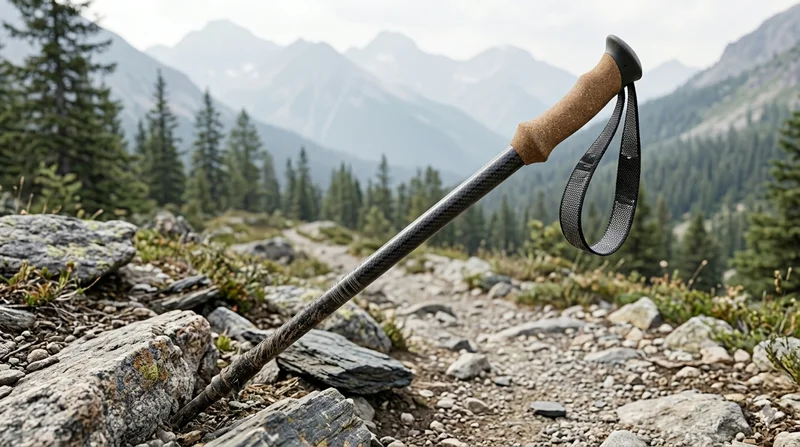
Carbon Fiber Trekking Pole
Lightweight carbon fiber trekking pole manufactured from high-grade carbon fiber tube. Weighs only 160g per pole while providing superior shock absorption and durability for hiking, trail running, and backpacking.

Carbon Fiber Plate — 3K Twill T700 3.0mm
Medium-thickness 3.0mm carbon fiber plate offering significantly higher load capacity while maintaining attractive 3K twill finish. Suitable for structural brackets, reinforcement plates, and load-bearing panels.