
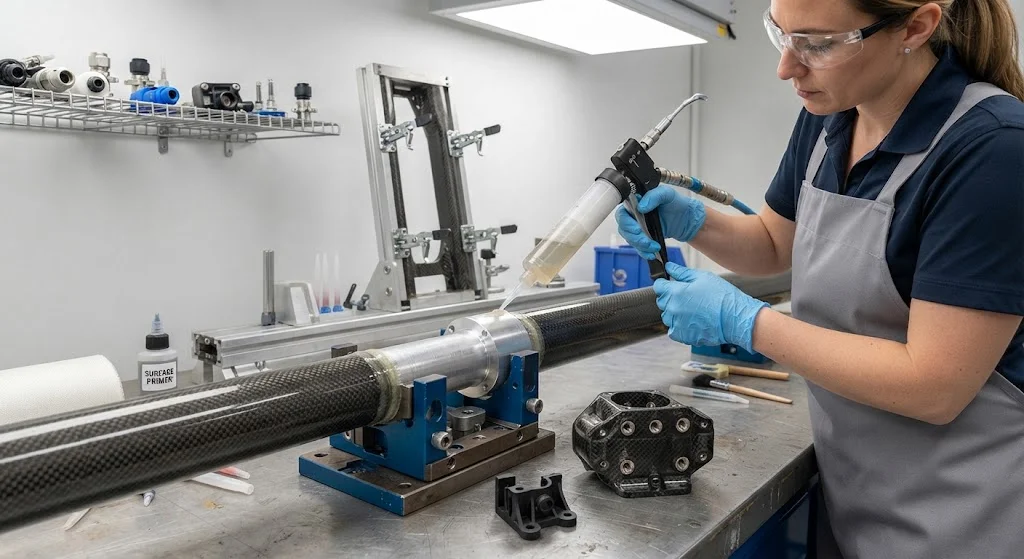
Custom carbon fiber assemblies sit one level above individual composite parts: instead of a single molded component, the supplier delivers a ready-to-install unit in which carbon fiber structures are joined to metal inserts, thermoplastic brackets, fasteners and electronic payloads. For original equ
Introduction
Custom carbon fiber assemblies sit one level above individual composite parts: instead of a single molded component, the supplier delivers a ready-to-install unit in which carbon fiber structures are joined to metal inserts, thermoplastic brackets, fasteners and electronic payloads. For original equipment manufacturers, buying custom carbon fiber assemblies rather than loose parts shifts the tolerance, bonding and integration risk to the supplier and shortens the path to production. The value of this approach shows up in applications where the carbon fiber component is only one element of the system — a robotic arm that needs a servo mount, a drone fuselage that needs hard points for landing gear, or a medical device housing that needs threaded inserts for assembly. This article examines what a custom carbon fiber assembly contains, how components are integrated, and how quality control is managed across the whole assembly rather than per part.
What a Custom Carbon Fiber Assembly Includes
A typical assembly combines several categories of parts, each with its own manufacturing route:
- Carbon fiber structures: tubes, plates, panels and housings produced by filament winding, compression molding, bladder molding or autoclave cure, depending on geometry and volume.
- Metal inserts: CNC-machined aluminum, titanium or stainless inserts for threaded fasteners, bearings, shafts and electrical grounding — bonded or co-cured into the composite.
- Secondary composites: overmolded thermoplastic ribs, PU foam cores or glass fiber brackets that add stiffness, damping or attachment points.
- Off-the-shelf hardware: bearings, bushings, fasteners, cable glands and sensors that the supplier sources and installs under incoming inspection.
The engineering content of a custom carbon fiber assembly lives in how these parts are toleranced, joined and verified as a system — which is where the integration methods below come into play.
Integration Methods for Custom Carbon Fiber Assemblies
Composite component integration is fundamentally a joining problem. Carbon fiber parts cannot be welded like steel, and drilling holes through the laminate cuts the load-bearing fibers, so the joining strategy determines both performance and cost. The main methods are:
- Adhesive bonding: the default for structural joints between carbon fiber parts and metal inserts. Epoxy adhesives with proper surface preparation achieve shear strengths of 20-35 MPa and distribute load across the whole bond area, avoiding the stress concentrations of fasteners.
- Mechanical fastening: bolts and rivets used where disassembly is required or where peel loads exceed adhesive limits. Oversized holes are avoided by bonding in metal lugs or by using interference-fit fasteners.
- Co-curing and co-bonding: uncured or partially cured composite is cured together with the mating part, creating a chemical bond as strong as the laminate itself. This is the highest-performance option for complex carbon fiber assemblies and the most demanding to control.
- Overmolding: a thermoplastic component is injection-molded directly onto the carbon fiber structure, adding ribs, snap-fits and sealing surfaces in one step.
The table below compares the four integration methods across the criteria that matter in production:
| Criterion | Adhesive bonding | Mechanical fastening | Co-curing | Overmolding |
|---|---|---|---|---|
| Typical joint strength | 20-35 MPa shear | Limited by bearing | Laminate-level | Moderate |
| Disassembly | No | Yes | No | No |
| Tolerance accommodation | Good | Excellent | Poor | Good |
| Weight penalty | Low | High (bolts) | Lowest | Low |
| Process cost | Medium | Low | High | Medium |
| Fatigue performance | Excellent | Moderate | Excellent | Good |
Most production custom carbon fiber assemblies use a combination: bonded inserts for load paths, fasteners where service access is needed, and co-cured interfaces for primary structure.
Quality Control in Custom Carbon Fiber Assembly Manufacturing
Quality control for CFRP assembly manufacturing differs from single-part QC because failures usually occur at interfaces — the bond line, the insert pocket or the tolerance stack-up — rather than inside the laminate. A mature assembly supplier therefore controls four areas:
- Tolerance stack-up analysis: carbon fiber parts cure with dimensional variation, so the supplier analyzes how individual tolerances accumulate before designing the joint, rather than discovering the mismatch at final fit.
- Surface preparation records: bonding quality depends on abrasion, cleaning and plasma or corona treatment of the bond surfaces; every step must be documented and verified by contact-angle or peel tests.
- NDT of joints: ultrasonic inspection of bond lines, and pull-off or lap-shear testing of sacrificial coupons from each production batch.
- Functional testing: torque checks on inserts, pressure or leak tests on sealed housings, and final dimensional inspection with CMM against the assembly drawing.
Ask any supplier how bond failures are detected before they reach the customer. If the answer is only visual inspection, the assembly quality system is not yet mature enough for structural applications.
Sourcing Custom Carbon Fiber Assemblies: Lead Times and Documentation
Sourcing a custom carbon fiber module — the term many suppliers use for a designed, integrated assembly — follows a different procurement path than buying stock parts. Expect a five-stage process:
- Design for manufacturing review: the supplier reviews your CAD, suggests joint and insert improvements, and confirms what is producible at your target cost.
- Prototype phase: typically 3-6 weeks for bonded and machined assemblies, including bond coupons and first functional samples.
- Qualification: test reports, bond strength data and dimensional results are delivered against an agreed acceptance document.
- Serial production: per-lot documentation — material certs, bond records, NDT results and inspection reports — ships with every batch.
- Change control: any change to materials, tooling or process is notified in writing before it affects your parts.
Because the documentation burden is heavy, the supplier's ability to produce clean records is itself a selection criterion. A well-documented assembly costs more per unit but removes incoming inspection and field failure risk from your side of the contract.
Treat the documentation package as part of the warranty: review it as carefully as the prototype itself, and require qualification test data before authorizing serial production — a supplier that cannot document the first lot will not document the hundredth.
Frequently Asked Questions
How much weight can a carbon fiber assembly save compared to an equivalent metal assembly?
For a well-designed assembly, weight savings of 40-60 percent versus welded or bolted steel, and 25-45 percent versus aluminum, are typical — but the comparison must include inserts, fasteners and brackets. A carbon fiber tube with aluminum end fittings is heavier than the tube alone; the realistic saving is measured on the whole assembly. The most effective designs replace the metal part and its fasteners together, which is why integrated assemblies usually beat retrofitting composite parts onto metal structures.
Can bonded carbon fiber assemblies be disassembled for maintenance?
Adhesive-bonded joints are permanent by design. Where maintenance access is required, designers use mechanical fastening at the service interfaces and bonding everywhere else, or they design replaceable sub-modules — a bonded insert carrier that can be exchanged as a unit. Discuss disassembly requirements during the design review; retrofitting serviceability after the fact is expensive and often compromises the bond design.
What documentation should I receive with a production assembly batch?
A complete batch package includes material certificates for the fibers, resins and metals used; bond process records with surface preparation and cure data; NDT results for bond lines and laminates; dimensional inspection reports; and functional test records such as insert torque or pressure test values. For aerospace or medical applications, add lot traceability back to raw material batches. If a supplier cannot produce this package for a sample lot, treat the missing documents as a red flag.
Conclusion
Custom carbon fiber assemblies move the integration risk — tolerance management, joint design and quality control — from the OEM to the supplier, which is exactly where it belongs when the assembly is the critical path to launch. The deciding factors in supplier selection are integration competence (bonding, co-curing and overmolding experience), quality documentation discipline, and the design-for-manufacturing input the supplier brings to your CAD. For applications where the carbon fiber part is one element of a larger system, buying the integrated assembly rather than loose parts reliably shortens lead time and reduces field failure risk.
Explore our carbon fiber fabrics, tubes and prepregs for your assembly program, or contact our engineering team to discuss multi-component integration, bonding support and qualification testing for your product.
Part of topic
Related Articles
- Carbon Fiber Sheets Suppliers: Specification Comparison and Procurement Guide
- Custom Carbon Fiber Fabrication: One-Stop Service from Design to Delivery
- Carbon Fiber Near Me Suppliers: Global Local Supplier Directory for Quick Procurement
- Custom Carbon Fiber Shop Services: From Prototype to Mass Production Workflow
- Carbon Fiber High-Speed Train Brake Discs: Thermal Stability and Wear Resistance
- Carbon Fiber Composite Rebar for Corrosive Environments: Marine and Chemical Plant Applications
Interested in Our Products?
Contact our team for competitive pricing and technical specifications.
Get a QuoteRelated Products
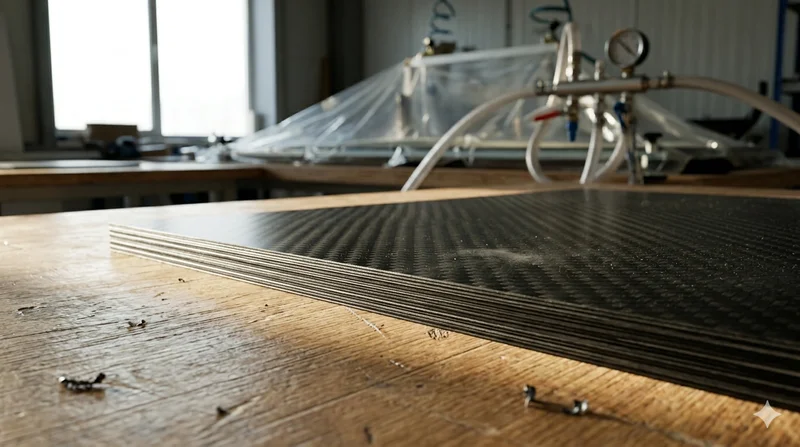
Carbon Fiber Plate — 3K Twill T700 3.0mm
Medium-thickness 3.0mm carbon fiber plate offering significantly higher load capacity while maintaining attractive 3K twill finish. Suitable for structural brackets, reinforcement plates, and load-bearing panels.
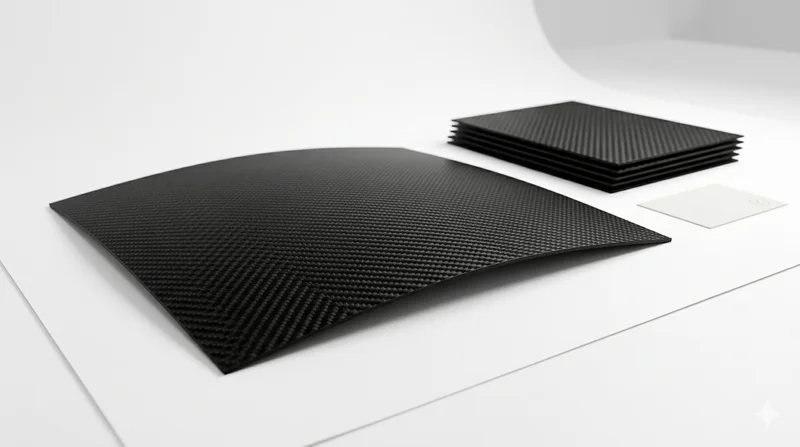
Carbon Fiber Plate — 3K Twill T700 1.5mm
Thin 1.5mm carbon fiber plate with 3K twill weave surface. Lightweight and stiff, commonly used for covers, panels, drone bodies, and applications requiring a premium aesthetic appearance.
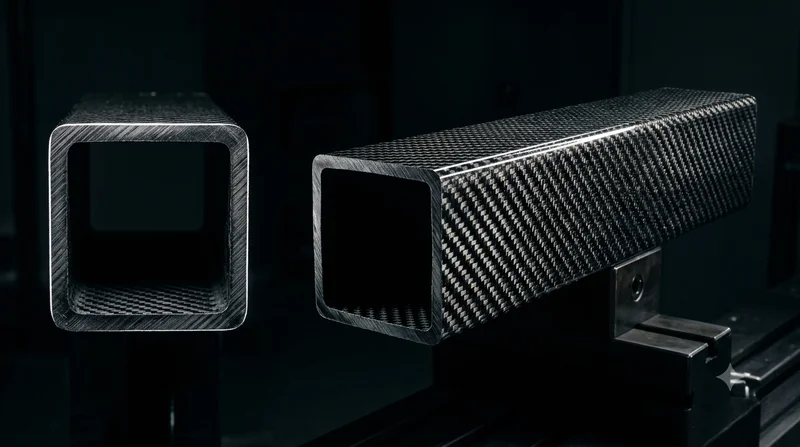
Square Carbon Fiber Tube — 3K Twill T700
Square cross-section carbon fiber tube manufactured with 3K twill weave for torsional strength. Preferred for structural frames, trusses, and support columns where rectangular geometry offers design flexibility.
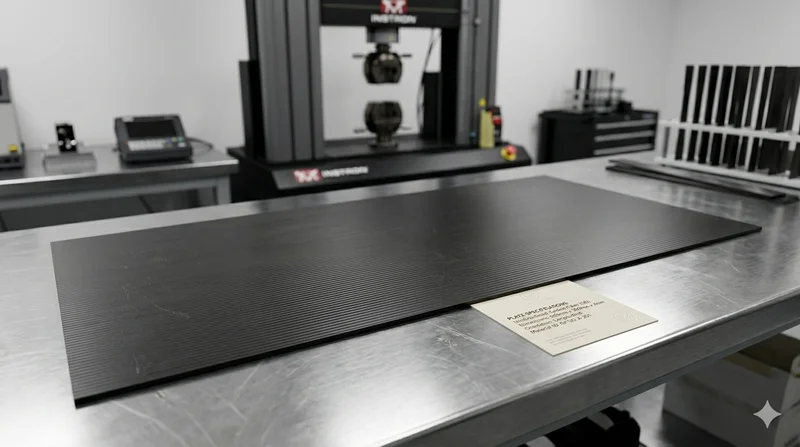
Carbon Fiber Plate — UD Unidirectional T700
Unidirectional carbon fiber plate with all fibers oriented in a single direction for maximum strength along the fiber axis. Essential for structural reinforcements, splints, and applications where load direction is predictable.
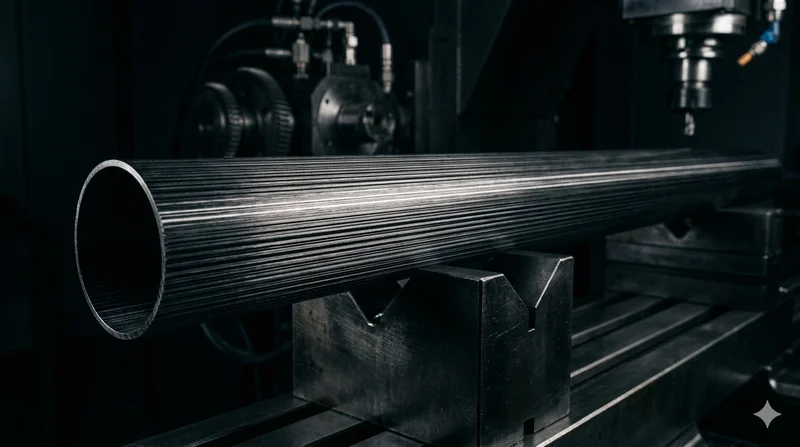
Round Carbon Fiber Tube — UD Unidirectional T700
Unidirectional (UD) round tube with all fibers aligned axially for maximum longitudinal stiffness. Ideal for applications requiring high bending rigidity with minimal weight, such as shafts, struts, and structural reinforcements.