
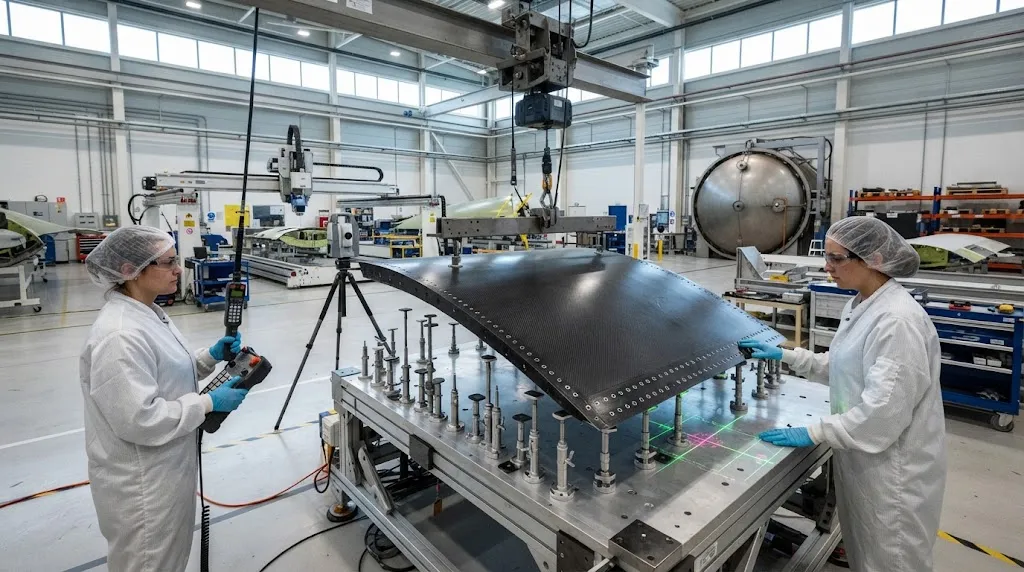
The wing box is the primary load-bearing structure of a fixed-wing aircraft, transferring lift, bending and torsion from the wing into the fuselage. On modern composite airliners such as the Airbus A350, the wing box is no longer a sheet-metal assembly but a single integrated carbon fib
Introduction
The wing box is the primary load-bearing structure of a fixed-wing aircraft, transferring lift, bending and torsion from the wing into the fuselage. On modern composite airliners such as the Airbus A350, the wing box is no longer a sheet-metal assembly but a single integrated carbon fiber structure. The Airbus A350 wing box is frequently cited as containing fewer than 15,000 parts, against more than 150,000 in an equivalent metallic design — a tenfold reduction that is possible only because composite panels are cured as large, continuous laminates rather than assembled from thousands of discrete pieces.
That integration is not automatic. It demands discipline across four areas: co-curing and co-bonding at the spar-skin interface, automated fiber placement for the wing covers, assembly tooling that holds large flexible parts to millimeter tolerances, and a quality system that catches defects before parts reach the assembly line. This article walks through each of these, drawing on the A350 experience and the process choices that determine cost, rate and first-pass yield in composite wing box programs.
Architecture of the Composite Wing Box
A composite wing box is built from a small number of large parts: upper and lower wing covers (skins, panels), front and rear spars, and ribs that distribute load between them. The design freedom of composites allows the skin thickness and ply orientation to vary continuously along the span, adding material where bending loads are highest and removing it at the outboard region.
- Upper cover: dominated by compression and buckling loads, it carries many plies in the 0-degree span direction and uses damage-tolerant toughened epoxy systems.
- Lower cover: tension-dominated, exploiting the full tensile strength of high-strength carbon fiber where bolt loads from pylon and landing gear attachments concentrate.
- Front and rear spars: shear webs with flanges that bond to the covers, transferring vertical shear and torsional loads; rear spar design is complicated by hinge cutouts for control surfaces.
- Ribs: metallic or composite, transferring discrete loads from landing gear, engines and control surfaces into the box structure.
Because the covers are several meters long and millimeters thick after cure, they flex like large metal sheets during handling. The entire integration process — from cure to final assembly — must brace these parts against the effects of their own flexibility.
Co-Curing and Co-Bonding: The Spar-Skin Interface
The defining decision in wing box integration is how spars and stringers join the skin. Three approaches exist, and each carries a different quality and rate profile:
| Joining method | Process | Bond quality | Rate impact |
|---|---|---|---|
| Co-curing | Skin and stringers/spars cured in one autoclave cycle | Best — no adhesively bonded interface | Complex tooling; long cycle per part |
| Co-bonding | Cured skin bonded with adhesive to uncured (or partly cured) stiffeners | Good — controlled adhesive layer | Moderate; separate skin cure step |
| Secondary bonding | Both parts fully cured, joined with adhesive film | Good but surface-prep sensitive | Highest throughput; assembly-line friendly |
A350-class programs use co-curing and co-bonding for the primary load path because a co-cured interface has no bond line that could become a certification risk under impact or fatigue. The trade-off is tooling: co-cured covers require segmented invar tooling that must hold the part to tolerance through cure, and any tooling error is reproduced in hundreds of parts before it is detected.
Large-Cover Manufacturing: AFP and the Rate Question
The upper and lower covers of a widebody wing are among the largest composite parts in production aviation. Automated fiber placement (AFP) is the standard process, laying 1/4-inch or 1/2-inch tows at high speed onto flat or gently curved molds, with a robotic head that adds or drops tows to steer the laminate around openings and thickness transitions.
- Placement rate: modern heads reach 100-200 kg per hour of deposited material, and a widebody wing cover requires 500-1,000 kg of carbon fiber.
- Gap and overlap control: tow gaps are held to fractions of a millimeter; repeated gaps in the same ply position create resin-rich zones that reduce compression strength.
- Defect detection: in-line laser profilometry and thermography check each course as it is laid, catching wrinkles and tow flip before cure.
- De-bulking: periodic vacuum compaction removes trapped air; the sequence of compaction steps is part of the qualified process.
Rate is the program-level constraint. A single autoclave can cure roughly one wing cover set per day, so widebody programs run multiple autoclaves and multiple AFP cells in parallel. Achieving the promised 13-per-month rate on an aircraft like the A350 demanded not one capable process but a factory full of synchronized ones.
Assembly Tooling and Tolerance Management
After cure, the wing covers are flexible and dimensionally unforgiving. The assembly tooling must position two curved covers, two spars and a rib set so that fastener holes align to fractions of a millimeter across spans of several meters. The A350-class answer combines several techniques:
- Determinate assembly: holes are drilled using tooling-based jigs rather than transferred from part to part, so positional error is not accumulated.
- Laser projection and metrology: laser trackers verify jig positions daily, accounting for thermal drift in the assembly hall.
- Flexible fixtures: numerically controlled pogo pins support the skin at defined points, compensating for the part's natural sag between rib stations.
- One-up assembly: where feasible, parts are fastened as they are placed, using the tool to define position instead of measurement.
Tolerance management extends to thermal effects: carbon fiber's near-zero coefficient of thermal expansion is a double-edged sword. The part barely moves with temperature, so the steel and invar tooling must be engineered to hold position against its own expansion, and the assembly hall is temperature-controlled to keep jig and part consistent.
Quality Gates and the Cost of Defects
Every stage of wing box integration is guarded by inspection, because the cost of rework grows by an order of magnitude at each step. Undetected porosity in a cured cover means a scrapped part worth hundreds of thousands of dollars; a misdrilled hole in final assembly interrupts a line worth millions per day in lost production. The quality architecture of a composite wing box program therefore includes:
- Non-destructive inspection after cure: ultrasonic phased-array scanning of the full cover for porosity, delamination and bond quality.
- Bond verification on secondary joints: surface-prep audits, witness coupons and pull-off testing on adhesive bonds.
- Statistical process control on AFP: gap, wrinkle and placement logs feeding back to the layup program in near real time.
- Digital thread: every part carries an electronic record of material lot, AFP program, cure cycle and inspection results, enabling traceability that metallic programs never needed.
These gates convert a materials program into a rate-capable production system. The A350 lesson is that the wing box is won in the quality system — a program that clears parts through inspection at 99% first-pass yield can staff a line at half the rate of one fighting 80%.
Frequently Asked Questions
How many parts are in the A350 carbon fiber wing box compared with a metallic design?
The A350 wing box is commonly cited as containing fewer than 15,000 parts, while an equivalent metallic wing box would require more than 150,000. The reduction comes from curing large continuous composite panels instead of assembling thousands of discrete sheet-metal pieces, which also removes most of the fasteners and their associated sealants and inspections.
What is the difference between co-curing and co-bonding a spar to a wing skin?
Co-curing cures the skin and the spar or stringer in a single autoclave cycle, creating a continuous laminate interface with no adhesive bond line. Co-bonding cures the skin first and bonds the uncured stiffener to it with an adhesive film. Co-curing gives the strongest, lowest-risk interface but requires more complex tooling and longer cycles.
Why does automated fiber placement dominate large wing cover manufacturing?
AFP deposits 1/4-inch to 1/2-inch tows robotically at 100-200 kg per hour with precise gap control, steering capability for openings and thickness transitions, and in-line defect detection. It is the only process that can place a 500-1,000 kg widebody wing cover at production rates while holding properties consistent enough for qualification.
What is determinate assembly and why is it critical for wing boxes?
Determinate assembly uses tooling-based fixtures to define hole positions rather than transferring hole locations from one part to another, so positional error does not accumulate across the assembly. Combined with laser metrology, temperature-controlled halls and flexible pogo-pin fixtures, it holds fastener alignment to fractions of a millimeter over multi-meter spans.
Conclusion
The carbon fiber wing box is the clearest proof that composites change not just weight but the entire economics of airframe assembly. Co-curing and co-bonding eliminate the fastener population and its inspection burden; automated fiber placement turns the largest airframe parts into repeatable, instrumented processes; determinate assembly and rigorous quality gates convert a materials innovation into a rate-capable factory. Any program that masters these four disciplines inherits the A350-class lesson: integration is where the value is created, and where it is lost.
YongXian supplies aerospace-grade carbon fiber fabrics, unidirectional prepregs and woven reinforcements for wing structures. Explore our aerospace product range or contact our engineering team to discuss material systems for wing box programs.
Part of topic
Related Articles
- Carbon Fiber Mooring for Floating Offshore Wind: Fatigue and Corrosion in Deep Water
- Carbon Fiber Bicycle Frame Optimization: Layup Design and Manufacturing for Competitive Racing
- Carbon Fiber CFRP Retrofit for Infrastructure: Bridge and Building Seismic Strengthening
- Carbon Fiber Medical Imaging Equipment: Lightweight Gantry and Couch Structures for MRI/CT
- Carbon Fiber EV Battery Enclosures: Crash Safety and Electromagnetic Shielding Design
- Carbon Fiber Structures for Low-Altitude Economy: UAV Airframes and eVTOL Components
Interested in Our Products?
Contact our team for competitive pricing and technical specifications.
Get a QuoteRelated Products
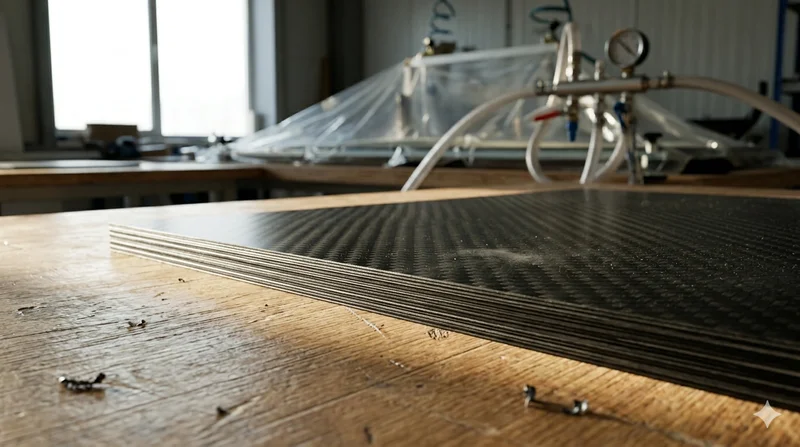
Carbon Fiber Plate — 3K Twill T700 3.0mm
Medium-thickness 3.0mm carbon fiber plate offering significantly higher load capacity while maintaining attractive 3K twill finish. Suitable for structural brackets, reinforcement plates, and load-bearing panels.
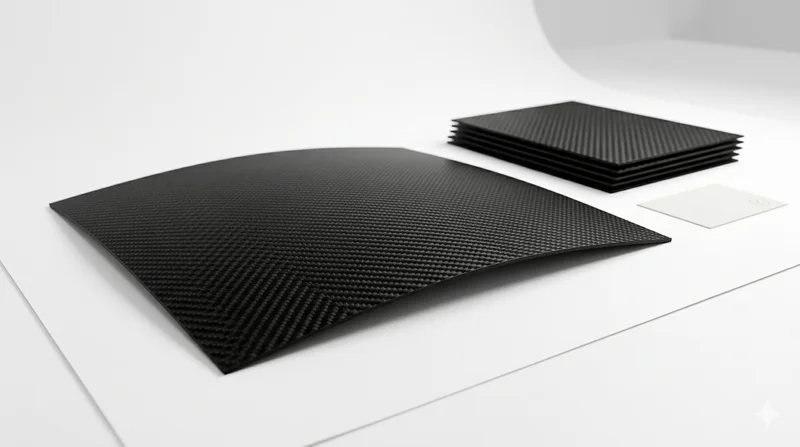
Carbon Fiber Plate — 3K Twill T700 1.5mm
Thin 1.5mm carbon fiber plate with 3K twill weave surface. Lightweight and stiff, commonly used for covers, panels, drone bodies, and applications requiring a premium aesthetic appearance.
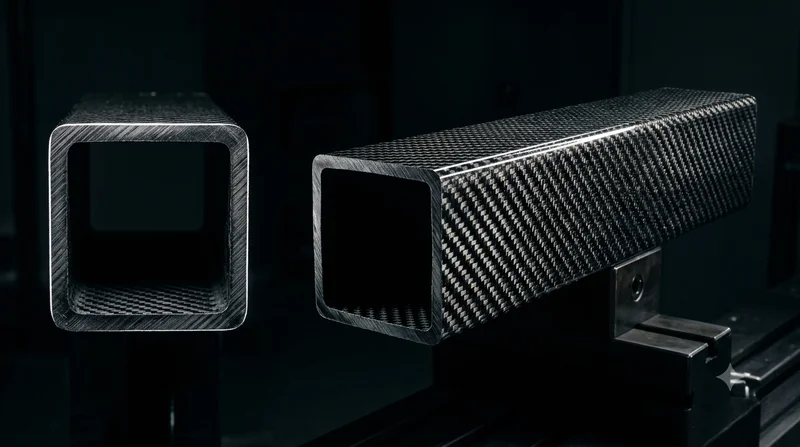
Square Carbon Fiber Tube — 3K Twill T700
Square cross-section carbon fiber tube manufactured with 3K twill weave for torsional strength. Preferred for structural frames, trusses, and support columns where rectangular geometry offers design flexibility.
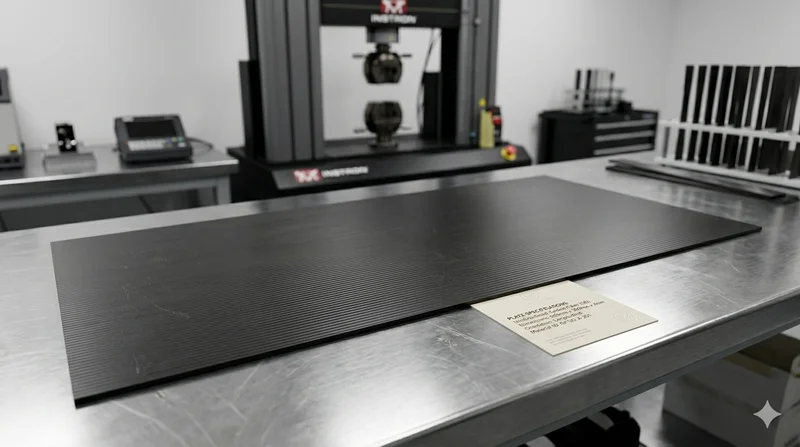
Carbon Fiber Plate — UD Unidirectional T700
Unidirectional carbon fiber plate with all fibers oriented in a single direction for maximum strength along the fiber axis. Essential for structural reinforcements, splints, and applications where load direction is predictable.
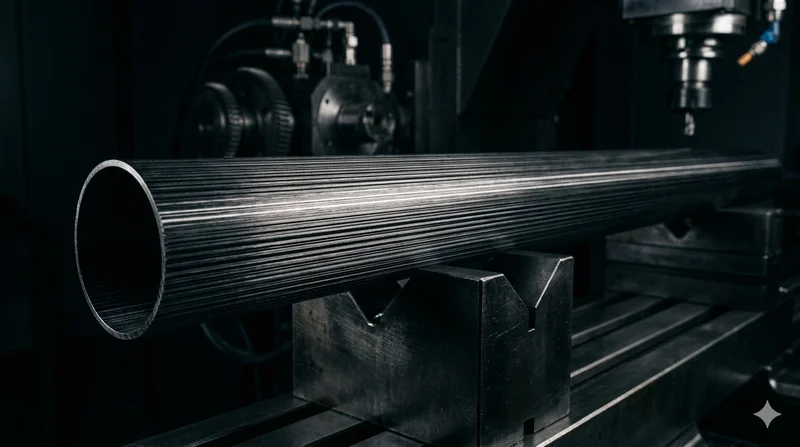
Round Carbon Fiber Tube — UD Unidirectional T700
Unidirectional (UD) round tube with all fibers aligned axially for maximum longitudinal stiffness. Ideal for applications requiring high bending rigidity with minimal weight, such as shafts, struts, and structural reinforcements.