
Commercial shipping accounts for roughly three percent of global CO2 emissions, and the International Maritime Organization's decarbonization targets have pushed the industry to test every viable option — alternative fuels, hull optimization, and a return to a technology that predates e
Introduction
Commercial shipping accounts for roughly three percent of global CO2 emissions, and the International Maritime Organization's decarbonization targets have pushed the industry to test every viable option — alternative fuels, hull optimization, and a return to a technology that predates engines: wind. Modern wind propulsion systems are nothing like traditional rigs. They are engineered structures that harvest wind power to cut fuel consumption on large cargo ships, and the most ambitious of them are built almost entirely from carbon fiber.
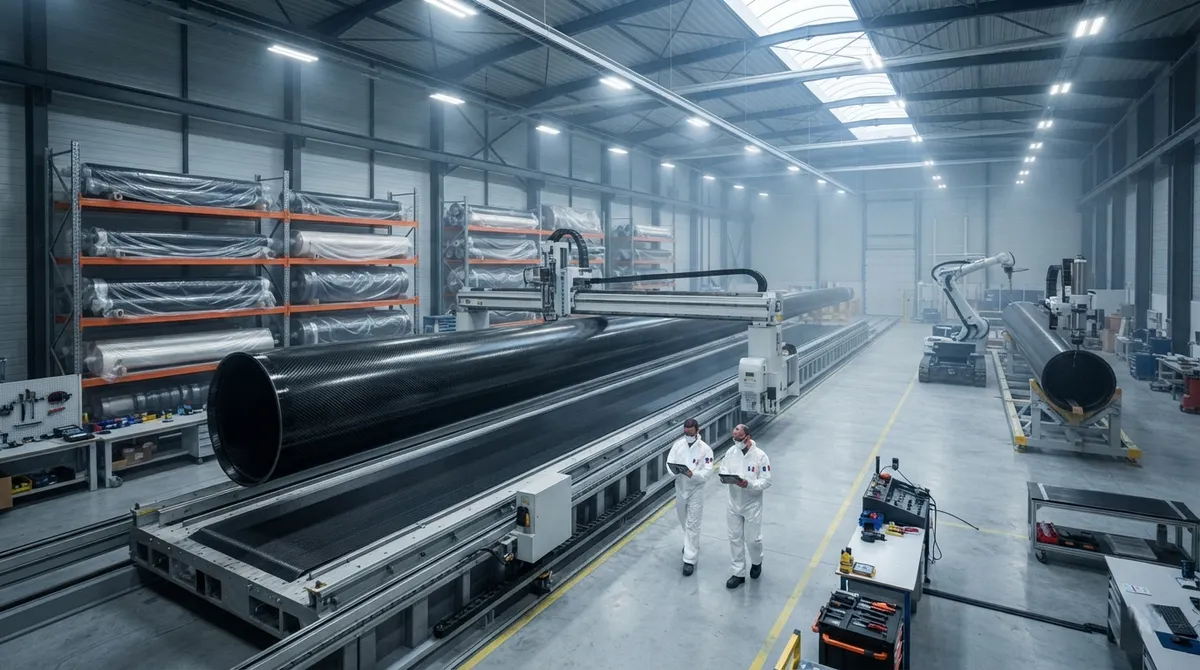
Nowhere is that more visible than in Lanester, near Lorient in Brittany, France, where SolidSail Mast Factory (SMAF) was inaugurated on February 12, 2026. The factory produces the giant CFRP masts for SolidSail, the rigid-sail wind propulsion system developed by shipbuilder Chantiers de l'Atlantique. With masts approaching 70 meters and sail areas from 800 to 1,500 square meters per rig, SMAF is manufacturing some of the largest carbon fiber structures in the world — and doing it with robotic automation that was developed specifically for the job.
The SolidSail Mast Factory: A Consortium for Giant Composites
SMAF is the result of a partnership between Chantiers de l'Atlantique and five specialists in composite materials — Avel Robotics, CDK Technologies, Lorima, Multiplast, and SMM Composites — that have collaborated since 2020 to industrialize large CFRP mast production. The factory represents an investment of 18 million euros (10 million for the building and 8 million for the process), partly financed by the French state and the European Union. Inside, a 4,000-square-meter hall free of internal pillars provides the clear floor space needed to lay up and cure masts longer than a standard football field is wide.
The factory is designed to produce 12 to 15 masts per year — about 250 tonnes of finished CFRP structures annually — with a permanent team of roughly thirty people. It is currently the only facility in the world capable of producing masts of 55 to 60 meters or more, and its order book extends to mid-2027. Beyond SolidSail masts, the facility is positioned to manufacture large composite parts for aerospace, defense, space, transport, and wind energy, making it a general-purpose platform for very large carbon fiber structures.
The Anatomy of a 70-Meter CFRP Mast
Each SolidSail mast is built from two half-shells, each made from ten tonnes of carbon fiber, laid up in molds 72 meters long and 3 meters wide that weigh 15 tonnes each. The finished structure — a 65-meter mast with a diameter of 2.2 meters and a weight of about 20 tonnes — tapers from 180 millimeters thick at its base to just 15 millimeters at its thinnest point. The carbon fiber arrives as prepreg rolls — fabric pre-impregnated with resin — stored at low temperature in 300 square meters of cold rooms to stop the resin from curing prematurely until draping begins.
Because weight is a direct driver of cost and performance on a ship, every layer of the layup is engineered to minimize mass. The mast is designed without shrouds — the wire stays used in conventional rigs — relying instead on its composite structure for stiffness, which further reduces weight and maintenance. The result is one of the largest carbon components in the world: a 55-meter mast weighs about ten tonnes, a fraction of what a steel equivalent would weigh, and the 65-meter masts for the largest rigs come in at around 20 tonnes.
Robotic Draping at Gigantic Scale
At the heart of SMAF are two robots mounted on rails that run the full length of the mast. A draping robot supplied by Fives Machining Systems, based on the company's Atlas head technology, lays carbon fiber plies onto the mold following a digital draping plan that specifies the number and type of plies at every position. It uses two interchangeable heads — one for unidirectional plies and one for curved surfaces — and is assisted by two operators. Only about five percent of the layup mass is still draped by hand. The second robot, supplied by French manufacturer Creno, machines the cured shell: it performs surface finishing and drills the 500 to 600 holes needed for fittings, in hole sizes ranging from a few millimeters to 1.5 meters in height and 200 millimeters in width.
Automation delivers more than speed. The robots replicate the layup identically from mast to mast, which is essential for a product that must be certified and reproducible in series. Robotic draping also eliminates certain vacuum compaction steps that are standard in manual prepreg work, shortening the process and improving consistency. For the consortium, the robotic line was the deciding factor that made it feasible to keep production in France and compete on cost at all.
From Masts to Decarbonized Voyages
The first masts have already found their ships. Two complete SolidSail rigs were installed on Neoliner Origin, a cargo vessel built in Turkey at the RMK Marine shipyard and christened on October 13, 2025. Three more rigs equip the Orient Express Corinthian luxury liner, soon to be operated by the new Orient Express cruise division backed by Accor and LVMH, and the factory's order book includes masts for a second Orient Express unit and a new prototype. Each SolidSail system combines a 1,050-square-meter mainsail — a dozen articulated composite panels with a carbon frame and glass fiber membrane that fold like an accordion — with a 450-square-meter jib on a furler, all mounted on a balestron rig that pivots 360 degrees and tilts up to 70 degrees to reduce air draft when passing under bridges.
The product line spans two rig sizes, summarized below:
| Configuration | Rig sail area | Target vessels | Mast length |
|---|---|---|---|
| Medium rig | 800 m² | 100-150 m ships | 55-60 m |
| Large rig | 1,500 m² | 120-250 m ships | 65-70 m |
The larger configuration was prototyped at half- and full scale at the Chantiers de l'Atlantique shipyard in Saint-Nazaire between 2020 and 2023, and is now in series production at SMAF.
Why Carbon Fiber Wins for Wind Propulsion
Carbon fiber is not an incidental choice for these masts; it is the enabling material. A mast of this height must carry enormous sail forces while staying as light as possible, because weight aloft directly reduces cargo capacity and increases vessel roll. CFRP delivers the required stiffness and strength at a fraction of the mass of steel or aluminum, resists saltwater corrosion that plagues metallic rigs, and offers the fatigue performance needed for decades of ocean service. The economics are equally decisive: wind propulsion typically cuts fuel consumption by 10 to 30 percent depending on route, and the fuel savings pay back the premium cost of the composite structure over the vessel's operating life.
The case for CFRP in these masts rests on four compounding advantages:
- Weight: a CFRP mast weighs a fraction of an equivalent steel structure, preserving cargo capacity and reducing vessel roll.
- Strength and stiffness: the fiber delivers the load-bearing performance required for sails of up to 1,500 m².
- Corrosion resistance: composites do not suffer the saltwater corrosion that attacks metallic rigs.
- Fatigue life: carbon fiber structures sustain decades of cyclic ocean loading with excellent durability.
Market projections underline the opportunity. Around 2,500 new ships are built every year, and industry estimates suggest a meaningful share could adopt wind propulsion within five years. If a third of those ships carried three masts each, the market would need roughly 750 rigs per year; capturing ten percent of that demand means about 70 rigs annually — the output of four factories like SMAF. The scale of the prize explains why the consortium industrialized production rather than continuing hand-built prototype methods.
Frequently Asked Questions
How much does a SolidSail carbon fiber mast weigh?
A 55-meter mast weighs about ten tonnes, and the largest 65-meter masts for the 1,500 m² rigs weigh around 20 tonnes. Each mast is built from two half-shells containing ten tonnes of carbon fiber each, laid up in 72-meter molds and machined by robots before painting and delivery.
How much fuel can wind propulsion save on a cargo ship?
Depending on the route, rig configuration, and weather, wind propulsion systems typically reduce fuel consumption and associated CO2 emissions by 10 to 30 percent. Operators such as the Neoliner and Orient Express programs are integrating SolidSail systems specifically to cut bunker fuel use and meet decarbonization targets ahead of regulation.
Why is the mast made of carbon fiber instead of steel?
Carbon fiber offers the required stiffness and strength at a fraction of steel's weight, which preserves cargo capacity and reduces vessel roll; it also resists saltwater corrosion and has excellent fatigue life for decades of ocean service. The weight saving is so important that the mast is designed without shrouds, relying on the composite structure itself for stiffness.
Conclusion
SolidSail Mast Factory is a demonstration that carbon fiber manufacturing can scale to structures measured in tens of meters and tens of tonnes. The robotic draping line built around Fives and Creno robots turns hand-built prototypes into a repeatable industrial process, and the partnership structure — a shipbuilder working with five composite specialists — shows how maritime decarbonization is creating entirely new demand for large-format CFRP. As wind propulsion moves from demonstration projects to series production, the factories that build these masts will become anchor customers for carbon fiber suppliers.
Large-format CFRP structures demand fiber grades, tow formats, and prepreg supply chains that match the application's structural requirements. Browse our carbon fiber and composite material range, or contact our engineering team to discuss material selection and supply planning for your marine or wind-energy program.
Related Articles
- Carbon Fiber Tube for Sale: Comparing Listings and Avoiding Bad Specs
- Carbon Fiber Engine Parts: High-Temperature Performance for Racing and Performance Vehicles
- Carbon Fiber Body Parts: Automotive Exterior Panels and Structural Components
- Carbon Fiber Drone Body Manufacturing: Monocoque Design and Production Methods
- Carbon Fiber Drone Parts Supplier: FPV Frames, Arms and Structural Components
- Filament Wound Epoxy Tubes: Industrial Applications from Oil and Gas to Aerospace
Interested in Our Products?
Contact our team for competitive pricing and technical specifications.
Get a QuoteRelated Products

Carbon Fiber Plate — 3K Twill T700 1.5mm
Thin 1.5mm carbon fiber plate with 3K twill weave surface. Lightweight and stiff, commonly used for covers, panels, drone bodies, and applications requiring a premium aesthetic appearance.

Carbon Fiber Plate — 3K Twill T700 3.0mm
Medium-thickness 3.0mm carbon fiber plate offering significantly higher load capacity while maintaining attractive 3K twill finish. Suitable for structural brackets, reinforcement plates, and load-bearing panels.

Square Carbon Fiber Tube — 3K Twill T700
Square cross-section carbon fiber tube manufactured with 3K twill weave for torsional strength. Preferred for structural frames, trusses, and support columns where rectangular geometry offers design flexibility.
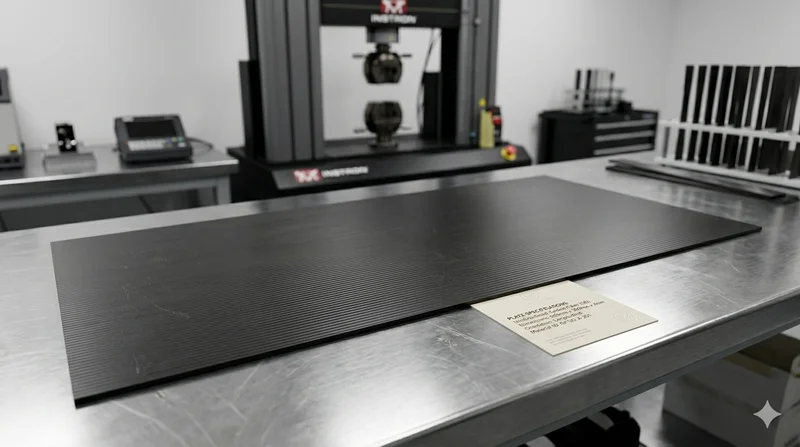
Carbon Fiber Plate — UD Unidirectional T700
Unidirectional carbon fiber plate with all fibers oriented in a single direction for maximum strength along the fiber axis. Essential for structural reinforcements, splints, and applications where load direction is predictable.
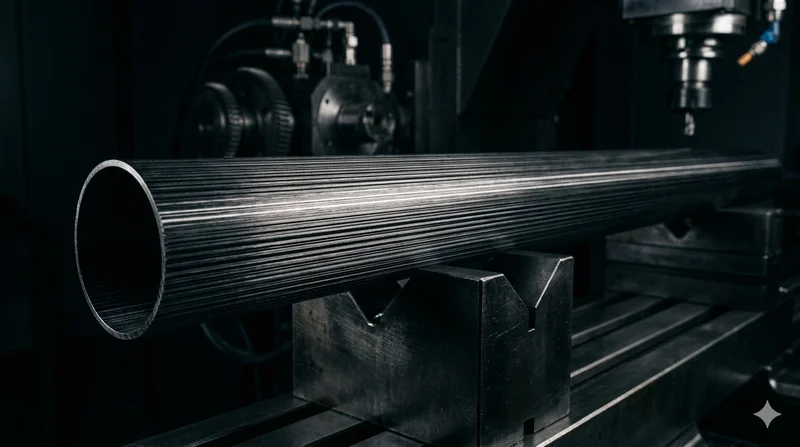
Round Carbon Fiber Tube — UD Unidirectional T700
Unidirectional (UD) round tube with all fibers aligned axially for maximum longitudinal stiffness. Ideal for applications requiring high bending rigidity with minimal weight, such as shafts, struts, and structural reinforcements.