
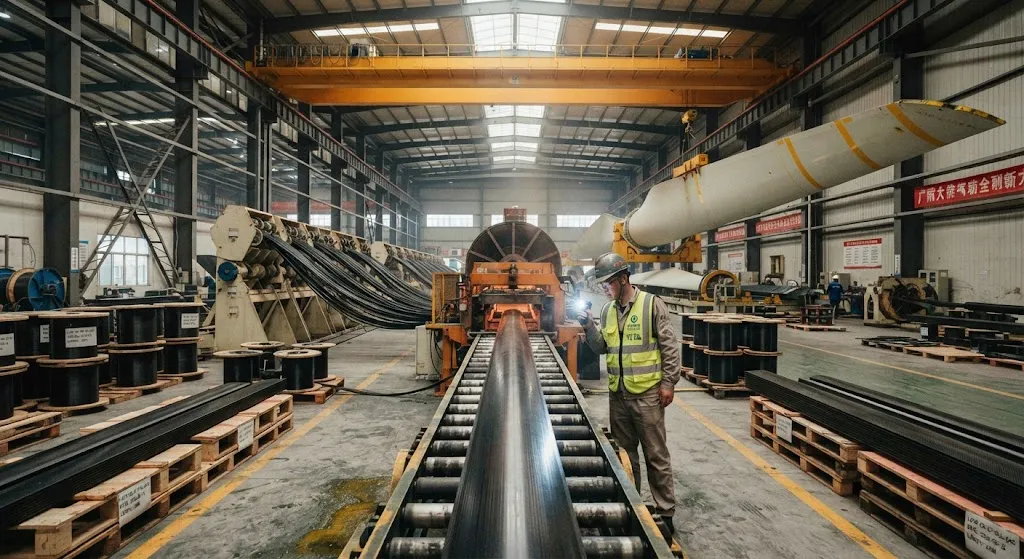
Wind energy is now the largest single demand sector in the global carbon fiber market. Industry estimates put wind-sector consumption at roughly 100,000 tonnes in 2025, ahead of aerospace, pressure vessels and automotive. The driver is simple: blades keep getting longer. When a blade pa
Introduction
Wind energy is now the largest single demand sector in the global carbon fiber market. Industry estimates put wind-sector consumption at roughly 100,000 tonnes in 2025, ahead of aerospace, pressure vessels and automotive. The driver is simple: blades keep getting longer. When a blade passes about 100 meters, glass fiber spar caps reach their stiffness limit, and designers switch the load-bearing spar cap — and increasingly the blade shells — to carbon fiber. At the same time, the supply side has reorganized: Chinese producers have become the top suppliers of wind-grade carbon fiber, and their capacity and price levels now set the pace for the entire sector.
Why Wind Blades Need Carbon Fiber
Blade design is a stiffness problem before it is a strength problem. Longer blades increase swept area and energy capture, but the gravitational and edgewise loads scale with blade mass and length, and the tip deflection of a purely glass-fiber blade becomes unacceptable beyond roughly 100 meters. Carbon fiber brings three advantages that matter exactly in this regime:
- Higher specific stiffness: Carbon spar caps are roughly three times stiffer than glass at comparable weight, limiting tip deflection on very long blades.
- Weight reduction: A carbon spar cap can cut blade mass by 20-30% versus glass, reducing gravity loads on the hub, bearings and tower.
- Fatigue performance: Carbon's superior fatigue properties sustain hundreds of millions of load cycles in turbulent offshore conditions.
The economics follow the physics: past 100 meters, the added cost of carbon is more than repaid by the savings in blade mass, drive train size and tower steel.
Blade Carbon Content: from 8-12% to about 20%
The carbon share of blade mass is the cleanest way to track penetration. Industry assessments indicate that carbon fiber accounted for roughly 8-12% of blade mass in 2025, concentrated in the spar cap of the largest onshore and offshore blades. Projections for 2030 put that share near 20% as carbon moves into tension surfaces, trailing edges and full-shell solutions on the largest rotors.
| Metric | 2025 | 2030 (projected) |
|---|---|---|
| Longest commercial blade | 115-125 m | 140-150 m |
| Carbon fiber share of blade mass | 8-12% | ~20% |
| Dominant spar cap material | Carbon pultrusion | Carbon pultrusion / weave |
| Offshore share of blade carbon demand | ~35% | 50%+ |
| Wind sector consumption (kt) | ~100 | 120-150 |
Pultruded carbon spar caps dominate because they combine high fiber volume fraction, straight fibers and continuous automated production. The same pultrusion capability produces the blade shell stiffeners and shear web reinforcement that account for a growing share of the carbon content of next-generation blades.
Demand by the Numbers
The market context is easier to judge with the full segment picture. The table below shows estimated global carbon fiber demand by sector for 2025 with a projected 2030 range, based on industry forecasts.
| Segment | 2025 demand (kt) | 2030 forecast (kt) | Main driver |
|---|---|---|---|
| Wind energy | ~100 | 120-150 | Blade length, offshore growth |
| Aerospace | ~25 | 30-35 | Aircraft production recovery |
| Pressure vessels | ~10-12 | 25-35 | Hydrogen storage ramp-up |
| Automotive | ~10 | 15-20 | EV lightweighting |
| Sports and leisure | ~8 | 8-10 | Stable demand |
| Other (construction, marine) | ~5-8 | 10-15 | Infrastructure applications |
| Total | ~160 | 210-260 | — |
Wind's lead is structural rather than cyclical. Even at the high end of the 2030 forecast, wind remains the largest or second-largest segment, and its growth is underwritten by global offshore targets, repowering programs of aging onshore fleets, and turbine OEM roadmaps that push rotor diameters upward every year.
The Supply Shift: China as Top Supplier
The supply side of wind-grade carbon fiber has been transformed in five years. Chinese producers have overtaken Japanese and American suppliers in wind-grade volume, and their large-tow, low-cost production now anchors the market price for spar cap material. The leading Chinese producers run integrated operations from polyacrylonitrile precursor to finished tow, which is a decisive cost advantage.
| Supplier | Base | Wind-grade offering | Position |
|---|---|---|---|
| Zhongfu Shenying | China | 48K/50K large-tow, pultrusion grade | Top Chinese producer, wind-focused growth |
| Guangwei Composites | China | Large-tow wind fiber | Major domestic supplier |
| Toray | Japan | T700-class small tow | Premium aerospace-grade position |
| Hexcel | USA | Qualified aerospace tow | Focus on aerospace and defense |
| SGL Carbon | Germany | 50K tow for industrial use | European wind and automotive supply |
The strategic consequence is price pressure on the entire value chain. Wind-grade carbon fiber has moved from a specialty material toward a commodity, and pultrusion lines that consume it are now sited near blade factories and port clusters in China, Europe and North America to shorten logistics. Local content rules are reshaping procurement as well: blade OEMs in Europe, North America and India increasingly require fiber supply, conversion or recycling commitments inside their home markets, which pushes suppliers to build pultrusion and weaving capacity near blade factories instead of shipping tow across oceans. For buyers this means more regional options and shorter lead times, but also deeper supplier qualification work, because wind-grade fiber must meet strict modulus and fatigue specifications before it qualifies for a blade program, and qualification campaigns typically take twelve months or more. Early engagement between fiber suppliers, pultruders and blade engineers is therefore becoming the norm rather than the exception in wind supply chains.
The 2030 Trajectory: Offshore, Longer Blades, Recycling
Three forces will shape wind carbon fiber demand through 2030. First, offshore wind is the growth engine: sea-based rotors are already the longest in the market, and every major offshore market plans capacity expansion. Second, repowering of early onshore wind farms replaces smaller glass blades with larger carbon blades at the same sites. Third, recycling is becoming a design input rather than an afterthought: turbine OEMs are committing to circular economy targets, and recycled carbon fiber is beginning to appear in secondary structures such as blade shells and factory transport fixtures, which creates a parallel market for reclaimed fiber on top of virgin demand.
Frequently Asked Questions
Why can't glass fiber be used in very long blades?
Glass fiber blades beyond roughly 100 meters hit a stiffness wall. Blade stiffness determines tip deflection, and excessive deflection risks tower strikes in storm conditions. Carbon fiber is about three times stiffer than glass at the same weight, so a carbon spar cap limits tip deflection while also cutting blade mass by 20-30%. The trade-off is cost: carbon spar caps are more expensive, but on very long blades the savings in hub, bearing, drive train and tower components outweigh the material premium, which is why the largest onshore and offshore blades use carbon.
Is China's position as top supplier stable?
China's lead rests on integrated production from PAN precursor to tow, large-tow processing up to 50K, and scale that keeps wind-grade prices low. That position looks durable in the medium term because replicating the precursor-to-tow chain requires substantial capital and time. The main risk factors are trade policy shifts, energy prices, and the pace of demand growth outside China. Meanwhile, Japanese, European and American producers retain their edge in aerospace-grade fiber, where qualification and quality systems matter more than price, so the two tiers of supply are unlikely to fully converge.
How will recycling affect the wind carbon fiber market?
Recycling will create a second, parallel supply stream rather than replacing virgin fiber. Carbon fiber is increasingly recovered from manufacturing scrap and end-of-life blades via pyrolysis and solvolysis, and the recycled fiber is being used in structural and semi-structural applications where its mechanical properties are adequate. In wind specifically, recycled fiber is appearing in blade shells, internal stiffeners and tooling. Because demand is growing faster than recycling capacity through 2030, recycled fiber will supplement rather than displace virgin wind-grade material, and the two prices will interact as quality standards mature.
Conclusion
Wind energy is the defining demand story of the carbon fiber industry: roughly 100,000 tonnes in 2025, carbon content in blades climbing from 8-12% toward 20% by 2030, and China established as the top supplier of wind-grade fiber. For buyers, the practical implications are a more commoditized price environment, shorter supply chains, and the emergence of recycled fiber as a new procurement option.
Whether you are sourcing virgin large-tow fiber for spar caps, recycled carbon for secondary structures, or fabrics and prepregs for blade prototyping, review our carbon fiber range or contact our team to discuss specifications, pricing and supply arrangements.
Part of topic
Related Articles
- Carbon Fiber Mooring for Floating Offshore Wind: Fatigue and Corrosion in Deep Water
- Carbon Fiber Bicycle Frame Optimization: Layup Design and Manufacturing for Competitive Racing
- Carbon Fiber CFRP Retrofit for Infrastructure: Bridge and Building Seismic Strengthening
- Carbon Fiber Medical Imaging Equipment: Lightweight Gantry and Couch Structures for MRI/CT
- Carbon Fiber EV Battery Enclosures: Crash Safety and Electromagnetic Shielding Design
- Carbon Fiber Structures for Low-Altitude Economy: UAV Airframes and eVTOL Components
Interested in Our Products?
Contact our team for competitive pricing and technical specifications.
Get a QuoteRelated Products

Carbon Fiber Plate — 3K Twill T700 3.0mm
Medium-thickness 3.0mm carbon fiber plate offering significantly higher load capacity while maintaining attractive 3K twill finish. Suitable for structural brackets, reinforcement plates, and load-bearing panels.

Carbon Fiber Plate — 3K Twill T700 1.5mm
Thin 1.5mm carbon fiber plate with 3K twill weave surface. Lightweight and stiff, commonly used for covers, panels, drone bodies, and applications requiring a premium aesthetic appearance.

Square Carbon Fiber Tube — 3K Twill T700
Square cross-section carbon fiber tube manufactured with 3K twill weave for torsional strength. Preferred for structural frames, trusses, and support columns where rectangular geometry offers design flexibility.
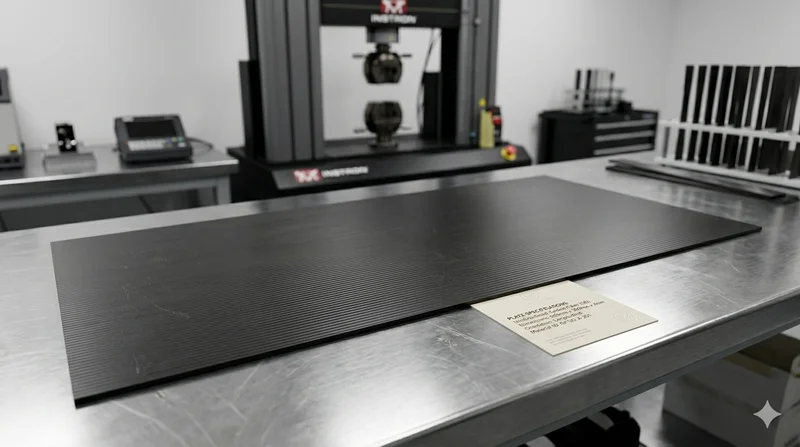
Carbon Fiber Plate — UD Unidirectional T700
Unidirectional carbon fiber plate with all fibers oriented in a single direction for maximum strength along the fiber axis. Essential for structural reinforcements, splints, and applications where load direction is predictable.
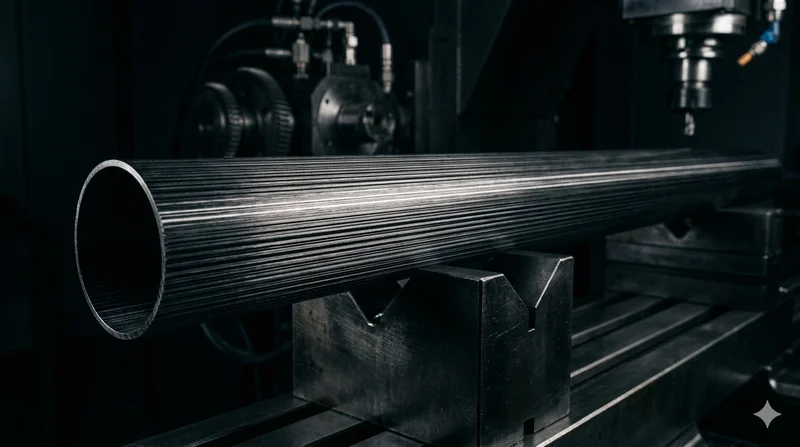
Round Carbon Fiber Tube — UD Unidirectional T700
Unidirectional (UD) round tube with all fibers aligned axially for maximum longitudinal stiffness. Ideal for applications requiring high bending rigidity with minimal weight, such as shafts, struts, and structural reinforcements.