
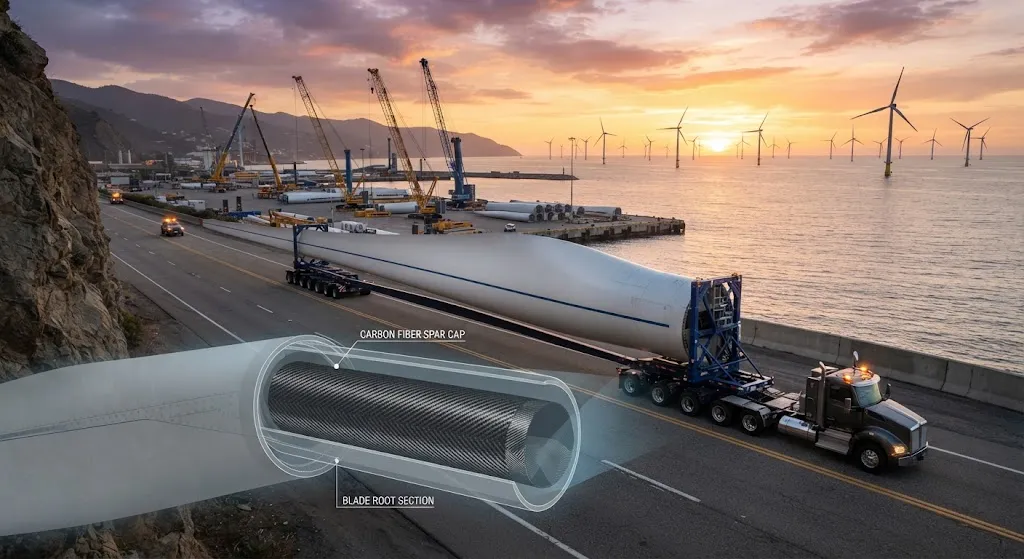
From record-breaking blade length to the domestic supply chain that makes it possible.
Introduction
The wind energy industry reached a new milestone in 2026 with the successful rollout of the world's largest commercial wind turbine blade at 107 meters. This achievement, led by Chinese blade manufacturers, represents a quantum leap in offshore wind technology and creates significant new demand for carbon fiber materials. A single 107-meter blade requires over 8 metric tons of carbon fiber for its spar cap structure, meaning a single turbine with three blades consumes more than 24 tons of carbon fiber — equivalent to the annual output of a medium-sized carbon fiber production facility.
The 107-meter blade is not just a size record. It validates the domestic large-tow carbon fiber supply chain that has been under development for the past five years, proving that locally produced large-tow carbon fiber can meet the demanding structural requirements of next-generation offshore wind turbines. For carbon fiber manufacturers and wind energy buyers, this development signals a fundamental shift in the offshore wind supply chain, with domestic sourcing replacing imported materials for the most demanding applications.
Blade Design Evolution and Carbon Fiber Content
The progression from 80-meter to 107-meter blades illustrates the increasing role of carbon fiber in wind turbine structures. As blade length increases, the bending moment at the root grows exponentially, requiring stiffer and lighter spar cap materials to maintain structural integrity without excessive mass. The relationship between blade length and carbon fiber content is summarized below:
| Blade Length | Spar Cap Material | Carbon Fiber per Blade | Total per Turbine | Primary Application |
|---|---|---|---|---|
| 60-80 meters | Glass fiber / hybrid | 0-2 tons | 0-6 tons | Onshore utility-scale |
| 80-90 meters | Carbon fiber spar cap | 3-5 tons | 9-15 tons | Nearshore and shallow offshore |
| 90-100 meters | Full carbon fiber spar cap | 5-7 tons | 15-21 tons | Offshore large-scale |
| 100-110 meters | Advanced carbon fiber spar cap | 8+ tons | 24+ tons | Deep-water offshore and floating |
The 107-meter blade uses a fully carbon fiber spar cap design with pultruded carbon fiber planks as the primary structural element. The spar cap accounts for approximately 35-40% of the total blade mass, and carbon fiber provides the stiffness-to-weight ratio necessary to keep blade mass within the limits of existing crane and installation vessel capabilities.
The Domestic Large-Tow Carbon Fiber Supply Chain
The development of the 107-meter blade was enabled by a domestic large-tow carbon fiber supply chain that has matured rapidly over the past three years. Large-tow carbon fiber, typically 24K to 50K filaments per tow, offers a cost-effective alternative to aerospace-grade small-tow material while meeting the structural requirements for wind turbine spar caps.
Chinese carbon fiber producers including Zhongfu Shenying, Jingniu Carbon Fiber, and Weihai Guangwei have invested heavily in large-tow production capacity, with combined annual capacity exceeding 80,000 metric tons for wind energy grade material. The domestic supply chain now covers the full production chain from precursor (PAN) through carbonization to surface treatment and sizing, eliminating the dependency on imported material that constrained earlier blade designs.
- Precursor availability: Domestic PAN precursor production capacity now exceeds 120,000 tons annually, sufficient to support both large-tow wind energy production and aerospace-grade small-tow material.
- Carbonization cost reduction: Large-tow carbonization costs have decreased by approximately 35% since 2023, driven by improved furnace utilization rates and energy efficiency gains in domestic production facilities.
- Quality consistency: Domestic large-tow carbon fiber now meets the tensile strength requirements of >3,500 MPa with coefficient of variation below 5%, comparable to imported material from major international producers.
- Supply reliability: Domestic suppliers maintain 2-4 week lead times with inventory buffers, compared to 8-12 weeks for imported material with ocean freight and customs clearance requirements.
Spar Cap Manufacturing Process
The spar cap of the 107-meter blade is manufactured using pultruded carbon fiber planks, which are bonded together to form the primary load-bearing structure. The pultrusion process produces constant-cross-section profiles with high fiber volume fraction (55-65%) and excellent fiber alignment, properties essential for maximizing stiffness in the spar cap application.
The manufacturing workflow begins with carbon fiber tows being impregnated with epoxy resin through a resin bath, then pulled through a heated die that cures the resin while maintaining fiber alignment. The resulting planks are typically 150-200 mm wide and 10-20 mm thick, with length matched to the spar cap dimensions. Multiple planks are bonded together using structural adhesive to achieve the required spar cap cross-section.
Quality control during spar cap manufacturing focuses on three critical parameters: fiber volume fraction, void content, and tensile modulus. Fiber volume fraction must remain within the 55-65% range to ensure adequate resin impregnation while maximizing structural performance. Void content must be below 2% to prevent moisture ingress and delamination under cyclic loading. Tensile modulus must meet the minimum 135 GPa specification to achieve the required blade stiffness.
Cost and Supply Chain Implications
The domestic large-tow supply chain has fundamentally changed the economics of carbon fiber spar caps for offshore wind. The cost of carbon fiber spar cap material has decreased from approximately $28/kg in 2022 to $18-20/kg in 2026 for domestic large-tow material, driven by capacity expansion and production efficiency improvements. For a 107-meter blade requiring 8+ tons of carbon fiber, this represents a material cost reduction of $64,000-80,000 per blade compared to 2022 pricing.
The cost reduction, combined with the structural performance advantages of carbon fiber, has enabled offshore wind developers to push blade length boundaries while keeping the levelized cost of energy competitive. The 107-meter blade is expected to achieve a 15-20% reduction in energy cost per megawatt-hour compared to the previous generation of 90-meter blades, primarily through increased swept area and higher capacity factors in offshore wind conditions.
Frequently Asked Questions
Why is carbon fiber preferred over glass fiber for 100+ meter wind blades?
Carbon fiber is preferred for blades exceeding 100 meters primarily because of its superior stiffness-to-weight ratio. At these lengths, glass fiber spar caps become prohibitively heavy, with blade mass increasing faster than the energy capture gains from larger swept area. Carbon fiber provides 2-3 times the stiffness of glass fiber at roughly half the weight, enabling blade designs that remain within the mass limits of existing crane capacity and installation vessel specifications. Additionally, carbon fiber spar caps reduce blade deflection at the tip, maintaining aerodynamic clearance from the tower and reducing fatigue loading on the pitch system and main bearing.
How does domestic large-tow carbon fiber compare with imported aerospace-grade material?
Domestic large-tow carbon fiber (24K-50K filaments) is optimized for cost-sensitive structural applications like wind turbine spar caps, while aerospace-grade small-tow material (3K-12K filaments) targets high-performance applications requiring tighter property tolerances. For wind energy applications, large-tow material provides comparable tensile strength (>3,500 MPa) and adequate modulus (135-170 GPa) at 40-50% lower cost. The main trade-off is that large-tow material has slightly higher variability in mechanical properties and is not suitable for aerospace certification, but these limitations are acceptable for wind energy structural requirements. Domestic large-tow production has reached maturity with consistent quality that meets the demanding fatigue requirements of 25-year offshore wind service life.
What are the challenges for domestic carbon fiber in the offshore wind market?
The primary challenges are achieving consistent long-term fatigue performance under offshore conditions and establishing qualification records with international wind turbine OEMs. Offshore wind turbines experience complex multi-axial loading with salt spray, humidity, and temperature cycling that requires rigorous material qualification. Domestic suppliers are addressing these challenges through accelerated fatigue testing programs and partnerships with Chinese wind turbine OEMs who are deploying the 107-meter blades in their offshore projects. The qualification timeline for new material suppliers is typically 18-24 months, but the volume opportunities in the Chinese offshore wind market justify the investment.
Conclusion
The 107-meter wind blade represents a watershed moment for both the wind energy industry and the carbon fiber supply chain. By validating domestic large-tow carbon fiber for the most demanding blade applications, the development eliminates a key supply chain bottleneck and opens the path to even larger blade designs in the 120-meter range. For carbon fiber manufacturers, the offshore wind market represents a high-volume, long-term demand driver that rewards investment in large-tow production capacity and quality systems.
For wind energy developers and blade manufacturers, the maturation of the domestic carbon fiber supply chain means reduced procurement risk, shorter lead times, and lower material costs for next-generation offshore wind projects. Explore our carbon fiber product range for wind energy applications, including large-tow materials optimized for spar cap manufacturing, or contact our technical team to discuss material specifications and qualification support for your blade program.
Part of topic
Related Articles
- Carbon Fiber Mooring for Floating Offshore Wind: Fatigue and Corrosion in Deep Water
- Carbon Fiber Bicycle Frame Optimization: Layup Design and Manufacturing for Competitive Racing
- Carbon Fiber CFRP Retrofit for Infrastructure: Bridge and Building Seismic Strengthening
- Carbon Fiber Medical Imaging Equipment: Lightweight Gantry and Couch Structures for MRI/CT
- Carbon Fiber EV Battery Enclosures: Crash Safety and Electromagnetic Shielding Design
- Carbon Fiber Structures for Low-Altitude Economy: UAV Airframes and eVTOL Components
Interested in Our Products?
Contact our team for competitive pricing and technical specifications.
Get a QuoteRelated Products
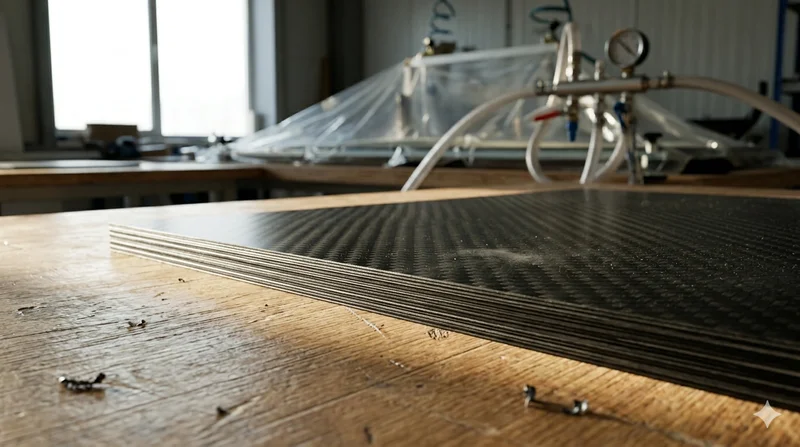
Carbon Fiber Plate — 3K Twill T700 3.0mm
Medium-thickness 3.0mm carbon fiber plate offering significantly higher load capacity while maintaining attractive 3K twill finish. Suitable for structural brackets, reinforcement plates, and load-bearing panels.
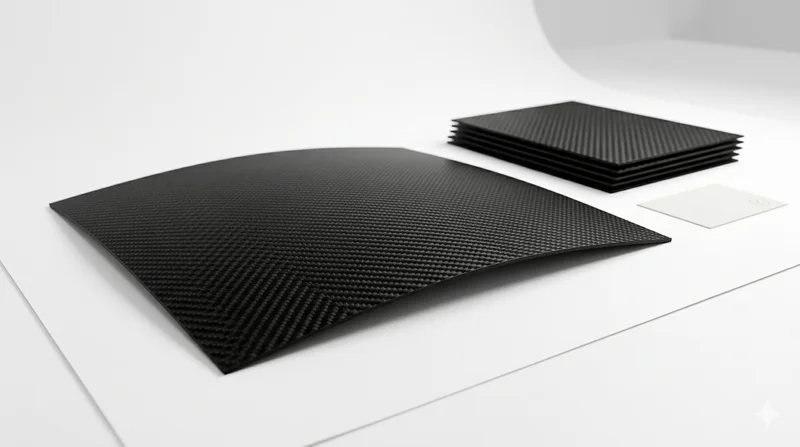
Carbon Fiber Plate — 3K Twill T700 1.5mm
Thin 1.5mm carbon fiber plate with 3K twill weave surface. Lightweight and stiff, commonly used for covers, panels, drone bodies, and applications requiring a premium aesthetic appearance.
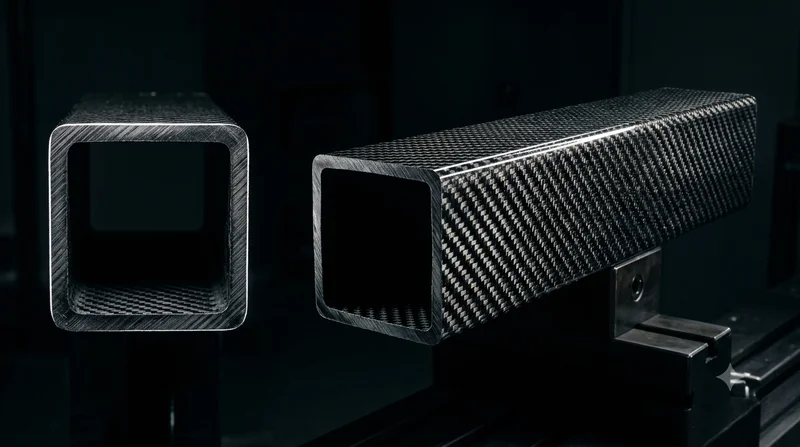
Square Carbon Fiber Tube — 3K Twill T700
Square cross-section carbon fiber tube manufactured with 3K twill weave for torsional strength. Preferred for structural frames, trusses, and support columns where rectangular geometry offers design flexibility.
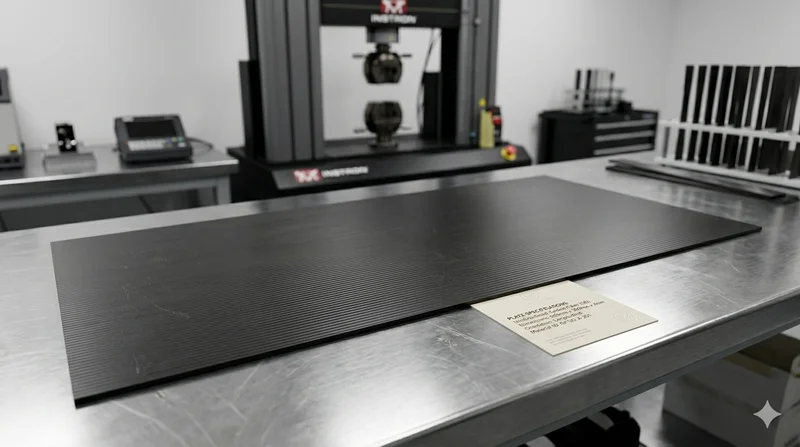
Carbon Fiber Plate — UD Unidirectional T700
Unidirectional carbon fiber plate with all fibers oriented in a single direction for maximum strength along the fiber axis. Essential for structural reinforcements, splints, and applications where load direction is predictable.
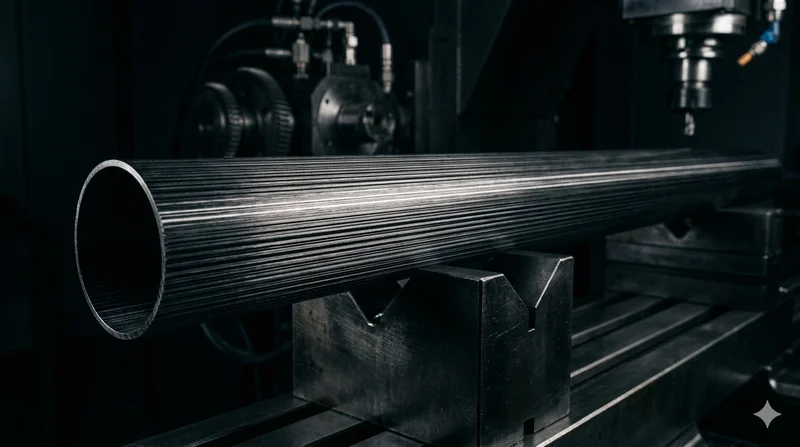
Round Carbon Fiber Tube — UD Unidirectional T700
Unidirectional (UD) round tube with all fibers aligned axially for maximum longitudinal stiffness. Ideal for applications requiring high bending rigidity with minimal weight, such as shafts, struts, and structural reinforcements.