
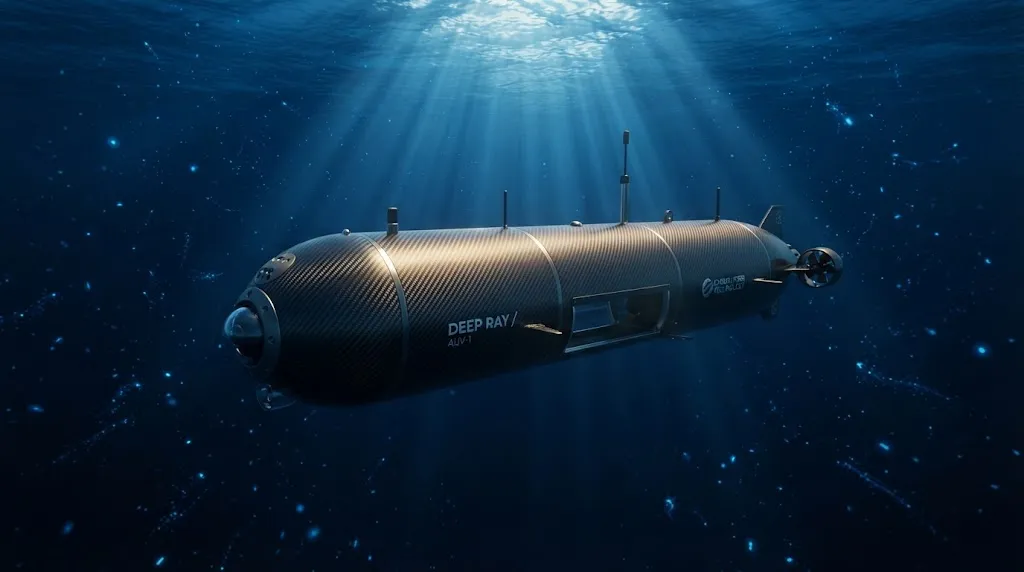
Carbon fiber underwater robots and autonomous underwater vehicles (AUVs) represent one of the most demanding applications for composite materials. These vehicles must withstand hydrostatic pressures that increase by one atmosphere for every 10 meters of depth — reaching 300-600 atmospheres at full o
Introduction
Carbon fiber underwater robots and autonomous underwater vehicles (AUVs) represent one of the most demanding applications for composite materials. These vehicles must withstand hydrostatic pressures that increase by one atmosphere for every 10 meters of depth — reaching 300-600 atmospheres at full ocean depth — while resisting the corrosive effects of saltwater, maintaining neutral buoyancy, and carrying payloads that include sensors, batteries, and sampling equipment. Traditional underwater vehicle construction relied on titanium and aluminum pressure hulls, but carbon fiber composites now offer compelling advantages in weight, corrosion resistance, and design flexibility that are reshaping how engineers approach deep-sea vehicle design.
The global AUV market is projected to reach $4.2 billion by 2028, driven by offshore energy inspection, deep-sea mining exploration, military surveillance, and scientific research. Carbon fiber composites are central to enabling the next generation of longer-endurance, deeper-diving underwater robots that these applications demand.
Hydrostatic Pressure Challenges for Carbon Fiber Hulls
The primary structural challenge for any underwater vehicle is hydrostatic pressure — the uniform compressive force exerted by seawater on all surfaces of the hull. At 1,000 meters depth, the pressure reaches approximately 100 bar (1,450 psi), and at 6,000 meters (full ocean depth), it exceeds 600 bar. Carbon fiber composites address this challenge through several design strategies:
- Cylindrical pressure hulls: The most common AUV hull form is a cylinder with hemispherical end caps. Carbon fiber/epoxy wound cylinders with fiber orientation optimized for hoop and axial stress ratios (typically 2:1 hoop to axial) achieve collapse pressures of 80-120 MPa at wall thicknesses of 8-15 mm — sufficient for 3,000-5,000 meter operating depths.
- Sandwich construction: Carbon fiber face sheets bonded to syntactic foam cores (hollow glass microspheres in epoxy) create lightweight pressure-resistant structures. The foam core provides buoyancy while the carbon fiber faces carry the membrane stresses, achieving buoyancy-to-weight ratios of 1.15-1.30.
- filament winding: Automated filament winding with controlled fiber tension produces seamless cylindrical shells with consistent wall thickness and minimal void content (below 1.5%), critical for uniform pressure distribution.
The key advantage of carbon fiber over titanium for pressure hulls is the specific strength — carbon fiber/epoxy composites achieve compressive strengths of 800-1,200 MPa at densities of 1.55-1.65 g/cm³, compared to titanium's 860 MPa at 4.51 g/cm³. This translates to a 50-60% weight reduction for equivalent pressure performance, directly extending mission endurance through reduced drag and increased battery capacity.
Corrosion Resistance in Saltwater Environments
Saltwater corrosion is a persistent maintenance burden for metal underwater vehicles. Aluminum alloys suffer pitting and stress corrosion cracking in seawater, requiring protective coatings and sacrificial anodes. Titanium resists corrosion but at significant cost and weight penalties. Carbon fiber composites are inherently immune to electrochemical corrosion — the polymer matrix and carbon fibers do not participate in the galvanic reactions that degrade metals in seawater.
| Material | Density (g/cm³) | Compressive Strength (MPa) | Corrosion in Seawater | Maintenance Cycle |
|---|---|---|---|---|
| Aluminum 6061-T6 | 2.70 | 276 | Pitting, stress corrosion | Annual coating inspection |
| Titanium Grade 5 | 4.43 | 860 | Excellent resistance | Minimal (5-10 year) |
| Carbon Fiber/Epoxy | 1.55-1.65 | 800-1,200 | No corrosion | None (structural) |
| CF/Syntactic Foam Sandwich | 0.85-1.10 | 40-80 (core crush) | No corrosion | None (structural) |
The absence of corrosion eliminates the need for cathodic protection systems, anti-fouling coatings on structural surfaces, and regular dry-dock inspections — reducing lifetime operating costs by an estimated 25-40% compared to aluminum-hulled vehicles. For military AUVs that must operate for months without maintenance, carbon fiber's corrosion immunity is a decisive operational advantage.
Weight Management and Buoyancy Optimization
Underwater vehicle performance is governed by the balance between weight and buoyancy. Every kilogram saved in hull structure can be allocated to additional battery capacity, payload sensors, or propulsion power — directly extending mission range and capability. Carbon fiber composites enable weight optimization through:
- Variable wall thickness: Filament winding and hand layup allow wall thickness to be tailored to local stress demands — thicker at end-cap transitions, thinner along the cylindrical midsection — reducing material usage by 15-25% compared to constant-thickness metallic shells.
- Negative buoyancy foam cores: Syntactic foam cores with densities of 0.56-0.72 g/cm³ provide positive buoyancy, allowing the overall vehicle to achieve neutral or slightly positive buoyancy without external buoyancy modules.
- Integrated structures: Carbon fiber enables monocoque designs where the hull, battery enclosures, and sensor mounts are co-cured as a single structure, eliminating fasteners, seals, and the weight penalties associated with multi-component assembly.
A typical 300 kg AUV with a carbon fiber hull achieves 15-20% greater battery capacity than an equivalent aluminum-hulled design, translating to 30-50% longer mission endurance at the same speed — a critical differentiator for deep-sea survey and inspection missions that require 24-72 hour continuous operation.
Applications Across Underwater Sectors
Carbon fiber underwater robots are deployed across several high-value sectors:
- Offshore energy inspection: Pipeline survey AUVs operating at 500-3,000 meters use carbon fiber hulls for extended bottom time and reduced launch/recovery vessel requirements. Companies like Kongsberg and Ocean Infinity operate fleets of carbon fiber AUVs for subsea infrastructure inspection.
- Deep-sea scientific research: Vehicles like the WHOI Autosub6000 and MBARI Dorado use carbon fiber construction to reach 6,000 meters depth while carrying multi-sensor payloads for oceanographic sampling and mapping.
- Military surveillance: Navy AUVs for mine countermeasures, anti-submarine warfare, and intelligence gathering require long endurance, quiet operation, and maintenance-free hulls — all strengths of carbon fiber construction.
- Underwater robotics and manipulation: Carbon fiber robot arms and manipulation systems for ROVs provide the stiffness and corrosion resistance needed for subsea construction, salvage, and sampling operations at depths exceeding 2,000 meters.
Frequently Asked Questions
What is the maximum operating depth for carbon fiber AUV hulls?
Current carbon fiber filament-wound pressure hulls are qualified to 6,000 meters depth (full ocean depth) with safety factors of 1.5-2.0. The deepest operational carbon fiber AUV — the ABYSS class vehicle — has been tested to 7,000 meters in the Mariana Trench. At these extreme depths, wall thicknesses of 12-18 mm and fiber orientations optimized for biaxial compression are required. The theoretical collapse pressure limit for carbon fiber cylinders exceeds 150 MPa, well beyond the 60 MPa encountered at full ocean depth, suggesting that deeper ratings are achievable with continued optimization of winding patterns and resin systems.
How does carbon fiber handle impact damage from underwater operations?
Carbon fiber composites are more susceptible to impact damage from dropped objects, docking collisions, and seafloor contact than metallic hulls. However, this vulnerability is mitigated through several design approaches: external polyurethane or elastomer bumpers absorb low-energy impacts; sandwich construction with thick foam cores distributes point loads over larger areas; and damage-tolerant resin systems (toughened epoxy or thermoplastic matrices) resist crack propagation from impact sites. For operational AUVs, pre-dive inspection protocols using ultrasonic testing detect subsurface damage before it compromises pressure integrity. The net result is that well-designed carbon fiber AUV hulls achieve comparable operational reliability to titanium at significantly lower weight and cost.
Can carbon fiber AUVs be repaired in the field?
Minor damage to carbon fiber hulls — surface scratches, small delaminations, and coating damage — can be repaired in the field using standard composite repair techniques: surface preparation, vacuum bagging, and room-temperature or elevated-temperature cure of repair patches. More significant damage requiring structural repair typically demands controlled-environment facilities with autoclave or oven capability. However, the absence of corrosion-related maintenance means that scheduled maintenance intervals for carbon fiber AUVs are typically 2-3 times longer than for aluminum-hulled vehicles, reducing the frequency of field repair requirements.
Conclusion
Carbon fiber composites are enabling a step change in underwater vehicle performance by solving the fundamental challenges of hydrostatic pressure resistance, saltwater corrosion immunity, and weight optimization. For AUV and ROV manufacturers, carbon fiber hulls deliver 50-60% weight savings over aluminum, eliminate corrosion maintenance, and enable longer mission endurance through improved battery-to-displacement ratios. As the offshore energy, defense, and scientific research sectors demand deeper, longer-lasting, and more capable underwater robots, carbon fiber will remain the material of choice for pressure hull structures.
To explore carbon fiber solutions for your underwater vehicle program, browse our carbon fiber product range or contact our engineering team for custom pressure hull design and filament winding services.
Related Articles
- Carbon Fiber Reusable Launch Vehicle Structures: Thermal Protection and Structural Integrity
- Carbon Fiber Electric Aircraft Propulsion: Lightweight Motor Housings and Nacelle Structures
- Carbon Fiber Mooring for Floating Offshore Wind: Fatigue and Corrosion in Deep Water
- Carbon Fiber Bicycle Frame Optimization: Layup Design and Manufacturing for Competitive Racing
- Carbon Fiber CFRP Retrofit for Infrastructure: Bridge and Building Seismic Strengthening
- Carbon Fiber Medical Imaging Equipment: Lightweight Gantry and Couch Structures for MRI/CT
Interested in Our Products?
Contact our team for competitive pricing and technical specifications.
Get a QuoteRelated Products
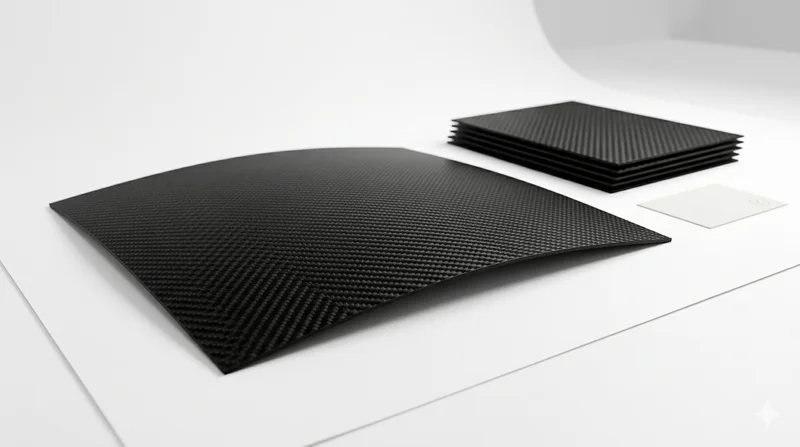
Carbon Fiber Plate — 3K Twill T700 1.5mm
Thin 1.5mm carbon fiber plate with 3K twill weave surface. Lightweight and stiff, commonly used for covers, panels, drone bodies, and applications requiring a premium aesthetic appearance.
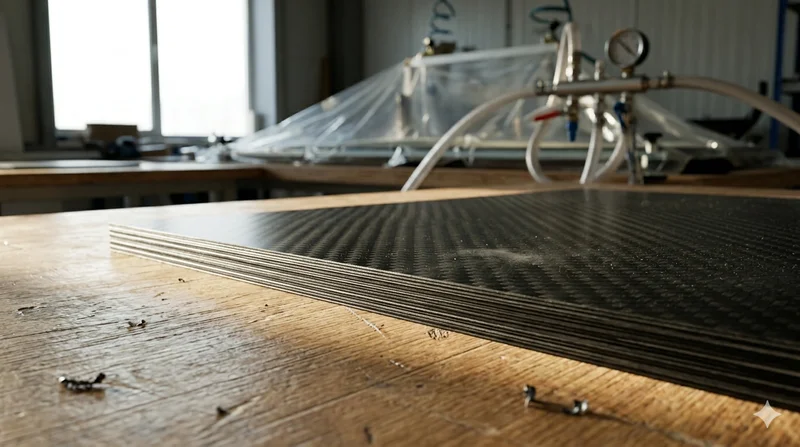
Carbon Fiber Plate — 3K Twill T700 3.0mm
Medium-thickness 3.0mm carbon fiber plate offering significantly higher load capacity while maintaining attractive 3K twill finish. Suitable for structural brackets, reinforcement plates, and load-bearing panels.
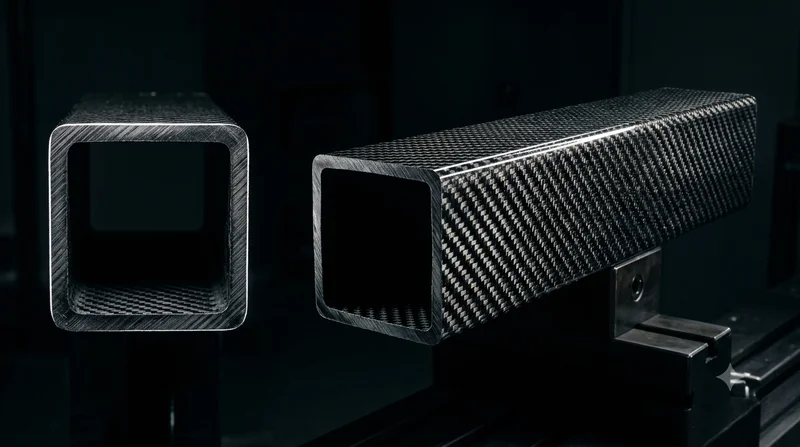
Square Carbon Fiber Tube — 3K Twill T700
Square cross-section carbon fiber tube manufactured with 3K twill weave for torsional strength. Preferred for structural frames, trusses, and support columns where rectangular geometry offers design flexibility.
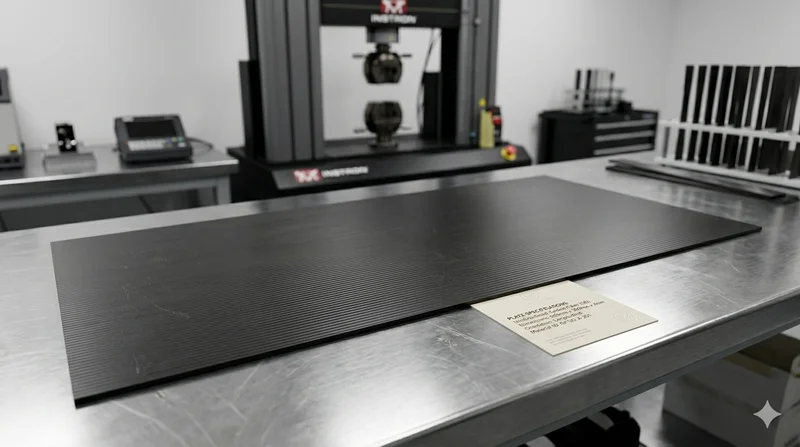
Carbon Fiber Plate — UD Unidirectional T700
Unidirectional carbon fiber plate with all fibers oriented in a single direction for maximum strength along the fiber axis. Essential for structural reinforcements, splints, and applications where load direction is predictable.
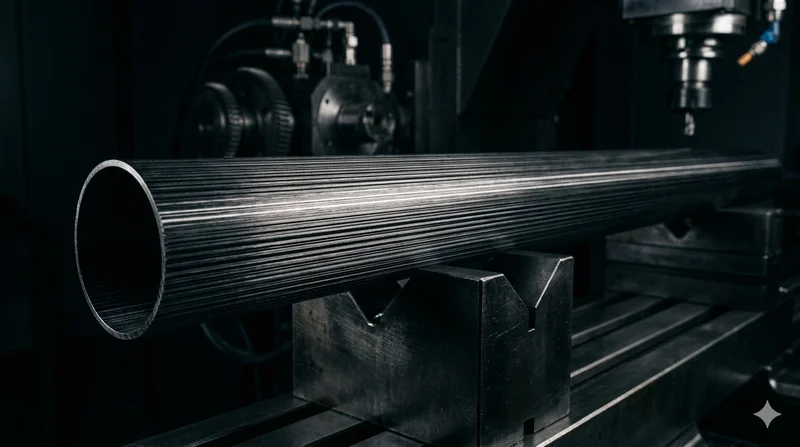
Round Carbon Fiber Tube — UD Unidirectional T700
Unidirectional (UD) round tube with all fibers aligned axially for maximum longitudinal stiffness. Ideal for applications requiring high bending rigidity with minimal weight, such as shafts, struts, and structural reinforcements.