
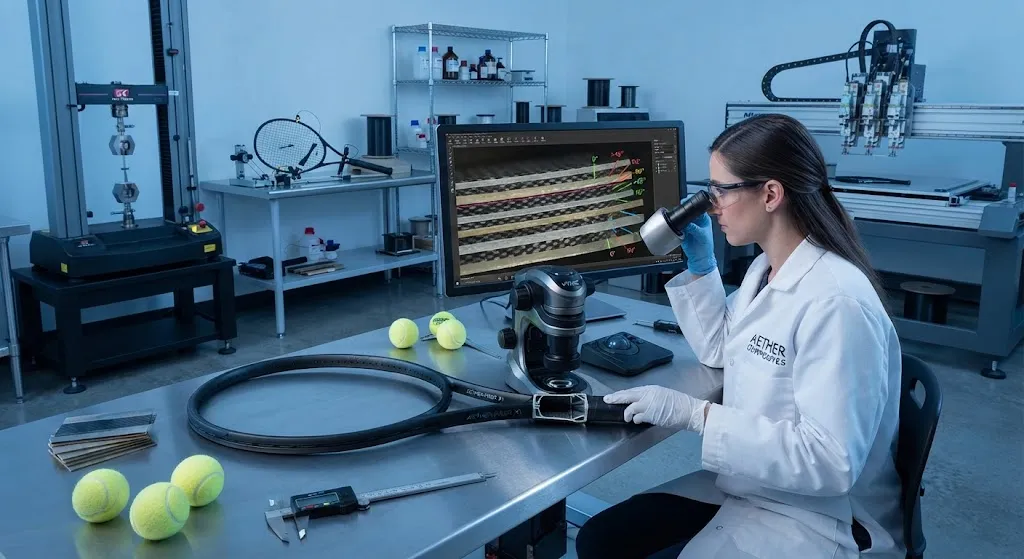
Modern tennis racquets leverage carbon fiber composites for optimal stiffness, weight distribution, and vibration damping. This article examines CFRP material selection, layup design, and performance tuning in professional and consumer racquets.
Introduction
The tennis racquet industry has been at the forefront of carbon fiber composite application since the 1980s, when CFRP frames replaced steel and aluminum as the dominant material. Today's professional and consumer racquets represent sophisticated composite engineering, with material systems, layup designs, and manufacturing processes optimized for specific performance characteristics — power, control, comfort, and feel.
Carbon fiber's unique combination of high specific stiffness, low density, and designability makes it ideal for tennis racquet applications. A modern racquet frame contains 15-30 plies of carbon fiber composite, with each ply orientation and material selected to achieve specific stiffness, strength, and damping targets.
Material Selection
Tennis racquet manufacturers select from several carbon fiber grades:
Standard modulus (SM): High-strength, lower-cost fibers provide the baseline material for most consumer racquets. SM fiber offers adequate stiffness and strength for recreational and intermediate players.
Intermediate modulus (IM): Higher stiffness-to-weight ratio than SM fiber, enabling thinner, lighter frames with maintained or improved stiffness. IM fiber is standard in premium and professional racquets.
High modulus (HM): Maximum stiffness fiber used in specific frame locations to enhance power transfer and stability. HM fiber is often combined with IM fiber in hybrid layups to optimize the stiffness distribution.
Hybrid configurations: Most modern racquets use hybrid material systems, combining different fiber grades in specific frame regions to optimize the balance of power, control, and comfort.
Layup Design
Racquet frame layup design is a sophisticated optimization problem:
Ply orientation: The angle of each carbon fiber ply relative to the frame axis determines the contribution to stiffness, strength, and torsional resistance. A typical racquet uses ply angles of 0°, ±45°, and 90°, with the specific sequence optimized for the target performance characteristics.
Ply count and distribution: Total ply count (15-30 plies) and distribution around the frame cross-section determine the frame's stiffness profile. More plies in specific regions increase local stiffness for power or control.
Core materials: Honeycomb or foam cores in the frame head and throat reduce weight while maintaining structural integrity. Core material selection affects the frame's feel and vibration characteristics.
Performance Tuning
Manufacturers tune racquet performance through material and design variables:
Stiffness profile: Frame stiffness determines power transfer and control. Stiffer frames provide more power but less control; more flexible frames provide more feel and control but less power. The stiffness profile is tuned through material selection, ply orientation, and frame geometry.
Vibration damping: Carbon fiber's inherent damping characteristics are enhanced through material selection and structural design. Vibration frequency and amplitude affect player comfort and injury risk. Specific layup sequences can shift vibration modes to reduce uncomfortable frequencies.
Weight distribution: The distribution of mass around the frame — head-light, head-heavy, or balanced — affects swing weight, maneuverability, and power. CFRP allows precise weight distribution through material placement and frame geometry.
Manufacturing Process
Tennis racquet frames are manufactured using specialized composite processes:
Bladder molding: The traditional racquet manufacturing process uses an inflatable bladder inside a two-piece mold to compact the carbon fiber plies during cure. This process produces consistent frame geometry and good surface finish.
Autoclave curing: Premium racquets use autoclave curing at elevated temperature and pressure to achieve maximum fiber volume fraction and minimum void content, optimizing mechanical properties.
Conclusion
Carbon fiber tennis racquets represent mature composite engineering, with material systems, layup designs, and manufacturing processes refined over decades of development. As material technology advances and manufacturing processes improve, racquet performance will continue to evolve, providing players with increasingly optimized equipment for their game.
Part of topic
Related Articles
- Carbon Fiber Mooring for Floating Offshore Wind: Fatigue and Corrosion in Deep Water
- Carbon Fiber Bicycle Frame Optimization: Layup Design and Manufacturing for Competitive Racing
- Carbon Fiber CFRP Retrofit for Infrastructure: Bridge and Building Seismic Strengthening
- Carbon Fiber Medical Imaging Equipment: Lightweight Gantry and Couch Structures for MRI/CT
- Carbon Fiber EV Battery Enclosures: Crash Safety and Electromagnetic Shielding Design
- Carbon Fiber Structures for Low-Altitude Economy: UAV Airframes and eVTOL Components
Interested in Our Products?
Contact our team for competitive pricing and technical specifications.
Get a QuoteRelated Products

Carbon Fiber Plate — 3K Twill T700 1.5mm
Thin 1.5mm carbon fiber plate with 3K twill weave surface. Lightweight and stiff, commonly used for covers, panels, drone bodies, and applications requiring a premium aesthetic appearance.

Carbon Fiber Plate — 3K Twill T700 3.0mm
Medium-thickness 3.0mm carbon fiber plate offering significantly higher load capacity while maintaining attractive 3K twill finish. Suitable for structural brackets, reinforcement plates, and load-bearing panels.

Square Carbon Fiber Tube — 3K Twill T700
Square cross-section carbon fiber tube manufactured with 3K twill weave for torsional strength. Preferred for structural frames, trusses, and support columns where rectangular geometry offers design flexibility.
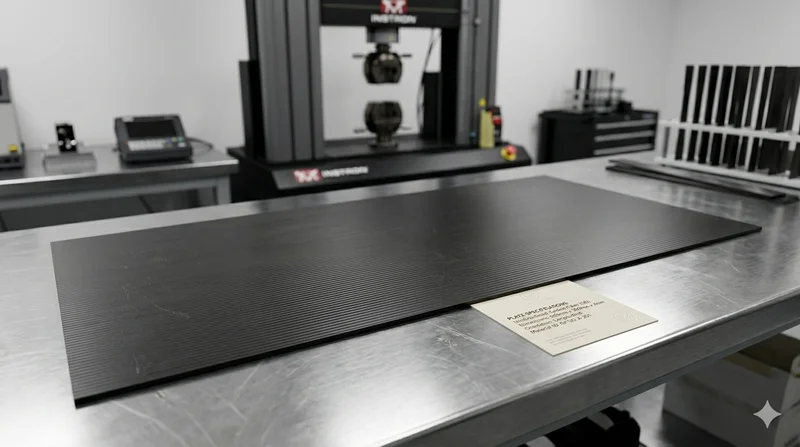
Carbon Fiber Plate — UD Unidirectional T700
Unidirectional carbon fiber plate with all fibers oriented in a single direction for maximum strength along the fiber axis. Essential for structural reinforcements, splints, and applications where load direction is predictable.
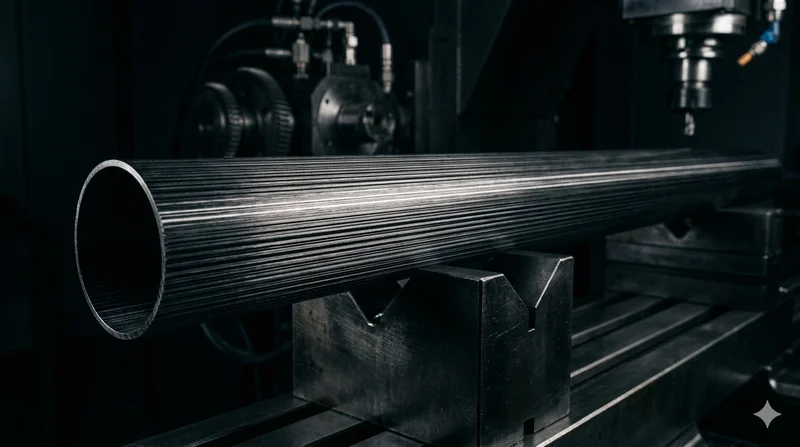
Round Carbon Fiber Tube — UD Unidirectional T700
Unidirectional (UD) round tube with all fibers aligned axially for maximum longitudinal stiffness. Ideal for applications requiring high bending rigidity with minimal weight, such as shafts, struts, and structural reinforcements.