
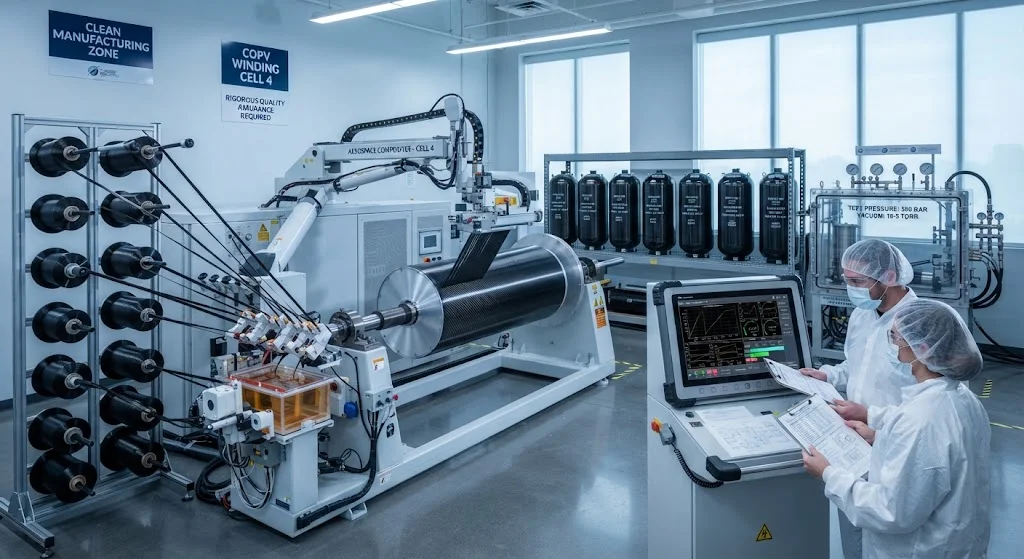
On a crewed spacecraft, the quiet component is often the one that can end the mission fastest. Composite overwrapped pressure vessels — the carbon-fiber-wrapped metal tanks that store helium and pressurizing gas — sit in that category. They are not the largest systems on the vehicle, bu
Introduction
On a crewed spacecraft, the quiet component is often the one that can end the mission fastest. Composite overwrapped pressure vessels — the carbon-fiber-wrapped metal tanks that store helium and pressurizing gas — sit in that category. They are not the largest systems on the vehicle, but their failure mode is unforgiving: a COPV that ruptures does so without warning, and on a human-rated vehicle there is no such thing as an acceptable containment breach. Every crewed program therefore builds its pressure-vessel qualification around a single organizing principle: the burst event must be pushed so far beyond the operating envelope that it becomes a design impossibility rather than a risk statistic.
This article examines how that principle is applied. We look at the burst-margin structure that defines a COPV safety case, the proof and cyclic-testing regime that screens flight hardware, the non-destructive examination standards that catch manufacturing defects before they fly, and the flight-heritage currency that still dominates procurement decisions in human spaceflight. The discussion is deliberately aircraft-agnostic in the sense that it concerns tank design rather than any single vehicle, but the examples come from the commercial-crew generation, where reuse has added a new qualification layer to an already conservative discipline.
Why Crewed Vehicles Use Composite Tanks at All
The first question a safety review asks is whether the weight saving justifies the added qualification burden. For an all-metal titanium or Inconel tank, the qualification path is long and well understood; for a composite overwrap, every fiber lot, every winding pattern and every cure cycle becomes a potential variable. The answer is that mass is a mission driver. A helium pressurant tank that saves 40-50 percent of its structural weight returns that saving directly to propellant, payload or life-support margin, and on a crewed vehicle those margins are the difference between a nominal flight and a reserve-limited one. COPV construction — a thin metallic liner carrying the seal and permeation function, with a carbon-fiber overwrap carrying the load — gives designers the high specific strength of composites without exposing propellant or pressurant to bare fiber surfaces.
The trade is well understood by every human-rating authority: accept the composite, but demand a qualification envelope that contains the statistical risk of an overwrap flaw. That envelope is what the rest of this article describes.
The Burst-Margin Structure of a COPV Safety Case
The centerpiece of a COPV safety case is the relationship between operating pressure, proof pressure and minimum burst. Industry practice — codified in standards such as ANSI/AIAA S-081 for space-system COPVs and reflected in the internal requirements of every crewed program — works with a layered set of margins so that no single anomaly can climb from operating pressure to rupture. The table below shows the typical envelope a crew-rated program applies:
| Parameter | Typical value | Purpose in the safety case |
|---|---|---|
| Maximum expected operating pressure (MEOP) | Defined per mission | Design basis for all margins |
| Proof pressure | 1.10-1.25 x MEOP | Shake-down of liner and overwrap; screens gross defects before flight |
| Minimum burst pressure | 1.5-2.0 x MEOP | Containment of the single-point failure; defines the catastrophic margin |
| Cyclic life requirement | 4 x mission cycles (often more) | Fatigue margin against cumulative pressurization damage |
| Failure mode | Leak-before-burst mandatory | Guarantees detectable warning instead of fragmentation |
| Non-destructive screening | AE monitoring on proof, radiography, CT | Catches fiber damage and liner anomalies before flight |
The burst factor deserves emphasis. For uncrewed applications a 1.5 x MEOP minimum burst has historically been accepted; crew-rated programs routinely push the requirement toward 2.0, and treat the proof-cycling demonstration as a filter that weeds out weak units before they accumulate service damage. The margin structure is deliberately redundant: proof pressure screens the as-built tank, cyclic life covers the fatigue regime, and leak-before-burst guarantees that even a degraded tank fails in a way the crew can detect and respond to.
Non-Destructive Screening: Defects Are Found Before They Fly
Composite overwraps are strong precisely because they are anisotropic — and anisotropic materials hide internal damage in ways a metallic structure does not. A cracked liner, a broken fiber tow or a delamination can lurk beneath the surface with no external sign. The screening regime therefore combines several complementary techniques rather than relying on a single method:
- Acoustic-emission monitoring during proof: sensors listen for the microcrack signatures of fiber breakage and matrix cracking while the tank is pressurized; anomalous emission is grounds for rejection.
- Computed tomography and radiography: volumetric inspection of the overwrap and liner interface catches voids, fiber waviness and liner wall anomalies that surface techniques miss.
- Hydrostatic and helium leak testing: verifies the liner seal function before the overwrap is trusted, and again after cycling.
- Thermal-cycling exposure: simulates the space environment to expose liner-overwrap interaction effects before flight hardware is accepted.
The 2005 rupture of a GPS satellite COPV during ground processing at a US integrator remains the field's cautionary reference: a flight-representative tank, handled within its qualified envelope on the ground, burst during a processing step and destroyed millions of dollars of hardware. The lesson that propagates into every crewed-program screening plan is that the overwrap must never be trusted on the basis of design analysis alone — every flight unit earns its place through inspection and test.
Flight Heritage: The Qualification Currency
For all the sophistication of the safety-case mathematics, the human-spaceflight procurement decision still weighs flight heritage heavily. A tank geometry proven across many missions accumulates statistical evidence that no analysis can fully replace — proof that the as-built fleet, with all its real-world manufacturing variation, performs as predicted. The Space Shuttle's pressurant COPVs, the commercial-crew vehicles' composite helium tanks, and the suborbital and orbital systems now flying commercially all draw on this logic: qualified once, flown many times, and re-qualified by inspection rather than by repeat burst testing.
This is why crew-rated programs are conservative about new tank architectures. A modest performance gain from a novel liner or fiber system must be weighed against the cost of rebuilding the flight-heritage base from zero, including full burst-article testing, life-article cycling and a multi-year qualification campaign. The result is that proven intermediate-modulus fiber systems and established winding geometries persist in crewed applications long after newer materials appear in uncrewed or terrestrial markets.
Reuse Adds a New Qualification Layer
Commercial crew introduced a requirement the Shuttle era only approached: the same pressure vessel must be certified to fly again. Reuse changes the qualification story from a single acceptance event to a recurring cycle, and the industry has settled on a structured approach:
- Re-inspection of the overwrap between flights using the same volumetric and acoustic techniques applied at acceptance, with threshold-based pass-fail criteria.
- Tracking of cumulative pressurization cycles against the qualified life, with margin accounting for every ground and flight cycle.
- Refurbishment of seals and valves as scheduled maintenance, independent of the structural qualification.
- Documented disposition of any inspection finding, so anomalies become data rather than judgment calls at the launch pad.
The reuse regime effectively turns the tank into a monitored asset with a fatigue ledger, in the same spirit as an airliner's life-tracked structure. It is more demanding than a single-use qualification, but it is the price of making crewed flight economically repeatable.
Frequently Asked Questions
Why not simply use all-metal titanium tanks for crewed vehicles?
Titanium tanks are flown and well understood, and for small systems the mass penalty is acceptable. But as tank volumes and pressures grow, the specific strength advantage of a carbon overwrap becomes decisive: a COPV typically saves 30-50 percent of structural mass against an equivalent all-metal vessel, and that saving converts directly into mission margin on a crewed vehicle. The qualification burden is higher, which is exactly why the safety case described here exists.
What does leak-before-burst actually mean?
It is a design requirement that a degrading tank must develop a detectable leak through the liner before it reaches the point of catastrophic fragmentation of the overwrap. In practice this means the liner must fail in a benign, venting mode while the overwrap retains enough structure to prevent explosive burst, giving the crew and ground teams a clear, early warning. Its absence is treated as a disqualifying flaw in crew-rated designs.
How can a reused COPV be trusted for a second or third flight?
Through inspection and life accounting rather than repeat burst testing. Between flights the tank is re-examined with acoustic emission, volumetric and leak techniques; cumulative cycles are compared against the qualified life; and any anomaly above threshold grounds the unit until dispositioned. The philosophy mirrors aviation's life-tracked structural maintenance, and it is central to how commercial crew reuse is certified.
Do newer carbon fiber grades change the qualification picture?
They can improve specific performance, but they arrive with no flight data attached. A crewed program adopting a new fiber or liner system must rebuild the heritage base: new burst articles, new life articles, new screening thresholds and a multi-year certification campaign. For this reason proven intermediate-modulus systems remain dominant in human-rated tanks, with newer grades entering only where the performance gap justifies the full re-qualification effort.
Conclusion
The COPV safety case for crewed spacecraft is a study in layered conservatism: burst margins set far beyond operating pressure, proof and cyclic screening that filters every flight unit, non-destructive examination that catches defects the structure would otherwise hide, and a flight-heritage ledger that no analysis can shortcut. Reuse has added a monitoring and life-tracking discipline on top, converting the tank from a one-time qualified part into a continuously inspected asset. For engineers and procurement teams working on crew-rated or high-value uncrewed systems, the practical lesson is simple: a composite pressure vessel is only as safe as the qualification envelope around it, and that envelope is built from margins, inspection and heritage — not from brochure specifications.
Whether you are specifying COPV liners, overwrap fiber or downstream composite components, review our carbon fiber tow and fabric range, or contact our team to discuss material qualification support for your program.
Part of topic
Related Articles
- Carbon Fiber Mooring for Floating Offshore Wind: Fatigue and Corrosion in Deep Water
- Carbon Fiber Bicycle Frame Optimization: Layup Design and Manufacturing for Competitive Racing
- Carbon Fiber CFRP Retrofit for Infrastructure: Bridge and Building Seismic Strengthening
- Carbon Fiber Medical Imaging Equipment: Lightweight Gantry and Couch Structures for MRI/CT
- Carbon Fiber EV Battery Enclosures: Crash Safety and Electromagnetic Shielding Design
- Carbon Fiber Structures for Low-Altitude Economy: UAV Airframes and eVTOL Components
Interested in Our Products?
Contact our team for competitive pricing and technical specifications.
Get a QuoteRelated Products

Carbon Fiber Plate — 3K Twill T700 1.5mm
Thin 1.5mm carbon fiber plate with 3K twill weave surface. Lightweight and stiff, commonly used for covers, panels, drone bodies, and applications requiring a premium aesthetic appearance.

Square Carbon Fiber Tube — 3K Twill T700
Square cross-section carbon fiber tube manufactured with 3K twill weave for torsional strength. Preferred for structural frames, trusses, and support columns where rectangular geometry offers design flexibility.
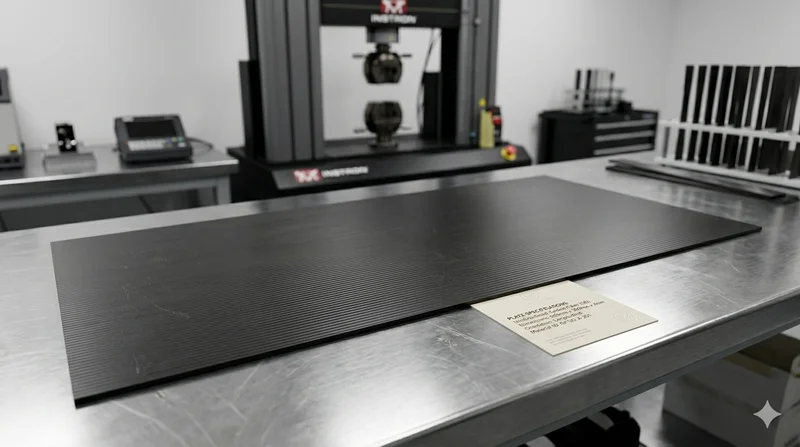
Carbon Fiber Plate — UD Unidirectional T700
Unidirectional carbon fiber plate with all fibers oriented in a single direction for maximum strength along the fiber axis. Essential for structural reinforcements, splints, and applications where load direction is predictable.
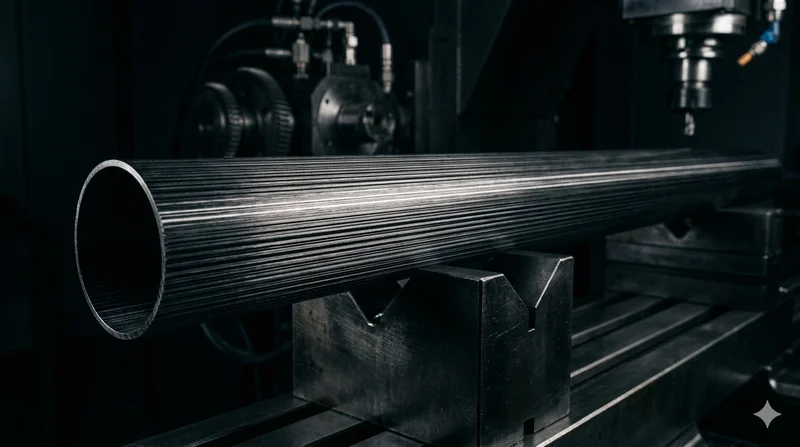
Round Carbon Fiber Tube — UD Unidirectional T700
Unidirectional (UD) round tube with all fibers aligned axially for maximum longitudinal stiffness. Ideal for applications requiring high bending rigidity with minimal weight, such as shafts, struts, and structural reinforcements.
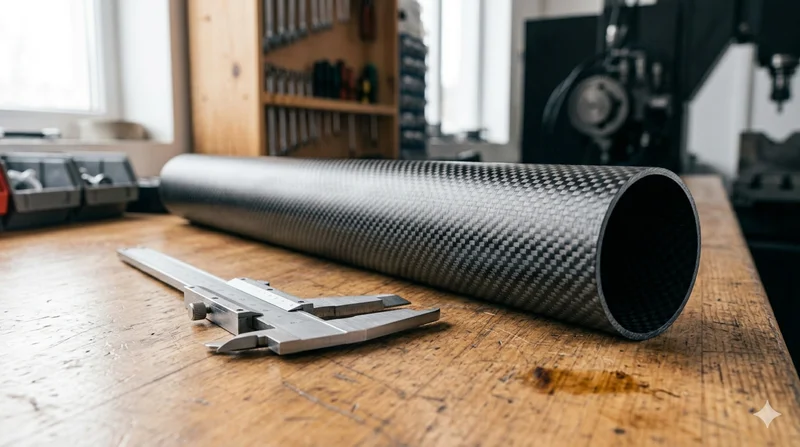
Round Carbon Fiber Tube — 3K Plain Weave T700
Standard round carbon fiber tube manufactured from Toray T700 grade fiber with 3K plain weave. Offers balanced strength and stiffness for general industrial applications including robotics, automation, sports equipment, and aerospace structures.