
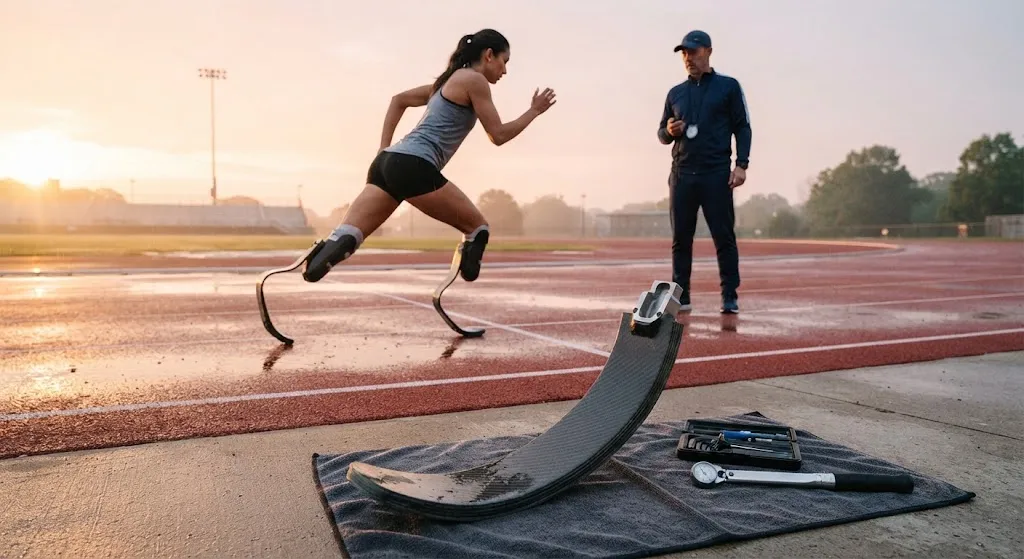
For an amputee runner, the prosthesis is not a passive replacement for a foot — it is a spring. The carbon fiber blade beneath the socket compresses as the athlete lands, stores mechanical energy, and releases it at toe-off, converting body weight into forward motion. The quality of tha
Introduction
For an amputee runner, the prosthesis is not a passive replacement for a foot — it is a spring. The carbon fiber blade beneath the socket compresses as the athlete lands, stores mechanical energy, and releases it at toe-off, converting body weight into forward motion. The quality of that spring determines how fast an athlete can run: blades with high energy-return efficiency give back more of the effort the runner puts in on every stride.
This makes running blades a genuinely demanding composite application. A blade must absorb the impact of a full-body landing at race speed, bend through a controlled curve, return energy without lag, and survive tens of millions of cycles over its life — all while weighing roughly 350-500 grams. Carbon fiber reinforced polymer is effectively the only material family that satisfies every requirement simultaneously. This article explains how blade design works, how manufacturers tune laminate properties, and how energy-return efficiency translates into Paralympic performance.
How a Running Blade Works
A running blade is a curved, cantilevered spring. In the simplest terms, the athlete's weight compresses the blade during the stance phase, storing elastic energy in the carbon fiber laminate; at toe-off, the blade springs back, releasing that energy and propelling the athlete forward. The two critical numbers are stiffness and energy-return efficiency. Stiffness sets how deep the blade deflects under load and how the force builds; efficiency sets how much of the stored energy actually comes back.
| Blade Characteristic | Role in Performance | Typical Range |
|---|---|---|
| Energy-return efficiency | Fraction of stored energy returned at toe-off | 60-90% |
| Blade stiffness | Sets deflection under athlete weight and speed | Category-matched to athlete mass |
| Blade weight | Added mass the athlete must accelerate | 350-500 g |
| Curvature and J-shape | Load path and spring rate through stance | J-category and elite running curves |
| Fatigue life | Cycles before stiffness degrades | Millions of cycles, several years |
The blade's shape is as important as its material. A J-shaped blade — named for its geometry — progressively loads as the athlete's center of mass moves over it, storing energy early in stance and returning it in a smooth, controlled release. Elite running blades are engineered so that spring rate, deflection, and return timing align with the biomechanics of sprinting and distance running, and manufacturers offer stiffness categories so athletes can match a blade to body weight and event type.
The Laminate Design Behind a Blade
Everything that matters about a blade's performance is set by the carbon fiber laminate. The spring behavior — stiffness, energy storage, return efficiency — is a function of the fiber architecture, the ply schedule, and the geometry, all of which the manufacturer controls during design.
- Fiber architecture: Unidirectional carbon fiber aligned along the blade's length carries the spring bending loads; cross-ply layers provide torsional and lateral stability.
- Ply schedule and taper: Thickness varies along the blade — thicker at the socket junction, thinner toward the toe — creating the progressive spring rate that makes the blade responsive across the gait cycle.
- Resin system: Tough epoxy or modified resin systems transfer load to the fibers without microcracking under repeated high-rate loading.
- Manufacturing: Vacuum-bagged or compression-molded prepreg layups, cured to controlled fiber volume fraction, give predictable stiffness part to part.
Stiffness tuning is where craft meets engineering. Changing the ply schedule by a few plies, adjusting the taper rate, or modifying the curve radius shifts the blade's spring rate and its feel. Manufacturers therefore develop blades in stiffness families — for example, categories aligned with athlete body weight — and refine the laminate until the blades match the target deflection signature measured on test rigs. Every category is validated by load-deflection testing so that an athlete moving between sizes keeps the same performance character.
Energy-Return Efficiency and Athlete Performance
The connection between laminate quality and race results runs through energy-return efficiency. When a blade returns 60-90 percent of the stored energy, the athlete loses only a small fraction of each stride's input to damping and heat. Efficient blades reduce the metabolic cost of running at a given speed, which is why energy return is the headline specification in prosthetics — higher efficiency means a runner can hold a faster pace with the same effort.
| Performance Aspect | Effect of Energy-Return Efficiency | Practical Consequence |
|---|---|---|
| Stride economics | Lower metabolic cost at same speed | Faster sustainable pace |
| Sprint capability | More stored energy available at toe-off | Higher top speed potential |
| Fatigue over distance | Less energy lost to blade damping | Better performance in long races |
| Impact absorption | Blade stores impact rather than transmitting it | Joint protection, comfort |
At the Paralympic level, these compounding effects are measured in milliseconds and centimeters. Athletes in the T62-T64 track classes use running blades engineered to their event — sprint blades favor stiffness and energy return at high load rates, while distance blades favor smoothness and endurance. The shared foundation is the same: a well-designed carbon fiber laminate with high energy-return efficiency, validated by testing, matched to the athlete.
Qualification and Testing of Prosthetic Blades
Because a blade is both a medical device and a performance product, it is tested on both dimensions. Structural testing applies repeated load cycles that simulate months of running, verifying that stiffness and energy return do not degrade over the service life. Performance testing measures the load-deflection curve, the energy returned per cycle, and the spring rate across the athlete's mass range. Biomechanical testing, where available, validates the blade on a subject with instrumented prostheses.
- Coupled fatigue testing: Millions of gait cycles at representative loads with periodic stiffness checks.
- Energy-return measurement: Load-deflection hysteresis loops quantifying stored and returned energy.
- Deflection signature: Verification that stiffness targets match the athlete's category and event type.
- Outcome tracking: Follow-up checks with athletes to capture real-world durability and comfort data.
The best manufacturers publish their test philosophy and stiffness categories openly because athletes and prosthetists select blades based on data. For composite suppliers, the prosthetic blade market rewards the same discipline as motorsport and aerospace: consistent materials, documented properties, and the willingness to tune laminates against measurable performance targets rather than anecdote.
Frequently Asked Questions
How is the energy-return efficiency of a running blade measured?
Energy-return efficiency is quantified with load-deflection testing. A test machine loads the blade through a controlled cycle that mimics the stance phase of running, then records the force-displacement curve as the load is released. The area under the loading curve is the energy stored; the area under the unloading curve is the energy returned; efficiency is the ratio, typically 60-90 percent for modern carbon fiber blades. The test is repeated across the athlete's weight range and at representative loading rates, because both affect how much energy the blade stores and returns in real running.
Why is carbon fiber the standard material for running blades?
No other material family combines the required properties. The blade needs very high stiffness per unit weight so that it is light enough to swing and stiff enough to store energy; excellent fatigue resistance so that it survives millions of strides; and the ability to be shaped into a controlled spring curve. Carbon fiber reinforced polymer delivers all three with specific properties that outperform metals and unreinforced polymers. Its energy-return efficiency is also high because the fibers store elastic energy with minimal internal damping. Alternative materials exist in some daily-use prostheses, but for performance running, carbon fiber is the benchmark and the vast majority of competition blades use it.
Does a unilateral amputee athlete have an advantage over a two-legged runner?
This is a long-debated question at the elite level. Research on amputee sprinters shows the blade returns a substantial fraction of stored energy, but the residual limb cannot generate the same work contribution as an intact biological ankle during push-off, so the athlete typically produces lower overall mechanical power at the affected side. Studies of world records collapsed across classes do not show an intrinsic advantage; in fact, only a small number of amputee athletes reach times that would be competitive with the fastest able-bodied sprinters. What the blade does do is restore a usable energy-returning mechanism: without it, the athlete would lose far more energy at the ground contact. The governing bodies set class rules on prosthesis characteristics precisely to keep the competition about the athlete.
How do stiffness categories on running blades work?
Blades are offered in stiffness categories matched to athlete body weight and, in some lines, to event type. A stiffer blade deflects less under the same load, storing energy in a shallower, higher-force curve; a softer blade deflects more deeply and loads more gradually. The right category lets the athlete's weight deflect the blade to the design depth at the intended speed, so sprint athletes typically choose stiffer categories for high-load-rate response while distance athletes may prefer a smoother, more gradual spring. Manufacturers validate each category against load-deflection targets, and prosthetists use the same targets to select and trim blades during fitting. Getting the category right is as important for comfort and joint protection as it is for performance.
Conclusion
Carbon fiber running blades are a demonstration of what engineered composites can do at the human scale. A carefully tuned laminate — unidirectional fiber, tapered ply schedule, controlled curing — turns body weight into forward speed with 60-90 percent energy-return efficiency, and the difference between blade designs is visible on the track in milliseconds. For manufacturers, the discipline is the same as in any high-performance composite product: consistent material, documented mechanical properties, and laminate design validated against measurable targets.
For device manufacturers and program teams developing prosthetic blades, material quality and supplier discipline sit at the foundation of athlete performance. Explore our carbon fiber products for medical and assistive device applications, or contact our engineering team to discuss laminate design support, material qualification, and supply for prosthetic blade programs.
Part of topic
Related Articles
- Carbon Fiber Mooring for Floating Offshore Wind: Fatigue and Corrosion in Deep Water
- Carbon Fiber Bicycle Frame Optimization: Layup Design and Manufacturing for Competitive Racing
- Carbon Fiber CFRP Retrofit for Infrastructure: Bridge and Building Seismic Strengthening
- Carbon Fiber Medical Imaging Equipment: Lightweight Gantry and Couch Structures for MRI/CT
- Carbon Fiber EV Battery Enclosures: Crash Safety and Electromagnetic Shielding Design
- Carbon Fiber Structures for Low-Altitude Economy: UAV Airframes and eVTOL Components
Interested in Our Products?
Contact our team for competitive pricing and technical specifications.
Get a QuoteRelated Products

Carbon Fiber Plate — 3K Twill T700 3.0mm
Medium-thickness 3.0mm carbon fiber plate offering significantly higher load capacity while maintaining attractive 3K twill finish. Suitable for structural brackets, reinforcement plates, and load-bearing panels.

Carbon Fiber Plate — 3K Twill T700 1.5mm
Thin 1.5mm carbon fiber plate with 3K twill weave surface. Lightweight and stiff, commonly used for covers, panels, drone bodies, and applications requiring a premium aesthetic appearance.

Square Carbon Fiber Tube — 3K Twill T700
Square cross-section carbon fiber tube manufactured with 3K twill weave for torsional strength. Preferred for structural frames, trusses, and support columns where rectangular geometry offers design flexibility.
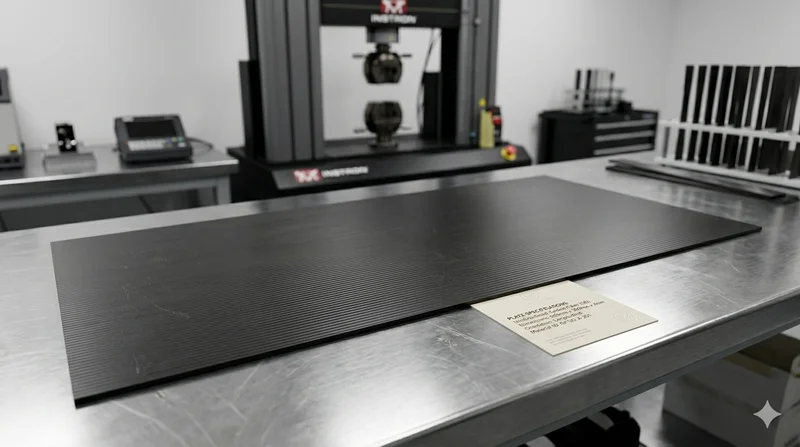
Carbon Fiber Plate — UD Unidirectional T700
Unidirectional carbon fiber plate with all fibers oriented in a single direction for maximum strength along the fiber axis. Essential for structural reinforcements, splints, and applications where load direction is predictable.
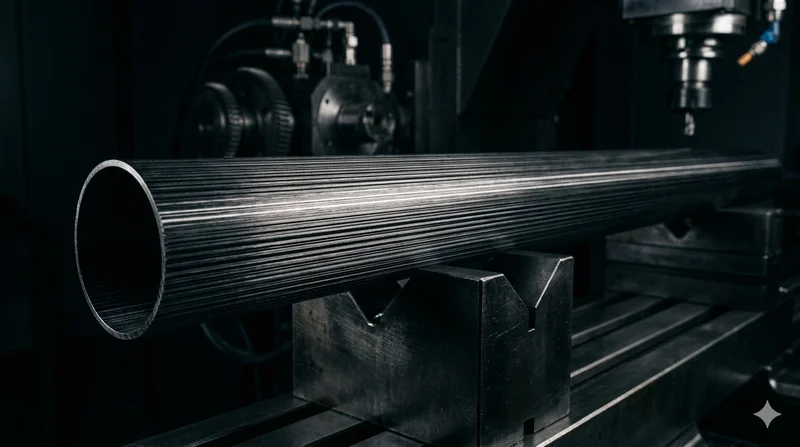
Round Carbon Fiber Tube — UD Unidirectional T700
Unidirectional (UD) round tube with all fibers aligned axially for maximum longitudinal stiffness. Ideal for applications requiring high bending rigidity with minimal weight, such as shafts, struts, and structural reinforcements.