
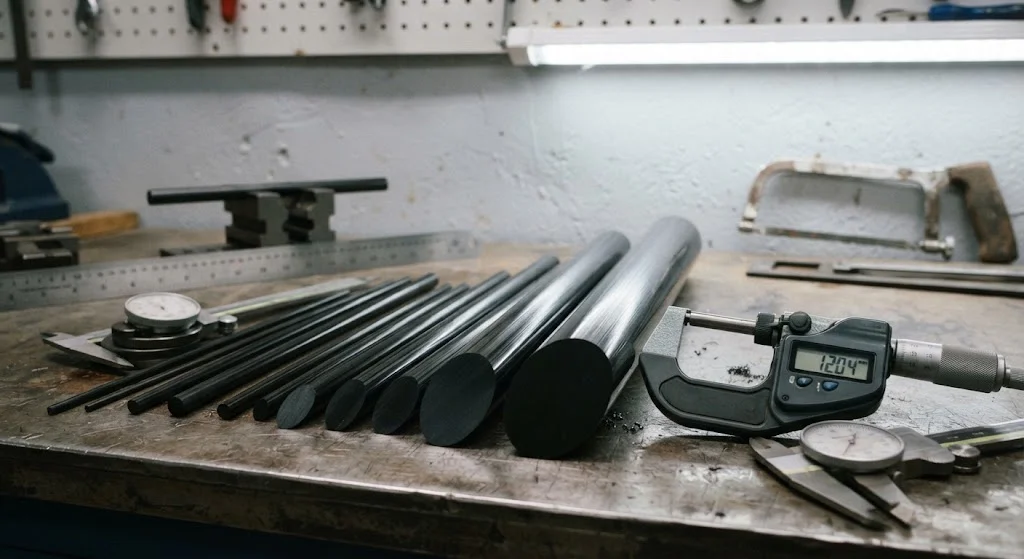
Searching for a carbon fiber rod near me is usually driven by speed: a prototype needs a rod tomorrow, a repair shop needs a replacement spar today, or a small production run needs material this week. Local carbon fiber rod suppliers and distributors stock a limited set of pultruded and filament wou
Introduction
Searching for a carbon fiber rod near me is usually driven by speed: a prototype needs a rod tomorrow, a repair shop needs a replacement spar today, or a small production run needs material this week. Local carbon fiber rod suppliers and distributors stock a limited set of pultruded and filament wound rods, and that stock follows predictable size and tolerance patterns. Understanding those patterns — the standard diameters, the lengths, the straightness and diameter tolerances, and the difference between pultruded and wound construction — is what separates a quick purchase from a repeated one. This article explains what local carbon fiber rod suppliers actually stock, how to verify that a rod meets its stated specification, and how to decide between local stock and a factory custom order for a carbon fiber rod near me purchase.
What Local Carbon Fiber Rod Suppliers Actually Stock
Local distributors stock the sizes that sell repeatedly, and the pattern is remarkably consistent across suppliers. The most common carbon fiber rod stock falls into a narrow range of diameters and lengths:
- Small solid rods: 1.0, 1.5, 2.0, 3.0, 4.0 and 5.0 mm diameters, cut from continuous pultruded stock and sold by the meter or in cut lengths.
- Medium solid rods: 6.0, 8.0, 10.0 and 12.0 mm, often stocked in 500 mm, 1000 mm or 2000 mm lengths for machining and structural work.
- Large solid rods and tubes: 14-30 mm diameters, typically stocked in shorter lengths because they are heavier and used in smaller quantities.
- Standard lengths: 1000 mm and 2000 mm are the universal norms; anything else is usually cut on request from those two.
Local stock is overwhelmingly pultruded rod rather than filament wound tube, for a simple reason: pultrusion produces a continuous, uniform rod at low cost, while filament winding is used for tubes and for rods where specific hoop strength is needed. If your application needs a tube with internal pressure capability or a specific fiber angle, local stock is unlikely to cover it and a custom order is the realistic path.
Stock Tolerances: What the Numbers Mean
The tolerance specification is where most local carbon fiber rod purchases go wrong, because buyers assume the rod matches its nominal size more closely than it does. Standard pultruded rod tolerances are wider than machined metal tolerances and follow a clear pattern:
| Specification | Typical stock tolerance | What affects it |
|---|---|---|
| Diameter, rods under 6 mm | ±0.05 mm | Die wear, fiber volume variation |
| Diameter, rods 6-20 mm | ±0.10 mm | Die precision, resin shrinkage |
| Diameter, rods over 20 mm | ±0.15-0.20 mm | Larger die, thicker laminate |
| Straightness | 0.5-1.0 mm per 1000 mm | Pultrusion line tension, curing balance |
| Length tolerance | +2 to +5 mm on cut stock | Cutting method, saw kerf |
Two implications follow. First, if your design relies on a sliding fit or a press fit, verify the actual measured diameter of the stock you are buying rather than trusting the nominal size. Second, straightness matters most for long rods used as spars or push rods: a rod that is straight over 500 mm may still bow measurably over 2000 mm, so check straightness over the full length you will use.
How to Verify the Quality of Local Carbon Fiber Rod Stock
A carbon fiber rod supplier near you can be verified in a few minutes with basic checks, and these checks filter out most low-quality stock:
- Measure the diameter with a micrometer at several points along the length and at several rotations. Consistent readings across the length indicate good die control; wandering readings indicate ovality or die wear.
- Check the surface: a good pultruded rod has a smooth, continuous surface with no fiber bloom, no cracks and no exposed dry fiber. Surface defects weaken the rod and indicate poor process control.
- Roll it on a flat surface to check straightness, or place it on two V-blocks and measure the bow at mid-span.
- Ask for the fiber type and fiber volume fraction: a real spec states the fiber (for example T700 or T300), the fiber volume fraction (typically 60-68 percent for structural pultrusion) and the resin system. A supplier who cannot state these is selling material of unknown origin.
- Request a test certificate for the lot if the rod will carry load. Flexural and compressive data on the actual lot are far more valuable than a generic datasheet.
The most common quality failure in inexpensive local stock is low fiber volume fraction — the rod looks fine but bends under load because it is resin-rich. A simple three-point bend test between two supports, or a request for the manufacturer's fiber volume data, exposes this quickly.
Local Stock vs Custom Order: When Each Wins
The decision between a carbon fiber rod near me purchase and a factory custom order depends on the gap between your requirement and the local stock list:
| Scenario | Best route | Why |
|---|---|---|
| Standard diameter, standard length, prototype or repair | Local stock | Speed, no minimum quantity, no tooling |
| Non-standard diameter or length | Local stock, if cut from standard | Cutting to length is cheap; diameter is not |
| Tight diameter tolerance or specific straightness | Custom or verified local lot | Stock tolerance may exceed your fit requirement |
| Filament wound tube or specific fiber angle | Factory custom | Local stock is almost always pultruded solid rod |
| Large quantity with consistent quality | Factory direct | Volume pricing and lot control |
When the local supplier does not have the exact size, ask whether it can be supplied by their factory or importer within a known lead time. Many local carbon fiber rod suppliers are resellers of a larger factory line, and the difference between "we do not carry it" and "we can get it in three weeks" is a small but important distinction. Plan the custom order lead time into the schedule and keep the local stock for the urgent items.
Frequently Asked Questions
How much does a carbon fiber rod cost?
The carbon fiber rod price depends on diameter, fiber grade and quantity. As a rough guide, a 3 mm pultruded rod sells for roughly USD 2-5 per meter at small quantities, a 6 mm rod for USD 5-12 per meter, and a 12 mm rod for USD 15-35 per meter, with significant discounts at coil or bundle quantities. T700-based rod costs more than T300-based rod, and rods requiring tight tolerances or special surface finish cost more again. Local stock prices include the distributor margin, so compare against factory-direct quotes when quantity grows beyond prototype scale.
Can I buy carbon fiber rod cut to exact length locally?
Yes, in most cases. Local suppliers stock 1000 mm and 2000 mm lengths and cut to requested lengths with a saw or abrasive cutter, typically with a tolerance of a few millimeters. For precision lengths, machine the ends yourself or ask for a machined end. Note that cut ends should be sealed or lightly sanded — raw cut ends can expose dry fiber at the surface, and while this is rarely a structural issue for a rod, a sanded and sealed end looks better and prevents edge fraying in handling.
How do I choose between a solid rod and a filament wound tube?
Choose a solid pultruded rod for axial load, bending and compressive applications such as push rods, struts, spars and dowels — it is cheaper, straighter and readily available. Choose a filament wound tube when you need a higher strength-to-weight ratio at large diameters, internal pressure capability, or a specific fiber angle that only winding provides. For the same outer diameter, a wound tube is lighter than a solid rod, but the solid rod is stiffer in bending for a given diameter because all of the cross-section carries load. If weight matters at large diameters, the tube wins; if simplicity and stiffness per dollar matter, the rod wins.
Conclusion
Buying a carbon fiber rod near me works well when you match your requirement to the standard stock pattern: pultruded solid rods, common diameters, 1000 mm and 2000 mm lengths, and tolerance expectations of roughly ±0.05-0.10 mm on diameter. Verify the actual lot with a micrometer, a straightness check and a fiber specification before relying on the rod structurally, and route non-standard sizes, wound tubes and large quantities to a factory custom order. The combination — local speed for the standard items, factory precision for the rest — covers the full range without compromising quality.
Explore our carbon fiber rods, tubes and profiles with full specifications and test data, or contact our technical team for stock sizes, custom diameters and volume pricing for your program.
Part of topic
Related Articles
- Carbon Fiber Auto Parts: Lightweight Solutions for EV Range and Performance
- Carbon Fiber Small Parts: Precision Manufacturing for Electronics and Medical Devices
- Carbon Fiber Sheets Suppliers: Specification Comparison and Procurement Guide
- Custom Carbon Fiber Assemblies: Multi-Component Integration and Quality Control
- Custom Carbon Fiber Fabrication: One-Stop Service from Design to Delivery
- Carbon Fiber Near Me Suppliers: Global Local Supplier Directory for Quick Procurement
Interested in Our Products?
Contact our team for competitive pricing and technical specifications.
Get a QuoteRelated Products

Carbon Fiber Plate — 3K Twill T700 3.0mm
Medium-thickness 3.0mm carbon fiber plate offering significantly higher load capacity while maintaining attractive 3K twill finish. Suitable for structural brackets, reinforcement plates, and load-bearing panels.

Carbon Fiber Plate — 3K Twill T700 1.5mm
Thin 1.5mm carbon fiber plate with 3K twill weave surface. Lightweight and stiff, commonly used for covers, panels, drone bodies, and applications requiring a premium aesthetic appearance.

Square Carbon Fiber Tube — 3K Twill T700
Square cross-section carbon fiber tube manufactured with 3K twill weave for torsional strength. Preferred for structural frames, trusses, and support columns where rectangular geometry offers design flexibility.
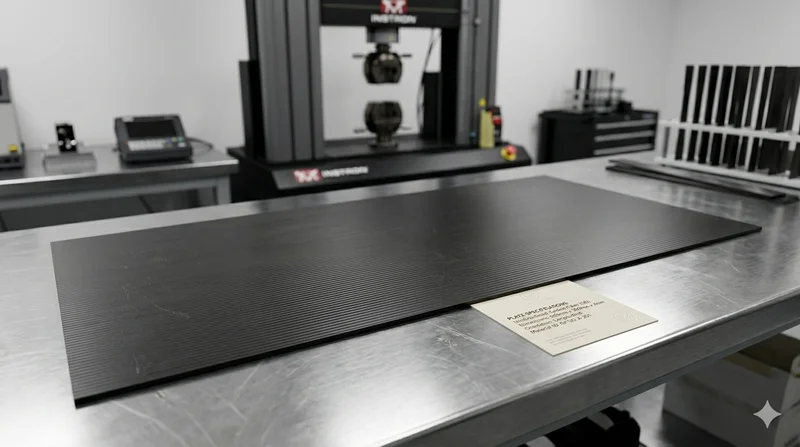
Carbon Fiber Plate — UD Unidirectional T700
Unidirectional carbon fiber plate with all fibers oriented in a single direction for maximum strength along the fiber axis. Essential for structural reinforcements, splints, and applications where load direction is predictable.
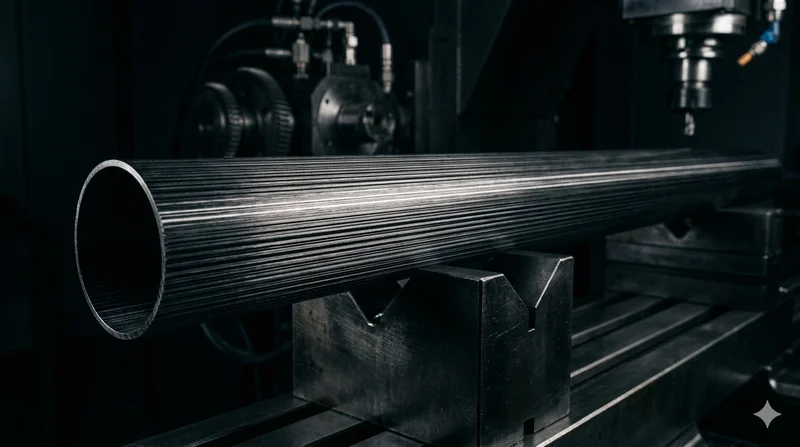
Round Carbon Fiber Tube — UD Unidirectional T700
Unidirectional (UD) round tube with all fibers aligned axially for maximum longitudinal stiffness. Ideal for applications requiring high bending rigidity with minimal weight, such as shafts, struts, and structural reinforcements.