
Racing yachts are won by fractions of a knot and tens of kilograms. The hull is the largest single component, so the material that builds it has an outsized influence on speed. Carbon fiber has become the only serious choice for the highest tier of sailing because it delivers a combinat
Introduction
Racing yachts are won by fractions of a knot and tens of kilograms. The hull is the largest single component, so the material that builds it has an outsized influence on speed. Carbon fiber has become the only serious choice for the highest tier of sailing because it delivers a combination of stiffness, strength, and low weight that glass and aluminum cannot match. From America's Cup foiling monohulls to superyacht deckhouses, carbon fiber prepregs define modern racing hull construction.
This article explains how carbon fiber racing hulls are built, how weight budgets drive every material decision, and what makes an America's Cup-class layup different from an ordinary production hull. For designers, yards, and buyers, the composite choices in the hull determine competitive performance as much as the sail plan or the helm.
Why Carbon Dominates Racing Hulls
A race boat's speed comes from low displacement, high stiffness-to-weight, and the ability to carry the right sail area. Carbon fiber composite hulls serve all three simultaneously. The decisive properties are clear in comparison:
| Property | Carbon Fiber Hull | Glass Fiber Hull | Aluminum Hull |
|---|---|---|---|
| Specific modulus | Highest | Lowest | Mid |
| Weight for same stiffness | Lightest | Heaviest | Heavy |
| Fatigue behavior | Excellent under tuned loads | Good | Good, weld-dependent |
| Fabrication flexibility | Highly tunable layup | Good | Limited shapes |
| Corrosion | Inert | Inert | Corrodes in saltwater |
Two factors dominate. First, carbon's high specific stiffness lets laminators achieve a stiff hull at a fraction of the weight of glass or aluminum, moving the saved mass into ballast, sail area, or reduced displacement. Second, the anisotropic nature of carbon lets designers orient fibers exactly where loads are highest, tailoring a hull panel for stiffness here and strength there instead of applying uniform thickness everywhere.
Prepreg Molds and the Autoclave Route
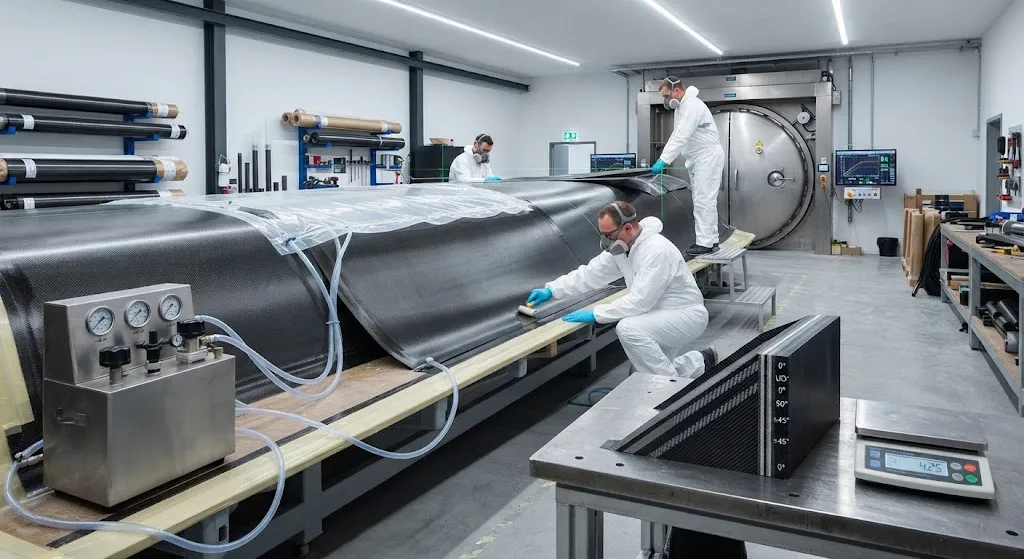
At the top of the racing pyramid, hulls are built from carbon fiber prepreg cured in an autoclave. A prepreg is a sheet of unidirectional or woven carbon fiber pre-impregnated with resin at a controlled ratio, which gives the builder precise control over fiber and resin content. The autoclave applies heat and pressure to consolidate the laminate and drive out voids, producing the lowest-porosity, highest-quality structure possible:
- Prepreg layup: Plies are cut, placed against the mold, and debulked in stages to remove trapped air, building up the laminate one accurately positioned ply at a time.
- Autoclave cure: Pressure consolidates the plies while heat cures the epoxy, yielding high fiber volume and very low void content essential for high compressive strength.
- Accurate molds: The male or female mold is itself made to tight tolerance, often from a carbon master, so that every hull panel holds shape and thickness.
- Post-cure and QC: Nondestructive inspection verifies the laminate before a hull is cleared for the water.
The autoclave route is slower and more expensive than infusion, which is why it is reserved for the highest-performance boats where every tenth of a millimeter and every void avoided translates into speed and structural margin. For these programs, the added cost of prepreg and autoclave capacity is justified by the weight and quality it returns.
Weight Budgets and the Cost of a Kilogram
Every racing boat operates under a weight budget: a target displacement above which the boat is slower. Designers allocate mass across hull, deck, rig, ballast, systems, and crew, and each kilogram saved in the hull is a kilogram that can be spent on ballast for righting moment or removed to reduce displacement. The value of a kilogram therefore scales with how close the program is to its target:
| Component Zone | Typical Priority | Where Mass Is Spent or Saved |
|---|---|---|
| Hull and deck skin | High stiffness-to-weight | Prepreg carbon skins, low-density cores |
| Structural frames and bulkheads | Load path | Rib layout and bonding optimization |
| Ballast | Righting moment | Mass saved in hull moves here for stability |
| Interior and systems | Lowest priority | Composite panels, lightweight fittings |
Teams are obsessive about the marginal weight of every bonded fitting, every meter of piping, and every layer of paint. A laminate that is 1-2 percent overweight on a 25-meter hull can represent dozens of kilograms that ultimately appear as slower acceleration, worse upwind pointing, or reduced payload. The weight budget is why carbon, despite its cost, is the rational choice: it delivers the lowest mass structure and frees the budget for the features that actually win races.
America's Cup-Class Layup: Foils, Load Paths and Local Reinforcement
An America's Cup-class boat is the extreme end of racing hull construction. These boats fly on foils, so the hull is lifted out of the water and the structure must carry the entire dynamic load through a small set of appendage and rig interfaces while remaining as light as possible. The layup is designed around these realities:
- Foil and rudder load paths: Heavy localized loads enter the hull at the foil casings and rudder, requiring thick, precisely oriented carbon build-ups around these points.
- Rig and shroud attachments: The mast step and chainplates concentrate enormous rigging loads into spreader-bonded carbon structure.
- Torsional and global stiffness: The hull must resist global bending and torsion as a single stiff beam, often with a carbon structural core and full-length unidirectional reinforcement.
- Damage tolerance with minimum mass: Hybrid and toughened prepregs balance stiffness against the unavoidable risk of grounding or impact.
The America's Cup layup is therefore not a single recipe but a carefully balanced laminate that puts the right fiber orientation at the right location. Carbon is placed where loads are high and direction is known, with stiffness oriented along the load path, while lower-stressed panels use lighter cores and thinner skins. The result is a hull that is simultaneously extremely stiff, extremely light, and able to carry the concentrated loads of a flying, crewed monohull.
Beyond the America's Cup: Translating the Technology
The same composite technology cascades down from the Cup to racing cruisers, performance catamarans, and even premium offshore vessels. The difference is one of degree rather than kind. A production performance boat may use carbon in the highly loaded areas, the mast and rigging, and selected panels, while reserving less-critical glass or hybrid laminates for lower-stressed regions. The weight budget still applies, and the prepreg-and-infusion skills learned at the top level become increasingly accessible as carbon costs fall:
Buyers evaluating a composite hull should check the fiber architecture, the resin and cure route, the core material, and the bonding quality at frames and bulkheads, because these determine both performance and long-term durability in a salty, high-cycle environment. Whether a boat is an America's Cup contender or a coastal racer, the carbon fiber layup is what separates a boat that holds its stiffness and weight over many seasons from one that gradually softens and gains water.
Frequently Asked Questions
Why is carbon fiber used in racing yacht hulls?
Carbon fiber provides the highest stiffness-to-weight ratio of any practical marine structural material, so a hull built from carbon is significantly lighter and stiffer than one built from glass or aluminum for the same size. Lower weight reduces displacement and improves acceleration and speed, while higher stiffness keeps the hull shape and structural integrity under load. Carbon also allows anisotropic tailoring, orienting fibers along load paths for maximum efficiency. For racing boats, where speed is decided by small margins, the combination of low weight and high tailored stiffness is decisive, which is why the highest tier of sailing uses carbon almost exclusively.
What is a prepreg mold and why does it matter?
A prepreg mold is the shaped male or female tool against which carbon fiber prepreg is laid up and cured. The mold is made to tight tolerances, often from a carbon master, so that every hull panel holds its shape and thickness. Prepreg refers to carbon fiber pre-impregnated with a controlled amount of resin, giving builders precise fiber-to-resin ratios. When laid up in a mold and cured under autoclave pressure, the result is a low-porosity, high fiber-volume laminate with excellent compressive strength and surface finish. The mold determines the accuracy of the hull, so its quality directly affects the performance of the finished boat.
How is an America's Cup hull different from a production hull?
An America's Cup hull is at the extreme of weight optimization and load concentration. Because the boat foils out of the water, the structure must carry the whole dynamic load through foil casings, rudder, mast step, and chainplates while staying as light as possible. The layup uses precisely oriented carbon at high-stress locations, a structural core, and toughened prepregs for damage tolerance, with lower-stressed panels built lighter. A production hull is typically a simpler, more uniform laminate that balances cost, producibility, and durability rather than squeezing out the last gram. Both use carbon, but the Cup hull pushes the fiber architecture and weight budget far further.
What should buyers check when specifying a carbon fiber hull?
Buyers should verify the fiber architecture and orientation, the resin system and cure route (prepreg and autoclave versus infusion), the core material used in sandwich panels, and the quality of bonding at frames, bulkheads, and appendage interfaces. They should check whether the laminate weight matches the stated design budget and whether nondestructive inspection was performed. Because carbon hulls are expensive to repair, buying from a yard with documented process control and traceability is important. These factors together determine both the competitive performance of the boat and its long-term durability and resale in a salty, high-cycle environment.
Conclusion
Carbon fiber is the defining material of modern racing yacht construction. From massive America's Cup foiling monohulls to high-performance cruisers, the combination of low weight, high tailored stiffness, and precise prepreg layup gives designers a hull that is simultaneously light and strong enough to race at the highest level. The weight budget dominates every decision, and carbon's specific modulus lets teams spend saved mass where it wins races, on ballast and righting moment, rather than carrying it in the structure.
Whether you are designing a Cup challenger or spec'ing a performance hull, the prepreg mold, the weight budget, and the fiber architecture decide the outcome. Explore our carbon fiber prepregs, tows, and marine laminates or contact our technical team to discuss resin systems, layup support, and material supply for your next sailing program.
Part of topic
Related Articles
- Carbon Fiber Mooring for Floating Offshore Wind: Fatigue and Corrosion in Deep Water
- Carbon Fiber Bicycle Frame Optimization: Layup Design and Manufacturing for Competitive Racing
- Carbon Fiber CFRP Retrofit for Infrastructure: Bridge and Building Seismic Strengthening
- Carbon Fiber Medical Imaging Equipment: Lightweight Gantry and Couch Structures for MRI/CT
- Carbon Fiber EV Battery Enclosures: Crash Safety and Electromagnetic Shielding Design
- Carbon Fiber Structures for Low-Altitude Economy: UAV Airframes and eVTOL Components
Interested in Our Products?
Contact our team for competitive pricing and technical specifications.
Get a QuoteRelated Products
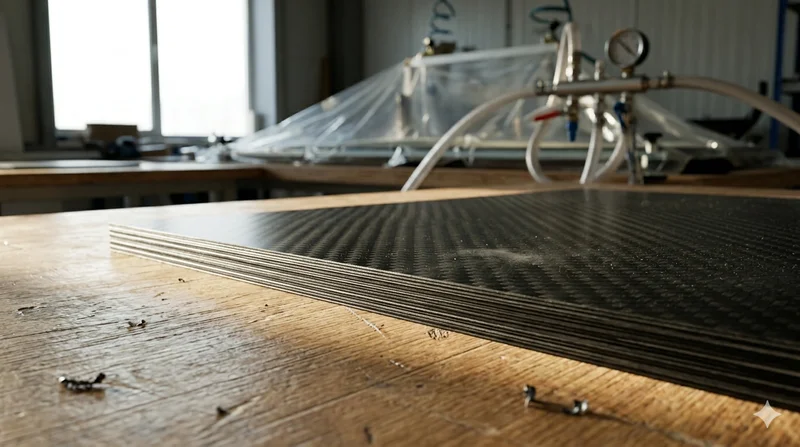
Carbon Fiber Plate — 3K Twill T700 3.0mm
Medium-thickness 3.0mm carbon fiber plate offering significantly higher load capacity while maintaining attractive 3K twill finish. Suitable for structural brackets, reinforcement plates, and load-bearing panels.

Carbon Fiber Plate — 3K Twill T700 1.5mm
Thin 1.5mm carbon fiber plate with 3K twill weave surface. Lightweight and stiff, commonly used for covers, panels, drone bodies, and applications requiring a premium aesthetic appearance.
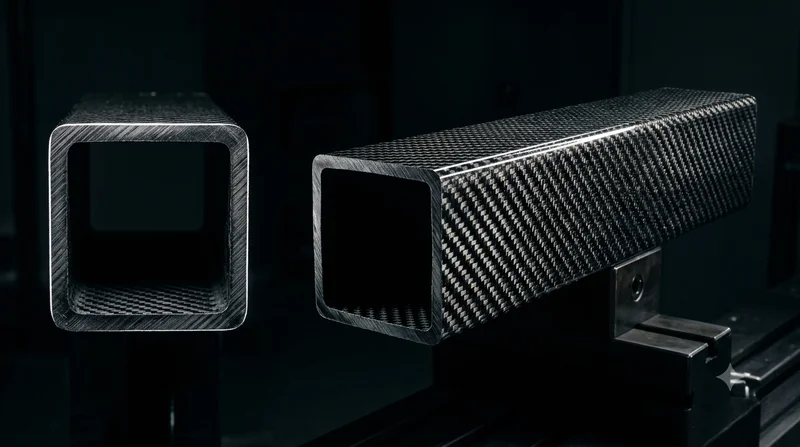
Square Carbon Fiber Tube — 3K Twill T700
Square cross-section carbon fiber tube manufactured with 3K twill weave for torsional strength. Preferred for structural frames, trusses, and support columns where rectangular geometry offers design flexibility.
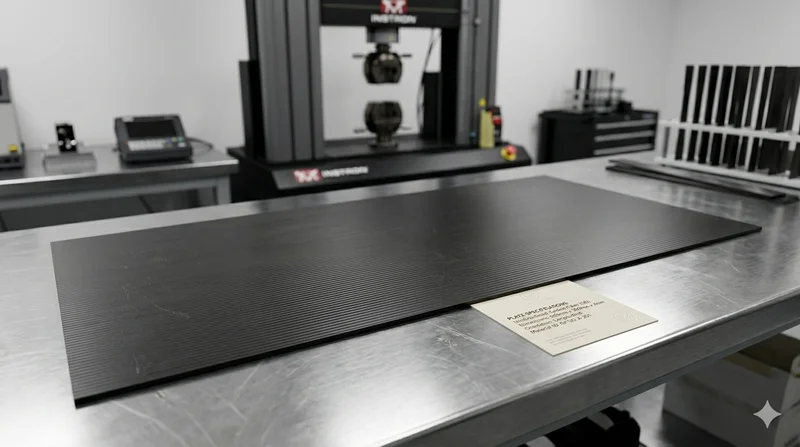
Carbon Fiber Plate — UD Unidirectional T700
Unidirectional carbon fiber plate with all fibers oriented in a single direction for maximum strength along the fiber axis. Essential for structural reinforcements, splints, and applications where load direction is predictable.
Round Carbon Fiber Tube — UD Unidirectional T700
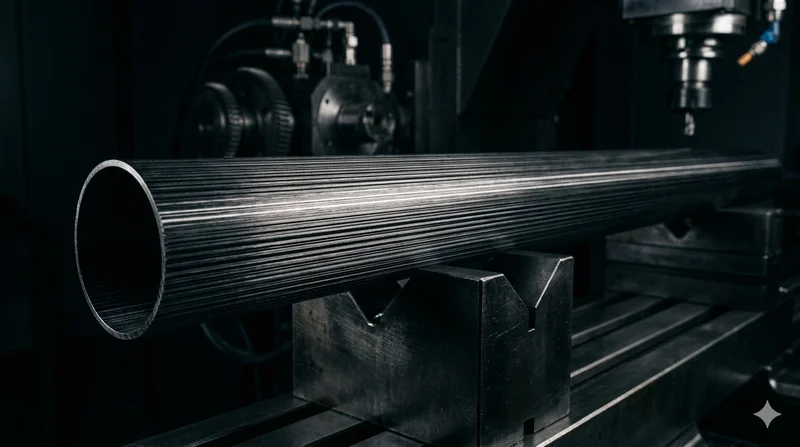
Unidirectional (UD) round tube with all fibers aligned axially for maximum longitudinal stiffness. Ideal for applications requiring high bending rigidity with minimal weight, such as shafts, struts, and structural reinforcements.