
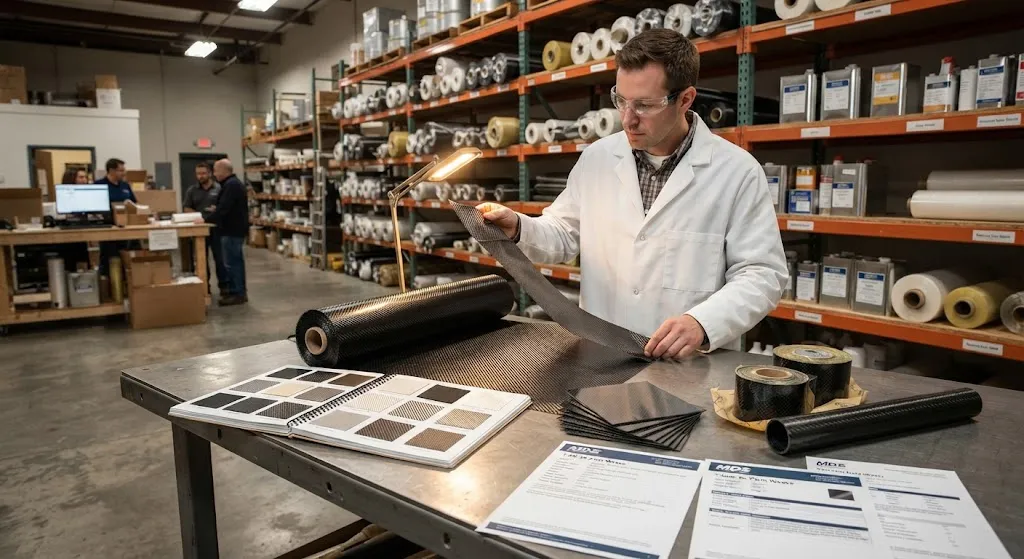
"Carbon fiber near me" is one of the most common searches in the composite industry — and for good reason. A prototyping team working on a drone frame, a medical brace, a robotics arm, or an automotive bracket often discovers in week one that carbon fiber is not a commodity that arrives identically
Introduction
"Carbon fiber near me" is one of the most common searches in the composite industry — and for good reason. A prototyping team working on a drone frame, a medical brace, a robotics arm, or an automotive bracket often discovers in week one that carbon fiber is not a commodity that arrives identically from every supplier. Fiber grade, weave style, resin system, surface finish, and dimensional tolerance all vary between sources, and the material you prototype with must match the material you produce with. That requirement makes proximity valuable. When a prototyping team searches carbon fiber near me, they are really looking for three things: material they can see and touch before committing, iteration speed measured in days rather than weeks, and a supplier who can answer engineering questions face to face. This article explains why local sourcing wins these situations, quantifies the trade-offs against cross-border buying, and defines the volume point where the equation flips.
What "Carbon Fiber Near Me" Actually Buys You
Local carbon fiber sourcing delivers four concrete advantages that cross-border purchasing cannot match, regardless of price per square meter:
- Physical inspection before purchase: A local supplier can show you actual material — weave quality, surface finish, thickness consistency — before you commit. Cross-border buying commits you to a spec sheet you cannot verify until the shipment arrives.
- Iteration measured in days: A prototype that needs a different weave, a thicker laminate, or a stiffer tube can be sourced, delivered, and tested within a week when the supplier is local. Cross-border iteration cycles run four to eight weeks per attempt.
- Direct engineering support: You can ask a local supplier which resin matches your cure cycle, which fabric drapes over your tool, or which core material pairs with your skin — and get an answer grounded in the specific products you are buying, not a generic catalog response.
- Dispute resolution that works: When a delivered batch has a defect, a local supplier can inspect it with you, rework it, or replace it in days. A cross-border dispute involves shipping, customs, and weeks of waiting.
These advantages are hardest to value at the per-meter price level and easiest to see in the total cost of the prototyping program, where rework loops and delivery delays dominate.
Quantifying Local versus Cross-Border
The cost comparison between local and cross-border carbon fiber sourcing changes as volume grows. The table below models a typical prototyping-to-production scenario for carbon fiber sheet and prepreg:
| Cost Factor | Local Supplier | Cross-Border Supplier |
|---|---|---|
| Material price per m² (T700 3K fabric) | $25-45 | $15-30 |
| Shipping and customs per order | $20-80 (ground, 1-3 days) | $150-400 (air), 7-14 days |
| Minimum order quantity | 1-5 m² typical | Often 50-100 m² or full rolls |
| Iteration cycle time | 2-5 days | 4-8 weeks |
| Engineering consultation | Included, direct | Email only, delayed |
| Inspection before purchase | Yes, on-site | No, spec sheet only |
For prototyping quantities — typically 1-50 m² of material across the whole program — the shipping cost per square meter is often the deciding factor. On a 10 m² prototype order, cross-border shipping adds $15-40 per m² on top of the material, erasing most of the per-meter price advantage. When failed iterations are counted, the local supplier's total cost of prototyping is frequently lower even at double the material price.
When Local Sourcing Wins, and When It Does Not
Local sourcing wins in four situations: prototyping and design validation, small production runs below minimum order quantities, applications with strict material traceability where inspection matters, and urgent repairs or replacement parts. In all of these, the value of speed, inspection, and support exceeds the per-meter price difference.
Cross-border sourcing wins in two situations. First, production volume: at hundreds of square meters per order, the material price difference compounds, shipping cost per meter collapses, and the volume justifies a qualified overseas supplier with batch consistency. Second, specialized grades: high-modulus fibers, aerospace prepregs, and exotic weaves are often only available from a handful of global manufacturers, and local distributors may not stock them at all. The engineering question is not "local or overseas" in the abstract — it is "what am I buying, at what volume, and how fast do I need it."
How to Qualify a Local Carbon Fiber Supplier
Finding a local supplier who can actually support prototyping requires more than a map search. Qualify candidates with four checks:
- Ask what they make versus resell: A manufacturer can answer process questions and modify products; a reseller can only quote what they hold. For prototyping support, a manufacturer or a distributor with a technical team is the right partner.
- Request material data: Ask for the fiber grade, areal weight, weave style, and resin system of everything you are considering. A supplier who cannot name the fiber grade does not know their own material.
- Check the sample policy: Samples should come from the same production line you will order from, not hand-selected showpieces. A mismatch between sample and production quality is the classic trap in composite sourcing.
- Test their engineering depth: Ask one specific question about your application — drape, resin compatibility, or thickness tolerance. The quality of the answer tells you whether the supplier supports your design or just sells material.
These checks take an hour and prevent the rework loops that silently inflate prototyping budgets.
Building a Hybrid Sourcing Strategy
The most effective strategy for most companies is hybrid: a local supplier for prototyping, iteration, and small production runs, paired with an overseas partner for production volume once the design and process are locked. The local supplier earns the early margin and becomes the design partner; the overseas supplier earns the volume margin and delivers the cost curve. The transition point varies by material and geography, but a useful rule of thumb is that when a single material specification exceeds roughly 100 m² per order, a qualified overseas supplier with batch consistency and certification documentation becomes the economic choice — provided the design is frozen and the risk of iteration is low.
Frequently Asked Questions
What does "carbon fiber near me" actually mean for a supplier search?
It means finding a carbon fiber supplier within practical shipping and consultation range — typically the same country or region — who can deliver material quickly, show you real products, and answer engineering questions directly. The search is common because prototyping teams need iteration speed and inspection that distance-based sourcing cannot provide, and the term reflects that local capability matters as much as price.
Is local carbon fiber more expensive than importing from overseas?
Per square meter, local material is usually 30-80% more expensive than the overseas base price. But for prototyping quantities, shipping and customs often add $15-40 per m² to imported material, and failed iteration cycles cost weeks of engineering time. On small orders, the total cost of a local supplier is frequently lower; on production volume above roughly 100 m² per order, overseas sourcing becomes economically dominant.
What should I look for when choosing a local carbon fiber supplier?
Look for a manufacturer or technically capable distributor rather than a pure reseller. Verify they can name the fiber grade, areal weight, and resin system of their material; check that samples come from the production line you will order from; and ask one specific engineering question about your application to test their depth. On-site material inspection is the core advantage of local sourcing — use it.
When should I switch from a local supplier to an overseas one?
Switch when three conditions hold: your design and process are frozen, your order volume exceeds roughly 100 m² per order (or the equivalent in other forms), and the overseas supplier can provide batch consistency documentation and certification. Below that point, iteration risk and shipping cost usually outweigh the per-meter price savings of overseas material.
Conclusion
When a team searches carbon fiber near me, they are expressing a real engineering need: material they can inspect, iteration they can measure in days, and support they can talk to. Local sourcing wins for prototyping because the total cost — including rework loops, shipping, and engineering time — is usually lower than the per-meter price suggests. Overseas sourcing wins for locked production volume where the design no longer changes. The best strategy is hybrid: use the local supplier to validate the design, then transition volume to a qualified overseas partner once the risk is out. The decision is not about loyalty to geography; it is about matching sourcing speed and risk to the stage of your product.
YongXian supplies carbon fiber fabrics, prepregs, tubes, and profiles for prototyping and production. Explore our carbon fiber product range or contact our engineering team to discuss material selection and supply options for your prototype program.
Part of topic
Related Articles
- Carbon Fibre for Sale: Reading Listings, Grades and Lead Times
- Carbon Fiber Rod Blanks: Supply Chain and Custom Cutting Services
- Carbon Fiber Tube Shop: Selecting the Right Supplier for Custom and Standard Tubes
- Carbon Fiber Sheet Price: Factors Affecting Cost per Square Meter
- Carbon Fibre Sheet Supplier UK: Sourcing Options and Specification Checklist
- Carbon Fiber Sheets Near Me Suppliers: Local Stock vs Factory Direct
Interested in Our Products?
Contact our team for competitive pricing and technical specifications.
Get a QuoteRelated Products
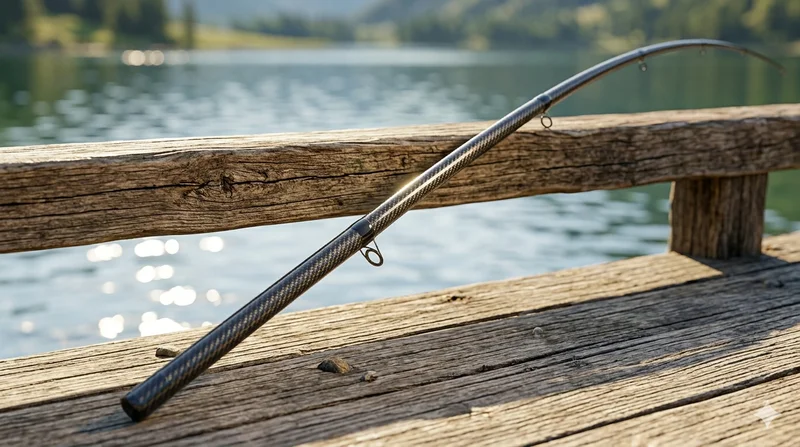
Carbon Fiber Fishing Rod Blank
High-quality carbon fiber fishing rod blank manufactured from multiple grades of Toray carbon fiber cloth. Available in a wide range of lengths, powers, and actions for freshwater and saltwater applications. Suitable for OEM rod building.

Carbon Fiber Plate — 3K Twill T700 3.0mm
Medium-thickness 3.0mm carbon fiber plate offering significantly higher load capacity while maintaining attractive 3K twill finish. Suitable for structural brackets, reinforcement plates, and load-bearing panels.

Carbon Fiber Plate — 3K Twill T700 1.5mm
Thin 1.5mm carbon fiber plate with 3K twill weave surface. Lightweight and stiff, commonly used for covers, panels, drone bodies, and applications requiring a premium aesthetic appearance.

Square Carbon Fiber Tube — 3K Twill T700
Square cross-section carbon fiber tube manufactured with 3K twill weave for torsional strength. Preferred for structural frames, trusses, and support columns where rectangular geometry offers design flexibility.
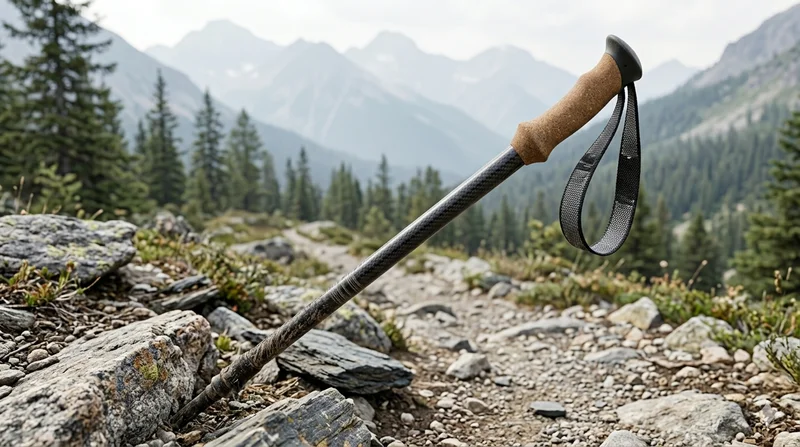
Carbon Fiber Trekking Pole
Lightweight carbon fiber trekking pole manufactured from high-grade carbon fiber tube. Weighs only 160g per pole while providing superior shock absorption and durability for hiking, trail running, and backpacking.