A carbon fiber composite foam supplier decides whether your sandwich panel keeps its shear strength after a wet season, a cure cycle and one day of rough handling. Skins carry tension; foam core carries shear and spacing. Wrong density, open cells or a supplier who cannot document moisture uptake wi
Introduction
A carbon fiber composite foam supplier decides whether your sandwich panel keeps its shear strength after a wet season, a cure cycle and one day of rough handling. Skins carry tension; foam core carries shear and spacing. Wrong density, open cells or a supplier who cannot document moisture uptake will fail the bond before a crack appears in the carbon.
This guide covers the foam families that actually enter a quote — closed-cell PVC, PET, PMI for high temperature — then the data a foam supplier must put in front of you before a purchase order.
Carbon Fiber Composite Foam Supplier: What You Are Buying
Foam is sold by density, cell structure, thickness tolerance and surface preparation that lets epoxy wet it. PVC at 60 kg/m³ and PET at the same density share a datasheet number and diverge in impact and heat. Closed-cell structure keeps water out if edges are sealed; open or partially open cells wick moisture along the panel and swell the bond line. A supplier who cannot state cell closure rate and edge-seal method is selling half a material.
| Foam family | Typical density | Flatwise compression | Shear modulus | Temperature ceiling | Best fit |
|---|---|---|---|---|---|
| Closed-cell PVC | 40–200 kg/m³ | 0.4–2.0 MPa | 50–160 MPa | ~80 °C continuous | Marine, wind blades, tooling blocks |
| Closed-cell PET | 60–200 kg/m³ | 0.7–2.5 MPa | 60–180 MPa | ~70 °C continuous | Cost-sensitive decks, transport panels |
| PMI rigid foam | 32–200 kg/m³ | 0.4–4.0 MPa | 50–350 MPa | ~180–200 °C (autoclave) | Aerospace, high-temp cure |
| Phenolic foam | 40–120 kg/m³ | 0.2–1.0 MPa | 30–80 MPa | Good fire, smoke performance | Fire-rated cores, transit |
| PU structural foam | 60–300 kg/m³ | 0.3–2.0 MPa | 40–120 MPa | Lower, moisture-sensitive | Light non-structural fill only |
Numbers above are typical datasheet ranges, not your certificate. A supplier who cannot map your load case onto one row of this table is quoting a catalog, not a program.
Matching Foam to the Load Case
Sandwich theory is simple: bending stiffness scales with the cube of the distance between skins, so doubling core thickness multiplies stiffness about eightfold for a linear mass increase. Design on shear first — if the foam fails in shear, thicker skins do not save the panel.
- Uniform pressure decks (roofs, floors): PET or PVC in the 80–120 kg/m³ band gives even skin support and a tolerant bonding window.
- Point loads and joints: raise local density or drop in a PMI patch instead of thickening the whole sheet.
- Cure above 120 °C: PMI or high-temperature PVC grades; standard PET creeps.
- Wet service without perfect edge seal: prefer fully closed-cell grades and pay for sealer at the supplier, not on the shop floor later.
Ask the carbon fiber composite foam supplier for flatwise compression and shear at the density you will actually receive, not at the nearest catalog step. A two percent density miss moves shear enough to flip a panel calculation.
Carbon Fiber Composite Foam US Supplier: Sourcing and Lead Time
United States buyers usually split between domestic converters and imported blocks. Domestic stock cuts lead times on common grades to one or two weeks and keeps country-of-origin records clean for programs that need them. Imported PET or PVC blocks can cut material cost twenty to thirty-five percent, then add four to eight weeks of sea freight, moisture-barrier packing and a second inspection at the port.
A carbon fiber composite foam US supplier keeps at least three grades per family in stock, retains batch records twelve months, and sends samples before a production run. Ask who runs the flatwise compression test — an in-house ASTM C365 lab is stronger than a mill certificate with no batch number attached.
Edge Sealing, Thickness Tolerance and Kitting
Foam leaves the mill at nominal thickness; you live with what the knife left. Structural foam is commonly held to ±0.5 mm on CNC-facing work. Faces must be clean for adhesive film contact — torn skin or oil marks hide dry spots until the panel is already cured.
- Thickness: three-point check with a calibrated gauge on every slab.
- Face: reject crushed cells, delaminated skin or line oil.
- Edge seal: specify sealer type and cure before the slab is bagged; open cells on a long edge wick for days.
- Kitting: one lot per kit, desiccant bagged, label with density, thickness and cut-list revision.
Documentation and Commercial Terms
Before a volume order, fix the document set in the purchase order:
- Lot-matched certificate: density, cell structure, flatwise compression, shear, moisture after conditioning.
- Retention: coupons and certificates available at least twelve months.
- Change control: written notice before any change to resin system, blowing agent or sealer supplier.
- Minimum order: stock grades often ship in cartons; custom density usually needs one full slab or about 300 kg.
- Packing: moisture-barrier bags with desiccant and shipping desiccant for sea freight; reject wet bags at receipt.
Frequently Asked Questions
What density do I need for a walk-on composite deck?
Most walk-on sandwich decks land between 80 and 120 kg/m³ closed-cell PET or PVC with skins around 1.5 to 3 mm carbon. Confirm flatwise compression above your worst point load plus a safety factor, and check that the skin layup can take the local bending between supports. A supplier who quotes one density for all decks is not reading your drawings.
How do I verify density before bonding?
Cut a 100 mm coupon from the slab edge, weigh it dry, divide by measured volume. Compare to the certificate. Do it at center and both ends — a three percent spread means recalculate or reject the slab before epoxy hits the face.
What is the lead time for custom foam?
Stock grades ship in one to two weeks. Custom density or sealed kits usually need four to six weeks including line purge, first-slab test and paperwork. Contour-cut kits add three to five days. A quote under two weeks for a brand-new density is almost always a relabeled stock grade.
Conclusion
A carbon fiber composite foam supplier should hand you a lot-traced certificate, a density you can re-measure, sealed edges and a kit that matches your cut list — not a catalog page with a foam picture. Ask for the test method behind every number, trial three lots, and seal edges before skins go down.
YongXian supplies carbon fiber composite foam cores and matched sandwich kits with lot certificates and export paperwork. Browse our composite materials or send your density, thickness and annual volume for a quotation.
Part of topic
Related Articles
- Carbon Fiber Composite Core Manufacturer: Foam and Honeycomb Production
- Carbon Fiber Composite Core Mill: Core Production
- Carbon Fiber Composite Core Supplier: Foam, Nomex and Qualification
- Carbon Fiber Composite Mold Maker: Tooling for OEM Programs
- Carbon Fiber Composite Hardener Supplier: Curing Agents for Epoxy Systems
- Carbon Fiber Composite Resin Mill: A Buyer Qualification Guide
Interested in Our Products?
Contact our team for competitive pricing and technical specifications.
Get a QuoteRelated Products
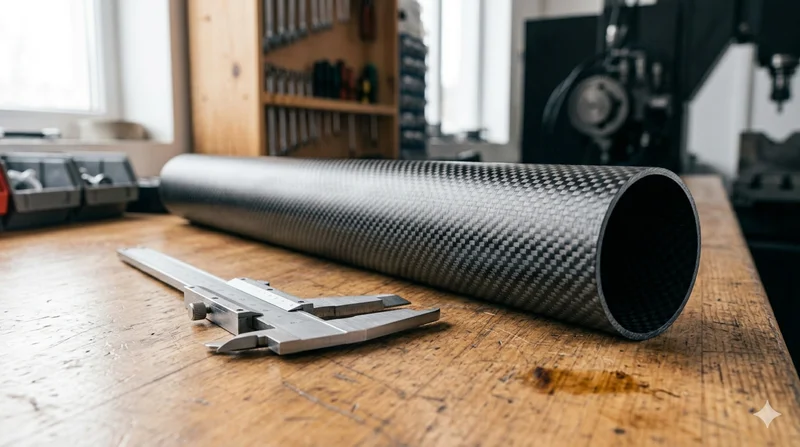
Round Carbon Fiber Tube — 3K Plain Weave T700
Standard round carbon fiber tube manufactured from Toray T700 grade fiber with 3K plain weave. Offers balanced strength and stiffness for general industrial applications including robotics, automation, sports equipment, and aerospace structures.

Custom Carbon Fiber Bicycle Frame
Full-custom carbon fiber bicycle frame manufactured to your geometry specifications. We produce road, gravel, mountain, and track frames using high-modulus carbon fiber layups optimized for each riding discipline. Monocoque construction with internal cable routing, available with disc or rim brake mounts.
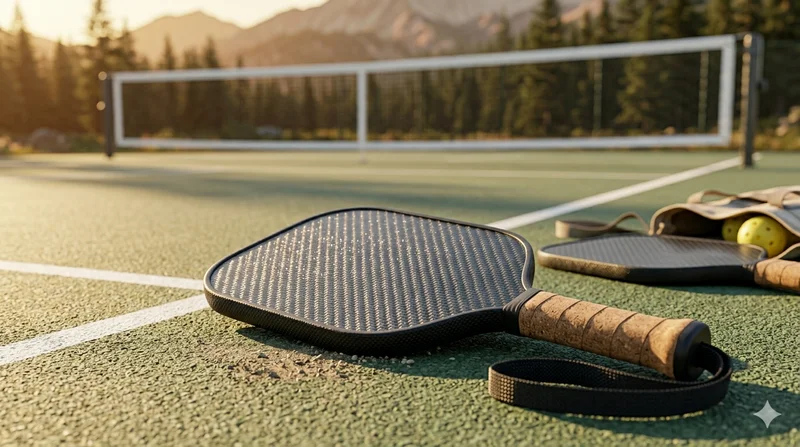
Carbon Fiber Pickleball Paddle
High-performance pickleball paddle with Toray T700 carbon fiber face and polypropylene honeycomb core. Delivers excellent power-to-weight ratio, spin generation, and vibration dampening for competitive play.

Carbon Fiber Trekking Pole
Lightweight carbon fiber trekking pole manufactured from high-grade carbon fiber tube. Weighs only 160g per pole while providing superior shock absorption and durability for hiking, trail running, and backpacking.
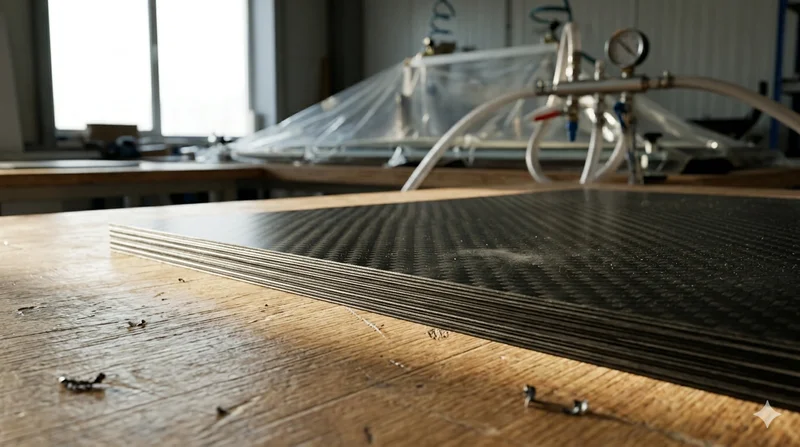
Carbon Fiber Plate — 3K Twill T700 3.0mm
Medium-thickness 3.0mm carbon fiber plate offering significantly higher load capacity while maintaining attractive 3K twill finish. Suitable for structural brackets, reinforcement plates, and load-bearing panels.