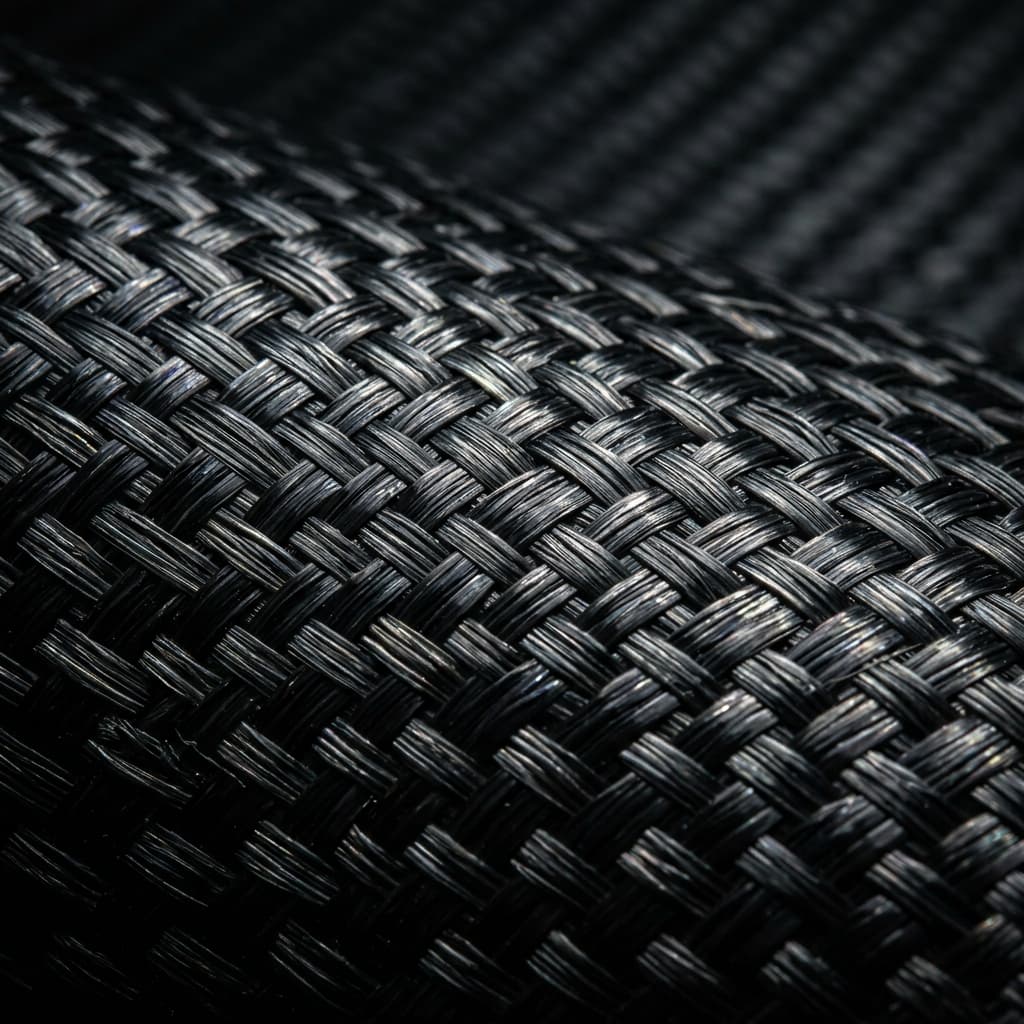
A carbon fiber composite core mill is where foam blocks are molded, honeycomb is expanded, and slabs are cured, sliced and kitted before they ever meet a carbon fiber skin. Production decisions on that line — batch mix, mold temperature, expansion ratio, knife sharpness — show up later as density dr
Introduction
A carbon fiber composite core mill is where foam blocks are molded, honeycomb is expanded, and slabs are cured, sliced and kitted before they ever meet a carbon fiber skin. Production decisions on that line — batch mix, mold temperature, expansion ratio, knife sharpness — show up later as density drift, warped edges and bond failures that no incoming inspection on the buyer side fully catches.
This guide walks through carbon fiber composite core production from resin or aramid paper intake to the sealed carton, and lists the questions that separate a controlled mill from a job shop running to shipment dates.
Carbon Fiber Composite Core Mill: The Production Line
Closed-cell foam starts as a premix: polymer beads, blowing agent, nucleating agents and often recycled scrap. The mix goes into a mold or extruder, where temperature and pressure profile decide cell size. Too hot and cells coarsen, cutting flatwise compression; too cool and the skin over-densifies. Honeycomb is different — aramid paper is printed with adhesive lines, corrugated or expanded, then dipped in phenolic resin and cured in an oven. The mill sets ribbon width, cell size and dip solids; each choice moves shear and crush properties.
| Process step | What the mill controls | Failure mode if loose | Buyer-visible symptom |
|---|---|---|---|
| Premix and molding | Batch ratio, mold temperature, pressure profile | Cell size drift, soft bands | Density map outliers, low flatwise compression |
| Curing / annealing | Time-temperature curve, moisture in feed | Residual stress, post-shrink | Warped slabs, thickness variation after cutting |
| Honeycomb expansion | Node bond, expansion ratio, cell regularity | Crushed nodes, irregular cells | Weak GSE, visual cell damage |
| Slicing and contour cut | Knife condition, feed rate, nesting | Thickness tolerance, torn faces | Fit-up gaps, poor adhesive film contact |
| Sealing and kitting | Edge sealer type, bagging, labeling | Open cells, mixed lots in one kit | Moisture uptake, wrong density in assembly |
A mill that prints this table on the wall and fills a column with measured values for every lot is worth a visit. A mill that answers with a datasheet paragraph is quoting from memory.
Carbon Fiber Composite Core Production: Density Control
Density is the single number that drives shear, compression and cost. Production control needs three points of measurement, not one: in-line mass and volume during molding, a cured-slab check after annealing, and a coupon from the slab you will actually ship. Target band is typically plus or minus 3 percent for structural foam; honeycomb is graded by areal density after dip and cure.
- In-line: continuous mass feed with mold fill sensors; alarms before a soft band reaches the cooling tunnel.
- Post-cure: ultrasonic or gamma thickness scan on every slab, logged by batch number.
- Ship check: three coupons per slab — center and both ends — weighed dry and compared to the certificate.
Ask to see a real density map from a production week, not a marketing graphic. If every point is identical, the map is not measuring anything.
Carbon Fiber Composite Core Mill USA: What Changes Locally
A United States mill shortens the loop: you can walk the line, audit the lab the same week, and pull a replacement slab without waiting for a container. Labor and energy cost more, so the mill tends to run higher-value grades — aerospace PMI, certified honeycomb, sealed marine foam — rather than commodity PET blocks. Import mills win on price for standard densities and lose on custom lots, traceability depth and lead-time recovery when a batch fails.
For programs that need country-of-origin records, Nadcap or AS9100 flow-down, and lot retention for years, a carbon fiber composite core mill USA with an in-house ASTM C365 lab usually total-costs less than a cheaper block plus a second inspection, rework and schedule slip.
Slicing Tolerance, Face Quality and Kitting
Slabs leave the mill at nominal thickness, but the buyer lives with what the knife left. Structural foam is commonly held to plus or minus 0.5 mm on CNC-facing work; honeycomb panels for aircraft floors often need tighter control on cell crush at the cut edge. Face quality matters for bonding: a torn or fuzzy face reduces adhesive film contact and hides dry spots until the panel is already cured.
- Thickness: measure at three points with a calibrated gauge, not by feel.
- Face: reject slabs with crushed cells, delaminated skin or oil marks from the line.
- Kitting: one lot number per kit, bagged with desiccant, labeled with density, thickness and cut list revision.
- Nesting: share your CAD early so the mill nests contours and reduces scrap you will pay for anyway.
Documentation, Retention and Audit Questions
Production without records is memory. Before you approve a mill, fix the document set in the purchase order:
- Batch record with premix lot, mold or expansion line ID, cure curve and operator sign-off.
- Lot-matched certificate: density, cell size or honeycomb grade, flatwise compression and shear, moisture after conditioning.
- Retention policy: how long coupons and certificates stay available — twelve months is common, aerospace often longer.
- Change control: written notice before any change to resin supplier, dip solids, sealer or knife vendor.
When you audit, stand at the slicing station for a full shift. Count the rejects, watch how a dull knife is handled, and ask what happened the last time density drifted out of band. The answers tell you more than the ISO certificate on the lobby wall.
Frequently Asked Questions
What is the difference between a core mill and a core converter?
A mill makes the base material — molds foam blocks or expands and cures honeycomb. A converter buys those slabs and cuts contours, seals edges and kits panels. Some companies do both. If a quality problem traces to cell structure or cure, only the mill can fix the root cause; if it traces to thickness or edge seal, the converter owns it.
How often should density be checked during production?
Continuous mass monitoring during molding or expansion, a slab check after cure, and a three-point ship check on every slab you receive. For high-value aerospace lots, add independent verification on first article and after any process change. Monthly sampling alone will miss a soft band that formed during a single shift.
What lead time should I expect from a mill for a custom density?
Stock grades ship in one to two weeks. A custom density or a sealed honeycomb kit typically needs four to six weeks including line purge, first-slab test and documentation. Contour-cut kits add three to five days. Any quote under two weeks for a brand-new density is probably a relabeled stock grade.
Conclusion
A carbon fiber composite core mill is judged by what its line records, not by its lobby brochure: density maps, cure curves, reject counts and change-control notices. Audit the slicing station, demand lot-matched certificates, and keep retention long enough to match a field failure back to a batch.
YongXian runs documented core production for foam and honeycomb with lot certificates and export paperwork. Browse our composite materials or send your density, thickness and annual volume for a mill quotation.
Related Articles
- Carbon Fiber Composite Core Manufacturer: Foam and Honeycomb Production
- Carbon Fiber Composite Foam Supplier: Core Materials
- Carbon Fiber Composite Core Supplier: Foam, Nomex and Qualification
- Carbon Fiber Composite Mold Maker: Tooling for OEM Programs
- Carbon Fiber Composite Hardener Supplier: Curing Agents for Epoxy Systems
- Carbon Fiber Composite Resin Mill: A Buyer Qualification Guide
Interested in Our Products?
Contact our team for competitive pricing and technical specifications.
Get a QuoteRelated Products
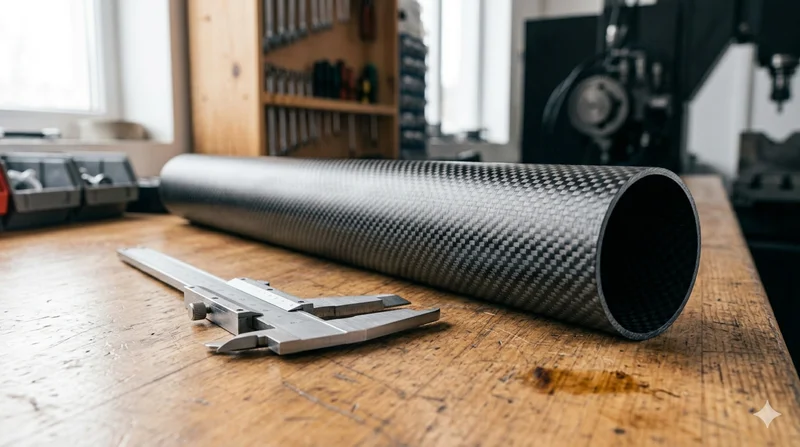
Round Carbon Fiber Tube — 3K Plain Weave T700
Standard round carbon fiber tube manufactured from Toray T700 grade fiber with 3K plain weave. Offers balanced strength and stiffness for general industrial applications including robotics, automation, sports equipment, and aerospace structures.

Custom Carbon Fiber Bicycle Frame
Full-custom carbon fiber bicycle frame manufactured to your geometry specifications. We produce road, gravel, mountain, and track frames using high-modulus carbon fiber layups optimized for each riding discipline. Monocoque construction with internal cable routing, available with disc or rim brake mounts.
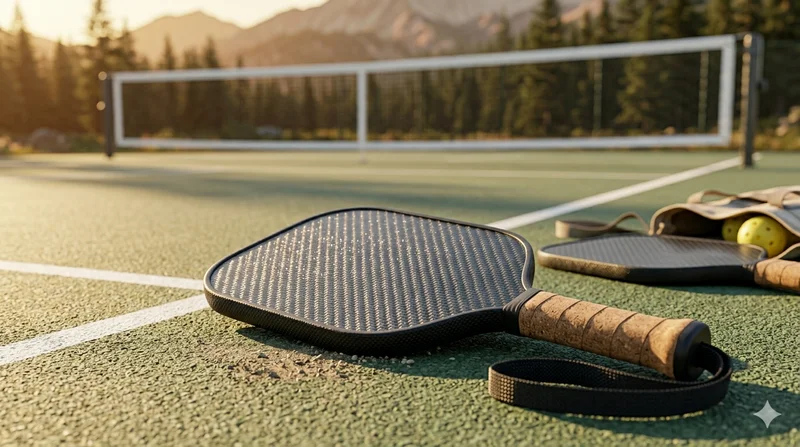
Carbon Fiber Pickleball Paddle
High-performance pickleball paddle with Toray T700 carbon fiber face and polypropylene honeycomb core. Delivers excellent power-to-weight ratio, spin generation, and vibration dampening for competitive play.

Carbon Fiber Trekking Pole
Lightweight carbon fiber trekking pole manufactured from high-grade carbon fiber tube. Weighs only 160g per pole while providing superior shock absorption and durability for hiking, trail running, and backpacking.
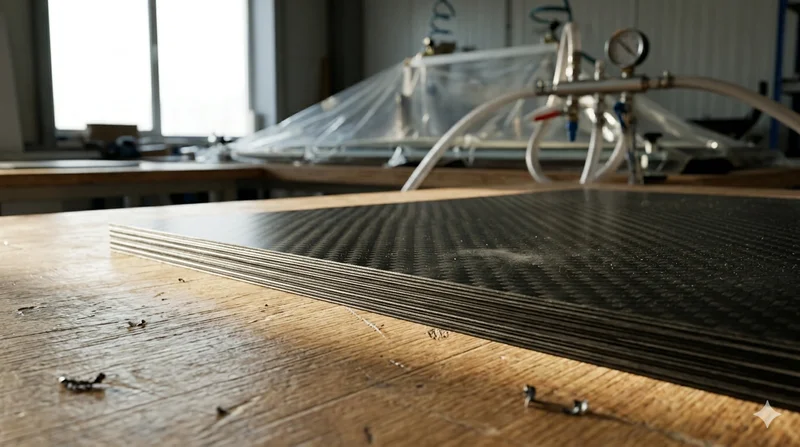
Carbon Fiber Plate — 3K Twill T700 3.0mm
Medium-thickness 3.0mm carbon fiber plate offering significantly higher load capacity while maintaining attractive 3K twill finish. Suitable for structural brackets, reinforcement plates, and load-bearing panels.