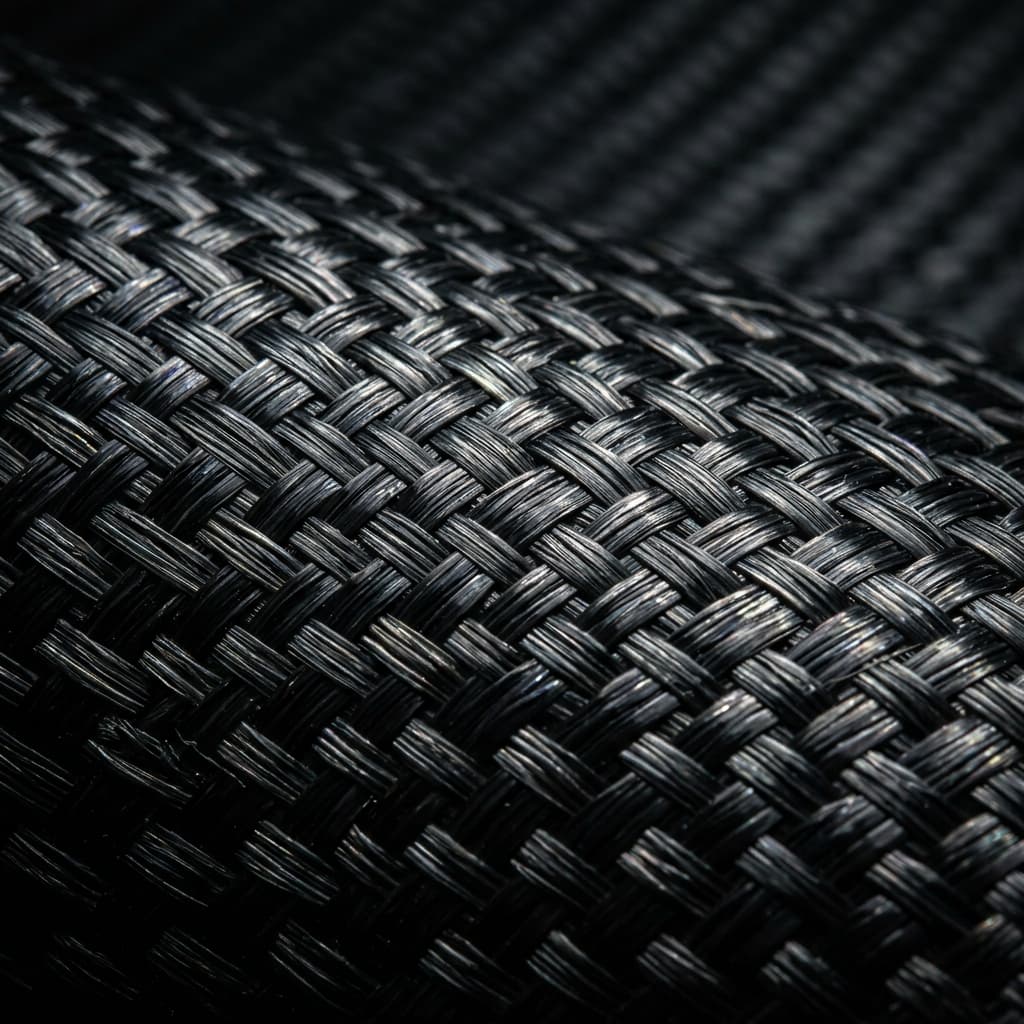
A carbon fiber composite core supplier decides whether your sandwich panel keeps its stiffness after a wet season, a thermal cycle and one rough handling day. The skins take the tension; the core carries shear and holds the distance between plies. Pick the wrong density, the wrong cell structure or
Introduction
A carbon fiber composite core supplier decides whether your sandwich panel keeps its stiffness after a wet season, a thermal cycle and one rough handling day. The skins take the tension; the core carries shear and holds the distance between plies. Pick the wrong density, the wrong cell structure or a supplier who cannot document moisture uptake, and the panel loses core-to-skin bond long before the carbon shows a crack.
This guide walks through the three core families you will actually quote — closed-cell foam, Nomex honeycomb and end-grain balsa — then the data a carbon fiber composite core manufacturer must put in front of you before a purchase order.
Carbon Fiber Composite Core Supplier: What You Are Actually Buying
Core material is sold by density, cell size, block dimension and the face preparation that lets epoxy wet it. A 60 kg/m3 PVC foam and a 60 kg/m3 PET foam share a number on the datasheet and behave differently under impact and temperature. Nomex honeycomb at 48 kg/m3 gives far higher flatwise compression than foam at the same weight, but it wicks moisture through open cells if the edges are not sealed. Balsa delivers the best stiffness-to-cost ratio in the flatwise direction and needs careful sealing against water.
| Core family | Typical density | Flatwise compression | Shear modulus (L) | Moisture behavior | Best fit |
|---|---|---|---|---|---|
| PVC closed-cell foam | 40-200 kg/m3 | 0.4-2.0 MPa | 50-160 MPa | Low uptake if sealed | Marine hulls, wind blades, tooling boards |
| PET foam | 60-200 kg/m3 | 0.7-2.5 MPa | 60-180 MPa | Very low, recyclable feedstock | Roof panels, transport, cost-sensitive builds |
| PMI rigid foam | 32-200 kg/m3 | 0.4-4.0 MPa | 50-350 MPa | Low, high temperature stability | Aerospace prepreg, autoclave parts |
| Nomex honeycomb | 24-128 kg/m3 | 1.0-8.0 MPa | 100-400 MPa | Wicks if edges open | Aircraft floors, doors, satellite panels |
| End-grain balsa | 100-160 kg/m3 | 2.0-5.0 MPa | 150-400 MPa | Rises fast if unsealed | Marine decks, high shear panels |
Numbers above are typical ranges from public datasheets, not a substitute for the certificate that arrives with your lot. The supplier who cannot map your layup to one row of this table is quoting a catalog, not a core program.
Matching Core Selection to Load Case
Sandwich theory is simple: bending stiffness scales with the cube of the distance between skins, so doubling core thickness multiplies stiffness by about eight while adding only linear mass. That is why a light core in the right thickness beats a heavy core saved by weight. Design shear first — if the core fails in shear, extra skin does not help.
- Uniform pressure panels (roofs, decks): PET or PVC foam in the 80-120 kg/m3 band gives a smooth skin support and forgiving bonding.
- Point loads and hinge zones: raise density locally or insert a Nomex patch rather than thickening the whole panel.
- Thermal cycles above 120 degrees Celsius: PMI or high-temperature PVC grades; standard PET will creep.
- Wet service without perfect edge seal: prefer closed-cell foam over honeycomb, or pay for edge sealing at the supplier.
Ask your carbon fiber composite core supplier for flatwise compression and shear at the exact density you will receive, not at the nearest catalog grade. Two percent density drift moves shear modulus enough to change the panel calculation.
Carbon Fiber Composite Core US Supplier: Sourcing and Lead Time
Buyers in the United States often choose between domestic converters and imported blocks. Domestic stock shortens lead time to one or two weeks on common grades and simplifies customs for aerospace programs that need country-of-origin records. Imported PET and PVC blocks can cut material cost 20 to 35 percent, but add four to eight weeks of ocean freight, moisture-control packing and a second inspection at the port.
A reliable carbon fiber composite core US supplier stocks at least three densities per family, holds lot traceability for 12 months, and will ship sample plaques before the production order. Confirm who performs the flatwise compression test — an in-house lab with ASTM C365 capability is stronger evidence than a forwarded mill certificate with no lot number.
Carbon Fiber Composite Core Manufacturer vs Distributor
Like resin, core has a chain: polymer or aramid paper producer, foam block molder or honeycomb expanding line, converter that slices and kits, then distributor. Each link changes what a defect means.
- Block manufacturer controls density profile through the slab, can reformulate, and can trace a soft band to a process upset.
- Converter controls thickness tolerance, contour cutting and edge sealing; depends on the mill for base consistency.
- Distributor holds inventory and kits small orders; weakest when a lot drifts, strongest when volume and price matter most.
One direct question separates the roles: who molded this block, and can I see the density map for my slab? If the answer is a photo of a pallet, keep looking.
Documentation, Kitting and Commercial Terms
Core without paperwork is an unverified material. Before the first shipment, fix the following in the order:
- Lot-matched certificate: density, cell size, flatwise compression and shear, moisture content after conditioning.
- Cut list: block size, thickness tolerance (plus or minus 0.5 mm is typical for CNC facing), and contour files if you send CAD.
- Edge sealing scope for honeycomb and balsa, including the sealer type and cure.
- Packaging: moisture barrier bags with desiccant for ocean freight, and a rule that damaged bags are rejected at receipt.
MOQ for custom densities often starts at one full slab or about 300 kg; stock grades can ship in single boxes. Lead time runs two weeks domestic and six to eight weeks for converted imports. Shelf life for sealed foam blocks is effectively unlimited if stored dry and out of sunlight; honeycomb should be sealed at the edges within months of expanding.
Frequently Asked Questions
What is the difference between a foam core supplier and a honeycomb supplier?
Foam suppliers mold or extrude closed-cell blocks and slice them; honeycomb suppliers expand or corrugate aramid or aluminum foil into cell structures. The qualification data differs — foam is graded by density and flatwise compression, honeycomb by cell size, ribbon direction and GSE compression. Many converters stock both, but only one of the two will control the process that matters for your order.
How do I verify density before bonding?
Cut a 100 mm coupon from the slab edge, weigh it dry, and divide by the measured volume. Compare with the certificate. Do this on three points of the slab: center and both ends. A drift greater than 3 percent means the panel calculation should be rerun or the slab rejected.
What lead time and MOQ should I expect for a custom core?
Stock densities ship within a week. A custom density or a sealed honeycomb kit usually needs four to six weeks and a minimum near one slab or 300 kg, because the line must be purged and the first slab tested. Contour-cut kits add three to five days for nesting and cutting.
Conclusion
The right carbon fiber composite core supplier delivers a documented, lot-traceable core matched to your shear and moisture case — not a slab with a density label. Ask for the test method behind every number, trial three lots, and seal edges before the skins go down.
YongXian supplies carbon fiber composite core materials and finished sandwich kits with lot certificates and export documentation. Browse our composite materials or send your panel size, load case and annual volume for a quotation.
Part of topic
Related Articles
- Carbon Fiber Composite Core Manufacturer: Foam and Honeycomb Production
- Carbon Fiber Composite Foam Supplier: Core Materials
- Carbon Fiber Composite Core Mill: Core Production
- Carbon Fiber Composite Mold Maker: Tooling for OEM Programs
- Carbon Fiber Composite Hardener Supplier: Curing Agents for Epoxy Systems
- Carbon Fiber Composite Resin Mill: A Buyer Qualification Guide
Interested in Our Products?
Contact our team for competitive pricing and technical specifications.
Get a QuoteRelated Products
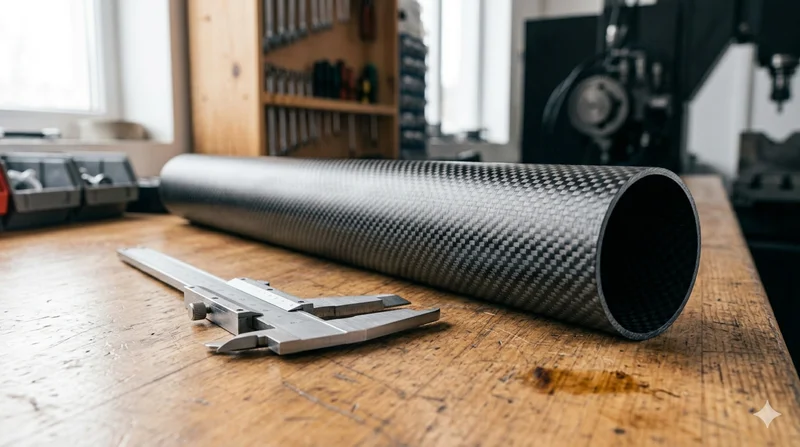
Round Carbon Fiber Tube — 3K Plain Weave T700
Standard round carbon fiber tube manufactured from Toray T700 grade fiber with 3K plain weave. Offers balanced strength and stiffness for general industrial applications including robotics, automation, sports equipment, and aerospace structures.

Custom Carbon Fiber Bicycle Frame
Full-custom carbon fiber bicycle frame manufactured to your geometry specifications. We produce road, gravel, mountain, and track frames using high-modulus carbon fiber layups optimized for each riding discipline. Monocoque construction with internal cable routing, available with disc or rim brake mounts.
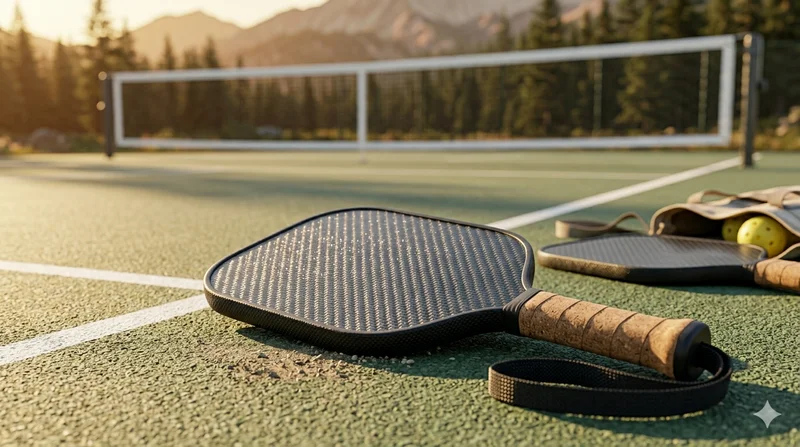
Carbon Fiber Pickleball Paddle
High-performance pickleball paddle with Toray T700 carbon fiber face and polypropylene honeycomb core. Delivers excellent power-to-weight ratio, spin generation, and vibration dampening for competitive play.
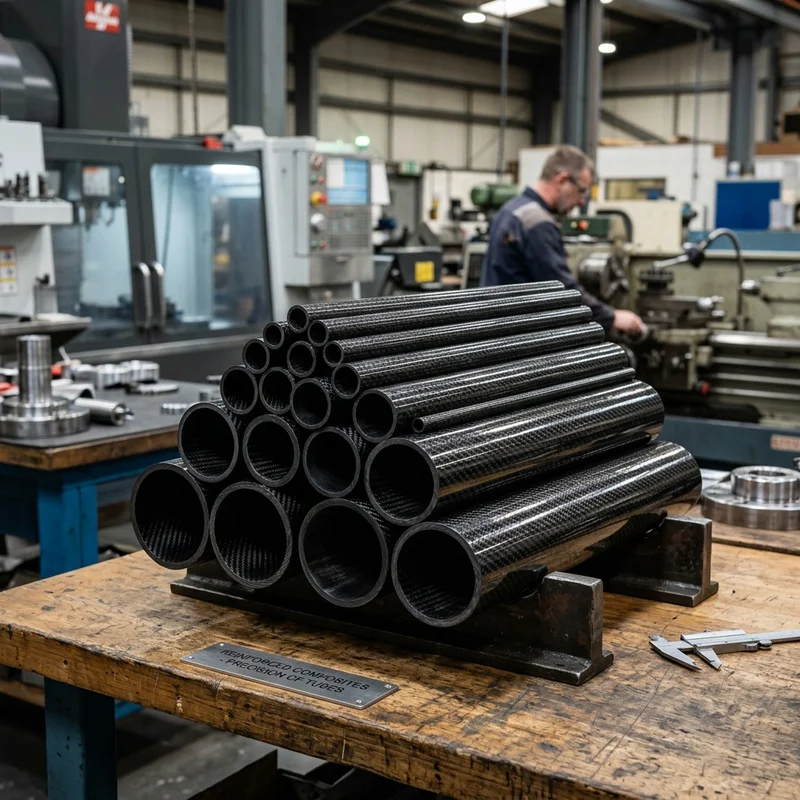
Round Carbon Fiber Tube — 3K Twill
Lightweight and ultra-stiff round tubes ideal for drone frames, robotics, and structural applications.
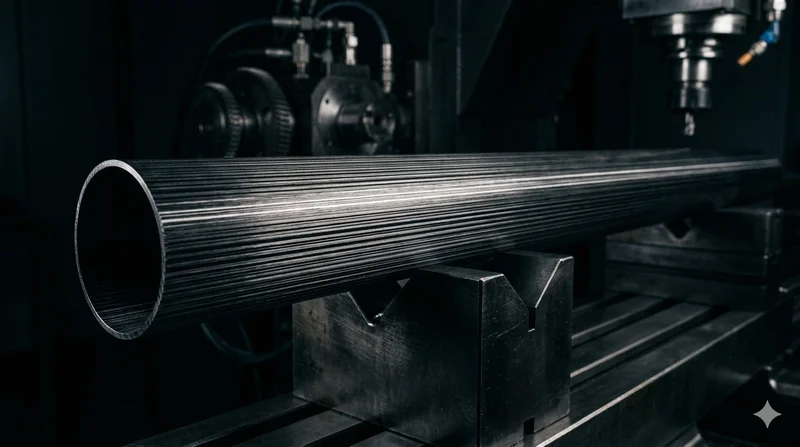
Round Carbon Fiber Tube — UD Unidirectional T700
Unidirectional (UD) round tube with all fibers aligned axially for maximum longitudinal stiffness. Ideal for applications requiring high bending rigidity with minimal weight, such as shafts, struts, and structural reinforcements.