
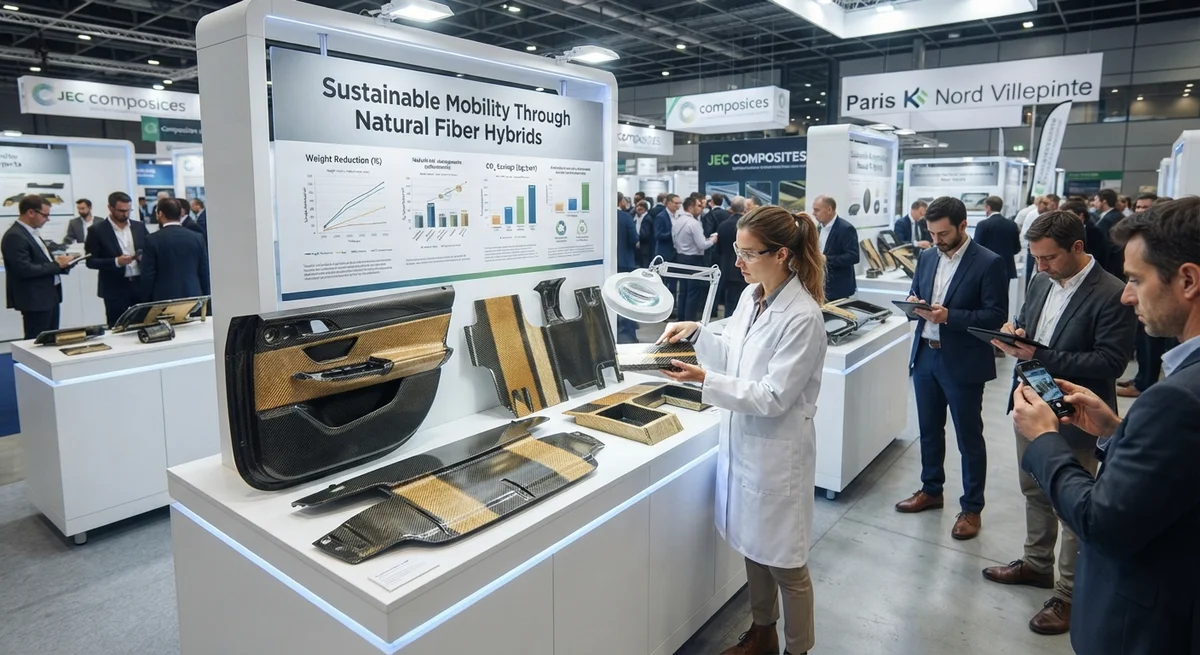
JEC World 2026 showcased production-ready natural fiber hybrid composites as sustainable alternatives to pure carbon fiber in automotive applications. Flax, hemp, and basalt fibers combined with carbon fiber in hybrid laminate architectures offer 40–70% cost reduction and 50–80% CO₂ footprint reduction while meeting engineering requirements for interior trim, underbody shields, and semi-structural components. This analysis covers material properties, showcased products, manufacturing considerations, and adoption timelines from major OEMs.
Natural Fiber Hybrid Automotive Parts Debut at JEC World 2026
JEC World 2026, the premier global composites exhibition held annually in Paris, has showcased a significant new trend: natural fiber hybrid composites as sustainable alternatives to pure carbon fiber in automotive applications. Several Tier 1 automotive suppliers and materials innovators presented production-ready components combining flax, hemp, and basalt fibers with carbon fiber in hybrid laminate architectures, targeting interior trim, underbody shields, and semi-structural components where the extreme performance of pure CFRP exceeds actual engineering requirements.
The emergence of natural fiber hybrids at JEC World 2026 reflects a fundamental shift in automotive composite thinking. For decades, the industry pursued maximum performance — highest stiffness, strongest tensile strength — regardless of cost. The sustainability mandate has rewritten this equation: automakers now seek the minimum material performance required to meet engineering specifications, optimizing for cost, weight, and environmental footprint simultaneously. Natural fiber hybrids occupy the sweet spot in this new optimization landscape.
Material Performance Comparison
To understand the tradeoffs between natural fiber hybrids and pure carbon fiber, it is essential to examine the mechanical properties side by side:
| Property | Pure CF (T700/Epoxy) | CF/Flax Hybrid (50/50) | CF/Hemp Hybrid (40/60) | Pure Flax/Epoxy | Glass Fiber/Epoxy |
|---|---|---|---|---|---|
| Tensile modulus (GPa) | 120–135 | 45–60 | 35–50 | 25–35 | 35–45 |
| Tensile strength (MPa) | 1,500–2,000 | 350–500 | 280–420 | 200–350 | 700–900 |
| Density (g/cm³) | 1.55 | 1.35 | 1.30 | 1.40 | 1.90 |
| Specific stiffness (MN·m/kg) | 77–87 | 33–44 | 27–38 | 18–25 | 18–24 |
| Elongation at break (%) | 1.5–1.8 | 1.8–2.5 | 1.8–2.2 | 1.2–1.6 | 2.5–3.5 |
| CO₂ footprint (kg CO₂/kg material) | 20–30 | 8–14 | 6–10 | 0.3–0.5 | 3.5–5.0 |
| Raw material cost ($/kg) | $20–30 | $8–14 | $6–10 | $3–5 | $2–4 |
| Recyclability | Difficult (energy-intensive) | Moderate (natural fiber burn-off possible) | Moderate | Good (fully biodegradable matrix-dependent) | Difficult |
The data reveals a clear pattern: pure carbon fiber delivers the highest absolute mechanical performance, but for many automotive interior and semi-structural applications, the performance of natural fiber hybrids is entirely adequate — often exceeding the engineering requirements by a comfortable margin — at half the cost and one-third to one-fifth the carbon footprint.
Key Products Showcased at JEC World 2026
Several innovative products at JEC World 2026 demonstrated the commercial readiness of natural fiber hybrid technology:
- Flax-CF hybrid door trim panel (Faurecia/Forvia): A production-ready interior door trim panel using a 50/50 flax/carbon fiber hybrid non-woven mat in an epoxy matrix. Weight is only 15% higher than the equivalent pure CFRP panel, but material cost is reduced by 55% and CO₂ footprint by 65%. The panel meets all OEM requirements for dimensional stability, impact resistance, and Class-A surface finish when painted.
- Hemp-fiber underbody shield (BASF/Stellantis): A hemp/carbon fiber hybrid needle-punched mat combined with BASF's Ultramid polyamide matrix. Designed to replace steel or glass fiber SMC underbody panels, this component achieves 40% weight reduction versus the steel baseline and 20% versus glass fiber SMC, while cutting cost by 30% compared to pure CFRP. The hemp content improves acoustic damping by 25% over pure carbon fiber, a significant NVH benefit.
- Basalt-CF structural insert (Teijin/Lotus): A basalt fiber/carbon fiber hybrid braided tube used as a structural insert in an A-pillar reinforcement. The basalt fiber provides excellent impact energy absorption (60 kJ/m² Charpy impact), while strategically placed carbon fiber tows carry the primary bending loads. The hybrid costs 40% less than a full carbon fiber solution while meeting all crash performance targets.
- Flax sandwich core material (Bcomp Ltd.): Bcomp's ampliTex flax fabric combined with carbon fiber face sheets creates a sandwich panel with outstanding bending stiffness-to-weight ratio for load floor and parcel shelf applications. The flax core is fully renewable and carbon-negative in production, sequestering more CO₂ than is emitted during processing.
Sustainability and Cost Tradeoff Analysis
The decision to substitute natural fiber hybrids for pure carbon fiber involves three intersecting criteria: performance, cost, and environmental impact. The following framework helps B2B procurement professionals evaluate the tradeoffs:
| Application Type | CF Required? | Hybrid Suitable? | Best Option | Cost Savings vs CF | CO₂ Reduction vs CF |
|---|---|---|---|---|---|
| Structural (chassis, subframe) | Yes | Limited | Pure CF or CF-dominant hybrid | 0–15% | 15–30% |
| Exterior body panels (Class A) | Depends | Yes (with surface veil) | 50/50 hybrid with CF veil | 40–55% | 50–65% |
| Interior trim (non-structural) | No | Yes | 2°/v° natural fiber dominant | 55–70% | 65–80% |
| Underbody shields | No | Yes | Hemp/basalt dominant | 30–50% | 50–70% |
| Acoustic/trim panels | No | Yes | Flax or hemp only | 70–85% | 85–95% |
| Structural reinforcements (B-pillar, crash members) | Yes | Limited (CF at load paths) | CF/directional hybrid | 25–40% | 30–50% |
Manufacturing Process Considerations
Adopting natural fiber hybrids requires adjustments to established composite manufacturing processes. Key considerations for B2B buyers include:
- Moisture management: Natural fibers are hygroscopic, absorbing up to 10–15% moisture by weight from ambient air. This moisture must be removed by pre-drying (typically 2–4 hours at 80–100°C) before processing to prevent void formation in the cured composite. Dried natural fibers must be processed within 2–4 hours of removal from drying ovens, or moisture regain will require re-drying.
- Resin compatibility: The hydroxyl-rich surface of natural fibers creates excellent bonding with polar epoxy resins but poor bonding with non-polar polypropylene. Maleic anhydride-grafted coupling agents are typically required for polypropylene matrix systems, adding 0.5–1.5% to material cost.
- Fiber orientation control: Natural fibers are shorter and more variable in diameter than carbon fibers (flax: 15–25 µm diameter, 20–50 mm length vs carbon: 7 µm, continuous). This limits the maximum achievable fiber volume fraction to 35–45% for non-woven mats versus 55–65% for continuous carbon fiber laminates. Preform technologies including aligned natural fiber mats are being developed to close this gap.
- Cycle time: Natural fiber composites can be processed using the same compression molding and resin transfer molding equipment as glass and carbon fiber composites, with comparable cycle times. The primary differentiator is the drying step, which adds 2–4 hours of batch pre-processing time that must be factored into production planning.
- Surface quality: Natural fiber composites typically produce a matte surface finish with visible fiber texture. For visible interior applications, a thin carbon fiber surface veil (50–100 g/m²) is often co-molded to provide a consistent Class-A surface, adding minimal cost and weight while dramatically improving appearance.
Market Outlook and Adoption Timeline
The natural fiber hybrid composite market for automotive applications is projected to grow from approximately $280 million in 2025 to $1.1–1.4 billion by 2035, representing a CAGR of 14–17%. This growth will be driven by: tightening EU CO₂ regulations that require automakers to report and reduce component-level carbon footprints; the 2026 Euro 7 standards which indirectly penalize high-embedded-carbon materials through the lifecycle assessment framework; and consumer demand for sustainable vehicles that extends beyond powertrain electrification to include interior material choices.
Several major automotive OEMs have announced natural fiber composite adoption targets that will drive this growth:
- BMW has committed to using natural fiber composites in all interior trim panels across its Neue Klasse EV platform starting in 2025, with hybrid carbon fiber/natural fiber components in structural areas by 2028.
- Mercedes-Benz has announced that its GENIUS (Green Natural-fiber Innovative Upcycled Sustainable) program will incorporate natural fiber composites in 35% of interior surface area by 2028.
- Volvo has set a target of 25% bio-based or recycled content in all composite components by 2030, explicitly including natural fiber hybrids as a qualifying material category.
- Volkswagen Group is evaluating natural fiber/carbon fiber hybrid floor panels for its MEB+ electric vehicle platform, targeting a 40% cost reduction versus the current pure CFRP option.
For B2B carbon fiber suppliers, the rise of natural fiber hybrids presents both a challenge and an opportunity. While these materials may displace some pure carbon fiber volume in non-structural applications, they also open new market segments where carbon fiber alone was too expensive. The net effect is likely market expansion: hybrid composites make carbon fiber-reinforced components accessible to mass-market vehicles that would otherwise use steel, aluminum, or glass fiber.
Frequently Asked Questions
Do natural fiber hybrid composites meet automotive fire safety standards?
Yes, natural fiber hybrid composites can meet automotive interior fire safety standards including FMVSS 302 (US), ISO 3795 (International), and ECE R118 (EU). The key is the resin system selection: phenolic and modified phenolic resins provide inherent flame retardance and low smoke generation, while epoxy and polyester systems require halogen-free flame retardant additives (typically aluminum trihydroxide or magnesium hydroxide at 15–30% loading by weight). Flax and hemp fibers have a limiting oxygen index (LOI) of 18–21%, similar to wood, making them more combustible than carbon fibers (LOI > 40%). However, in a hybrid laminate, the carbon fiber layers act as a thermal barrier, slowing flame penetration. Several products showcased at JEC World 2026, including Faurecia/Forvia's flax-CF hybrid door trim, have achieved FMVSS 302 compliance with self-extinguishing times under 30 seconds — well within the 100-second maximum specified by the standard. For underbody shields and engine compartment applications, where higher temperature resistance is required, basalt fiber hybrids or carbon fiber-dominant laminates with ceramic-filled resin systems are preferred.
How does the long-term durability of natural fiber composites in automotive environments compare to carbon fiber?
The long-term durability of natural fiber composites in automotive environments is a legitimate concern that has been addressed through extensive testing. Accelerated aging studies conducted by the Joint European Research Institute for Composites (JERIC) subjected flax/carbon fiber hybrid laminates to 1,000 hours of combined temperature cycling (-30°C to +85°C), 95% relative humidity at 50°C, and salt spray exposure. The hybrid laminates retained 72–85% of their initial flexural modulus and 68–80% of their initial flexural strength after testing, compared to 88–94% retention for pure carbon fiber laminates under identical conditions. The primary degradation mechanism in natural fibers is moisture-induced fiber swelling that creates localized stress concentrations and microcracking in the matrix. Mitigation strategies include fiber surface treatments (acetylation, silane coupling) that reduce moisture uptake by 30–50%, barrier resin formulations, and protective topcoats. For interior applications where moisture exposure is minimal, natural fiber composite durability is essentially equivalent to glass fiber composites over a 15-year vehicle life. For underbody and exterior applications, additional moisture protection measures are required.
Can natural fiber hybrid composites be recycled at end of vehicle life?
End-of-life recycling of natural fiber hybrid composites is more straightforward than pure carbon fiber recycling, though not without challenges. Three primary recycling pathways exist: (1) Mechanical recycling through grinding and re-compounding yields a short-fiber filler that retains 40–60% of the modulus of the virgin material. The natural fiber component can be burned off during processing, leaving predominantly carbon fiber as the reinforcing phase in the recyclate. (2) Thermal recycling via controlled combustion recovers energy from the natural fibers (calorific value of flax: 18–20 MJ/kg, comparable to wood) while the carbon fibers survive as ash residue that can be recovered and potentially re-used as a filler material. (3) Feedstock recycling through solvolysis or pyrolysis, which depolymerizes the resin matrix and allows recovery of both carbon fibers and natural fibers (the latter typically degraded in quality). A 2026 life cycle assessment by the German Composites Association (AVK) found that mechanical recycling of flax/carbon fiber hybrid composites achieves a 40–55% reduction in cradle-to-grave CO₂ footprint compared to landfilling, making recycling environmentally beneficial even if the recyclate has lower mechanical properties than the virgin material. Several European recycling companies, including CFK Valley Recycling in Germany, have announced pilot programs specifically targeting natural fiber hybrid composite recycling.
Part of topic
Related Articles
- Carbon Fiber Mooring for Floating Offshore Wind: Fatigue and Corrosion in Deep Water
- Carbon Fiber Bicycle Frame Optimization: Layup Design and Manufacturing for Competitive Racing
- Carbon Fiber CFRP Retrofit for Infrastructure: Bridge and Building Seismic Strengthening
- Carbon Fiber Medical Imaging Equipment: Lightweight Gantry and Couch Structures for MRI/CT
- Carbon Fiber EV Battery Enclosures: Crash Safety and Electromagnetic Shielding Design
- Carbon Fiber Structures for Low-Altitude Economy: UAV Airframes and eVTOL Components
Interested in Our Products?
Contact our team for competitive pricing and technical specifications.
Get a QuoteRelated Products
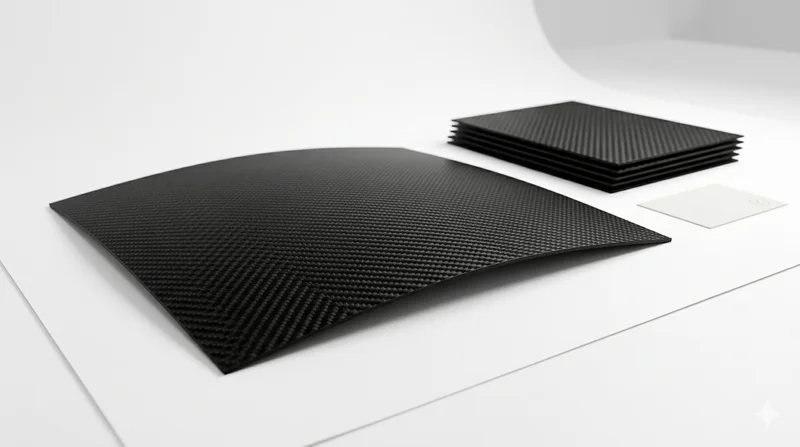
Carbon Fiber Plate — 3K Twill T700 1.5mm
Thin 1.5mm carbon fiber plate with 3K twill weave surface. Lightweight and stiff, commonly used for covers, panels, drone bodies, and applications requiring a premium aesthetic appearance.
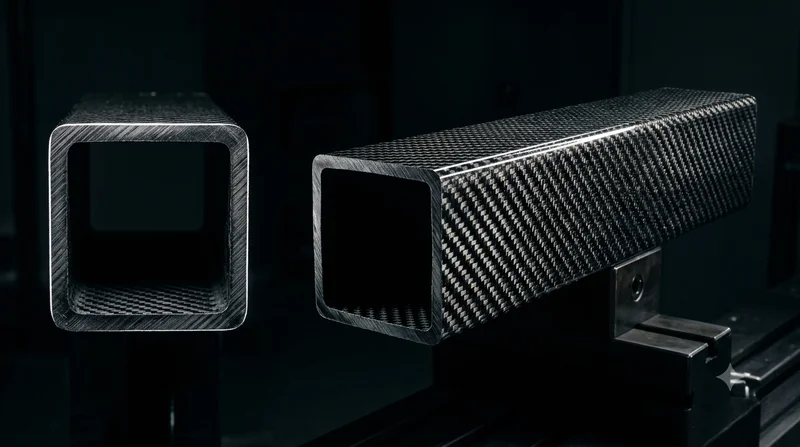
Square Carbon Fiber Tube — 3K Twill T700
Square cross-section carbon fiber tube manufactured with 3K twill weave for torsional strength. Preferred for structural frames, trusses, and support columns where rectangular geometry offers design flexibility.
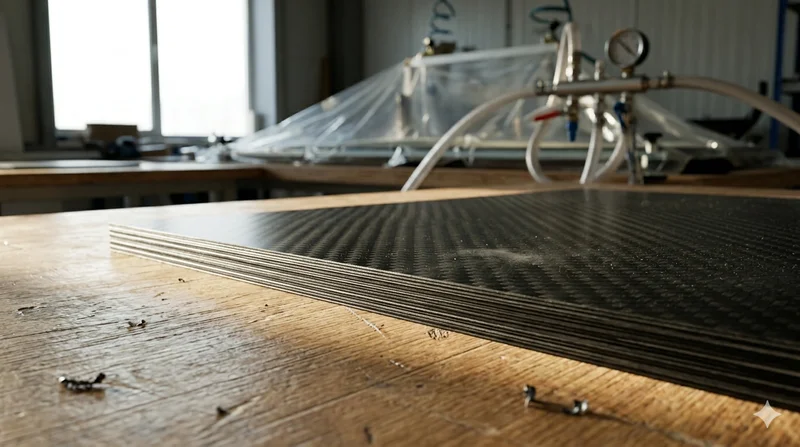
Carbon Fiber Plate — 3K Twill T700 3.0mm
Medium-thickness 3.0mm carbon fiber plate offering significantly higher load capacity while maintaining attractive 3K twill finish. Suitable for structural brackets, reinforcement plates, and load-bearing panels.
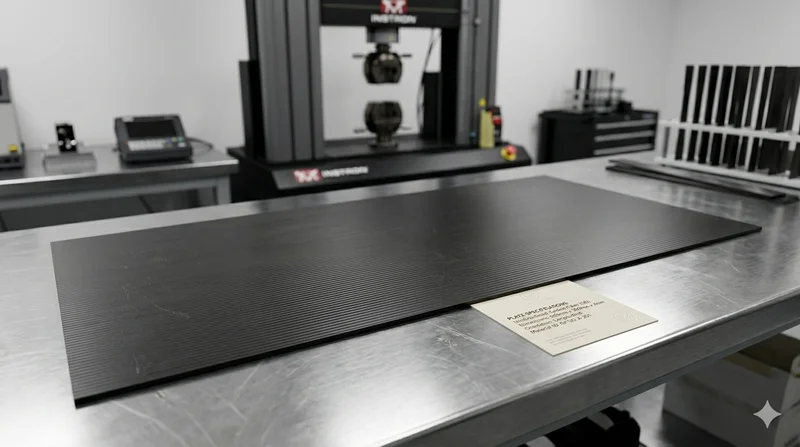
Carbon Fiber Plate — UD Unidirectional T700
Unidirectional carbon fiber plate with all fibers oriented in a single direction for maximum strength along the fiber axis. Essential for structural reinforcements, splints, and applications where load direction is predictable.
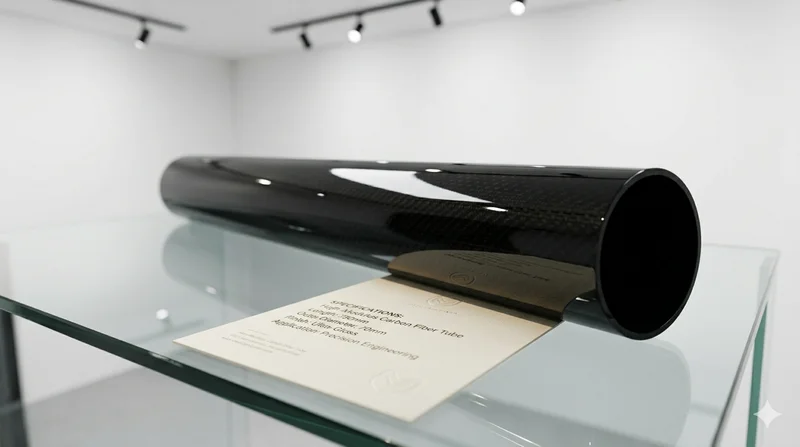
High Modulus Round Carbon Fiber Tube — M40
High modulus round tube manufactured with M40 grade fiber (tensile modulus 400 GPa). Designed for applications where maximum stiffness-to-weight ratio is critical, such as optical systems, precision machinery, and aerospace structures.