
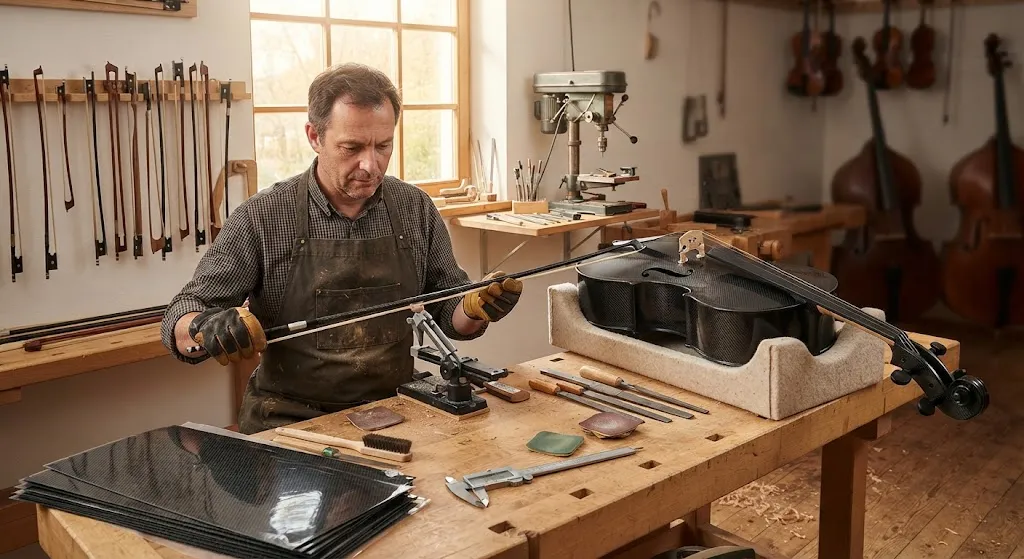
For more than two centuries, the instruments of the violin family were tied to tonewoods — spruce for the soundboard, maple for the back and ribs, and pernambuco for the bow. These woods produce magnificent sound, but they also create a chronic operational problem: every wooden instrume
Introduction
For more than two centuries, the instruments of the violin family were tied to tonewoods — spruce for the soundboard, maple for the back and ribs, and pernambuco for the bow. These woods produce magnificent sound, but they also create a chronic operational problem: every wooden instrument reacts to climate. Humidity swings make bodies swell and crack, bows warp, and string tension drift, so players in orchestras, schools, and touring ensembles spend real time managing temperature and humidity instead of playing.
Carbon fiber composite instruments remove that climate sensitivity while keeping the physical performance musicians need. This article focuses on the two most established segments — carbon fiber violin bows and full-size carbon fiber cellos — and explains the manufacturing approaches, the consistency that composite construction delivers, and the supply formats that matter to instrument makers and distributors.
The Climate Problem That Wood Cannot Solve
A wooden instrument is a working piece of timber. Spruce and maple absorb and release moisture as ambient relative humidity changes, and the dimensional movement is enough to distort the structure over a season. Below roughly 40% relative humidity, wooden instruments crack; above roughly 60%, they swell and the response deadens. That is why serious players store instruments at 45-55% relative humidity and travel with humidifiers in winter.
Carbon fiber does not absorb moisture, so this maintenance category disappears: no humidifiers, no seasonal readjustment, no crack repairs after a dry airplane cabin or a damp outdoor stage. The comparison matters most to organizations that manage fleets of instruments — school districts, conservatories, and touring groups — where climate damage is one of the largest recurring costs.
| Property | Wooden Instrument | Carbon Fiber Instrument | Operational Consequence |
|---|---|---|---|
| Response to humidity | Swelling and shrinkage through seasonal swings | Dimensionally stable from 10% to 90% RH | No humidifiers or seasonal setup work |
| Crack and warp risk | Real below about 40% RH and after thermal shock | None from moisture | Far lower maintenance and repair cost |
| Piece-to-piece consistency | Natural scatter in grain, density, and stiffness | Engineered repeatability from molded layups | Identical feel and response across a batch |
| Full-size cello weight | Typically 3.5-4.5 kg | Around 3 kg | Easier handling for young and touring players |
| Service life while touring | Decades with climate care and repairs | Decades with minimal precautions | Lower total cost of ownership for fleets |
Performance Consistency in Violin Bows
The violin bow is the clearest example of what composite construction changes. A high-quality wooden bow starts with pernambuco, a tonewood that is endangered and subject to trade regulation, and whose stiffness and density vary from stick to stick. Luthiers work around this by selecting and sculpting each stick — skilled work that also makes every bow subtly different. A player who loses a favorite bow must recondition to a new one.
Carbon fiber bows are built differently. The shaft is laid up from carbon fiber on a mandrel or pultruded, cured in a mold, and fitted with the same frog and hair hardware as a wooden bow. Because the process is tool-controlled rather than wood-selected, stiffness, balance, and weight can be tuned and then repeated: a batch of fifty bows leaves the line with the same curve, strength, and playing character. That matters for professionals who want an identical backup and for schools that need a dependable fleet.
- Weather independence: carbon shafts do not warp or soften in humidity, so setup stays stable from tour bus to concert hall.
- Repeatable production: molded construction turns bow making from individual craft into controlled batch manufacturing.
- Durability: composite shafts tolerate drops and travel cases far better than pernambuco sticks.
- Material security: composites bypass the tightening regulation around endangered tonewoods.
- Price accessibility: production carbon bows cost a small fraction of premium wooden bows.
Typical violin bow weights sit around 55-65 g in both material families, so a player switching to a well-set carbon bow trades wood's variability for repeatability, not for weight.
Full-Size Instruments and the Cello
Within the violin family, the cello benefits most from composite materials. It is the largest and heaviest standard instrument, so a roughly one-third weight saving directly helps young players, traveling soloists, and studio musicians who carry their instrument every day. Carbon cellos have been in professional use since the mid-2000s, appearing in touring, outdoor, film-scoring, and amplified settings where climate, handling, and feedback resistance count as much as acoustics.
The sound character differs from the finest wooden instruments: some listeners find composite bodies less rich in overtones, yet they project clearly, respond quickly, and hold tuning more reliably because the body does not swell with humidity. Makers tune the acoustic signature by adjusting the layup schedule and thickness map of the plates, which turns sound into an engineered, repeatable variable. The same engineering path is now being applied to violas, double basses, and performance guitar components.
What Instrument Makers and Distributors Need
For manufacturers, the composite instrument supply chain has matured into a few clear product formats:
- Bow shafts and blanks: pultruded or molded carbon shafts ready for frog, winding, and hair fitting.
- Rolled prepreg: unidirectional or woven carbon prepreg rolls for body and neck layups, with resin systems and cure cycles specified.
- Molded plates and half-shells: soundboard and back components produced to net shape for assembly lines.
- OEM finished bows: complete bows private-labeled for brands that want inventory depth without a workshop.
In every format, buying decisions rest on the same documentation as any engineered composite part: mechanical test data, batch traceability, and consistent cure-process control. Instrument brands reward suppliers who guarantee identical output across repeat orders — exactly what tool-based composite production provides.
Quality Control in Composite Instrument Production
Because composite instruments are built rather than carved, quality control shifts from wood selection to process verification. Makers and their suppliers control three things: the cure cycle, the fiber volume, and the finished geometry. Cure temperature and hold time determine the resin state and therefore the stiffness and damping of the finished part; fiber volume fraction is set by the ply schedule and compaction; and the final thickness map of a cello plate or bow shaft is measured rather than assumed.
Nondestructive and simple physical checks can be applied at release, giving instrument brands the same confidence that composite part buyers expect in aerospace: resonant-frequency testing to confirm the acoustic signature of a plate within a tolerance, stiffness and balance measurement on every bow before hair fitting, and dimensional checks against the mold references. Batch release records — resin batch, cure log, and test results — make each instrument traceable, and they are exactly what a school district or a professional player buys when they choose consistency rather than a single handmade specimen.
Frequently Asked Questions
Do carbon fiber instruments sound as good as wooden ones?
Opinion is split, and the honest answer is that they sound different rather than better or worse. The finest wooden instruments have a rich, complex overtone structure that composite instruments rarely fully match. However, carbon fiber instruments project clearly, respond quickly, and stay consistent in every climate, which is why they are widely used on stage, in film scoring, and in outdoor and amplified work. The choice between the two is an acoustic and operational trade-off, not a simple quality ranking.
Are carbon fiber instruments cheaper than wooden ones?
It depends on the segment. Production carbon fiber bows typically cost a fraction of premium pernambuco bows, which is why they dominate the student and intermediate market. Carbon cellos sit in the mid-range of the market — above student wooden instruments but far below professional wooden cellos. For schools and touring organizations, the life-cycle cost is usually lower because climate-related repairs largely disappear.
Can carbon fiber instruments be repaired when damaged?
Yes. Composite instruments are repaired with the same techniques used across the composites industry: cracked areas are cleaned, scarfed, and patched with matched prepreg or wet layup, then cured and refinished. Because the material does not crack from humidity, the repair demand is far lower than for wooden instruments — damage comes almost entirely from impacts during transport or handling rather than from the environment.
Conclusion
Carbon fiber has moved from experimental curiosity to a proven material for musical instruments, with violin bows and cellos leading the way. The decisive advantages are operational: immunity to humidity, repeatable production, lighter handling weight, and stable long-term cost. The sound differences remain a matter of musical taste, but the engineering advantages are objective and measurable.
Instrument makers and distributors looking for consistent carbon fiber bows, prepreg, or molded components can explore our carbon fiber product range or contact our technical team to discuss specifications, batch consistency, and supply agreements.
Related Articles
- Carbon Fiber Mooring for Floating Offshore Wind: Fatigue and Corrosion in Deep Water
- Carbon Fiber Bicycle Frame Optimization: Layup Design and Manufacturing for Competitive Racing
- Carbon Fiber CFRP Retrofit for Infrastructure: Bridge and Building Seismic Strengthening
- Carbon Fiber Medical Imaging Equipment: Lightweight Gantry and Couch Structures for MRI/CT
- Carbon Fiber EV Battery Enclosures: Crash Safety and Electromagnetic Shielding Design
- Carbon Fiber Structures for Low-Altitude Economy: UAV Airframes and eVTOL Components
Interested in Our Products?
Contact our team for competitive pricing and technical specifications.
Get a QuoteRelated Products
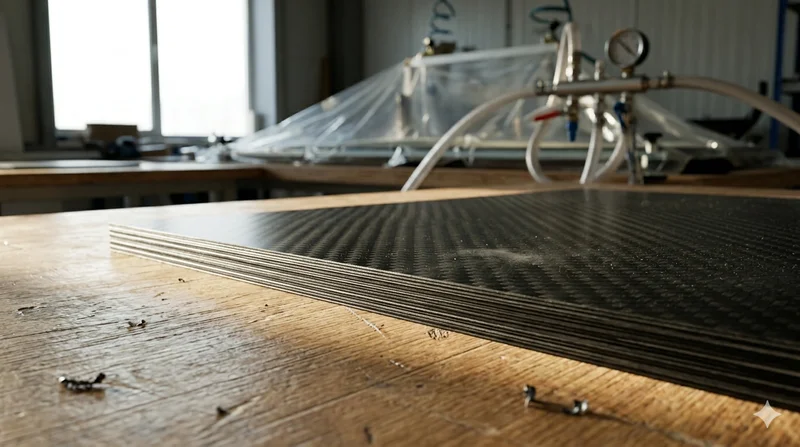
Carbon Fiber Plate — 3K Twill T700 3.0mm
Medium-thickness 3.0mm carbon fiber plate offering significantly higher load capacity while maintaining attractive 3K twill finish. Suitable for structural brackets, reinforcement plates, and load-bearing panels.
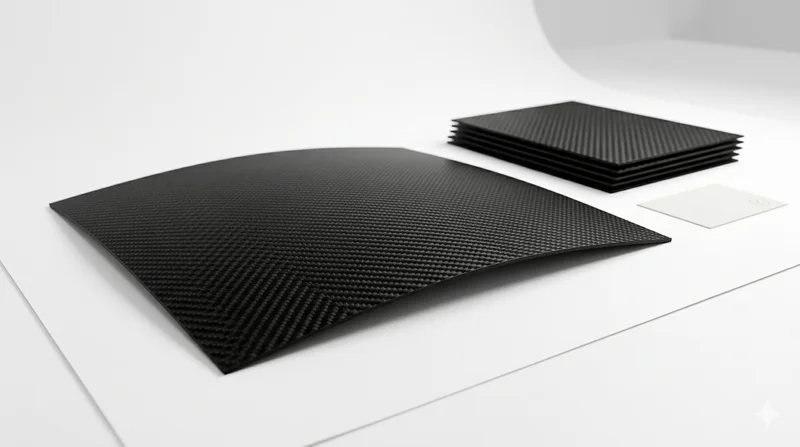
Carbon Fiber Plate — 3K Twill T700 1.5mm
Thin 1.5mm carbon fiber plate with 3K twill weave surface. Lightweight and stiff, commonly used for covers, panels, drone bodies, and applications requiring a premium aesthetic appearance.
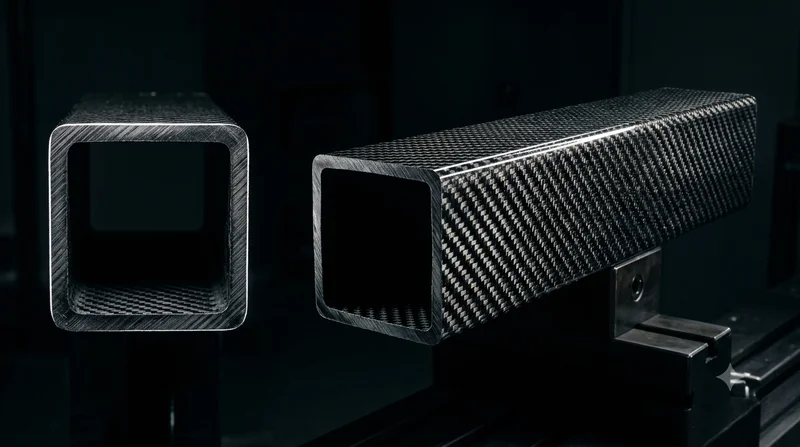
Square Carbon Fiber Tube — 3K Twill T700
Square cross-section carbon fiber tube manufactured with 3K twill weave for torsional strength. Preferred for structural frames, trusses, and support columns where rectangular geometry offers design flexibility.
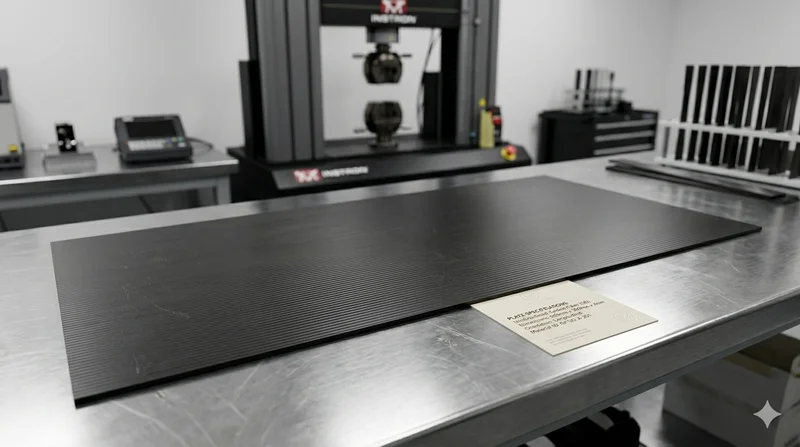
Carbon Fiber Plate — UD Unidirectional T700
Unidirectional carbon fiber plate with all fibers oriented in a single direction for maximum strength along the fiber axis. Essential for structural reinforcements, splints, and applications where load direction is predictable.
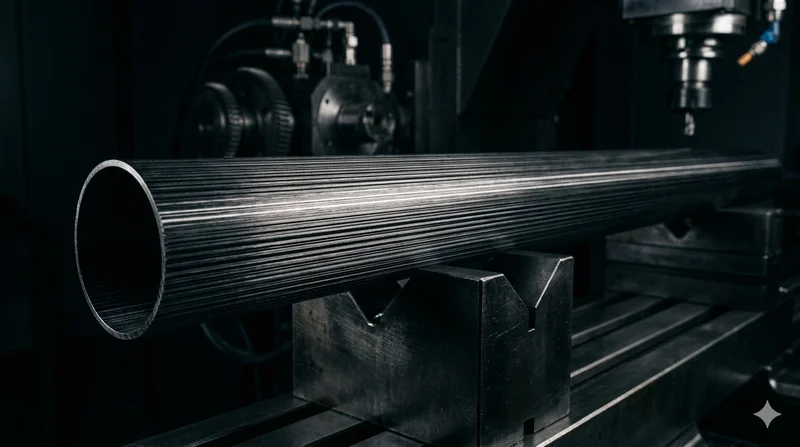
Round Carbon Fiber Tube — UD Unidirectional T700
Unidirectional (UD) round tube with all fibers aligned axially for maximum longitudinal stiffness. Ideal for applications requiring high bending rigidity with minimal weight, such as shafts, struts, and structural reinforcements.