
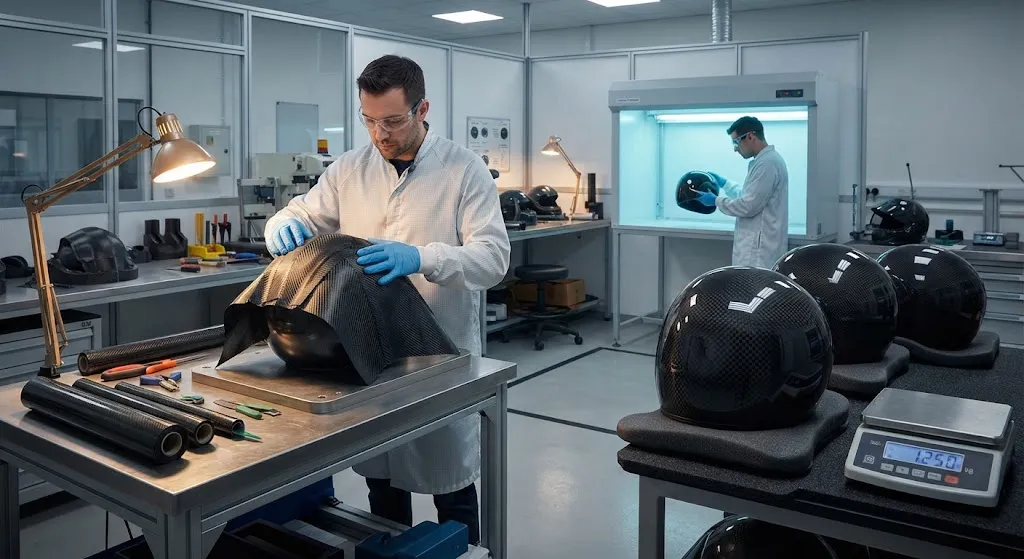
A racing driver's helmet is the most safety-critical composite product in motorsport, and carbon fiber has become its defining material. The shell must absorb and distribute impact energy, resist penetration, survive high-speed oblique impacts, and do all of this while weighing as littl
Introduction
A racing driver's helmet is the most safety-critical composite product in motorsport, and carbon fiber has become its defining material. The shell must absorb and distribute impact energy, resist penetration, survive high-speed oblique impacts, and do all of this while weighing as little as possible — every 100 grams of head mass amplifies the inertial forces on the neck during a crash. This combination of requirements is precisely what carbon fiber does best. Tailored layups made from 3K prepreg fabric deliver the stiffness and strength where they are needed, and series production compression molding keeps the shell light, consistent, and certifiable to standards such as FIA 8859 for motorcycle circuit racing and FIA 8856 for auto racing.
This article breaks down the anatomy of a carbon helmet, the zone-by-zone impact layup design, the certification tests that define acceptance, and the ventilation and weight engineering that separate a good helmet from a great one.
Helmet Anatomy: What the Shell Does
A modern motorsport helmet is a layered system in which every layer has a distinct job:
- Outer shell: the carbon fiber laminate that distributes impact loads over a large area, resists penetration and abrasion, and provides the structural stiffness that keeps the helmet stable during high-speed aerodynamic loads.
- Impact liner: expanded polystyrene foam that crushes in a controlled manner, absorbing the kinetic energy of the impact before it reaches the head.
- Comfort padding: removable, washable foam pads that fit the head, hold the helmet in position, and carry the retention system anchors.
- Retention system: the double-D ring chin strap that keeps the helmet in place under crash forces.
- Ventilation and aero elements: intake vents, internal air channels, exhaust ports, and external aero devices that manage airflow.
The shell carries the loads that the foam liner cannot: it spreads concentrated impacts across the surface, prevents penetration by sharp objects, and maintains its integrity at speed. Its stiffness-to-weight ratio directly determines how much weight sits on the driver's neck.
The Impact Layup: Engineering Zone by Zone
Carbon helmet shells are not uniform — the layup is engineered zone by zone to match the impact environment and certification test points. The table below shows a typical high-performance shell architecture:
| Shell Zone | Typical Layup | Design Function |
|---|---|---|
| Crown and top | High-density 3K twill, 6-8 plies, ±45° bias layers | Oblique impact absorption, penetration resistance |
| Forehead and temples | 3K twill with UD cap-layer, 8-10 plies | Linear impact and brow energy management |
| Side and rear | Optimized 5-7 ply build with 0°/90° reinforcement | Lateral crush resistance and stability |
| Jaw and chin bar | Thickened aramid-carbon hybrid, 10-12 plies | Direct chin impact survival, chin-strap anchorage |
| Visor surround | Localized 4-6 ply patches and anchor inserts | Visor, tear-off, and mount integrity |
Each zone is verified against a specific certification load case. The crown is designed around the oblique impact test, where a guided drop of the helmeted form hits an abrasive anvil at an angle; the chin bar is designed around direct and lateral chin impact tests; and the retention region is verified by dynamic strap pull tests. Changing any zone changes the weight and stiffness balance of the whole shell, so shell engineers iterate between laminate design and finite element analysis until all test points pass with margin.
FIA Certification: The Tests That Define Acceptance
FIA 8859 and 8856 certification sets the performance bar for motorsport helmets, and the tests map directly onto the shell design choices described above:
- Linear impact absorption: the helmeted headform is dropped onto flat and hemispherical anvils at specified velocities, and the transmitted acceleration to the headform must stay below the mandated limit.
- Oblique impact test: a guided angular impact measures rotational kinematics — the shell's low-friction surface and energy-absorbing liner must keep rotational acceleration within the certified envelope.
- Penetration test: a falling striker must not contact the headform through the shell, verifying the crown resistance built into the layup.
- Retention system test: the chin strap and anchor points must withstand dynamic loading without excessive displacement or failure.
- Chin bar and field of vision: chin bar impact and crush tests for full-face helmets, plus a minimum field-of-vision requirement that ventilations may not obstruct.
| Test Category | What It Verifies | Shell Design Driver |
|---|---|---|
| Linear impact | Acceleration transmission below limit | Crown and liner energy management |
| Oblique impact | Rotational acceleration and energy | Low-friction shell surface, bias layers |
| Penetration | No contact through the shell | High-density crown layup |
| Retention + chin bar | Strap and jaw integrity | Anchorage inserts, thickened chin area |
Certification is not a one-time event: every production batch must be sampled and tested, and FIA homologation audits cover the production line's quality system, so batch-to-batch reproducibility of the composite process is a hard requirement.
Manufacturing with 3K Prepreg
The manufacturing route determines whether the shell design survives contact with production reality. Most premium carbon helmets are molded from 3K carbon fiber prepreg — woven fabric pre-impregnated with a controlled resin content, typically 38-42 percent epoxy for helmet shells. The process runs in five stages: prepreg cutting and kit preparation, hand or robotic layup of the zone-based stack into a multi-part compression mold, vacuum bagging, high-pressure molding with heated press platens at 130-160 °C for 20-40 minutes, and post-cure inspection. The pressed shell emerges at final thickness with a smooth outer surface that requires only light finishing before painting or clear coating.
Quality control in the molding process mirrors aerospace practice: every shell is weighed and dimensionally checked, and batch samples undergo ultrasonic scanning to detect voids or delamination in the laminate. Because a void in the crown zone could compromise the oblique impact result, non-destructive verification is as important as the impact testing itself.
Ventilation and Weight: The Driver Experience
Once certification is achieved, the purchasing decision turns on two attributes that a carbon shell directly improves: ventilation and weight. Proper ventilation matters because a race helmet is worn in extreme heat — a full-face shell without airflow becomes a heat trap, degrading concentration and physical performance. Design elements include front intake vents feeding air channels routed through the EPS liner, exhaust vents at the rear that create negative pressure to pull air through, and breath deflectors that control moisture and fogging. The carbon shell must integrate these channels without creating weak points in the impact zones, which is why vent placement is decided in the same design iteration as the layup.
| Helmet Attribute | Fiberglass Shell | Carbon Shell |
|---|---|---|
| Typical shell mass (g, size M) | 500-650 | 350-500 |
| Complete helmet mass (g, size M) | 1,350-1,550 | 1,150-1,400 |
| Neck load contribution | Baseline | -10 to -15% |
| Stiffness-to-weight ratio | Baseline | 1.5-2x |
Weight reduction of 150-250 grams translates directly into measurable driver benefit: lower inertial forces on the neck during impacts and high-g cornering, reduced fatigue over long stints, and more stable head position in turbulent airflow. It is the reason carbon shells command the premium they do — the performance gain is felt in every session, not just in the crash scenario.
Frequently Asked Questions
What does FIA 8859 certification actually require?
FIA 8859 covers motorcycle circuit racing helmets, while FIA 8856 covers auto racing; both define a battery of physical tests including linear impact absorption on flat and hemispherical anvils, oblique impact for rotational kinematics, penetration resistance, retention system dynamic loading, and for full-face models, chin bar impact. Helmets that pass are homologated, and production batches are sampled and retested, with FIA audits covering the manufacturer's quality system.
Why is 3K carbon fiber the standard for helmet shells?
3K (3,000 filaments per tow) carbon fiber fabric offers the balance of drapeability, surface finish, and interlacing density that shell molding needs. The tighter weave wets out cleanly in prepreg, conforms to the compound curves of a helmet shell, and produces the dense, void-free laminate that impact and penetration tests demand — at a weight that fiberglass cannot match.
How much safer is a carbon helmet than a fiberglass one?
Certified carbon and fiberglass helmets pass the same FIA impact tests, so both meet the safety bar; the carbon advantage is not raw impact numbers but system performance. The stiffer shell distributes loads more evenly, the lower weight reduces inertial neck forces during impact and high-g loading, and the same energy management is achieved in a lighter package — reducing fatigue over a race distance as well as improving outcome in the crash scenario.
How do vents survive the structural design without weakening the shell?
Vent openings are placed in low-load regions of the shell wherever possible, away from the crown and chin bar test zones, and the surrounding laminate is locally thickened with additional plies to restore stiffness around each aperture. Every vented design is re-analyzed and re-tested against the certification load cases, so the airflow channels never compromise the impact performance envelope.
Conclusion
Carbon fiber motorsport helmets achieve their performance through a tightly integrated system: a zone-engineered 3K prepreg shell that absorbs and distributes impact energy, FIA 8859 or 8856 certification verified on every production batch, and ventilation and weight engineering that translate directly into driver comfort and reduced neck fatigue. The result is a product in which safety, performance, and experience are inseparable — and where the material choice is the foundation of all three.
For helmet manufacturers and motorsport teams, the practical considerations are shell design iteration against certification load cases, process control in prepreg molding, and material selection that balances stiffness, weight, and quality. Explore our carbon fiber fabrics and materials for helmet and sporting goods manufacturing, or contact our engineering team to discuss material specifications, prototyping, and production support.
Part of topic
Related Articles
- Carbon Fiber Mooring for Floating Offshore Wind: Fatigue and Corrosion in Deep Water
- Carbon Fiber Bicycle Frame Optimization: Layup Design and Manufacturing for Competitive Racing
- Carbon Fiber CFRP Retrofit for Infrastructure: Bridge and Building Seismic Strengthening
- Carbon Fiber Medical Imaging Equipment: Lightweight Gantry and Couch Structures for MRI/CT
- Carbon Fiber EV Battery Enclosures: Crash Safety and Electromagnetic Shielding Design
- Carbon Fiber Structures for Low-Altitude Economy: UAV Airframes and eVTOL Components
Interested in Our Products?
Contact our team for competitive pricing and technical specifications.
Get a QuoteRelated Products

Carbon Fiber Plate — 3K Twill T700 3.0mm
Medium-thickness 3.0mm carbon fiber plate offering significantly higher load capacity while maintaining attractive 3K twill finish. Suitable for structural brackets, reinforcement plates, and load-bearing panels.

Carbon Fiber Plate — 3K Twill T700 1.5mm
Thin 1.5mm carbon fiber plate with 3K twill weave surface. Lightweight and stiff, commonly used for covers, panels, drone bodies, and applications requiring a premium aesthetic appearance.

Square Carbon Fiber Tube — 3K Twill T700
Square cross-section carbon fiber tube manufactured with 3K twill weave for torsional strength. Preferred for structural frames, trusses, and support columns where rectangular geometry offers design flexibility.
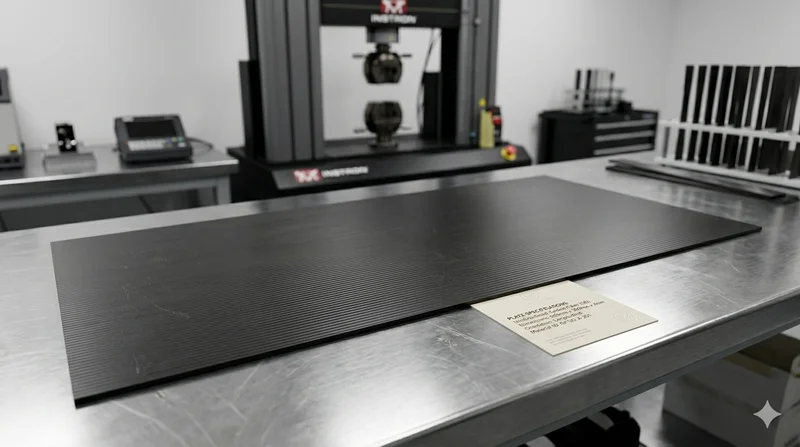
Carbon Fiber Plate — UD Unidirectional T700
Unidirectional carbon fiber plate with all fibers oriented in a single direction for maximum strength along the fiber axis. Essential for structural reinforcements, splints, and applications where load direction is predictable.
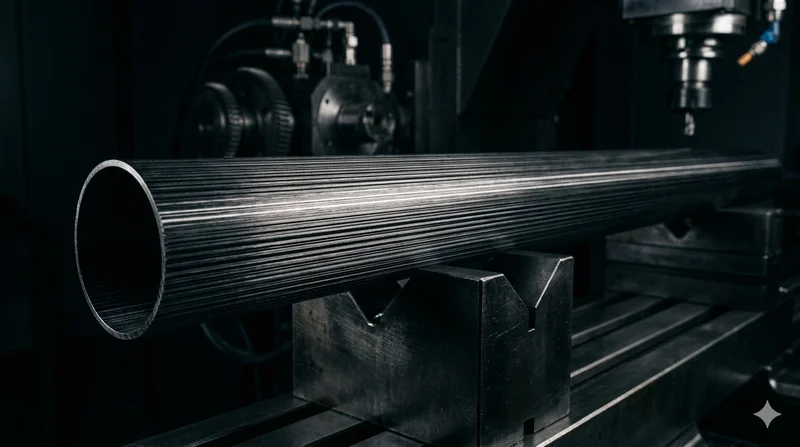
Round Carbon Fiber Tube — UD Unidirectional T700
Unidirectional (UD) round tube with all fibers aligned axially for maximum longitudinal stiffness. Ideal for applications requiring high bending rigidity with minimal weight, such as shafts, struts, and structural reinforcements.