
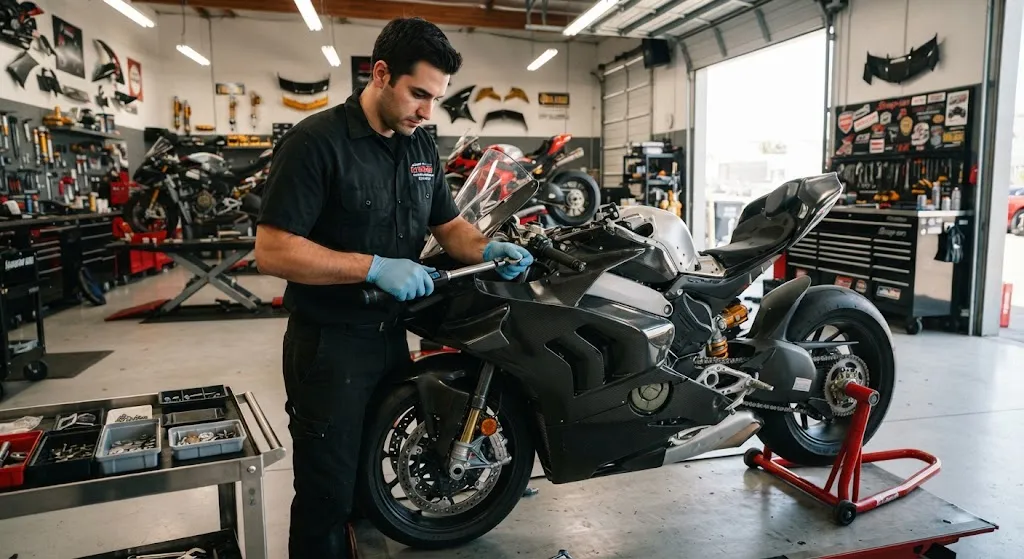
Motorcycle fairings serve multiple critical functions: aerodynamic drag reduction, rider protection, engine cooling management, and aesthetic design. In professional racing, fairing performance directly influences lap times through aerodynamic efficiency and weight distribution. For str
Introduction
Motorcycle fairings serve multiple critical functions: aerodynamic drag reduction, rider protection, engine cooling management, and aesthetic design. In professional racing, fairing performance directly influences lap times through aerodynamic efficiency and weight distribution. For street bikes, fairings define the motorcycle's visual identity while providing practical weather protection and structural support for lighting and instrumentation.
Carbon fiber reinforced polymer composites have transformed fairing design from heavy fiberglass and ABS plastic constructions to lightweight, high-performance structures. CFRP fairings typically weigh 40-60% less than equivalent fiberglass parts while offering superior stiffness-to-weight ratios and impact energy absorption. This article evaluates CFRP solutions for motorcycle fairing applications, analyzing material systems, manufacturing techniques, and field performance data from racing and consumer motorcycles.
Material Systems for Motorcycle Fairings
Selecting the right carbon fiber composite for motorcycle fairings requires balancing weight, stiffness, impact resistance, and cost. Three material configurations dominate current fairing applications:
- Woven carbon fiber with epoxy resin: The most common system for premium fairings, using 200-300 gsm plain or twill weave fabric with 50-55% fiber volume fraction. This provides excellent visual surface finish with the characteristic carbon weave pattern, good impact resistance, and moderate cost. Typical wall thickness is 0.8-1.5 mm for outer skins.
- Unidirectional carbon fiber with toughened epoxy: Used in racing applications where maximum stiffness-to-weight is critical. Unidirectional plies oriented along primary load paths provide 15-25% higher stiffness than woven equivalents at comparable weight, but with reduced impact resistance and no aesthetic weave pattern.
- Carbon fiber with vinyl ester or bio-based resin: An emerging system that offers improved impact resistance over standard epoxy while reducing environmental impact. Vinyl ester resins provide 20-30% higher elongation at failure than standard epoxy, making fairings more resistant to cracking from stone impacts or low-speed drops.
| Property | Woven CFRP (Epoxy) | Unidirectional CFRP | CFRP (Vinyl Ester) | Fiberglass (Polyester) | ABS Plastic |
|---|---|---|---|---|---|
| Density (g/cm³) | 1.55 | 1.58 | 1.52 | 1.85 | 1.04 |
| Tensile Modulus (GPa) | 55-70 | 90-120 | 50-65 | 15-25 | 2.0-2.5 |
| Tensile Strength (MPa) | 600-800 | 800-1,200 | 500-700 | 150-250 | 40-55 |
| Impact Energy (J/m) | 80-120 | 50-80 | 120-180 | 150-250 | 200-400 |
| Typical Fairing Weight (kg, full sportbike set) | 2.5-3.5 | 2.2-3.0 | 2.8-3.8 | 5.0-7.0 | 4.5-6.0 |
| Relative Cost Index | 1.0 | 1.2-1.5 | 1.1 | 0.3-0.5 | 0.15-0.25 |
The weight advantage is significant for racing applications. A full CFRP fairing set for a MotoGP-class motorcycle weighs 2.5-3.5 kg compared to 5.0-7.0 kg for fiberglass equivalent — a 50% weight reduction that directly improves acceleration, braking, and cornering performance. For street bikes, the weight saving translates to improved handling and reduced rider fatigue during extended riding sessions.
Manufacturing Processes
Motorcycle fairings are manufactured using several composite fabrication methods, each optimized for different production volumes and performance requirements:
- Vacuum bagging with hand layup: The most common method for low-to-medium volume production. Carbon fiber fabric is manually placed into molds, saturated with resin using brush or spray application, and consolidated under vacuum pressure. Cycle times are 4-8 hours per part. This method provides good fiber wet-out and surface finish but requires skilled labor and produces moderate void content (2-5%).
- Prepreg compression molding: Used for high-performance racing fairings where weight and consistency are critical. Pre-impregnated carbon fiber sheets are placed in matched metal molds and cured under heat (120-150°C) and pressure (5-15 bar). Cycle times of 30-60 minutes produce parts with void content below 1% and excellent dimensional accuracy. Tooling costs are higher but per-part costs decrease significantly at volumes above 500 units.
- Resin transfer molding (RTM): An intermediate approach suitable for medium-to-high volume production. Dry carbon fiber preforms are placed in closed molds and infused with resin under pressure. RTM provides near-net-shape parts with good surface finish on both sides, making it ideal for fairings that require paint-ready surfaces.
Aerodynamic Performance Benefits
Fairing aerodynamics directly influence motorcycle performance through drag coefficient, downforce generation, and cooling airflow management. CFRP enables aerodynamic optimizations that are difficult or impossible with heavier materials:
- Drag reduction: CFRP's stiffness allows thinner fairing profiles that reduce frontal area by 8-12% compared to fiberglass equivalents. At racing speeds of 200+ km/h, this translates to 3-5% drag reduction, worth 2-4 km/h top speed or 0.3-0.5 seconds per lap on a typical circuit.
- Downforce generation: Carbon fiber's high specific stiffness enables integrated winglet designs and aerodynamic appendages that generate front-wheel downforce without significant weight penalty. Modern MotoGP fairings incorporate multiple aerodynamic surfaces that would be structurally impractical in heavier materials.
- Cooling optimization: Precise fairing geometry around radiator and engine areas optimizes cooling airflow while minimizing aerodynamic drag. CFRP's moldability allows complex duct shapes that balance cooling requirements with drag reduction.
Crash Performance and Repairability
Motorcycle fairings must withstand crash impacts without dangerous fragmentation. CFRP fairings exhibit different crash behavior than plastic alternatives:
- Energy absorption: CFRP absorbs impact energy through fiber breakage, matrix cracking, and delamination — mechanisms that progressively decelerate the motorcycle during a slide. This controlled energy absorption reduces peak deceleration forces compared to rigid plastic fairings that shatter on impact.
- Debris management: Unlike ABS plastic that fragments into sharp shards, CFRP tends to break into larger, less hazardous pieces. Racing regulations increasingly specify composite fairings for this safety advantage.
- Repair options: Damaged CFRP fairings can often be repaired rather than replaced. Small cracks and impact damage can be filled with resin and over-wrapped with additional carbon fiber layers, restoring 85-95% of original strength at 20-30% of replacement cost. This repairability is particularly valuable for racing teams managing crash budgets.
Frequently Asked Questions
How much weight can CFRP fairings save compared to stock fiberglass or plastic?
CFRP fairings typically achieve 40-60% weight reduction compared to fiberglass equivalents and 50-65% reduction compared to ABS plastic fairings. For a complete sportbike fairing set (upper cowl, side panels, belly pan, tail section), stock fiberglass weighs 5.0-7.0 kg, stock ABS weighs 4.5-6.0 kg, while CFRP replacement weighs 2.5-3.5 kg. The weight saving is most significant in upper bodywork where the fairing sits high on the motorcycle, raising the center of gravity. Reducing this mass by 2-3 kg measurably improves low-speed handling and turn-in response.
Are carbon fiber fairings street legal?
Carbon fiber fairings are street legal in all major markets provided they meet local vehicle regulations. Key compliance requirements include: DOT/ECE certification for headlight mounting (fairings must maintain correct light aim), reflector mounting provisions, and material compliance with local flammability standards. Most aftermarket CFRP fairings are designed as direct replacements for OEM parts and maintain all required mounting points for lights, indicators, and mirrors. Some jurisdictions require notification of material changes for insurance purposes, so riders should verify local requirements before installation.
What maintenance do CFRP fairings require?
CFRP fairings require minimal maintenance compared to painted plastic or fiberglass. The carbon fiber surface should be protected with UV-resistant clear coat to prevent resin degradation from sun exposure. Regular cleaning with pH-neutral soap and water prevents surface contamination. Inspect periodically for impact damage, delamination (visible as surface waviness or popping sounds when tapped), and fastener point stress cracks. Small chips can be repaired with matching resin; larger damage may require professional composite repair. Avoid abrasive polishes that can thin the clear coat and expose the carbon fabric.
Conclusion
Carbon fiber reinforced polymer composites have established themselves as the premium material for motorcycle fairings across racing and street applications. The 40-60% weight reduction compared to fiberglass directly improves acceleration, braking, and handling performance, while CFRP's stiffness enables aerodynamic optimizations that reduce drag and generate downforce. Manufacturing maturity spans from hand-layup vacuum bagging for custom and low-volume applications to prepreg compression molding for high-performance racing production.
For motorcycle manufacturers and racing teams evaluating CFRP fairing solutions, the practical considerations include material selection based on production volume and performance requirements, manufacturing process validation, and cost-benefit analysis against fiberglass and plastic alternatives. Explore our carbon fiber fabric and composite material range, including motorcycle-grade materials optimized for fairing applications, or contact our engineering team to discuss material selection and manufacturing support for your motorcycle program.
Part of topic
Related Articles
- Carbon Fiber Mooring for Floating Offshore Wind: Fatigue and Corrosion in Deep Water
- Carbon Fiber Bicycle Frame Optimization: Layup Design and Manufacturing for Competitive Racing
- Carbon Fiber CFRP Retrofit for Infrastructure: Bridge and Building Seismic Strengthening
- Carbon Fiber Medical Imaging Equipment: Lightweight Gantry and Couch Structures for MRI/CT
- Carbon Fiber EV Battery Enclosures: Crash Safety and Electromagnetic Shielding Design
- Carbon Fiber Structures for Low-Altitude Economy: UAV Airframes and eVTOL Components
Interested in Our Products?
Contact our team for competitive pricing and technical specifications.
Get a QuoteRelated Products

Carbon Fiber Plate — 3K Twill T700 1.5mm
Thin 1.5mm carbon fiber plate with 3K twill weave surface. Lightweight and stiff, commonly used for covers, panels, drone bodies, and applications requiring a premium aesthetic appearance.

Square Carbon Fiber Tube — 3K Twill T700
Square cross-section carbon fiber tube manufactured with 3K twill weave for torsional strength. Preferred for structural frames, trusses, and support columns where rectangular geometry offers design flexibility.
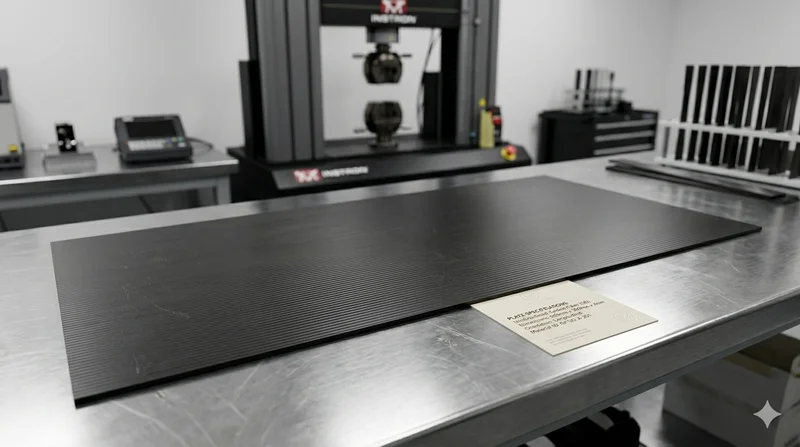
Carbon Fiber Plate — UD Unidirectional T700
Unidirectional carbon fiber plate with all fibers oriented in a single direction for maximum strength along the fiber axis. Essential for structural reinforcements, splints, and applications where load direction is predictable.
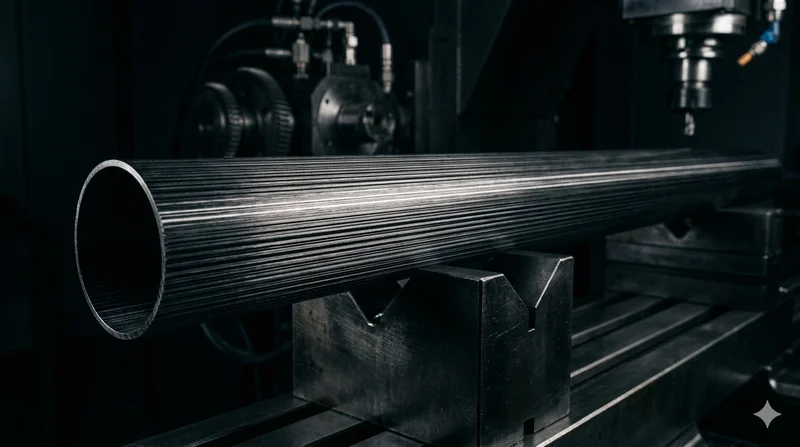
Round Carbon Fiber Tube — UD Unidirectional T700
Unidirectional (UD) round tube with all fibers aligned axially for maximum longitudinal stiffness. Ideal for applications requiring high bending rigidity with minimal weight, such as shafts, struts, and structural reinforcements.
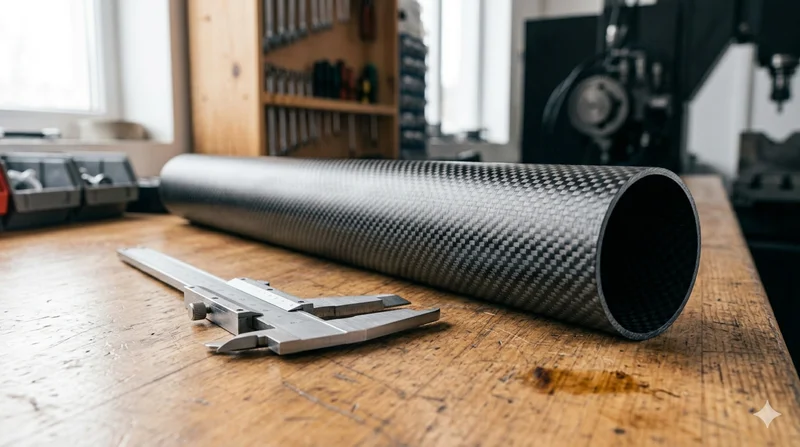
Round Carbon Fiber Tube — 3K Plain Weave T700
Standard round carbon fiber tube manufactured from Toray T700 grade fiber with 3K plain weave. Offers balanced strength and stiffness for general industrial applications including robotics, automation, sports equipment, and aerospace structures.