
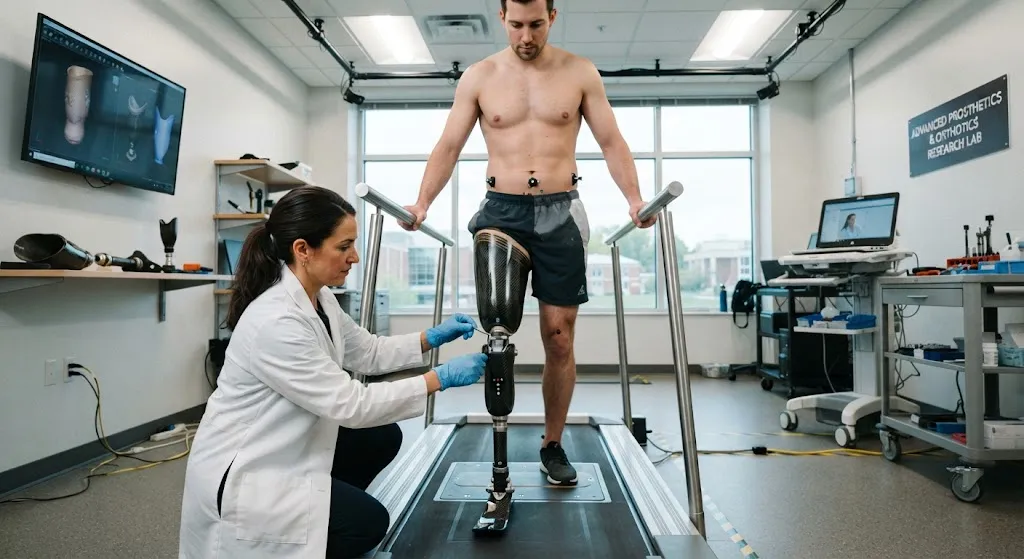
Carbon fiber composite prosthetics and exoskeletons represent a significant leap forward from traditional titanium and aluminum devices, offering 40-60% weight reductions while maintaining or exceeding structural performance requirements. In prosthetic applications, every gram saved at
Introduction
Carbon fiber composite prosthetics and exoskeletons represent a significant leap forward from traditional titanium and aluminum devices, offering 40-60% weight reductions while maintaining or exceeding structural performance requirements. In prosthetic applications, every gram saved at the distal end translates to exponentially less metabolic cost for the user — a 100-gram reduction at the ankle can lower oxygen consumption during walking by 5-8%. For exoskeletons, carbon fiber's specific stiffness and fatigue resistance enable lighter frames that extend battery life and reduce user fatigue during rehabilitation sessions or industrial work shifts.
The convergence of advanced composite manufacturing, 3D scanning for custom fit, and growing clinical evidence is accelerating adoption. Global demand for carbon fiber prosthetic components is projected to grow 12-15% annually through 2030, driven by aging populations in developed markets and expanding rehabilitation infrastructure in emerging economies. This article covers the material properties, manufacturing processes, and clinical evidence that prosthetic device manufacturers and exoskeleton integrators must understand when evaluating carbon fiber solutions.
Why Carbon Fiber Outperforms Metals in Prosthetics
The selection of prosthetic materials hinges on four properties: specific strength, fatigue life, vibration damping, and formability. Carbon fiber composites excel across all four metrics compared to the titanium alloys and aluminum grades traditionally used in limb prosthetics:
| Property | Carbon Fiber Composite | Titanium Alloy (Ti-6Al-4V) | Aluminum 7075-T6 |
|---|---|---|---|
| Specific tensile strength (MPa·cm³/g) | 780-950 | 230-280 | 180-210 |
| Fatigue life at 60% UTS (cycles) | >10 million | 2-5 million | 500K-1 million |
| Density (g/cm³) | 1.55-1.65 | 4.43 | 2.81 |
| Vibration damping coefficient | High (fiber-matrix interface) | Low | Moderate |
| Corrosion resistance in body environment | Excellent (inert) | Good (passive oxide) | Poor (requires coating) |
| Thermal expansion (µm/m·°C) | -1 to +2 (tunable) | 8.6 | 23.6 |
For below-knee prosthetics, the energy return characteristic of carbon fiber running blades — storing and releasing elastic strain energy during gait — has been quantified at 90-95% energy return, compared to 65-75% for titanium spring mechanisms. This directly translates to walking economy closer to natural limb biomechanics.
Prosthetic Applications: Running Blades, Socket Liners, and Structural Frames
Carbon fiber has become the material of choice across three major prosthetic component categories:
- Energy-storage-and-release (ESAR) running blades: The C-shaped or J-shaped carbon fiber blade used in transtibial running prostheses stores energy during stance phase and returns it at push-off. Blade thickness, width, and layup schedule are tuned to user weight and activity level, with fiber orientations optimized at ±45° for torsion and 0°/90° for bending stiffness. Competitive running prostheses achieve blade weights of 150-300 grams.
- Structural socket and frame components: Carbon fiber laminate sockets replace thermoplastic check sockets for permanent use, providing 30-40% weight reduction with superior moisture resistance and structural rigidity. Multi-axial layup designs distribute loads from the residual limb interface to the distal attachment point without stress concentrations.
- Microprocessor-controlled knee and ankle units: Carbon fiber housings and structural members reduce the weight of powered prosthetic joints by 25-35%, extending daily battery life from 8-10 hours to 12-14 hours for active users.
For upper limb prosthetics, carbon fiber terminal devices (hands and hooks) benefit from the material's ability to be overwrapped with silicone or polyurethane elastomers, providing both structural integrity and cosmetically acceptable surfaces.
Exoskeleton Design: Carbon Fiber Frame and Linkage Optimization
Lower-limb exoskeletons for rehabilitation and industrial augmentation increasingly use carbon fiber for structural frames, particularly in hip-knee-ankle designs where cumulative weight directly impacts user endurance and motor actuator sizing:
- Structural frame rails: Carbon fiber tube or plate frames reduce exoskeleton torso and thigh segment mass by 40-50% compared to aluminum, directly reducing the motor torque required to lift and swing the user's leg during gait assistance.
- Joint linkages and couplings: Carbon fiber linkage arms provide high stiffness-to-weight at the knee and hip pivot points, minimizing backlash and improving trajectory tracking accuracy for robotic gait training protocols.
- Battery and electronics enclosures: Carbon fiber composite housings protect electronics while serving as structural members, consolidating functions and reducing total part count.
Industrial exoskeletons (upper-lift assist, posture support) benefit from carbon fiber in back-frame and shoulder-link components where the material's fatigue resistance exceeds 10 million cycles at typical service loads — a critical advantage over aluminum frames that may require replacement after 2-3 years of daily industrial use.
Manufacturing Methods for Medical-Grade Carbon Fiber Devices
Prosthetic and exoskeleton manufacturers employ several composite fabrication routes, each suited to different production volumes and performance requirements:
- Prepreg autoclave layup: The gold standard for high-performance prosthetic blades and structural frames. Unidirectional or woven carbon fiber prepreg is hand-laid or machine-placed into molds, vacuum-bagged, and cured at 120-180°C under 3-7 bar pressure. Fiber volume fractions of 55-65% produce consistent mechanical properties with void content below 1%.
- Vacuum infusion: A lower-cost alternative for higher-volume prosthetic socket production. Dry carbon fiber fabric is placed in open molds, vacuum-bagged, and resin is drawn through the laminate. Cycle times of 2-4 hours and lower material costs make this viable for mass-produced prosthetic components.
- Filament winding: Used for tubular exoskeleton linkages and prosthetic pylon structures. Continuous carbon fiber tows are wound onto rotating mandrels at controlled angles, producing seamless tubes with excellent hoop and axial strength.
- Pultrusion: For standardized profiles — C-channels, I-beams, and round rods — used in exoskeleton frame structures. Pultruded carbon fiber profiles offer the lowest per-meter cost for constant-cross-section structural members.
Clinical Evidence and Patient Outcomes
Clinical studies consistently demonstrate the functional benefits of carbon fiber prosthetics over metal alternatives. Transtibial amputees using carbon fiber ESAR blades show 10-15% faster self-selected walking speeds, 8-12% lower metabolic cost (measured by oxygen consumption), and 20-30% reduction in phantom limb pain compared to rigid socket and metal pylon configurations. For exoskeleton-assisted rehabilitation, carbon fiber-framed devices report 15-25% longer daily therapy sessions due to reduced user fatigue, with equivalent or improved gait symmetry metrics compared to heavier aluminum-framed systems.
Frequently Asked Questions
How does carbon fiber prosthetic cost compare to titanium alternatives?
Carbon fiber prosthetic components typically cost 20-40% more than equivalent titanium components in materials alone, but total device cost depends on manufacturing complexity and customization. For running blades, carbon fiber is now the standard material — titanium alternatives are rare because they cannot match the energy return performance. For structural sockets, carbon fiber's higher material cost is offset by reduced fabrication time (fewer layup cycles than multi-piece metal frames) and longer service life, producing comparable total cost of ownership over a 5-7 year device lifespan.
What is the typical service life of a carbon fiber prosthetic component?
Carbon fiber prosthetic structural components are designed for 3-5 years of daily use, which translates to approximately 1-2 million gait cycles for lower limb devices. Fatigue testing per ISO 10328 requires 3 million cycles at proof load levels without failure. Carbon fiber's fatigue performance exceeds titanium in this regime, with well-designed composite blades showing no measurable stiffness degradation after 2 million cycles. Environmental degradation from UV exposure, moisture, and body heat is managed through surface coatings and resin system selection — epoxy-based systems with UV-resistant topcoats are standard.
Can carbon fiber exoskeletons be customized for individual patients?
Yes, and this is one of carbon fiber's key advantages over metals. Digital scanning of the patient's anatomy feeds into CAD models that define frame geometry, joint alignment, and structural thickness. Carbon fiber molds can be produced quickly (3D-printed patterns with composite tooling), enabling custom-fit exoskeletons in 2-3 weeks versus 6-8 weeks for machined metal frames. The layup schedule — number of plies, fiber orientation, and resin system — can be adjusted per patient to match their weight, strength, and rehabilitation goals.
Conclusion
Carbon fiber's combination of high specific strength, excellent fatigue life, design flexibility, and biocompatibility makes it the optimal material for next-generation prosthetic and exoskeleton devices. The clinical evidence supports what engineers have long known: lighter devices improve patient outcomes, extend daily use, and reduce metabolic burden. As manufacturing costs continue to decline and production volumes increase, carbon fiber will increasingly dominate the prosthetic and exoskeleton markets currently shared with titanium and aluminum.
For prosthetic device manufacturers and exoskeleton integrators evaluating carbon fiber solutions, the key considerations are material grade selection (aerospace vs. industrial carbon fiber), manufacturing process matching to production volume, and clinical validation requirements for regulatory approval. Explore our carbon fiber fabric and prepreg range for medical device applications, or contact our engineering team to discuss material qualification and custom layup development for your prosthetic or exoskeleton program.
Part of topic
Related Articles
- Carbon Fiber Mooring for Floating Offshore Wind: Fatigue and Corrosion in Deep Water
- Carbon Fiber Bicycle Frame Optimization: Layup Design and Manufacturing for Competitive Racing
- Carbon Fiber CFRP Retrofit for Infrastructure: Bridge and Building Seismic Strengthening
- Carbon Fiber Medical Imaging Equipment: Lightweight Gantry and Couch Structures for MRI/CT
- Carbon Fiber EV Battery Enclosures: Crash Safety and Electromagnetic Shielding Design
- Carbon Fiber Structures for Low-Altitude Economy: UAV Airframes and eVTOL Components
Interested in Our Products?
Contact our team for competitive pricing and technical specifications.
Get a QuoteRelated Products

Carbon Fiber Plate — 3K Twill T700 1.5mm
Thin 1.5mm carbon fiber plate with 3K twill weave surface. Lightweight and stiff, commonly used for covers, panels, drone bodies, and applications requiring a premium aesthetic appearance.

Carbon Fiber Plate — 3K Twill T700 3.0mm
Medium-thickness 3.0mm carbon fiber plate offering significantly higher load capacity while maintaining attractive 3K twill finish. Suitable for structural brackets, reinforcement plates, and load-bearing panels.

Square Carbon Fiber Tube — 3K Twill T700
Square cross-section carbon fiber tube manufactured with 3K twill weave for torsional strength. Preferred for structural frames, trusses, and support columns where rectangular geometry offers design flexibility.
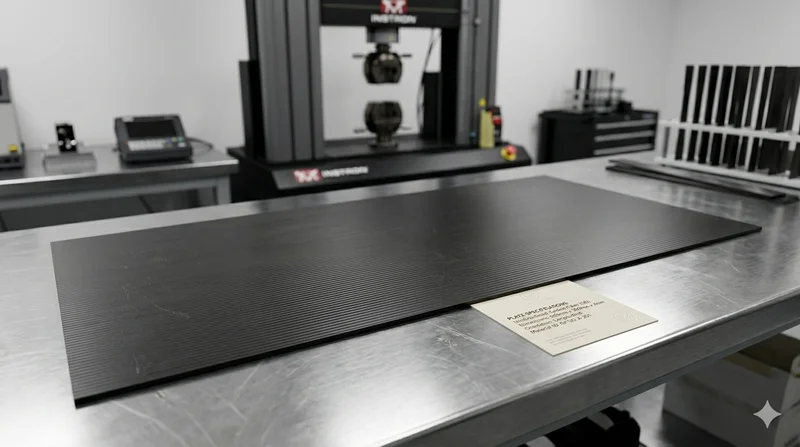
Carbon Fiber Plate — UD Unidirectional T700
Unidirectional carbon fiber plate with all fibers oriented in a single direction for maximum strength along the fiber axis. Essential for structural reinforcements, splints, and applications where load direction is predictable.
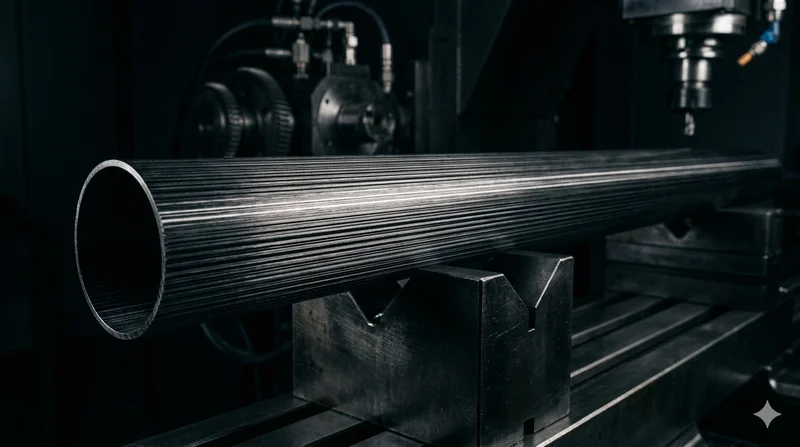
Round Carbon Fiber Tube — UD Unidirectional T700
Unidirectional (UD) round tube with all fibers aligned axially for maximum longitudinal stiffness. Ideal for applications requiring high bending rigidity with minimal weight, such as shafts, struts, and structural reinforcements.