
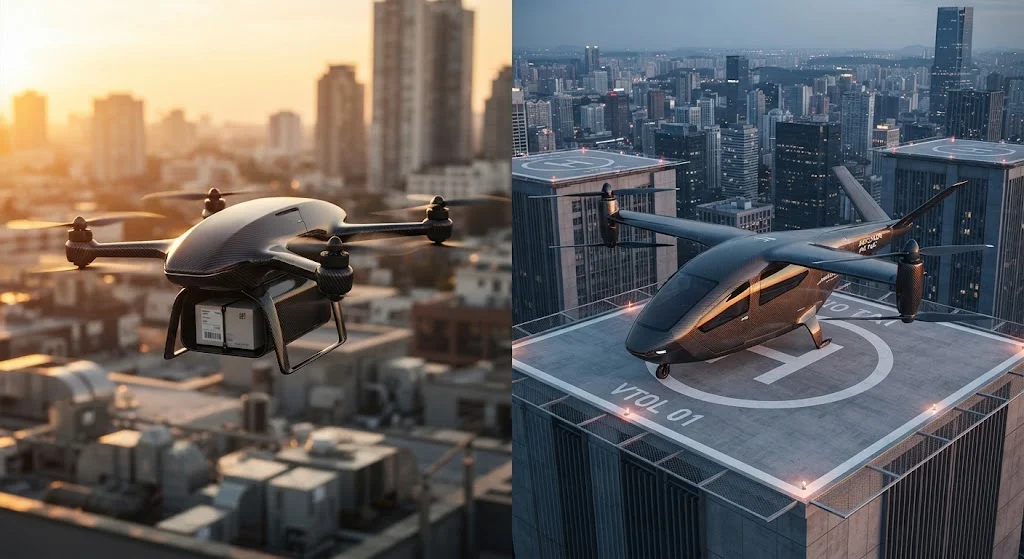
Carbon fiber structures for low-altitude economy applications represent one of the fastest-growing segments in the composites industry, driven by the convergence of urban air mobility, commercial drone delivery, and precision agriculture. The low-altitude economy—typically defined as ai
Introduction
Carbon fiber structures for low-altitude economy applications represent one of the fastest-growing segments in the composites industry, driven by the convergence of urban air mobility, commercial drone delivery, and precision agriculture. The low-altitude economy—typically defined as airspace below 1,000 meters—requires aircraft that maximize payload capacity while minimizing empty weight, a balance that carbon fiber composites uniquely achieve. For UAV manufacturers and eVTOL developers, the structural material choice directly determines range, payload, battery life, and ultimately commercial viability.
The physics driving carbon fiber adoption in low-altitude vehicles are compelling. Electric propulsion systems are inherently power-limited by battery energy density—typically 150-250 Wh/kg for lithium-polymer cells—meaning every kilogram of structural weight directly reduces useful payload or flight time. Carbon fiber specific strength of 1,500-2,500 kN·m/kg and specific stiffness of 70-150 MN·m/kg enable structural weight fractions of 15-25%, compared to 30-40% for aluminum and 40-50% for steel. This article examines how these material properties translate into UAV and eVTOL design advantages, reviews the manufacturing technologies enabling production rates of 1,000-10,000 units per year, and evaluates the cost-performance tradeoffs driving material selection decisions.
Structural Requirements for Low-Altitude Aircraft
Low-altitude economy aircraft operate under unique structural requirements that differ significantly from traditional aerospace:
- Cyclic loading from turbulence: Urban environments create complex turbulence patterns from buildings, requiring fatigue life of 10,000-50,000 flight hours for commercial UAV operations. Carbon fiber fatigue limits of 50-70% of static strength outperform aluminum's 30-40% threshold.
- Bird strike and ground impact: Regulatory requirements demand energy absorption capability of 15-30 J/kg for cabin structures, achievable with carbon fiber crush zones designed to fail progressively.
- EMI shielding requirements: UAV communication and navigation systems require electromagnetic interference shielding. Carbon fiber composites provide 20-40 dB shielding effectiveness, meeting FCC and ETSI standards without additional metallic mesh.
- Thermal stability: Exposure to solar radiation and operational heat from batteries and motors requires structural stability from -20°C to +60°C, where carbon fiber's near-zero CTE prevents dimensional changes that could affect aerodynamic performance.
- Crash energy absorption: eVTOL certification (EASA SC-VTOL, FAA Part 135) requires controlled energy absorption during emergency landings. Carbon fiber crush structures can absorb 25-40 J/g, exceeding aluminum's 15-25 J/g.
Carbon Fiber vs. Alternative Materials for Low-Altitude Vehicles
Material selection for low-altitude economy aircraft involves balancing weight, cost, manufacturability, and certification complexity. The table below compares carbon fiber against common alternatives:
| Property | Carbon Fiber Epoxy | Aluminum 6061-T6 | Fiberglass Epoxy | Titanium Ti-6Al-4V |
|---|---|---|---|---|
| Density (g/cm³) | 1.55-1.60 | 2.70 | 1.85-1.95 | 4.43 |
| Tensile strength (MPa) | 1,500-2,500 | 310 | 500-800 | 900-1,100 |
| Elastic modulus (GPa) | 130-180 | 69 | 20-35 | 110-120 |
| Specific strength (kN·m/kg) | 1,500-2,500 | 115 | 270-430 | 200-250 |
| Fatigue endurance limit (% UTS) | 50-70% | 30-40% | 30-40% | 50-60% |
| Material cost ($/kg) | 15-80 | 2-5 | 5-15 | 80-150 |
| Manufacturing complexity | High | Low | Medium | High |
For UAV airframes where cost is the primary driver, aluminum and fiberglass remain competitive for smaller platforms. However, for eVTOL aircraft where every kilogram affects payload capacity and battery range, carbon fiber's 40-55% weight advantage over aluminum justifies the 3-5x cost premium. Most eVTOL programs target structural weight fractions of 18-22%, achievable only with carbon fiber primary structure.
UAV Airframe Design Considerations
Carbon fiber UAV airframes range from small delivery drones weighing 5-25 kg to large cargo platforms exceeding 500 kg. Design considerations vary by size class:
- Small UAVs (5-25 kg MTOW): Primary structure typically uses woven carbon fiber fabric with epoxy resin, formed by vacuum bag molding or compression molding. Wall thicknesses of 0.5-2 mm achieve the required stiffness-to-weight ratios. Integration of battery compartments and motor mounts often uses co-cured or secondary-bonded carbon fiber brackets.
- Medium UAVs (25-150 kg MTOW): Sandwich construction with carbon fiber skins over honeycomb or foam cores provides the structural efficiency needed for extended range. Wing spars and fuselage longerons use pultruded carbon fiber tubes or CNC-machined solid laminates for predictable mechanical properties.
- Large UAVs (150-500+ kg MTOW): Primary structure may incorporate carbon fiber prepreg with autoclave cure for aerospace-grade quality, or resin transfer molding for cost-effective production. Structural testing requirements increase significantly, with full-scale static and fatigue testing mandated for commercial certification.
The design philosophy differs from traditional aerospace: UAV airframes are often designed for 10-15 year service lives rather than 30+ years, allowing higher design load factors and reduced inspection intervals. This philosophy enables thinner laminates and lower-cost manufacturing approaches while maintaining adequate safety margins.
eVTOL Component Architecture
eVTOL aircraft present unique structural challenges due to their hybrid lift-plus-cruise configuration:
- Lift fan nacelles and ducts: Carbon fiber composites provide the smooth aerodynamic surfaces and precise dimensional stability needed for efficient lift fan operation. Nacelle walls typically use 2-4 mm carbon fiber sandwich construction with Nomex honeycomb cores for acoustic damping.
- Fuselage and cabin structure: The passenger cabin requires crashworthiness certification, driving the use of carbon fiber energy-absorbing structures designed to fail progressively under 15-20g impact loads. Cabin frames often use carbon fiber-aramid hybrid layups for combined stiffness and impact resistance.
- Transition mechanism structures: eVTOL aircraft that tilt rotors or wings for transition between hover and cruise modes require high-stiffness carbon fiber structural members with integrated bearing interfaces for the transition mechanism.
- Battery integration structures: The battery pack is typically the heaviest single component (200-500 kg), requiring carbon fiber structural trays that provide crash protection while managing thermal loads through integrated cooling channels.
Manufacturing Technologies for Production Rates
Meeting production rates of 1,000-10,000 units per year—necessary for commercial viability—requires manufacturing technologies beyond traditional aerospace hand layup:
- Resin Transfer Molding (RTM): Closed-mold process producing parts with 55-60% fiber volume fraction in 15-30 minute cycles. Suitable for complex geometries like motor mounts and nacelle structures. Tooling costs of $50,000-200,000 per part are amortized across high production volumes.
- Compression molding: Thermoset and thermoplastic compression molding achieves cycle times of 2-5 minutes for simpler geometries like fairings and structural brackets. Automated fiber placement (AFP) for large structures enables fiber placement rates of 10-20 kg/hour.
- Pultrusion: Continuous process for constant cross-section profiles like wing spars, longerons, and structural tubes. Production rates of 1-3 meters per minute make pultrusion the most cost-effective method for linear carbon fiber components.
- Filament winding: Automated process for cylindrical and conical structures like motor nacelles and pressure vessels. Fiber placement accuracy of ±0.5 mm ensures consistent wall thickness and mechanical properties.
Cost Optimization Strategies
Reducing carbon fiber structure costs is critical for low-altitude economy commercial success:
- Material cost reduction: Standard modulus carbon fiber at $15-25/kg meets most UAV requirements, avoiding the premium for intermediate or high modulus fibers. Recycled carbon fiber at $8-12/kg is viable for non-structural components.
- Process automation: Automated cutting, layup, and inspection reduce labor content from 60-70% to 20-30% of total manufacturing cost. Robotic fiber placement and automated tap testing are becoming standard in production environments.
- Design for manufacturing: Reducing part count through integrated structures—combining brackets, frames, and skins into single molded components—eliminates assembly operations and fastener weight.
- Multi-use tooling: Modular tooling systems that accommodate multiple part variants within the same production cell maximize capital equipment utilization.
Frequently Asked Questions
How much weight can carbon fiber save compared to aluminum in a typical delivery drone?
For a delivery drone in the 15-25 kg MTOW range, carbon fiber primary structure typically saves 30-45% structural weight compared to aluminum equivalent designs. This translates to 2-4 kg of weight savings, which directly converts to 15-25% more payload capacity or 10-15% extended flight range. The weight benefit is most significant in large flat panels (fuselage skins, wing surfaces) where carbon fiber's high specific stiffness enables thinner laminates. For small brackets and fittings, the weight difference is less pronounced, and the cost premium may not justify switching from aluminum.
What is the typical certification path for carbon fiber structures in eVTOL aircraft?
eVTOL certification follows either FAA Part 21/Part 135 or EASA SC-VTOL pathways, both requiring substantiation of structural strength and durability. Carbon fiber structures require material allowables testing (static, fatigue, environmental conditioning), component testing (static to 1.5x limit load, fatigue to design life), and full-scale aircraft testing. The certification process typically takes 3-5 years and costs $10-50 million, with structural testing representing 30-40% of the total effort. Early engagement with certification authorities and using pre-qualified material systems can reduce timeline and cost.
How do carbon fiber structures perform in the event of a crash compared to metal structures?
Carbon fiber structures can be designed for superior crash energy absorption compared to aluminum. Carbon fiber crush zones absorb 25-40 J/g through controlled progressive failure modes—fiber microbuckling, matrix crushing, and delamination—compared to aluminum's 15-25 J/g through plastic deformation. However, carbon fiber fails in a more brittle manner than aluminum, requiring careful design of crush initiators and energy-absorbing geometries. eVTOL crashworthiness certifications (EASA SC-VTOL, FAA Part 135) require demonstrated energy absorption capability, which carbon fiber structures can meet or exceed with proper design.
Conclusion
Carbon fiber structures are enabling the low-altitude economy by providing the weight-critical performance that electric propulsion systems demand. The 40-55% weight advantage over aluminum directly translates to increased payload capacity, extended flight range, and improved commercial viability for both UAV and eVTOL platforms. As manufacturing technologies mature and production rates increase, carbon fiber costs are decreasing while performance continues to improve—creating a virtuous cycle that will accelerate adoption across urban air mobility, commercial drone delivery, and precision agriculture applications.
For UAV manufacturers and eVTOL developers evaluating carbon fiber structures, the practical starting point is defining structural performance requirements, quantifying weight savings targets, and assessing manufacturing capability and certification pathways. Explore our carbon fiber materials and reinforcements designed for low-altitude economy applications, or contact our engineering team to discuss structural design and material selection for your platform.
Related Articles
- Carbon Fiber Mooring for Floating Offshore Wind: Fatigue and Corrosion in Deep Water
- Carbon Fiber Bicycle Frame Optimization: Layup Design and Manufacturing for Competitive Racing
- Carbon Fiber CFRP Retrofit for Infrastructure: Bridge and Building Seismic Strengthening
- Carbon Fiber Medical Imaging Equipment: Lightweight Gantry and Couch Structures for MRI/CT
- Carbon Fiber EV Battery Enclosures: Crash Safety and Electromagnetic Shielding Design
- Carbon Fiber Satellite Structures: Dimensional Stability for Space Environment Cycling
Interested in Our Products?
Contact our team for competitive pricing and technical specifications.
Get a QuoteRelated Products

Carbon Fiber Plate — 3K Twill T700 1.5mm
Thin 1.5mm carbon fiber plate with 3K twill weave surface. Lightweight and stiff, commonly used for covers, panels, drone bodies, and applications requiring a premium aesthetic appearance.

Carbon Fiber Plate — 3K Twill T700 3.0mm
Medium-thickness 3.0mm carbon fiber plate offering significantly higher load capacity while maintaining attractive 3K twill finish. Suitable for structural brackets, reinforcement plates, and load-bearing panels.

Square Carbon Fiber Tube — 3K Twill T700
Square cross-section carbon fiber tube manufactured with 3K twill weave for torsional strength. Preferred for structural frames, trusses, and support columns where rectangular geometry offers design flexibility.
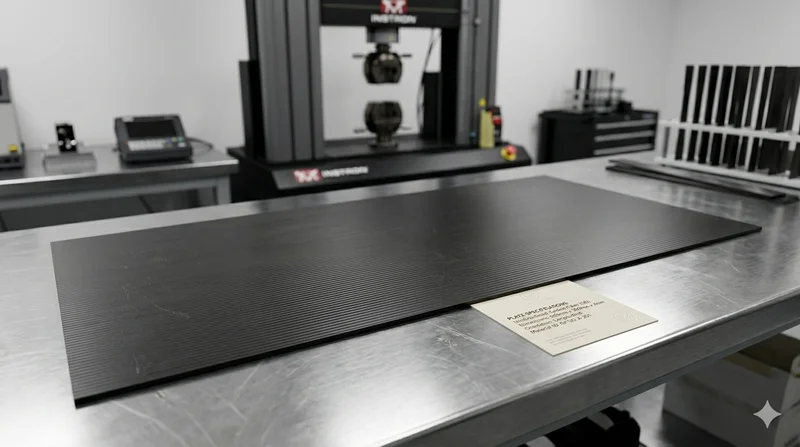
Carbon Fiber Plate — UD Unidirectional T700
Unidirectional carbon fiber plate with all fibers oriented in a single direction for maximum strength along the fiber axis. Essential for structural reinforcements, splints, and applications where load direction is predictable.
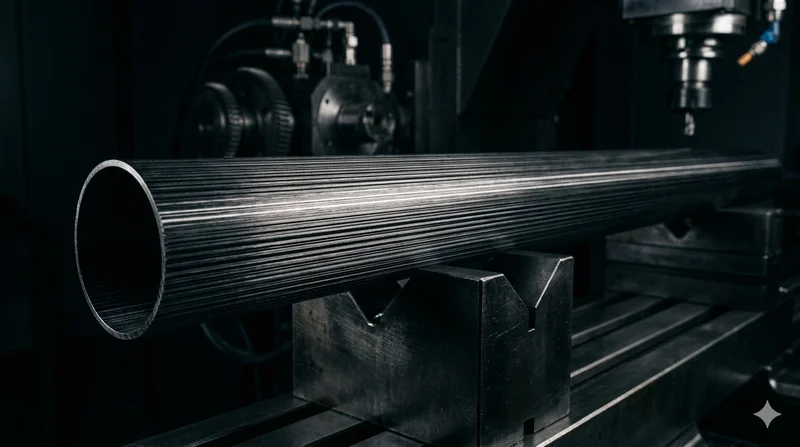
Round Carbon Fiber Tube — UD Unidirectional T700
Unidirectional (UD) round tube with all fibers aligned axially for maximum longitudinal stiffness. Ideal for applications requiring high bending rigidity with minimal weight, such as shafts, struts, and structural reinforcements.