
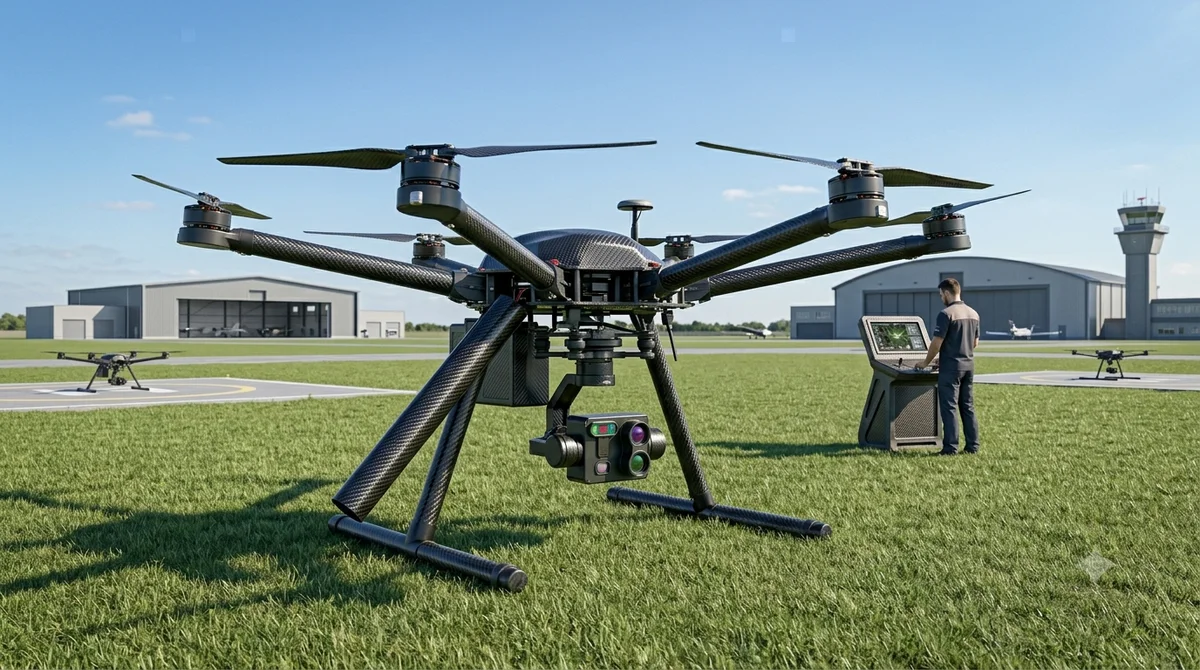
A comprehensive guide to selecting carbon fiber materials for drones and eVTOL aircraft components, with a component-by-component comparison table.
Introduction
Carbon fiber composites have become the material of choice for drones and eVTOL aircraft due to their exceptional strength-to-weight ratio, stiffness, and fatigue resistance. Every gram saved in the airframe translates directly into extended flight time, higher payload capacity, and improved maneuverability. This guide helps engineers select the right carbon fiber grade, weave, and manufacturing process for each critical component.
Why Carbon Fiber for UAVs?
Carbon fiber offers tensile moduli from 230 GPa (standard modulus) to over 900 GPa (ultra-high modulus), allowing designers to tailor stiffness precisely. Compared to aluminum, carbon fiber is 40% lighter at equivalent strength, does not suffer galvanic corrosion when properly isolated, and provides 5–10× better vibration damping — critical for stable aerial platforms.
Component-by-Component Selection Guide
| Component | Recommended Material | Key Advantage | Weight vs Aluminum |
|---|---|---|---|
| Arm / Boom | T800S IM prepreg, 0°/±45° layup | Bending & torsional stiffness | −55% |
| Main Frame | T700 woven, compression molded | Impact resistance, cost | −50% |
| Fuselage Skin (eVTOL) | M55J HM unidirectional tape | Aeroshell stiffness | −65% |
| Propeller Blades | CF-reinforced PEEK or CF/PA | Mass production, weldability | −50% |
| Battery Enclosure | Flame-retardant CF/epoxy or CF/PPS | Fire resistance | −70% |
| Landing Gear | High-toughness CF/epoxy or CF/aramid hybrid | Impact energy absorption | −50% |
For consumer drones, standard modulus T700 with compression molding strikes the best cost-performance balance. For commercial eVTOL, intermediate modulus IM prepreg in autoclave is the benchmark, though out-of-autoclave (OoA) prepregs are gaining traction to reduce capital costs.
Manufacturing Considerations
Prepreg/autoclave offers the best mechanical properties and consistent quality for eVTOL primary structures. Compression molding provides higher throughput for medium-complexity drone frames. Resin transfer molding (RTM) suits complex shapes with good surface finish. For eVTOL, lightning strike protection (copper mesh or expanded foil) is mandatory on outer skins per SAE ARP5412. Crashworthiness requires energy-absorbing designs — intermediate modulus fibers with toughened resin systems are preferred in occupant-protection zones.
Frequently Asked Questions
What is the best carbon fiber for drone arms?
Intermediate modulus fibers such as T800S provide the best balance of stiffness and strength for multirotor arms. Standard modulus T700 is a cost-effective alternative. Avoid ultra-high modulus fibers as they are too brittle for bending loads during flight and crash landings.
How does carbon fiber compare to aluminum for drone frames?
Carbon fiber is 40–50% lighter for equivalent stiffness, offers superior fatigue life (billions vs millions of cycles), but is more expensive and harder to repair. Many high-end drones use a hybrid approach: carbon fiber arms for stiffness, aluminum hub for impact absorption.
Is carbon fiber safe for eVTOL in lightning strike conditions?
Carbon fiber alone is conductive but ~1000× less than aluminum, causing resistive heating during strikes. Per SAE ARP5412, eVTOL skins require a copper mesh or aluminum foil lightning strike protection layer co-cured with the composite to prevent delamination.
Conclusion
Selecting the right carbon fiber material for each UAV component significantly enhances performance, range, and payload. Our drone-grade tubes and plates meet the stiffness, weight, and certification requirements of the industry. Browse our UAV-grade materials or contact our engineering team for technical consultation.
Related Articles
- Carbon Fiber Mooring for Floating Offshore Wind: Fatigue and Corrosion in Deep Water
- Carbon Fiber Bicycle Frame Optimization: Layup Design and Manufacturing for Competitive Racing
- Carbon Fiber CFRP Retrofit for Infrastructure: Bridge and Building Seismic Strengthening
- Carbon Fiber Medical Imaging Equipment: Lightweight Gantry and Couch Structures for MRI/CT
- Carbon Fiber EV Battery Enclosures: Crash Safety and Electromagnetic Shielding Design
- Carbon Fiber Structures for Low-Altitude Economy: UAV Airframes and eVTOL Components
Interested in Our Products?
Contact our team for competitive pricing and technical specifications.
Get a QuoteRelated Products

Carbon Fiber Plate — 3K Twill T700 1.5mm
Thin 1.5mm carbon fiber plate with 3K twill weave surface. Lightweight and stiff, commonly used for covers, panels, drone bodies, and applications requiring a premium aesthetic appearance.

Square Carbon Fiber Tube — 3K Twill T700
Square cross-section carbon fiber tube manufactured with 3K twill weave for torsional strength. Preferred for structural frames, trusses, and support columns where rectangular geometry offers design flexibility.
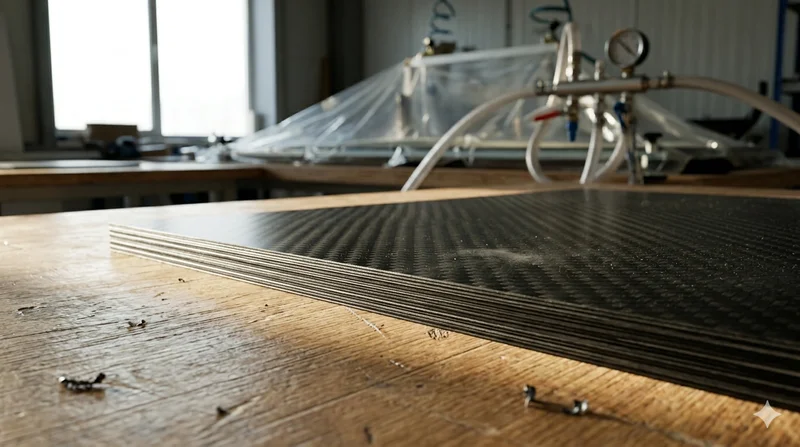
Carbon Fiber Plate — 3K Twill T700 3.0mm
Medium-thickness 3.0mm carbon fiber plate offering significantly higher load capacity while maintaining attractive 3K twill finish. Suitable for structural brackets, reinforcement plates, and load-bearing panels.
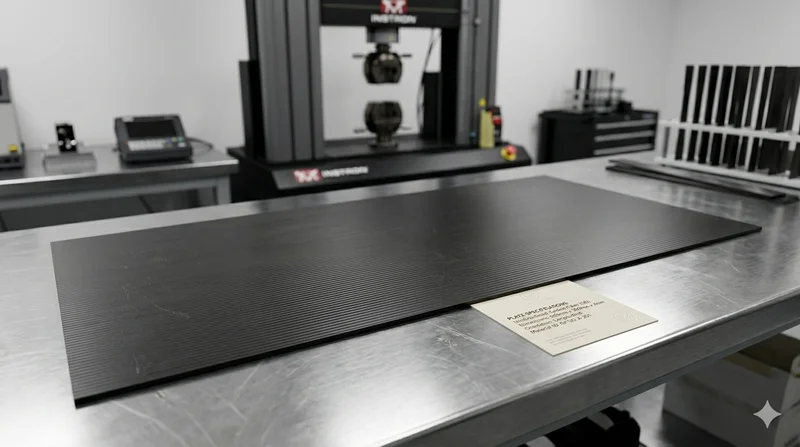
Carbon Fiber Plate — UD Unidirectional T700
Unidirectional carbon fiber plate with all fibers oriented in a single direction for maximum strength along the fiber axis. Essential for structural reinforcements, splints, and applications where load direction is predictable.
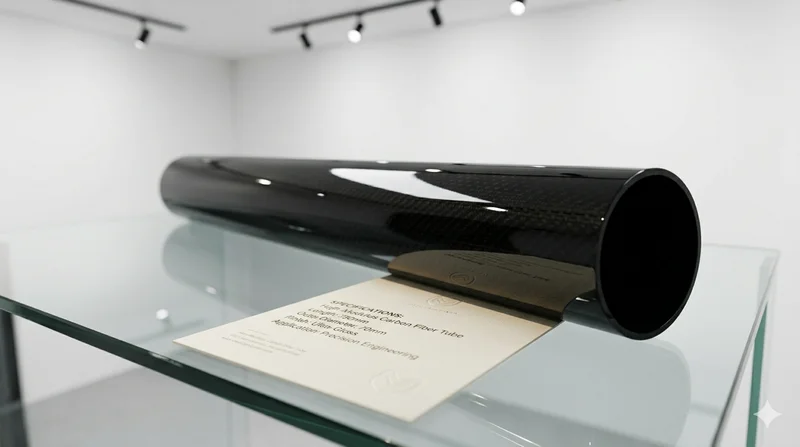
High Modulus Round Carbon Fiber Tube — M40
High modulus round tube manufactured with M40 grade fiber (tensile modulus 400 GPa). Designed for applications where maximum stiffness-to-weight ratio is critical, such as optical systems, precision machinery, and aerospace structures.