
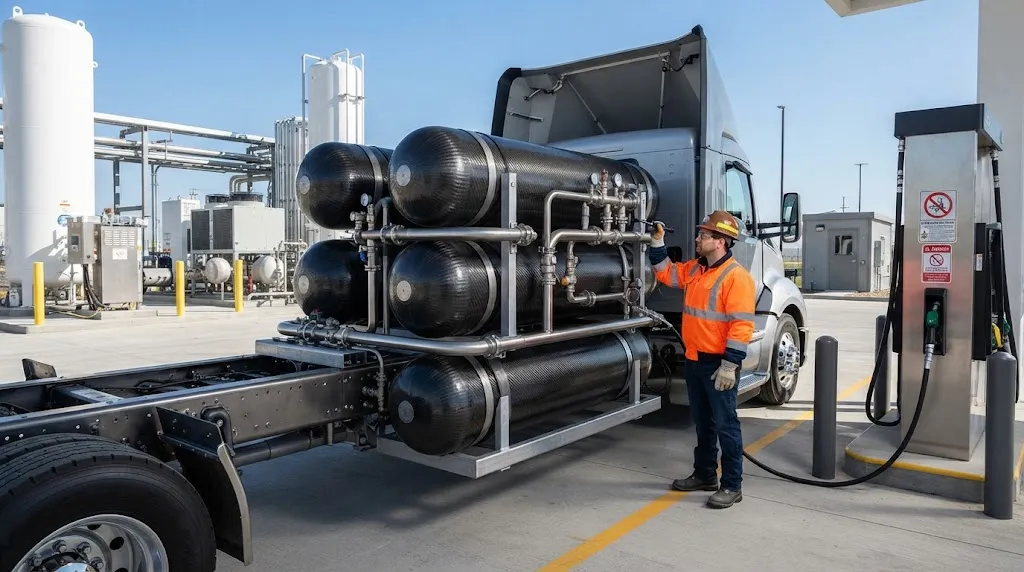
The hydrogen economy is transitioning from passenger vehicle demonstrations to commercial transport applications, where Type IV hydrogen storage tanks are emerging as the dominant technology for heavy-duty trucking and rail transport. Unlike Type I (all-metal) and Type II (metal with co
Introduction
The hydrogen economy is transitioning from passenger vehicle demonstrations to commercial transport applications, where Type IV hydrogen storage tanks are emerging as the dominant technology for heavy-duty trucking and rail transport. Unlike Type I (all-metal) and Type II (metal with composite wrap) tanks, Type IV construction uses a polymer liner with full carbon fiber composite overwrap, achieving the highest gravimetric density of any hydrogen storage format — typically 5.7-6.5 wt% hydrogen storage capacity. This weight advantage is critical for commercial transport, where every kilogram of tank weight directly reduces payload capacity and operating range.
At 70MPa (700 bar) storage pressure, Type IV tanks provide the energy density needed for long-haul trucking (500+ km range) and regional rail operations without compromising cargo capacity. The carbon fiber composite overwrap — typically 60-70% of tank weight — provides the burst pressure containment while the polymer liner ensures hydrogen impermeability. This article examines the technical requirements, market drivers, and carbon fiber material specifications for Type IV hydrogen tanks in truck and rail transport applications.
Technical Requirements for 70MPa Commercial Transport
Hydrogen storage for commercial transport imposes requirements beyond passenger vehicle applications. The table below compares key specifications for Type IV tanks in truck versus passenger vehicle applications:
| Specification | Passenger Vehicle (70MPa) | Heavy-Duty Truck (70MPa) | Rail Transport (70MPa) |
|---|---|---|---|
| Tank volume (liters) | 120-180 | 300-500 | 500-1,000+ |
| Working pressure (MPa) | 70 | 70 | 70 |
| Burst pressure ratio | 2.25x | 2.25x | 2.25x |
| Gravimetric density (wt%) | 5.7-6.5 | 5.7-6.5 | 5.5-6.2 |
| Cycle life (fill/drain cycles) | 5,000+ | 5,000+ | 10,000+ |
| Operating temperature range | -40°C to +85°C | -40°C to +85°C | -40°C to +85°C |
| Hydrogen permeability rate | < 6×10⁻⁶ mbar·L/s | < 6×10⁻⁶ mbar·L/s | < 6×10⁻⁶ mbar·L/s |
| Typical weight (kg) | 40-60 | 80-120 | 120-200 |
Truck and rail applications demand higher cycle life and larger volumes than passenger vehicles, but the fundamental carbon fiber composite requirements remain similar: high-tensile-strength fiber (T700S or equivalent minimum) with consistent modulus, combined with optimized winding patterns to minimize weight while maintaining burst pressure containment.
Carbon Fiber Specifications for Type IV Tanks
The carbon fiber composite overwrap in a Type IV hydrogen tank is the primary structural element, providing 95-98% of the burst pressure containment. The material specifications are stringent:
- Fiber type: Standard modulus carbon fiber (T700S, T700G, or equivalent) with tensile strength of 4,900 MPa minimum and modulus of 230-240 GPa. High-modulus fibers (M40J, M50J) are avoided because their lower strain-to-failure reduces burst margin.
- Resin system: Toughened epoxy or toughened thermoplastic (PEEK, PPS) with glass transition temperature above 120°C to maintain mechanical properties at elevated operating temperatures. The resin must demonstrate low hydrogen permeability and long-term cyclic fatigue resistance.
- Fiber volume fraction: 58-62% in the overwrap region, achieved through controlled filament winding tension and compaction. Higher fiber volume fractions increase strength but reduce impact resistance and increase manufacturing complexity.
- Winding pattern: Multi-angle helical winding (typically ±55° to ±65°) combined with hoop winding (85°-90°) to balance axial and circumferential stress distribution. The winding pattern must account for dome curvature, polar openings, and boss attachments.
- Wall thickness: Total composite wall thickness of 15-25 mm depending on tank diameter and length, with the overwrap typically 80-90% of total wall thickness.
Material quality requirements include consistent tow tension (±5%), minimal fiber waviness (< 2% deviation from nominal), and controlled resin content (±2%) to ensure uniform mechanical properties throughout the tank structure.
Truck Transport Market Dynamics
Heavy-duty trucking represents the highest-volume near-term market for Type IV hydrogen tanks, driven by three factors:
- Range requirements: Long-haul trucking demands 500-800 km range per fill, which requires 60-100 kg of hydrogen storage at 70MPa — achievable only with Type IV tanks due to weight constraints. Type I tanks would add 200-300 kg of additional weight, reducing payload capacity by 15-20%.
- Refueling time: 70MPa truck refueling targets 10-15 minutes for a full fill, comparable to diesel refueling. This requires high-flow fueling protocols and tank designs that manage temperature rise during fast fill — a capability enhanced by the thermal conductivity of the carbon fiber overwrap.
- Total cost of ownership: While hydrogen fuel costs remain higher than diesel, fleet operators are evaluating TCO including carbon credits, zero-emission zone access, and maintenance savings from fuel cell electric vehicles. Type IV tanks' lower weight improves energy efficiency by 3-5% compared to heavier alternatives.
Major truck manufacturers (Hyundai, Nikola, Daimler Truck, Volvo) have announced production programs for hydrogen fuel cell trucks, with Type IV tank supply chains scaling to meet projected demand of 50,000-100,000 units annually by 2030.
Rail Transport Applications
Rail transport presents unique requirements for hydrogen storage that favor Type IV tank solutions:
- Space constraints: Locomotive and multiple-unit designs have limited underfloor and roof space for hydrogen storage. Type IV tanks' superior gravimetric density allows more hydrogen storage within the same volume envelope compared to metal-lined alternatives.
- Vibration and fatigue: Rail environments subject tanks to constant vibration (10-50 Hz, 1-5 g acceleration) and cyclic pressure loading. Carbon fiber composite overwraps provide excellent fatigue resistance, with demonstrated cycle life exceeding 100,000 pressure cycles at 70MPa.
- Safety certification: European (EN 12245) and international (ISO 19881) standards for Type IV hydrogen tanks are well-established, with specific provisions for rail applications including crashworthiness requirements and fire resistance specifications.
- Modular installation: Type IV tanks can be configured in modular arrays (4-8 tanks per locomotive) to optimize weight distribution and meet redundancy requirements for rail safety certification.
European rail operators (Deutsche Bahn, SNCF, Trenitalia) are piloting hydrogen multiple-unit trains with Type IV storage, targeting regional routes where electrification is not economically viable.
Manufacturing Considerations
Production of Type IV hydrogen tanks for commercial transport requires specialized filament winding facilities with:
- Multi-axis CNC winding machines: 6-8 axis machines capable of complex helical and hoop winding patterns with precise fiber placement control.
- Pressure vessel curing systems: Autoclave or oven curing with controlled temperature profiles (120-180°C) and internal pressure during cure to ensure liner-composite bonding.
- 100% quality inspection: Acoustic emission testing during hydrostatic proof testing, CT scanning for internal defect detection, and helium leak testing to verify hydrogen impermeability.
- Production rate targets: Current capacity of 10,000-20,000 tanks per year is scaling to 100,000+ by 2028-2030 to meet truck and rail demand projections.
Frequently Asked Questions
Why are Type IV tanks preferred over Type III for commercial transport applications?
Type III tanks (aluminum liner with carbon fiber overwrap) offer lower cost and established manufacturing processes but suffer from 20-30% lower gravimetric density compared to Type IV. For commercial transport, this weight penalty directly reduces payload capacity and operating range — critical factors for fleet economics. Type IV tanks also demonstrate superior fatigue life under the high-cycle pressure loading characteristic of commercial refueling operations. The cost premium for Type IV (15-25% higher per unit) is offset by improved vehicle efficiency and reduced total cost of ownership over the tank's service life.
What is the typical service life and inspection interval for commercial Type IV hydrogen tanks?
Commercial Type IV hydrogen tanks are designed for 15-20 year service life with 5,000-10,000 pressure cycles, depending on operating profile. The inspection interval follows a risk-based approach: visual inspection annually, hydrostatic proof testing every 5 years, and comprehensive NDT (ultrasonic thickness measurement, acoustic emission) every 10 years. Carbon fiber composite tanks do not suffer from corrosion-related degradation, reducing long-term maintenance requirements compared to metal alternatives. Tank retirement criteria are based on fiber degradation indicators detected during periodic inspection.
How do carbon fiber costs impact the economics of Type IV hydrogen tanks for truck transport?
Carbon fiber represents 40-50% of Type IV tank material cost, making fiber pricing a critical factor in tank economics. At current aerospace-grade fiber prices ($25-40/kg), a 500-liter truck tank requires 80-100 kg of carbon fiber, representing $2,000-4,000 in fiber cost per tank. Volume scaling to 50,000+ units annually is projected to reduce fiber costs by 20-30% through automotive-grade qualification and supply chain optimization. The total tank cost target for commercial viability is $15-20 per kWh of hydrogen storage capacity, which requires fiber costs below $20/kg at production volumes.
Conclusion
Type IV hydrogen tanks are penetrating truck and rail transport markets as the preferred storage solution for 70MPa commercial hydrogen applications. The carbon fiber composite overwrap — providing 60-70% of tank weight and 95-98% of burst pressure containment — enables the gravimetric density required for long-haul trucking and regional rail operations. With production capacity scaling from 10,000 to 100,000+ units annually and fiber costs declining with volume, Type IV tanks are positioned to become the standard for commercial hydrogen transport by 2030.
For fleet operators and transport manufacturers evaluating hydrogen storage solutions, the key specifications are gravimetric density, cycle life, and total cost of ownership. Explore our carbon fiber materials optimized for Type IV hydrogen tank winding, including standard modulus tow and prepreg formats for pressure vessel applications, or contact our engineering team to discuss material selection and winding optimization for your hydrogen storage program.
Part of topic
Related Articles
- Carbon Fiber Mooring for Floating Offshore Wind: Fatigue and Corrosion in Deep Water
- Carbon Fiber Bicycle Frame Optimization: Layup Design and Manufacturing for Competitive Racing
- Carbon Fiber CFRP Retrofit for Infrastructure: Bridge and Building Seismic Strengthening
- Carbon Fiber Medical Imaging Equipment: Lightweight Gantry and Couch Structures for MRI/CT
- Carbon Fiber EV Battery Enclosures: Crash Safety and Electromagnetic Shielding Design
- Carbon Fiber Structures for Low-Altitude Economy: UAV Airframes and eVTOL Components
Interested in Our Products?
Contact our team for competitive pricing and technical specifications.
Get a QuoteRelated Products
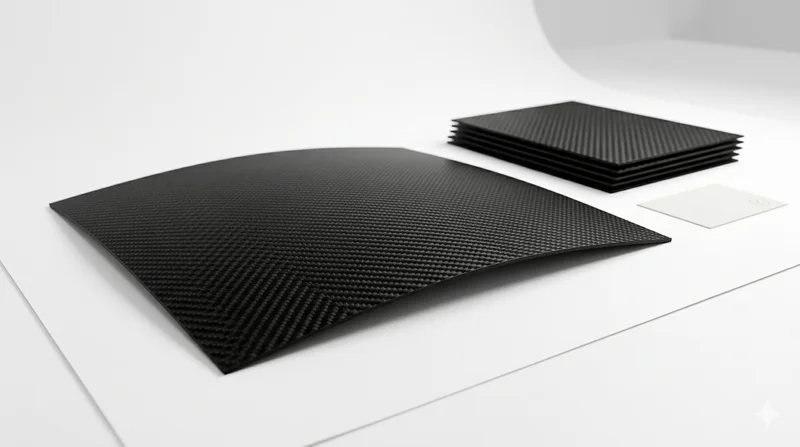
Carbon Fiber Plate — 3K Twill T700 1.5mm
Thin 1.5mm carbon fiber plate with 3K twill weave surface. Lightweight and stiff, commonly used for covers, panels, drone bodies, and applications requiring a premium aesthetic appearance.
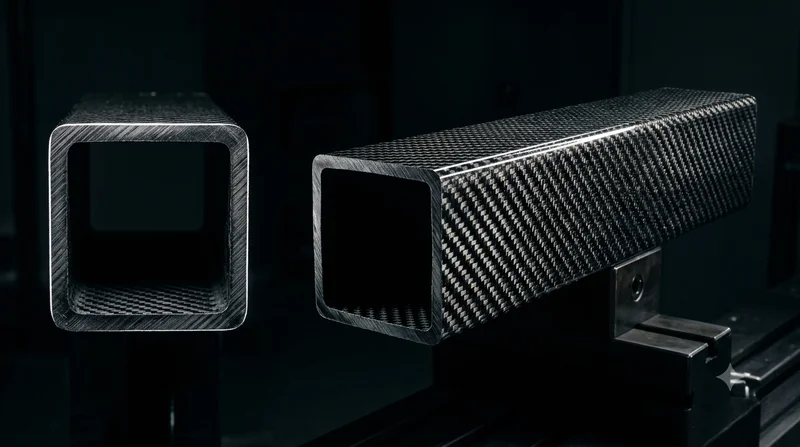
Square Carbon Fiber Tube — 3K Twill T700
Square cross-section carbon fiber tube manufactured with 3K twill weave for torsional strength. Preferred for structural frames, trusses, and support columns where rectangular geometry offers design flexibility.
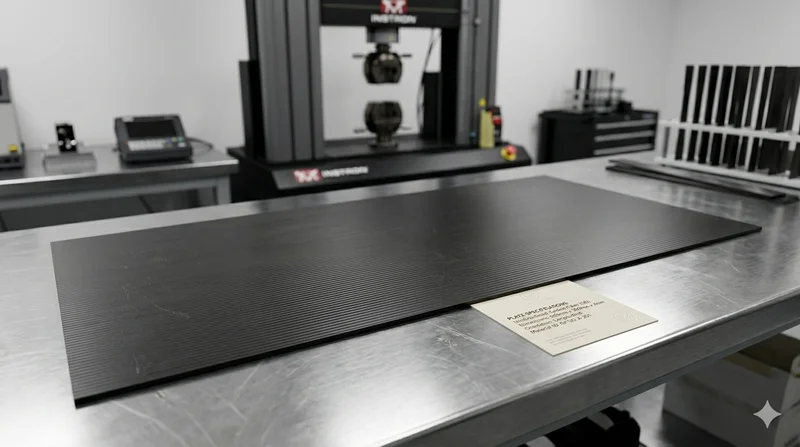
Carbon Fiber Plate — UD Unidirectional T700
Unidirectional carbon fiber plate with all fibers oriented in a single direction for maximum strength along the fiber axis. Essential for structural reinforcements, splints, and applications where load direction is predictable.
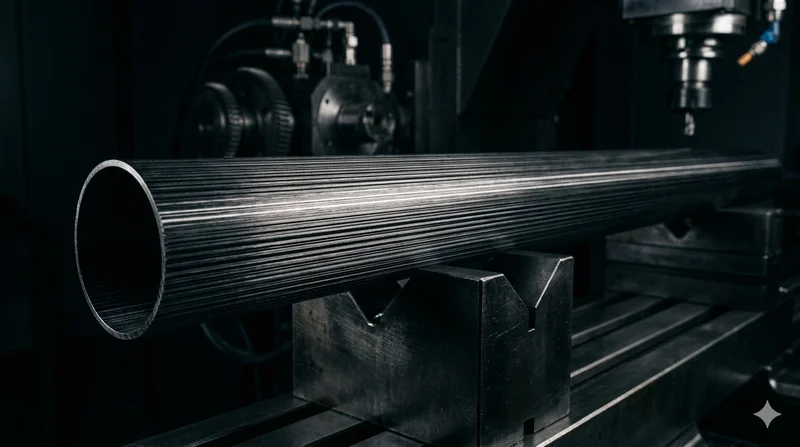
Round Carbon Fiber Tube — UD Unidirectional T700
Unidirectional (UD) round tube with all fibers aligned axially for maximum longitudinal stiffness. Ideal for applications requiring high bending rigidity with minimal weight, such as shafts, struts, and structural reinforcements.
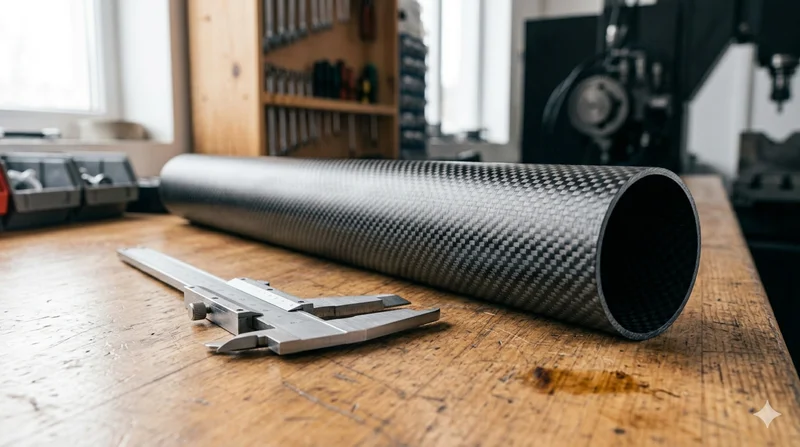
Round Carbon Fiber Tube — 3K Plain Weave T700
Standard round carbon fiber tube manufactured from Toray T700 grade fiber with 3K plain weave. Offers balanced strength and stiffness for general industrial applications including robotics, automation, sports equipment, and aerospace structures.