
Hydrogen trains are the most credible route to decarbonizing rail lines that cannot be electrified with overhead wires — tens of thousands of kilometers of track across Europe alone. The systems powering these trains are now well established: a fuel cell converts hydrogen and oxygen int
Introduction
Hydrogen trains are the most credible route to decarbonizing rail lines that cannot be electrified with overhead wires — tens of thousands of kilometers of track across Europe alone. The systems powering these trains are now well established: a fuel cell converts hydrogen and oxygen into electricity, electric motors drive the axles, and batteries buffer the peaks. What remains the hardest engineering problem is not the fuel cell but the storage. A fuel cell train must carry enough hydrogen for a full day of service, and every kilogram of hydrogen requires a storage system weighing many times more. The technology that solves this problem is the Type IV composite pressure vessel: a polymer liner wrapped in carbon fiber, storing hydrogen at 350 bar while keeping the storage system light enough for a rail vehicle.
This article examines how Type IV tanks work, why 350 bar is the rail standard, how tanks are integrated into fuel cell trains, and what the expanding fuel cell rail market means for carbon fiber suppliers.
Why Type IV Tanks Dominate Rail Hydrogen Storage
Hydrogen storage systems are rated by their gravimetric efficiency — the mass of hydrogen stored per unit of system mass, expressed as a percentage. The table below compares the leading storage technologies as applied to rail:
| Storage Technology | Typical Pressure | Gravimetric Efficiency | Rail Suitability |
|---|---|---|---|
| Type IV composite tank (carbon fiber) | 350 bar | 5.5-6.5% | Best balance of weight, volume, cost for rail |
| Type III composite tank (metal liner) | 350 bar | 4.0-5.0% | Suitable where liner durability matters more |
| Type IV composite tank (high pressure) | 700 bar | 4.5-5.5% | Heavier and costlier; used mainly in vehicles, not rail |
| Compressed steel / metal tanks | 200-350 bar | 1.5-3.0% | Too heavy for meaningful rail range |
| Liquid hydrogen (cryogenic) | ~1-6 bar | 8-15% (system) | Promising but complex; limited refueling infrastructure |
Type IV tanks win for rail because they deliver the best available compromise: at 350 bar a well-designed Type IV tank stores 5.5-6.5 percent hydrogen by total system mass, roughly double the efficiency of steel storage and comfortably ahead of Type III designs. The carbon fiber wrap does essentially all the structural work — the polymer liner only contains the gas — which concentrates strength and stiffness exactly where pressure loads are highest. For a train that must carry many kilograms of hydrogen, the difference between a 5.5 percent and a 2 percent gravimetric efficiency can be the difference between a full operating day and a mid-day refuel.
The Carbon Fiber Content of a Rail Tank
Carbon fiber dominates the material content of a Type IV tank, with significant consequences for its cost and supply chain:
- Fiber usage: A typical 350-bar rail tank uses approximately 7-10 kilograms of carbon fiber per kilogram of hydrogen capacity, varying with tank size, pressure, and safety factor.
- Fiber grade: Standard-modulus tow (typically 12K-24K) is the workhorse, wound in a hoop-and-helical pattern that evenly distributes load across the vessel geometry.
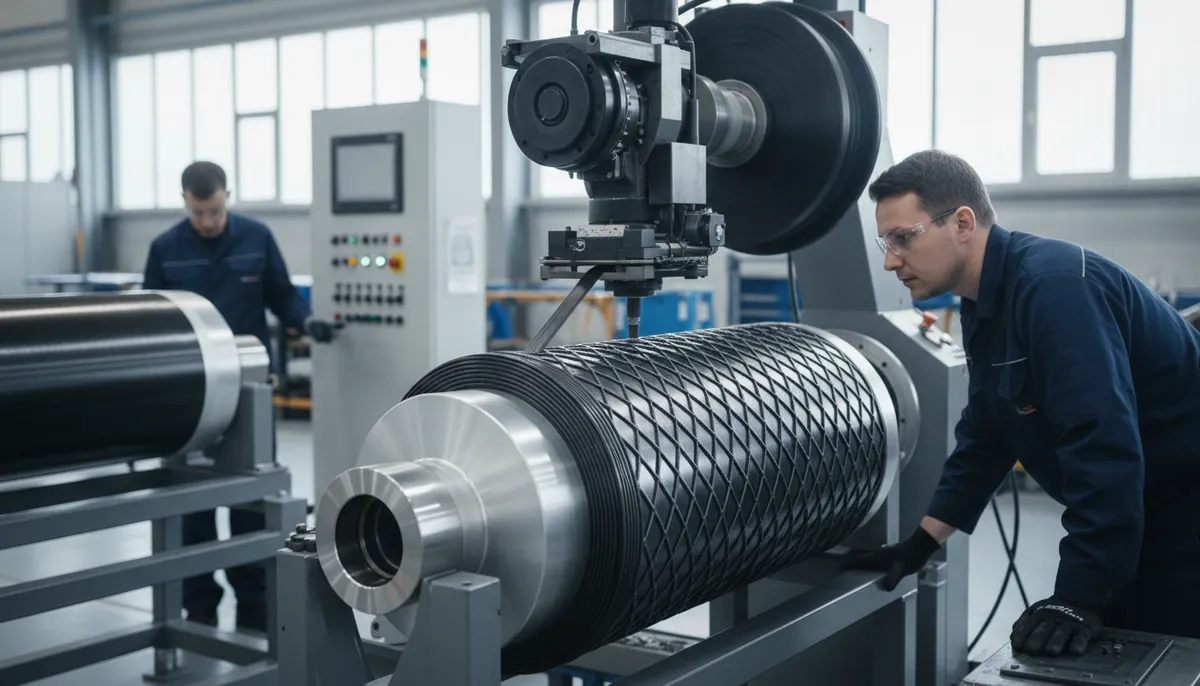
- Winding process: Filament winding, either wet or with towpreg, lays the fiber at controlled angles over the liner; automated winding lines process dozens of tanks per day at dedicated vessel plants.
- Boss and liner systems: Polymer liners (typically high-density polyethylene) with aluminum or steel bosses form the gas-tight barrier, while the carbon wrap carries the pressure load and the boss transmits it to the tank connection.
- Safety factor: Rail applications apply high design safety factors and lifetime cycle requirements, which in practice raise fiber content per tank compared with lighter-duty uses.
The result is that a fuel cell train with, say, 200-400 kilograms of hydrogen capacity carries roughly 1.5-3.5 tonnes of carbon fiber in its storage system — making rail hydrogen storage one of the largest single sinks for carbon fiber in the transport energy sector.
Fuel Cell Train Programs and Storage Integration
Fuel cell train deployments have matured from first demonstrations to series orders. The most significant programs show how storage is integrated into real rail vehicles:
- Germany's pioneer routes: Germany operated the first regular-service fuel cell trains on non-electrified lines, setting the pattern of roof-mounted compressed-hydrogen storage: tank modules are grouped on the roof above the fuel cells, allowing rapid refueling and avoiding intrusion into passenger space.
- European regional orders: France, Italy, and other markets have ordered fuel cell multiple units for regional corridors, with tank capacity sized to roughly 500-600 kilometers of daily range at 350 bar — a full day of regional service without refueling.
- Passenger and shunting duty: Beyond regional trains, fuel cell power is being applied to shunting locomotives, where hydrogen's refueling speed and zero-emission operation suit yard work, and to niche passenger applications.
- Asian programs: China, Japan, and South Korea are developing and deploying hydrogen trains, with Chinese programs advancing trams and regional units that use domestically produced Type IV vessels, reinforcing the global standardization of 350-bar rail storage.
Roof integration is the defining rail constraint. Tanks must fit within defined loading gauge envelopes, respect axle-load limits, and survive crash and mounting-load requirements that are stricter than automotive applications. Manufacturers solve this with modular tank frames — a structural skid carrying several tanks, piping, pressure relief devices, and sensors that mounts as a single unit — which is assembled and pressure-tested off the train, then craned into place. This modularity matters for carbon fiber suppliers because frames and tank arrays are specified as complete systems, meaning fiber is sold into a supply chain organized around vessel manufacturers and frame integrators rather than directly to train builders.
The Refueling and Standards Ecosystem
Rail hydrogen storage operates within a stricter standards environment than other transport modes. Pressure vessel directives and rail-specific safety rules apply to design, testing, and in-service inspection; adoption of the automotive hydrogen protocols (such as SAE J2601 for refueling) is common where interoperable 350-bar stations serve both buses and trains. Refueling speed is a practical constraint: 350-bar dispensing allows a train to refuel in roughly the 10-15 minutes typical between services, using the same nozzle and communication protocols as heavy-duty buses — one reason the rail industry converged on 350 bar rather than 700.
For tank production, the standards ecosystem translates directly into cost: certification of new tank designs, third-party testing, and quality documentation are significant expenses layered onto the fiber itself. This favors vessel manufacturers with tested designs and a track record of approvals, and it rewards suppliers whose carbon fiber comes with consistent batch properties and documented pedigree.
The Carbon Fiber Supply Opportunity
The fuel cell rail market is a genuine growth segment for carbon fiber, with characteristics that differ from wind and aerospace:
- Standard-modulus volume: Rail tanks use standard-modulus tow at industrial prices, not aerospace grades — a volume channel compatible with large-tow production economics.
- Steady, predictable demand: Tank orders are driven by train contracts that multiply into dozens of tanks per train, giving suppliers multi-year visibility.
- Global competition: Vessel manufacturers source fiber globally and price transparently, making cost-competitive certified fiber — including Chinese production — directly relevant.
- Entry timing: As fleets scale, the fiber demand curve is steepening; suppliers who qualify into vessel manufacturer supply chains now capture a decade of growth.
For suppliers, the entry point is qualification: meeting the mechanical, cyclic, and batch-consistency requirements of vessel manufacturers, then pricing competitively against the global fiber market. Markets with the fastest fleet growth — Europe's committed corridors and Asia's trams — are the best proving grounds.
Frequently Asked Questions
Why are Type IV tanks used for hydrogen trains?
Type IV tanks — a polymer liner wrapped in carbon fiber — offer the best gravimetric efficiency for rail duty, storing 5.5-6.5 percent hydrogen by total system mass at 350 bar. That is roughly double the efficiency of metal storage and enough to give a regional fuel cell train a full operating day of range without refueling.
How much carbon fiber is in a hydrogen train tank?
A 350-bar rail tank uses approximately 7-10 kilograms of carbon fiber per kilogram of hydrogen capacity. A train carrying 200-400 kilograms of hydrogen therefore holds roughly 1.5-3.5 tonnes of carbon fiber in its roof-mounted storage system.
What pressure do hydrogen trains store at, and why not 700 bar?
Rail hydrogen storage is standardized at 350 bar. The higher 700-bar pressure raises weight, cost, and refueling complexity without range benefit for rail, and 350-bar dispensing interoperability with heavy-duty buses allows a train to refuel within typical turnaround times.
How is hydrogen storage integrated into fuel cell trains?
Tanks are grouped in modular roof frames — structural skids carrying tanks, piping, pressure relief devices, and sensors that are assembled and tested off the train, then mounted as a unit. This satisfies rail gauge, axle-load, and crash requirements while enabling rapid refueling between services.
Conclusion
Type IV carbon fiber tanks are the enabling technology for fuel cell rail. They deliver the storage mass efficiency that makes hydrogen-powered trains practical over a full service day, and they are now standardized at 350 bar across Europe and Asia as fuel cell fleets move from demonstration to series deployment. For the carbon fiber industry, rail hydrogen storage means tens of tonnes of standard-modulus fiber per train program, procured through vessel manufacturers and frame integrators on multi-year, volume-predictable contracts. As the world's non-electrified rail lines convert to hydrogen, the supply chain that delivers certified, consistent, competitively priced carbon fiber to tank manufacturers will ride the same growth curve.
YongXian supplies carbon fiber tow suitable for Type IV pressure vessel winding, with batch-consistent mechanical properties and documented pedigree. Explore our carbon fiber product range or contact our team to discuss specifications for hydrogen storage and rail applications.
Part of topic
Related Articles
- Carbon Fiber Rod Grips: Ergonomic Handle Design for Industrial and Sport Applications
- Carbon Fiber Propellers for Drones: Efficiency, Durability and Performance Optimization
- Carbon Fiber Tube for Sale: Comparing Listings and Avoiding Bad Specs
- Carbon Fiber Engine Parts: High-Temperature Performance for Racing and Performance Vehicles
- Carbon Fiber Body Parts: Automotive Exterior Panels and Structural Components
- Carbon Fiber Drone Body Manufacturing: Monocoque Design and Production Methods
Interested in Our Products?
Contact our team for competitive pricing and technical specifications.
Get a QuoteRelated Products

Carbon Fiber Plate — 3K Twill T700 1.5mm
Thin 1.5mm carbon fiber plate with 3K twill weave surface. Lightweight and stiff, commonly used for covers, panels, drone bodies, and applications requiring a premium aesthetic appearance.

Square Carbon Fiber Tube — 3K Twill T700
Square cross-section carbon fiber tube manufactured with 3K twill weave for torsional strength. Preferred for structural frames, trusses, and support columns where rectangular geometry offers design flexibility.
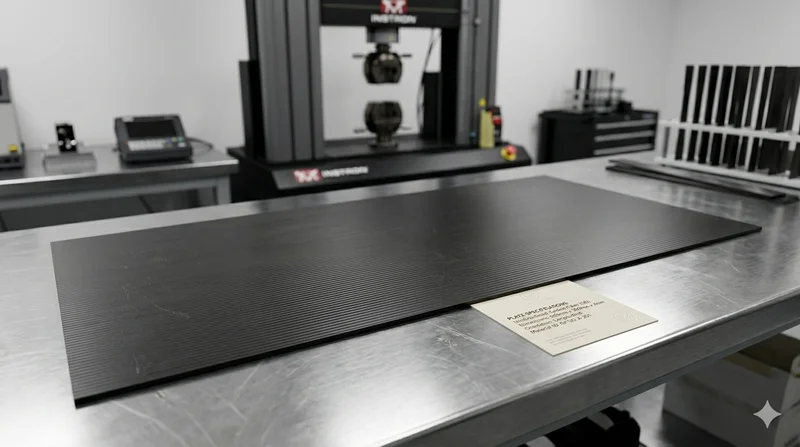
Carbon Fiber Plate — UD Unidirectional T700
Unidirectional carbon fiber plate with all fibers oriented in a single direction for maximum strength along the fiber axis. Essential for structural reinforcements, splints, and applications where load direction is predictable.
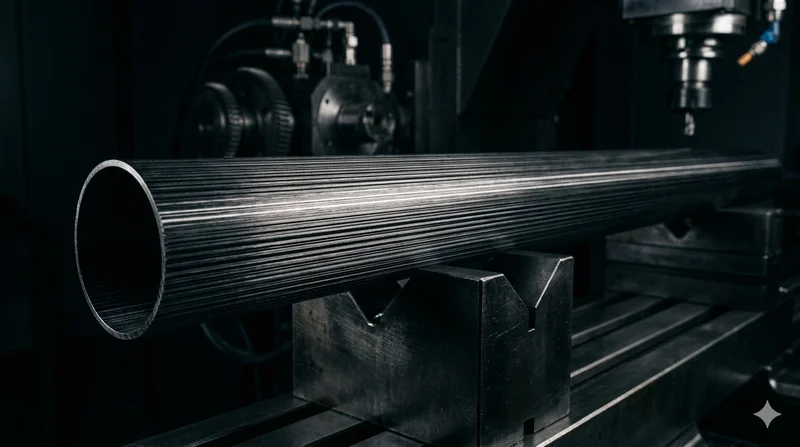
Round Carbon Fiber Tube — UD Unidirectional T700
Unidirectional (UD) round tube with all fibers aligned axially for maximum longitudinal stiffness. Ideal for applications requiring high bending rigidity with minimal weight, such as shafts, struts, and structural reinforcements.
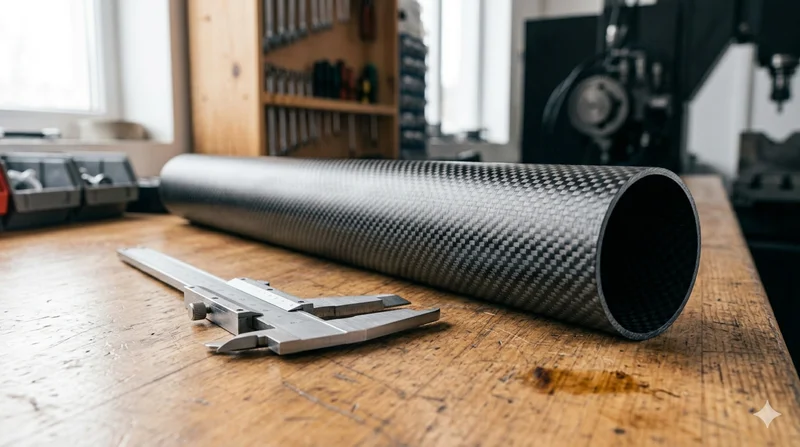
Round Carbon Fiber Tube — 3K Plain Weave T700
Standard round carbon fiber tube manufactured from Toray T700 grade fiber with 3K plain weave. Offers balanced strength and stiffness for general industrial applications including robotics, automation, sports equipment, and aerospace structures.