
Modulus describes the stiffness of the carbon fiber used in the blank. A higher modulus carbon fiber fishing rod can improve sensitivity and speed, which helps with lure control and bite detection. The tradeoff is that stiffness without a balanced layup may reduce tolerance to knocks or overload. Ac
Modulus and action in a carbon fiber fishing rod
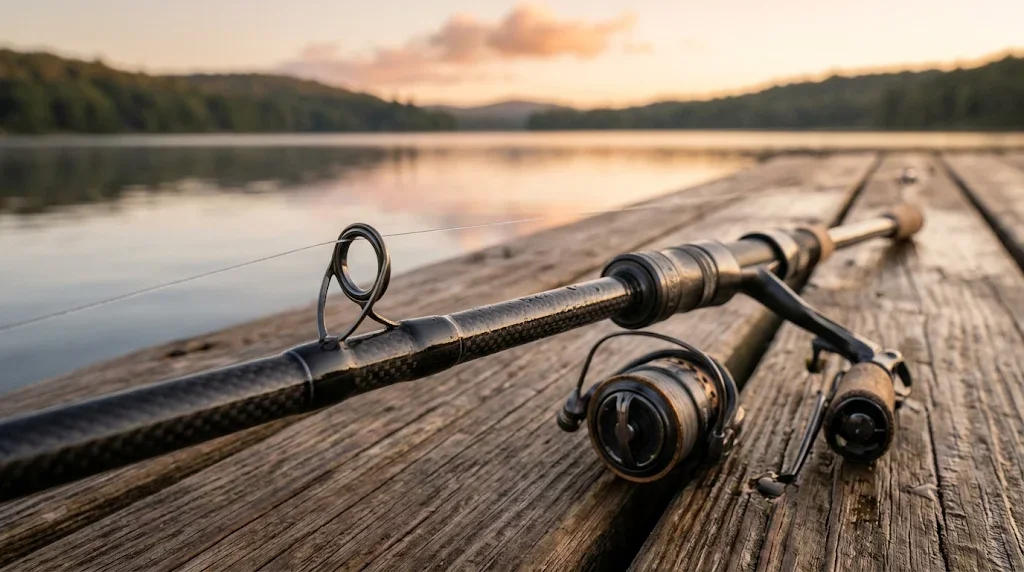
Modulus describes the stiffness of the carbon fiber used in the blank. A higher modulus carbon fiber fishing rod can improve sensitivity and speed, which helps with lure control and bite detection. The tradeoff is that stiffness without a balanced layup may reduce tolerance to knocks or overload. Action describes where the rod bends: fast action concentrates flex near the tip, while moderate or slower actions bend deeper into the blank. Power describes lifting strength. A good carbon fiber fishing rod choice comes from combining modulus, action, power, and lure rating rather than chasing the highest advertised number.
Manufacturers often blend fiber layers in different orientations to balance recovery, hoop strength, and impact resistance. That is why two rods with similar labels can feel different. When possible, test casting feel, balance with the intended reel, and how the blank responds under load. When evaluating any carbon fiber fishing rod, compare the complete system rather than one specification. Blank design, component quality, and user handling determine whether the rod feels refined or fragile. A careful buying process also includes checking warranty terms, spare tip availability, shipping protection, and after-sales support. For brands and retailers, sample testing across multiple anglers can reveal whether the action rating and power label match real use. Consistent labeling reduces returns and improves trust.
Guides and component quality
| Component | What to inspect | Impact on use |
|---|---|---|
| Guide rings | Material, smoothness, cracks | Line friction, casting distance, wear |
| Guide frames | Strength, corrosion resistance, alignment | Durability in transport and saltwater |
| Reel seat | Locking stability, fit, materials | Comfort and power transfer |
| Handle | Grip, length, balance point | Control during long sessions |
| Ferrules | Fit on multi-piece rods | Action consistency and reliability |
| Finish and wraps | Epoxy coverage, alignment, defects | Service life and appearance |
Durability risks for a carbon fiber fishing rod
Carbon fiber offers excellent stiffness-to-weight performance, but a carbon fiber fishing rod can still be damaged by point impacts, misuse, or poor storage. Hitting the blank against a boat edge, rod locker, car door, or hard lure can create hidden damage. High-sticking during a fight can overload the tip section. In saltwater environments, hardware and guide frames need rinsing and drying. Durability should be understood as a combination of design, component selection, and user habits. A rugged-looking carbon fiber fishing rod still benefits from careful handling.
- Use the carbon fiber fishing rod within its rated lure and line range.
- Check guide inserts and frames before each trip.
- Transport the rod in a tube or sleeve to avoid impact damage.
- Rinse saltwater off guides, reel seat, and wraps after use.
- Avoid lifting fish by sharply bending the tip section.
Choosing by fishing scenario
For finesse presentations, anglers often prefer a sensitive carbon fiber fishing rod that communicates subtle movement. For heavy cover, larger fish, or aggressive hook sets, backbone and component strength become more important. Travel anglers may choose multi-piece designs, but joint fit should be precise so the action remains consistent. Kayak and boat anglers should consider rod length and storage constraints. For retail or OEM buyers, consistency matters: weight, balance, finish, and rating labels should be stable across batches so customers receive the performance they expect from the same carbon fiber fishing rod model.
It is also helpful to define acceptance criteria before bulk ordering. Sample rods can be checked for straightness, guide alignment, cosmetic finish, label accuracy, and balance. Field testing with the intended line and lure range reveals whether the product description matches real use.
Buying and quality control notes
For individual anglers, buying a carbon fiber fishing rod is about matching feel and technique. For brands, retailers, and OEM programs, the process should also include acceptance criteria. Check sample straightness, guide alignment, weight range, balance, cosmetic finish, label accuracy, and packaging. Field testing with different users can reveal whether the rated action and power match real expectations. A stable carbon fiber fishing rod product depends on controlled materials, assembly quality, and consistent inspection, not only on a good prototype.
- Compare samples with the same reel, line, and lure range.
- Inspect wraps, epoxy coverage, and hardware fit.
- Verify that rating labels match actual use.
- Review shipping protection to reduce transit damage.
- Use field feedback to refine future batches.
Frequently asked questions
Is a higher modulus carbon fiber fishing rod always the best choice?
Not always. A higher modulus carbon fiber fishing rod can feel more sensitive and responsive, but impact tolerance and overall balance depend on the full blank design. Choose based on technique, target fish, and handling conditions.
Do guides really change how a rod performs?
Yes. Guide size, ring material, spacing, and alignment affect casting smoothness, friction, line wear, and reliability. A well-made carbon fiber fishing rod needs quality components, not just a good blank.
How can I extend the life of my carbon fiber fishing rod?
Stay within the rated range, avoid impacts and high-sticking, inspect components, and store the rod safely. After saltwater use, rinse and dry the carbon fiber fishing rod to protect hardware and wraps.
For composite material support or product discussions related to fishing equipment, contact Yongxian.
Part of topic
Related Articles
- Carbon Fiber Composite Core Repair Service: Damage Assessment and Return to Service
- 4mm carbon fiber drone frame: When the Extra Wall Thickness Pays Off
- What One Carbon Fiber Plate Means in Shoe Specs
- Carbon Fiber Rods for Fishing: Blank Selection for Builders
- Carbon Fiber Toe Plates: Rocker Design in Footwear
- Carbon Fiber Drones (carbon fiber drones): Airframes, Payloads, and Cost Impact
Interested in Our Products?
Contact our team for competitive pricing and technical specifications.
Get a QuoteRelated Products

Round Carbon Fiber Tube — 3K Plain Weave T700
Standard round carbon fiber tube manufactured from Toray T700 grade fiber with 3K plain weave. Offers balanced strength and stiffness for general industrial applications including robotics, automation, sports equipment, and aerospace structures.

Round Carbon Fiber Tube — 3K Twill
Lightweight and ultra-stiff round tubes ideal for drone frames, robotics, and structural applications.

Round Carbon Fiber Tube — UD Unidirectional T700
Unidirectional (UD) round tube with all fibers aligned axially for maximum longitudinal stiffness. Ideal for applications requiring high bending rigidity with minimal weight, such as shafts, struts, and structural reinforcements.

Carbon Fiber Plate — 3K Twill T700 3.0mm
Medium-thickness 3.0mm carbon fiber plate offering significantly higher load capacity while maintaining attractive 3K twill finish. Suitable for structural brackets, reinforcement plates, and load-bearing panels.

Square Carbon Fiber Tube — 3K Twill T700
Square cross-section carbon fiber tube manufactured with 3K twill weave for torsional strength. Preferred for structural frames, trusses, and support columns where rectangular geometry offers design flexibility.