
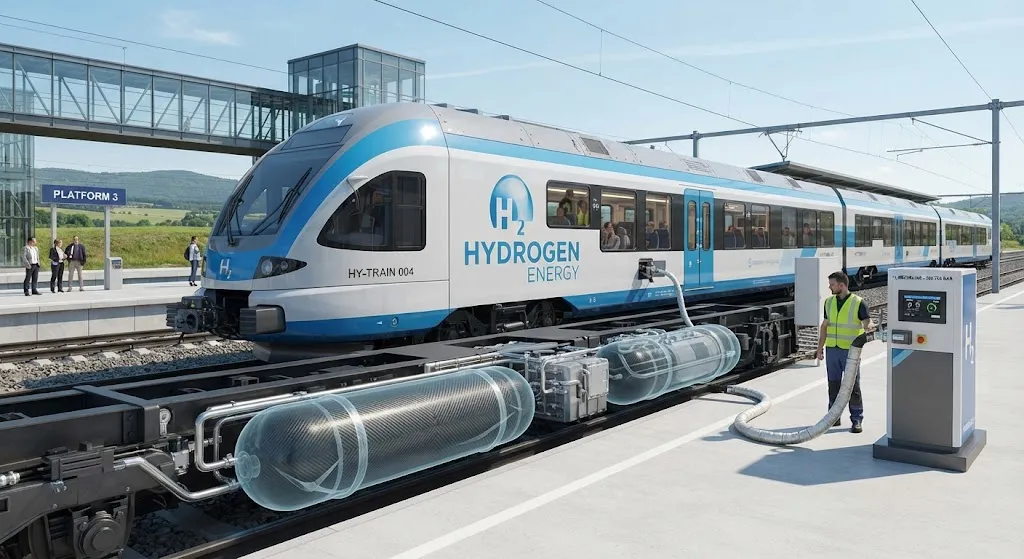
Hydrogen-powered trains require lightweight carbon fiber composite storage tanks to maximize range while meeting stringent rail safety standards. This article covers tank design, certification requirements, and deployment experience from European hydrogen train programs.
Introduction
Hydrogen-powered trains represent a promising pathway for decarbonizing rail routes that cannot be easily electrified with overhead catenary systems. These trains carry hydrogen fuel in high-pressure composite storage tanks, typically operating at 350-700 bar, to power fuel cells that generate electricity for traction. Carbon fiber reinforced polymer (CFRP) composite tanks are essential for hydrogen trains because they provide the weight savings needed to maximize range while meeting the demanding safety requirements of rail transport.
Several European rail operators have deployed hydrogen trains in revenue service, demonstrating the viability of CFRP hydrogen storage for rail applications. These programs provide valuable experience in tank design, certification, maintenance, and refueling infrastructure.
Tank Design Requirements
Hydrogen storage tanks for rail applications must satisfy unique requirements:
High-pressure containment: Tanks must safely contain hydrogen at 350-700 bar operating pressure, with burst pressures of 2-3x operating pressure to demonstrate adequate safety margins. CFRP overwrap provides the hoop and longitudinal strength needed for high-pressure containment.
Weight optimization: Every kilogram of tank weight directly reduces payload capacity or increases energy consumption. CFRP tanks offer 50-60% weight savings compared to all-metal alternatives, enabling practical hydrogen storage volumes for rail applications.
Volume efficiency: Train underfloor and roof mounting locations impose geometric constraints that require optimized tank shapes. Cylindrical and toroidal tank configurations maximize storage volume within available space.
Safety certification: Rail tanks must comply with international standards — EN 12245, ISO 19880, and national railway regulations — that specify design, testing, and manufacturing requirements for hydrogen storage systems in rail vehicles.
Material Systems
Rail hydrogen tanks use specialized CFRP material systems:
Fiber selection: High-strength carbon fibers (T700, T800) provide the tensile strength needed for high-pressure containment with adequate strain capability for fatigue resistance. Fiber volume fractions of 55-65% optimize the strength-to-weight ratio.
Resin systems: Toughened epoxy resins with high glass transition temperature and low moisture absorption are standard. The resin system must demonstrate compatibility with hydrogen permeation requirements and thermal cycling performance.
Liner materials: Type III tanks use aluminum liners, while Type IV tanks use polymer liners (high-density polyamide or polyethylene). Both provide hydrogen permeation barriers while accommodating differential thermal expansion between the liner and CFRP overwrap.
Deployment Experience
European hydrogen train programs provide operational experience:
Alstom Coradia iLint: The world's first hydrogen-powered passenger train has operated in revenue service in Germany since 2022, using CFRP Type IV tanks mounted under the train floor. Operational experience demonstrates reliable hydrogen storage with maintenance intervals compatible with rail service requirements.
Refueling infrastructure: Hydrogen refueling stations for rail applications must deliver large volumes (hundreds of kilograms) in short time windows (15-30 minutes) to maintain train schedules. CFRP tube trailers provide hydrogen transport from production facilities to rail refueling points.
Conclusion
Carbon fiber composite hydrogen storage tanks are essential enabling technology for zero-emission rail transport. As hydrogen train programs expand across Europe and Asia, CFRP tank technology will continue to evolve, with improvements in weight efficiency, cost reduction, and manufacturing scalability supporting the broader adoption of hydrogen rail solutions.
Part of topic
Related Articles
- Carbon Fiber Mooring for Floating Offshore Wind: Fatigue and Corrosion in Deep Water
- Carbon Fiber Bicycle Frame Optimization: Layup Design and Manufacturing for Competitive Racing
- Carbon Fiber CFRP Retrofit for Infrastructure: Bridge and Building Seismic Strengthening
- Carbon Fiber Medical Imaging Equipment: Lightweight Gantry and Couch Structures for MRI/CT
- Carbon Fiber EV Battery Enclosures: Crash Safety and Electromagnetic Shielding Design
- Carbon Fiber Structures for Low-Altitude Economy: UAV Airframes and eVTOL Components
Interested in Our Products?
Contact our team for competitive pricing and technical specifications.
Get a QuoteRelated Products

Carbon Fiber Plate — 3K Twill T700 1.5mm
Thin 1.5mm carbon fiber plate with 3K twill weave surface. Lightweight and stiff, commonly used for covers, panels, drone bodies, and applications requiring a premium aesthetic appearance.

Carbon Fiber Plate — 3K Twill T700 3.0mm
Medium-thickness 3.0mm carbon fiber plate offering significantly higher load capacity while maintaining attractive 3K twill finish. Suitable for structural brackets, reinforcement plates, and load-bearing panels.

Square Carbon Fiber Tube — 3K Twill T700
Square cross-section carbon fiber tube manufactured with 3K twill weave for torsional strength. Preferred for structural frames, trusses, and support columns where rectangular geometry offers design flexibility.
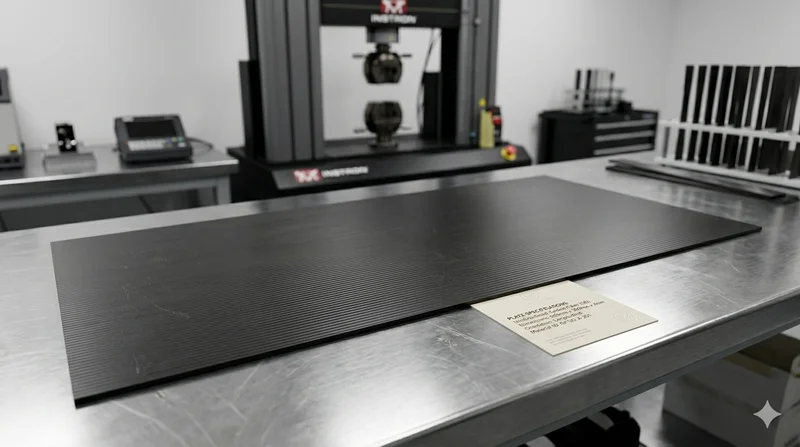
Carbon Fiber Plate — UD Unidirectional T700
Unidirectional carbon fiber plate with all fibers oriented in a single direction for maximum strength along the fiber axis. Essential for structural reinforcements, splints, and applications where load direction is predictable.
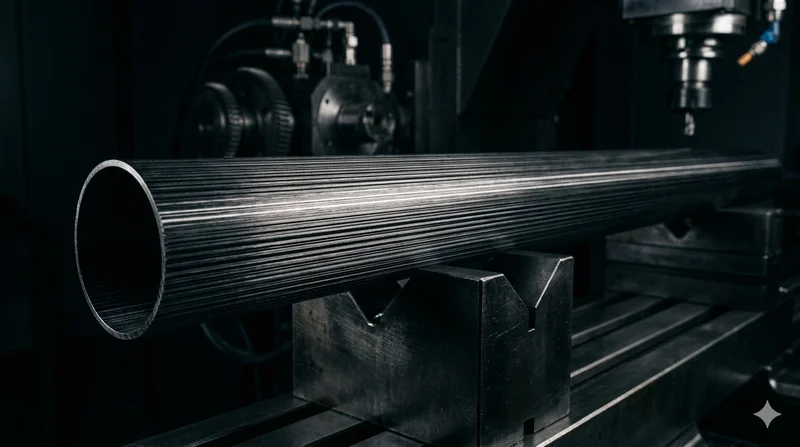
Round Carbon Fiber Tube — UD Unidirectional T700
Unidirectional (UD) round tube with all fibers aligned axially for maximum longitudinal stiffness. Ideal for applications requiring high bending rigidity with minimal weight, such as shafts, struts, and structural reinforcements.