
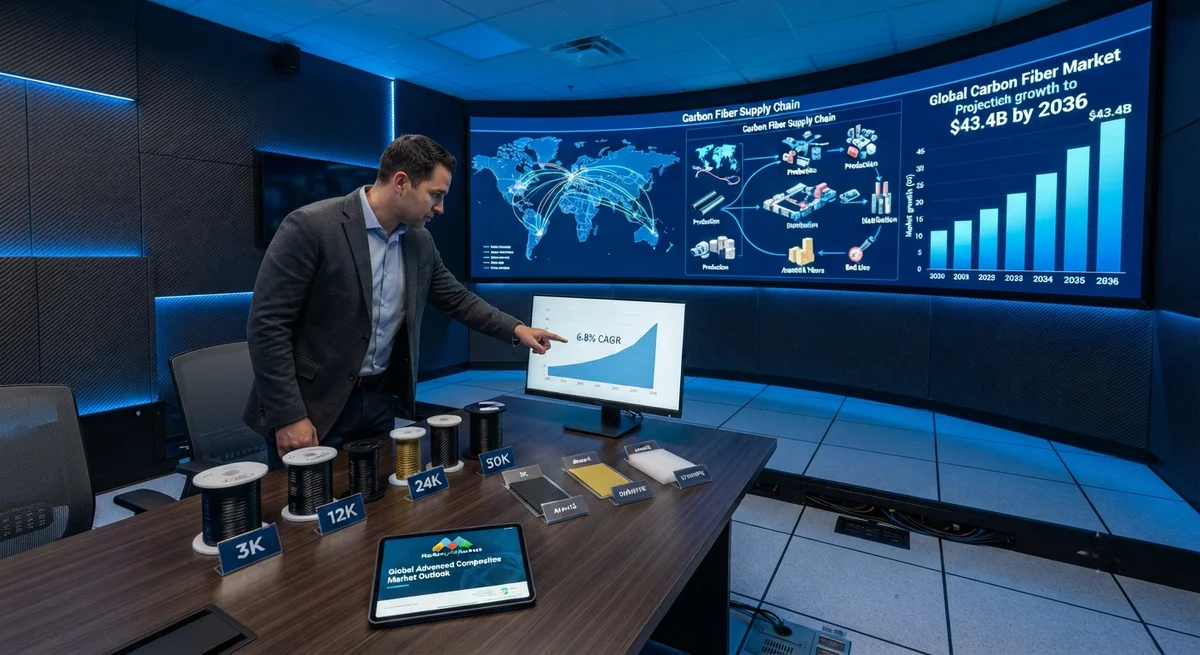
The global high-performance fiber market is projected to grow from $21.8 billion in 2025 to $43.4 billion by 2036 at a CAGR of 6.8%, with carbon fiber capturing the largest value share at 38% of total market revenue. This article analyses the key growth drivers — aerospace lightweighting, electric vehicle adoption, wind energy expansion — and provides market segmentation data by fiber type, application, and region for B2B strategic planning.
Market Overview: A $43.4 Billion Opportunity by 2036
The global high-performance fiber market is undergoing a period of sustained structural growth driven by megatrends in aerospace lightweighting, electric vehicle (EV) mass reduction, renewable energy infrastructure, and defence modernisation. According to the latest comprehensive market analysis published by MarketsandMarkets in Q2 2026, the total high-performance fiber market — encompassing carbon fiber, aramid fiber, ultra-high molecular weight polyethylene (UHMWPE), glass fiber (specialty grades), polybenzoxazole (PBO), and ceramic fibers — is projected to expand from an estimated $21.8 billion in 2025 to $43.4 billion by 2036, representing a compound annual growth rate (CAGR) of 6.8% in nominal terms.
Within this expanding landscape, carbon fiber occupies a uniquely dominant position. Despite accounting for only approximately 12–15% of total high-performance fiber tonnage, carbon fiber commands the largest value share at an estimated 38% of total market revenue in 2025 — approximately $8.3 billion — driven by its premium pricing ($18–55/kg for standard modulus, $60–200+/kg for intermediate and high modulus grades) and its irreplaceable role in weight-critical structural applications across aerospace, defence, and high-end automotive sectors. This article provides B2B buyers, procurement professionals, and strategic planners with detailed market segmentation data, growth forecasts by fiber type and application, regional analysis, and actionable insights for carbon fiber sourcing strategy through 2032.
Market Segmentation by Fiber Type
| Fiber Type | 2025 Market Value ($B) | 2036 Market Value ($B) | CAGR (2025–2036) | Value Share 2036 | Key Growth Driver |
|---|---|---|---|---|---|
| Carbon Fiber (PAN-based) | $8.3 | $17.8 | 7.2% | 41.0% | Aerospace production ramp, EV lightweighting |
| Carbon Fiber (Pitch-based) | $0.5 | $1.1 | 7.5% | 2.5% | Semiconductor equipment, thermal management |
| Aramid (Para- and Meta-) | $4.1 | $7.6 | 5.8% | 17.5% | Ballistic protection, automotive hoses |
| UHMWPE Fiber | $2.3 | $5.4 | 8.1% | 12.4% | Marine ropes, cut-resistant gloves |
| Specialty Glass Fiber (S-Glass, R-Glass) | $2.8 | $4.9 | 5.2% | 11.3% | Wind turbine blades, aerospace secondary structures |
| PBO and Heterocyclic Polymers | $0.6 | $1.5 | 8.7% | 3.5% | Firefighting suits, high-temperature industrial fabrics |
| Ceramic Fibers (oxide and non-oxide) | $1.2 | $2.4 | 6.5% | 5.5% | CMC (ceramic matrix composites) for jet engines |
| Other (Basalt, PPS, PTFE, etc.) | $2.0 | $2.7 | 2.8% | 6.2% | Construction reinforcement, filtration |
| Total | $21.8 | $43.4 | 6.8% | 100% | — |
The data reveals that carbon fiber (PAN-based) alone is projected to nearly double in market value from $8.3 billion to $17.8 billion over the forecast period, maintaining and slightly increasing its dominant value share from 38% to 41%. This growth outpaces the broader market average (7.2% vs 6.8% CAGR), driven by accelerating adoption in aerospace production, commercial aviation backlogs, and the structural lightweighting requirements of next-generation EV platforms. Pitch-based carbon fiber, while comprising a much smaller market ($1.1 billion by 2036), shows a slightly higher CAGR of 7.5%, reflecting growing demand from semiconductor manufacturing equipment — where carbon fiber's high thermal conductivity (500–800 W/m·K for pitch-based grades) and near-zero thermal expansion are critical for precision wafer handling.
Application Segment Analysis
| Application | 2025 Carbon Fiber Demand (tonnes) | 2036 Carbon Fiber Demand (tonnes) | CAGR | Key Growth Factor |
|---|---|---|---|---|
| Aerospace & Defence | 28,500 | 52,000 | 5.6% | Boeing 737 MAX recovery, A350 production rate increase, next-gen fighter programmes |
| Automotive (inc. EVs) | 16,800 | 42,000 | 8.7% | EV battery enclosure lightweighting, structural battery packs, Class A body panels |
| Wind Energy | 22,000 | 48,500 | 7.5% | Offshore wind 15+ MW turbines requiring 80–115 m carbon spar caps |
| Sports & Leisure | 11,500 | 18,000 | 4.2% | Premium bicycle market growth, golf shaft performance demand |
| Pressure Vessels (hydrogen) | 6,200 | 24,000 | 13.1% | Type IV and Type V hydrogen storage tank production scale-up |
| Construction & Infrastructure | 5,800 | 14,500 | 8.6% | CFRP rebar adoption in marine concrete, seismic retrofit |
| Marine & Maritime | 3,200 | 6,100 | 6.0% | Superyacht construction, naval vessel lightweighting |
| Industrial (Rolls, Winding) | 4,500 | 7,800 | 5.1% | High-speed machinery rollers, textile machinery |
| Other | 4,400 | 8,100 | 5.7% | Medical devices, electronics, 3D printing filaments |
| Total | 102,900 | 221,000 | 7.2% | — |
Three application segments deserve particular attention from B2B carbon fiber buyers:
- Pressure vessels (hydrogen storage) — 13.1% CAGR: This is the fastest-growing application segment for carbon fiber, driven by global hydrogen infrastructure investments exceeding $320 billion announced through 2030. Each Type IV 350-bar hydrogen storage tank requires 75–120 kg of carbon fiber; Type V (fully composite linerless) tanks require 100–160 kg per unit. With heavy-duty truck OEMs including Daimler Truck, Hyundai, and Tesla's Semi programme all announcing hydrogen fuel cell variants, the demand for high-strength, intermediate-modulus carbon fiber for filament winding is projected to more than triple from 6,200 tonnes in 2025 to 24,000 tonnes by 2036.
- Automotive/EV — 8.7% CAGR: The shift from carbon fiber as a luxury/supercar material to a mainstream EV structural material is the defining trend of this segment. Tesla's Cybertruck structural body panels, BYD's carbon fiber battery enclosure cover (integrated crash structure reducing pack weight by 25%), and multiple OEM battery tray programmes driving demand for rapid-cure prepreg systems with cycle times under 5 minutes. By 2030, automotive is expected to overtake aerospace as the largest carbon fiber-consuming sector by tonnage.
- Construction & Infrastructure — 8.6% CAGR: CFRP rebar and structural strengthening systems are moving from niche to mainstream in North American and European infrastructure markets. The U.S. Infrastructure Investment and Jobs Act ($1.2 trillion, including $550 billion in new spending) includes specific provisions for corrosion-resistant reinforcement in bridge and waterfront projects. CFRP rebar demand alone is projected to grow from approximately 3,500 tonnes in 2025 to over 9,000 tonnes by 2032 in North America.
Regional Market Analysis
| Region | 2025 Carbon Fiber Demand (tonnes) | 2036 Forecast (tonnes) | CAGR | Share of Global 2036 | Dominant Driver |
|---|---|---|---|---|---|
| North America | 32,000 | 65,000 | 6.6% | 29.4% | Aerospace OEMs, hydrogen storage, defence procurement |
| Europe | 28,500 | 57,000 | 6.5% | 25.8% | Wind turbine manufacturing, automotive OEM, Airbus supply chain |
| Asia-Pacific (ex. China) | 18,000 | 43,000 | 8.2% | 19.5% | Japan carbon fiber production, South Korea hydrogen economy, India defence |
| China | 22,500 | 52,000 | 8.0% | 23.5% | Domestic aerospace (COMAC C919), wind energy, EV production |
| Middle East & Africa | 1,200 | 2,800 | 8.0% | 1.3% | Oil & gas composite pipe repair, desalination infrastructure |
| South America | 700 | 1,200 | 5.0% | 0.5% | Embraer aerospace supply chain, mining equipment |
China merits particular attention from global B2B buyers. As the world's largest carbon fiber producer by installed capacity (estimated 145,000 tonnes/year of PAN-based precursor-equivalent capacity as of Q1 2026, representing approximately 42% of global capacity), China is simultaneously the fastest-growing consumer market. The convergence of domestic capacity expansion, technology upgrading from standard modulus to intermediate modulus grades, and government-priority programmes in aerospace (COMAC C919 and C929), wind energy, and hydrogen infrastructure creates both supply opportunities and competitive dynamics for international buyers.
Supply-Demand Balance and Pricing Outlook
The high-performance fiber market faces a nuanced supply-demand picture through 2030. On the supply side, global carbon fiber production capacity has expanded rapidly — from approximately 120,000 tonnes/year in 2020 to an estimated 345,000 tonnes/year of nameplate capacity in 2026. However, effective capacity (taking into account production line utilisation rates, grade changeover losses, and qualification qualification lead times) is estimated at 240,000–270,000 tonnes/year. With total demand projected at 103,000 tonnes in 2025 growing to 221,000 tonnes by 2036, the market is broadly in balance through 2028–2029, but significant tightness is expected in intermediate modulus (IM) grades (330–400 GPa modulus) required for aerospace primary structures and hydrogen pressure vessels.
Key pricing trends for B2B buyers to monitor:
- Standard modulus (SM) carbon fiber (230–240 GPa): $18–23/kg in China, $22–28/kg in rest of world. Stable to gently declining as Chinese capacity additions outpace demand growth. Expect $16–20/kg by 2028 for large-volume contracts (>500 tonnes/year).
- Intermediate modulus (IM) carbon fiber (290–400 GPa): $40–70/kg globally. Supply-constrained with aerospace and hydrogen pressure vessel demand competing for limited IM-grade capacity. Prices expected to remain elevated ($45–75/kg) through 2030 until new IM-grade production lines (Toray's France expansion, Zoltek's Mexico facility, Sinofibers Technology's new lines) come online.
- High modulus (HM) and ultra-high modulus (UHM) grades: $80–200+/kg, stable to increasing due to niche demand from semiconductor equipment, satellite structures, and premium automotive applications. Limited capacity expansion planned — pricing may increase 10–15% in real terms through 2030.
- Pitch-based CF (high thermal conductivity): $200–800/kg depending on thermal conductivity grade (400–800+ W/m·K). Stable, limited market size ($1.1 billion by 2036).
- Recycled carbon fiber: $12–20/kg in 2026, down from $18–28/kg in 2023 as commercial-scale recycling operations (ELG Carbon Fibre, Gen 2 Carbon, Vartega) expand capacity. Applicable primarily in non-structural applications (automotive interior panels, construction fillers, compounding) where mechanical properties of 70–85% of virgin fiber are acceptable.
Strategic Implications for B2B Buyers
- Secure IM-grade supply early: With IM-grade carbon fiber expected to be the tightest segment through 2030, B2B buyers with hydrogen pressure vessel or aerospace structural applications should negotiate 3–5 year supply agreements with fixed price escalation clauses (3–5% annually) rather than relying on spot purchases.
- Evaluate Chinese supply options: Chinese carbon fiber manufacturers (Zhongfu Shenying, Jiangsu Hengshen, Sinofibers Technology, YongXian CarbonFiber's strategic partners) offer SM-grade carbon fiber at 20–40% below non-Chinese producer pricing. However, buyers must factor in USITC Section 301 tariffs (25% on Chinese CF imports to the US), EU anti-dumping duties (currently under investigation), and end-user certification requirements for aerospace and defence applications.
- Plan for recycled-content specifications: By 2030–2032, EU and US regulatory frameworks (EU's Sustainable Products Regulation, California's SB 253 climate disclosure rules) will increasingly require minimum recycled content in manufactured products. B2B buyers should qualify recycled carbon fiber sources now for non-structural and semi-structural applications to ensure compliance readiness.
- Monitor hydrogen storage as a demand disruptor: At 13.1% CAGR, hydrogen storage could absorb 24,000 tonnes of carbon fiber by 2036 — equivalent to 11% of total projected demand. Any acceleration in heavy-duty truck or stationary hydrogen storage deployment could tighten the IM-grade market further.
Frequently Asked Questions
Q: What is driving the 6.8% CAGR in the high-performance fiber market?
A: Four primary drivers underpin this growth: (1) Aerospace production recovery — Boeing and Airbus combined backlog exceeding 14,000 aircraft as of mid-2026, each widebody containing 25–50 tonnes of carbon fiber (A350: 53% composites by weight); (2) Electric vehicle structural lightweighting — the shift from steel uni-body to multi-material architectures incorporating CFRP battery enclosures, with each EV battery pack requiring 15–40 kg of carbon fiber for structural components; (3) Wind energy — offshore wind turbine blades exceeding 115 metres in length (Vestas V236-15.0 MW, Siemens Gamesa SG 14-236 DD) requiring carbon fiber spar caps as a weight-constrained design necessity, not a performance luxury; (4) Hydrogen infrastructure investment — over 1,200 hydrogen refuelling stations under construction or planned globally, each with Type IV or Type V storage requirements, plus the heavy-duty truck tank market.
Q: How does the carbon fiber market growth compare to other high-performance fibers?
A: Carbon fiber (PAN-based) at 7.2% CAGR outpaces the overall market average of 6.8% and significantly exceeds aramid (5.8% CAGR), specialty glass (5.2%), and ceramic fibers (6.5%). Only UHMWPE (8.1%) and PBO (8.7%) have higher growth rates, but from much smaller bases. In absolute tonnage terms, carbon fiber's projected growth of 118,100 tonnes (from 102,900 to 221,000 tonnes) is the largest absolute increase of any fiber type in the high-performance category. In value terms, carbon fiber's growth of $9.5 billion (from $8.3B to $17.8B) accounts for 44% of the total market value increase of $21.6 billion.
Q: What are the key risk factors that could slow high-performance fiber market growth?
A: (1) Aerospace supply chain disruption — ongoing engine and landing gear supplier bottlenecks (CFM LEAP, Pratt & Whitney GTF) continue to constrain aircraft delivery rates, directly impacting aerospace carbon fiber demand. (2) Hydrogen infrastructure buildout delays — if hydrogen refuelling station deployment lags behind current projections, the 13.1% CAGR in pressure vessel carbon fibre demand could be 30–50% lower. (3) Tariff and trade policy escalation — Section 301 tariffs on Chinese carbon fiber imports in the US, potential EU anti-dumping measures, and Chinese export controls on PAN precursor (classified as a dual-use item) could fragment supply chains and increase costs by 15–25% for cross-border buyers. (4) Technology substitution — advances in high-performance glass fiber (Owens Corning's newly developed high-modulus glass formulation at 95 GPa modulus) and aluminium metal matrix composites could erode carbon fiber's advantage in specific cost-sensitive applications.
Q: Which region offers the best opportunities for carbon fiber B2B buyers in 2026–2030?
A: China offers the most favourable pricing for standard modulus grades (30–40% below international market prices) and is rapidly upgrading to intermediate modulus production capability. However, trade restrictions, certification requirements, and end-user restrictions for defence/aerospace applications limit addressability for some buyers. For IM-grade supply, Europe — particularly the Toray (formerly Zoltek) facility in Hungary and SGL Carbon facilities in Germany — offers competitive pricing with full aerospace and automotive certification compatibility. For buyers requiring US-content preference (Buy America Act, defence procurement), North American capacity from Hexcel (Salt Lake City, UT), Solvay (Greenville, SC), and the newly commissioned Toray facility in Spartanburg, SC (targeting 70,000 tonnes/year capacity by 2030) provides the most secure supply chain.
Conclusion
The high-performance fiber market's trajectory to $43.4 billion by 2036 represents a once-in-a-generation growth cycle for carbon fiber in particular. With carbon fiber commanding the largest value share — projected at 41% of total market revenue by 2036 — and with demand across aerospace, EV, hydrogen, and wind energy applications creating sustained upward pressure on intermediate modulus grades, B2B buyers must adopt a strategic, forward-looking procurement posture. Key actionable steps include securing IM-grade supply with multi-year agreements, evaluating the Chinese market for SM-grade cost advantages while navigating trade policy complexities, establishing recycled carbon fiber qualification programmes for compliance readiness, and closely monitoring the hydrogen storage segment as the highest-growth demand driver. The companies that build resilient, diversified carbon fiber supply chains today will be best positioned to capitalise on the $43.4 billion market opportunity of 2036.
Part of topic
Related Articles
- Recycled Carbon Fiber Market Forecast 2030: Technology Maturity and Commercialization Path
- South Korea Carbon Fiber Market 2026: Hydrogen Economy and Shipbuilding Innovation
- Wind Turbine Blade Leading Edge Protection 2026: Polyurethane, Tape, and Metallic Shield Solutions
- China Carbon Fiber Overcapacity 2026: Price War Impact and Industry Consolidation
- India Carbon Fiber Market 2026: Wind Energy, Aerospace, and Defense Expansion
- PAN Precursor Market 2026: Acrylonitrile Supply and Carbon Fiber Cost Structure
Interested in Our Products?
Contact our team for competitive pricing and technical specifications.
Get a QuoteRelated Products
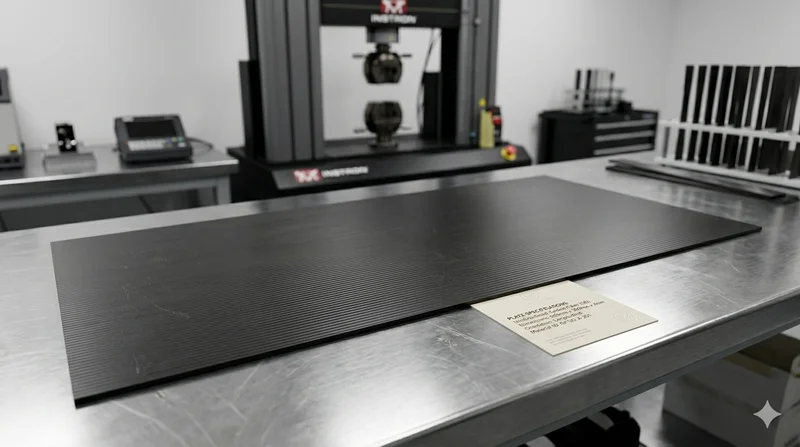
Carbon Fiber Plate — UD Unidirectional T700
Unidirectional carbon fiber plate with all fibers oriented in a single direction for maximum strength along the fiber axis. Essential for structural reinforcements, splints, and applications where load direction is predictable.
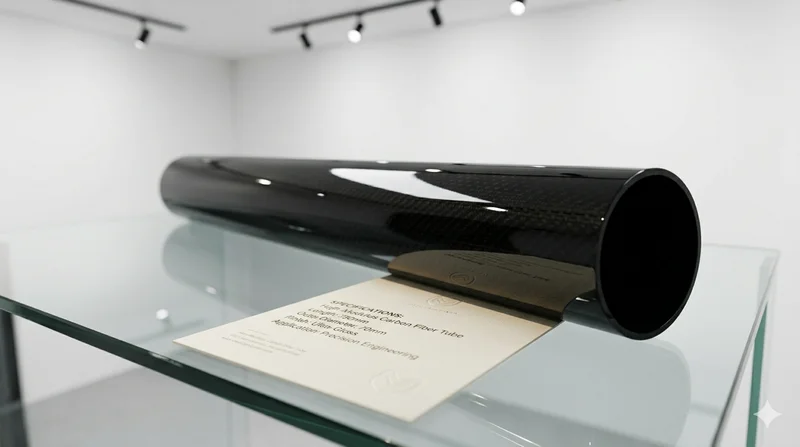
High Modulus Round Carbon Fiber Tube — M40
High modulus round tube manufactured with M40 grade fiber (tensile modulus 400 GPa). Designed for applications where maximum stiffness-to-weight ratio is critical, such as optical systems, precision machinery, and aerospace structures.

Carbon Fiber Fishing Rod Blank
High-quality carbon fiber fishing rod blank manufactured from multiple grades of Toray carbon fiber cloth. Available in a wide range of lengths, powers, and actions for freshwater and saltwater applications. Suitable for OEM rod building.
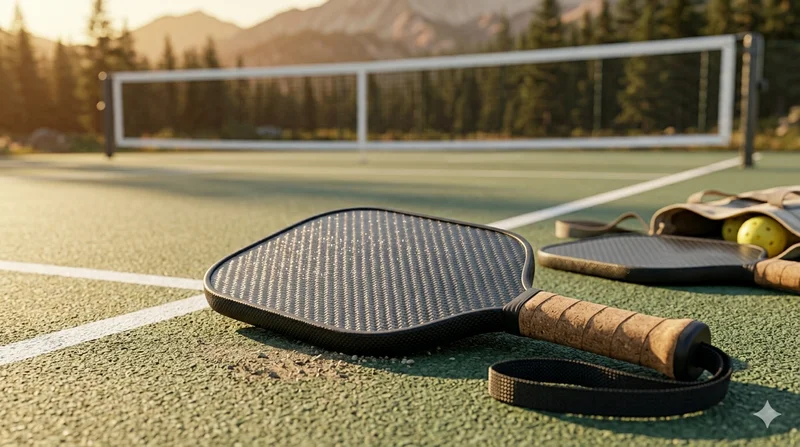
Carbon Fiber Pickleball Paddle
High-performance pickleball paddle with Toray T700 carbon fiber face and polypropylene honeycomb core. Delivers excellent power-to-weight ratio, spin generation, and vibration dampening for competitive play.

Carbon Fiber Drone Arm
Precision-molded carbon fiber drone arm combining unidirectional fiber for stiffness and woven layers for torsional strength. Designed for FPV, photography, and industrial drone platforms. Each arm is CNC-machined to exact specifications.