
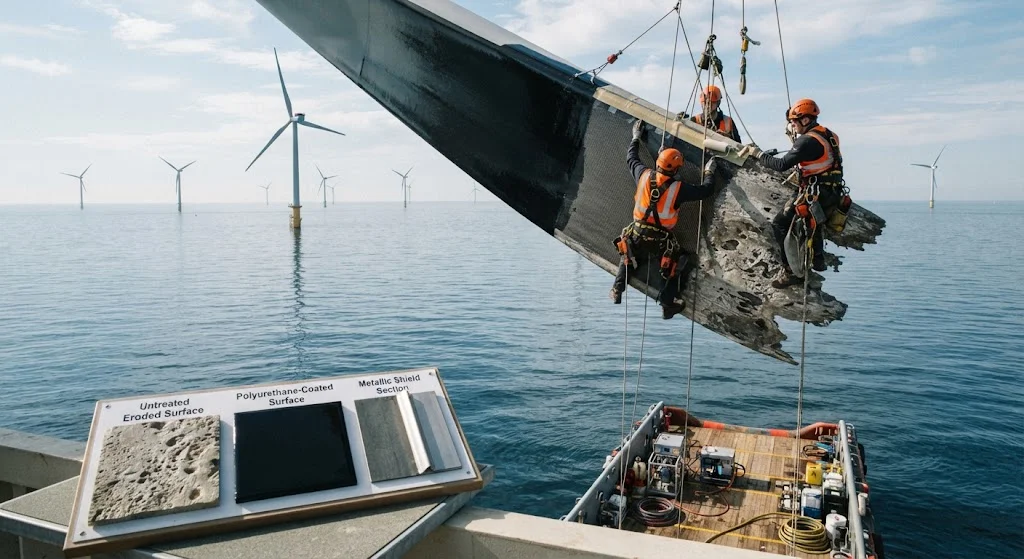
Leading edge erosion has emerged as one of the most significant maintenance challenges for wind turbine blades, particularly in offshore and coastal installations where blades are exposed to rain, hail, salt spray, and airborne particulates at high rotational speeds. The leading edge of
Introduction
Leading edge erosion has emerged as one of the most significant maintenance challenges for wind turbine blades, particularly in offshore and coastal installations where blades are exposed to rain, hail, salt spray, and airborne particulates at high rotational speeds. The leading edge of a wind turbine blade experiences the highest relative velocity of any blade section — tip speeds reaching 80-100 m/s in modern turbines — making it extremely vulnerable to erosion damage. This erosion degrades aerodynamic performance, increases noise emissions, and ultimately reduces energy production and revenue.
The global wind energy industry has recognized leading edge erosion as a critical issue requiring systematic solutions. Recent estimates suggest that erosion-related maintenance costs account for 5-10% of total blade lifecycle costs, with offshore installations experiencing even higher rates due to more aggressive environmental conditions. This article examines the state-of-the-art in leading edge protection technologies as of 2026, covering polyurethane coatings, protective tape systems, and metallic shield solutions, along with repair strategies and cost-benefit analyses.
Erosion Mechanisms and Impact
Understanding erosion mechanisms is essential for selecting appropriate protection strategies. The primary erosion mechanisms affecting wind turbine blade leading edges include:
- Rain erosion: High-speed raindrop impacts create localized stress waves that initiate micro-cracks in the blade surface coating. Repeated impacts cause crack propagation and material removal, particularly in thermoset resin systems.
- Hail damage: Hailstones create high-energy impacts that can cause immediate coating damage and substrate cracking, especially on unprotected leading edges.
- Salt spray corrosion: In marine environments, salt crystals impact the blade surface and accelerate coating degradation through chemical attack and osmotic blistering.
- Abrasion: Airborne particulates (sand, dust, insects) create continuous low-energy impacts that gradually erode surface coatings.
The impact of erosion on turbine performance is significant. Studies show that leading edge erosion can reduce annual energy production (AEP) by 2-5% in moderate erosion conditions and up to 10-15% in severe cases. Beyond energy losses, eroded blades generate increased noise (5-10 dB higher SPL), require more frequent inspections, and may eventually need structural repair if the erosion penetrates the load-carrying laminate.
Polyurethane Leading Edge Protection Systems
Polyurethane coatings and films represent the most widely adopted leading edge protection technology in 2026. These systems offer a balance of erosion resistance, flexibility, and repairability. The table below compares the major polyurethane protection systems available:
| System Type | Thickness | Erosion Resistance | Service Life | Application Method |
|---|---|---|---|---|
| Thermoplastic polyurethane (TPU) film | 0.5-1.0 mm | Moderate | 3-5 years | Adhesive bonding |
| Two-component polyurethane coating | 0.3-0.8 mm | Good | 5-8 years | Spray application |
| UV-cured polyurethane | 0.2-0.5 mm | Very good | 5-10 years | Roller/curtain coating |
| Polyurethane-polyurea hybrid | 1.0-2.0 mm | Excellent | 8-12 years | Spray application |
Modern polyurethane leading edge protection systems incorporate several advanced features:
- Elastomeric properties: High elongation at break (300-500%) allows the coating to absorb impact energy without cracking, even at low temperatures (-40°C).
- Self-healing capabilities: Some formulations contain microcapsules that release healing agents when the coating is damaged, providing autonomous repair of minor scratches and abrasions.
- UV stability: Advanced UV stabilizers and hindered amine light stabilizers (HALS) prevent photo-degradation and maintain coating flexibility over the service life.
- Hydrophobic surfaces: Low surface energy coatings reduce raindrop adhesion and minimize erosion impact force, extending coating life by 20-30%.
Application of polyurethane protection typically involves surface preparation (cleaning, priming), followed by coating application in controlled environmental conditions. Field repairs can be performed using spray equipment, with typical repair times of 4-8 hours per blade depending on erosion severity.
Protective Tape Systems
Protective tape systems offer a modular approach to leading edge protection, allowing pre-fabricated protection to be applied during blade manufacturing or retrofit in the field. Key tape systems in 2026 include:
- TPU-based tapes: Thermoplastic polyurethane tapes with pressure-sensitive adhesive backing, typically 0.5-1.5 mm thick. These tapes offer good erosion resistance and can be applied at ambient temperature without specialized equipment.
- Elastomeric rubber tapes: Natural or synthetic rubber compounds with high tear strength and abrasion resistance. These tapes provide excellent impact absorption but may have limited UV resistance.
- Multi-layer composite tapes: Tapes combining erosion-resistant outer layers with compliant inner layers and adhesive backing. These systems provide tailored protection with optimized thickness and flexibility.
- Phase-change material (PCM) tapes: Experimental tapes incorporating phase-change materials that absorb impact energy through latent heat absorption, reducing stress wave propagation in the blade structure.
Tape systems offer advantages in field application speed and consistency, but require careful surface preparation and application technique to avoid bubbles, wrinkles, or poor adhesion. Recent developments include self-adhesive tapes with guided application tools that ensure consistent pressure and alignment during installation.
Metallic Shield Solutions
Metallic leading edge shields represent a more robust but heavier protection approach, typically used in high-erosion environments or for blades requiring maximum protection life. The primary metallic shield solutions include:
- Aluminum shields: Lightweight (0.5-1.0 mm thickness) shields formed from aerospace-grade aluminum alloy, offering good erosion resistance and repairability. Typical weight penalty is 2-5 kg per blade.
- Stainless steel shields: Thinner (0.3-0.6 mm) shields with higher density but superior abrasion resistance. Weight penalty is 4-8 kg per blade, but service life can exceed 15 years.
- Titanium shields: Premium protection with excellent corrosion resistance and fatigue performance. Weight penalty is 3-6 kg per blade, with service life exceeding 20 years in marine environments.
- Hybrid metallic-composite shields: Combining metallic erosion surfaces with composite backing structures to optimize weight and protection performance.
Metallic shields are typically mechanically fastened to the blade leading edge, allowing removal and replacement during maintenance. The attachment system must accommodate blade flexure and thermal expansion without creating stress concentrations or fatigue failure points. Recent designs use segmented shields with flexible joints that conform to blade curvature changes along the span.
Repair Strategies and Cost-Benefit Analysis
Leading edge erosion repair strategies must balance repair cost against energy production losses and future erosion protection. The decision framework includes:
- Preventive protection: Applying protection systems before erosion occurs (typically during blade manufacturing or early service) provides the lowest lifecycle cost, preventing energy losses and avoiding structural damage.
- Corrective repair: Repairing erosion after it occurs addresses immediate performance losses but may not prevent recurrence without improved protection. Corrective repair costs are typically 2-5 times higher than preventive protection when considering energy losses.
- Major repair: Severe erosion penetrating the load-carrying laminate requires structural repair, including laminate patching and load path restoration. Major repairs cost 10-20 times more than preventive protection.
Cost-benefit analyses consistently show that preventive leading edge protection provides positive ROI within 2-4 years, depending on erosion severity and energy prices. For offshore installations, where access costs are high (typically $50,000-100,000 per blade visit), preventive protection becomes even more compelling as it reduces the frequency of expensive blade access operations.
Emerging Technologies and Future Trends
Several emerging technologies are expected to influence leading edge protection in the coming years:
- Smart coatings: Coatings with embedded sensors that monitor erosion severity and provide real-time data for condition-based maintenance scheduling.
- Bio-inspired surfaces: Surface textures inspired by shark skin or lotus leaves that reduce erosion impact force through aerodynamic effects.
- Nanocomposite coatings: Coatings incorporating nanoparticles (silica, alumina, carbon nanotubes) that significantly enhance erosion resistance without increasing thickness or weight.
- Robotic application systems: Autonomous robots that can apply and repair leading edge protection without human blade access, reducing maintenance costs and safety risks.
Frequently Asked Questions
How much does leading edge erosion reduce wind turbine energy production?
Leading edge erosion can reduce annual energy production (AEP) by 2-5% in moderate erosion conditions and up to 10-15% in severe cases. The reduction occurs because eroded surfaces disrupt the aerodynamic profile, increasing drag and reducing lift. For a typical 5 MW offshore turbine, 5% AEP loss represents approximately $200,000-300,000 in annual revenue loss, making prevention a compelling investment.
What is the typical service life of polyurethane leading edge protection?
Polyurethane leading edge protection systems typically provide 5-10 years of service life depending on the specific system, environmental conditions, and maintenance practices. Two-component polyurethane coatings last 5-8 years, while polyurethane-polyurea hybrids can last 8-12 years. UV-cured systems offer 5-10 years of protection with excellent surface finish retention.
Can leading edge protection be applied in the field, or must it be done during blade manufacturing?
Both approaches are viable. Factory application provides the most controlled environment and highest quality, but field application is common for retrofit installations. Polyurethane coatings and protective tapes can be applied in the field with proper surface preparation and environmental controls. Metallic shields are typically designed for field installation and removal during maintenance.
How much do leading edge protection systems cost per blade?
Costs vary significantly by system type and blade size. Polyurethane coating systems typically cost $15,000-30,000 per blade for new installations and $10,000-20,000 for retrofit. Protective tape systems cost $8,000-15,000 per blade. Metallic shields cost $20,000-40,000 per blade but provide longer service life. All costs are for modern offshore wind turbines with blade lengths of 60-80 meters.
Conclusion
Leading edge erosion remains a significant challenge for the wind energy industry, with polyurethane coatings, protective tapes, and metallic shields representing the primary protection technologies available in 2026. Each approach offers distinct advantages in terms of erosion resistance, service life, application method, and cost. Preventive protection consistently provides positive ROI by preventing energy production losses and avoiding costly structural repairs. As wind turbines continue to grow in size and operate in more demanding environments, leading edge protection technology will continue to evolve to meet these challenges.
For wind turbine operators and blade manufacturers seeking leading edge protection solutions, understanding the specific erosion conditions, maintenance access constraints, and lifecycle cost requirements is essential for selecting the optimal protection strategy. Explore our carbon fiber product range or contact our engineering team for guidance on composite materials and protection systems for wind turbine applications.
Part of topic
Related Articles
- Recycled Carbon Fiber Market Forecast 2030: Technology Maturity and Commercialization Path
- South Korea Carbon Fiber Market 2026: Hydrogen Economy and Shipbuilding Innovation
- China Carbon Fiber Overcapacity 2026: Price War Impact and Industry Consolidation
- India Carbon Fiber Market 2026: Wind Energy, Aerospace, and Defense Expansion
- PAN Precursor Market 2026: Acrylonitrile Supply and Carbon Fiber Cost Structure
- Carbon Fiber Price War Bottom 2026: Toray Price Hike and Industry Consolidation Outlook
Interested in Custom Carbon Fiber Products?
Contact our team for competitive pricing and technical specifications.
Get a QuoteRelated Products
Carbon Fiber Watch Strap — 20mm/22mm Quick-Release
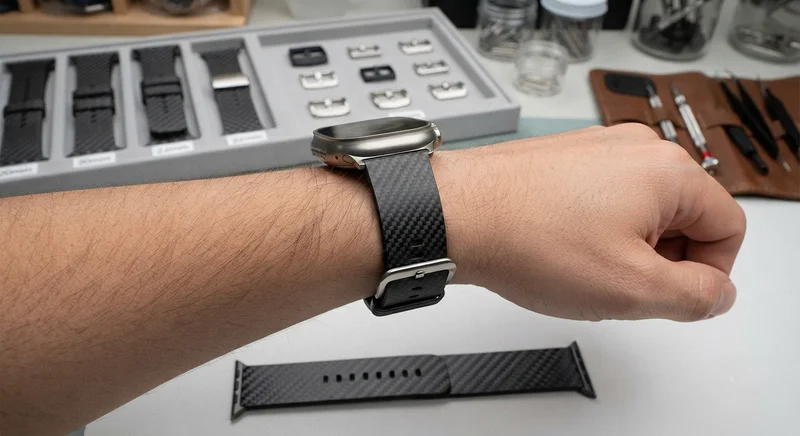
Premium carbon fiber watch strap with quick-release spring bars. Woven from T700 3K twill prepreg with a flexible resin system that conforms to the wrist. Available in 20mm and 22mm lug widths, compatible with Apple Watch, Samsung Galaxy Watch, Garmin, and traditional mechanical watches. Features a stainless steel buckle and carbon fiber keepers. The natural weave pattern makes each strap unique.
Carbon Fiber Robot End Effector Link — Custom Shape & Sensor Integration
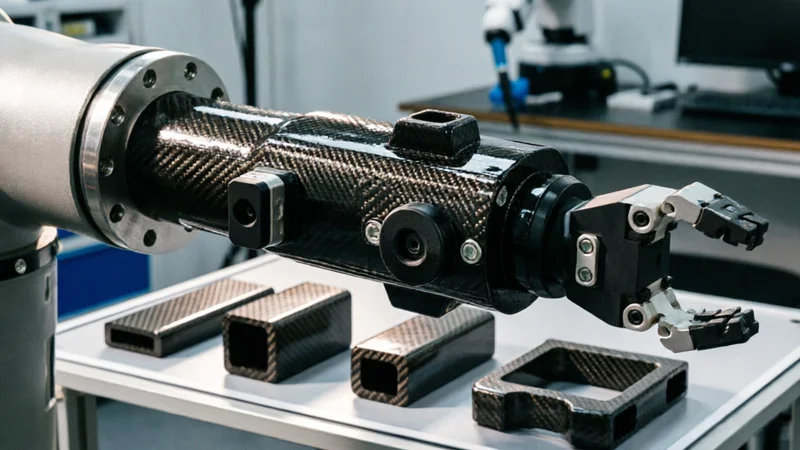
Custom-shaped carbon fiber end effector links for robotic arms. Designed for automation integrators and research labs requiring lightweight, rigid connections between the robot wrist and gripper/tool. Can incorporate sensor mounting bosses, cable routing channels, and quick-change interfaces.

Custom Carbon Fiber Musical Instrument Parts
Carbon fiber components for musical instrument manufacturing offering superior dimensional stability, low weight, and consistent acoustic properties. We produce carbon fiber bows, guitar necks, violin chin rests, drum shells, and wind instrument bodies. Carbon fiber instruments are immune to humidity changes and temperature fluctuations that affect wooden instruments.
Custom Carbon Fiber Medical Device Components
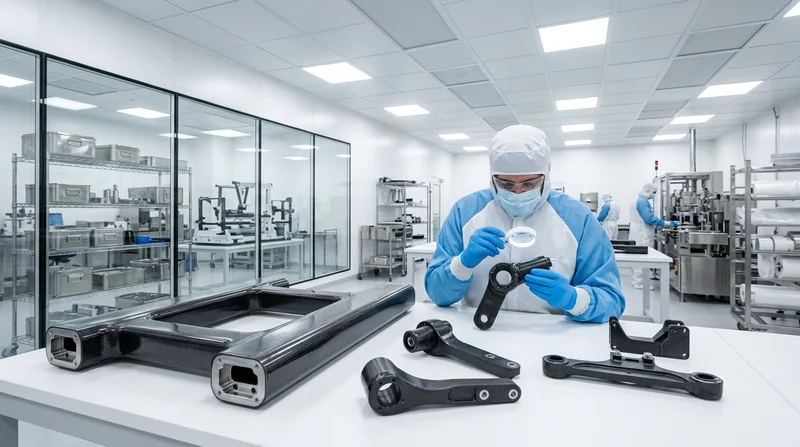
Medical-grade carbon fiber components manufactured for imaging equipment, surgical instruments, and patient support systems. Carbon fiber's radiolucency (X-ray transparency) and high strength-to-weight ratio make it ideal for CT scanner beds, wheelchair frames, surgical robot arms, and MRI-compatible accessories. Biocompatible resin systems available.
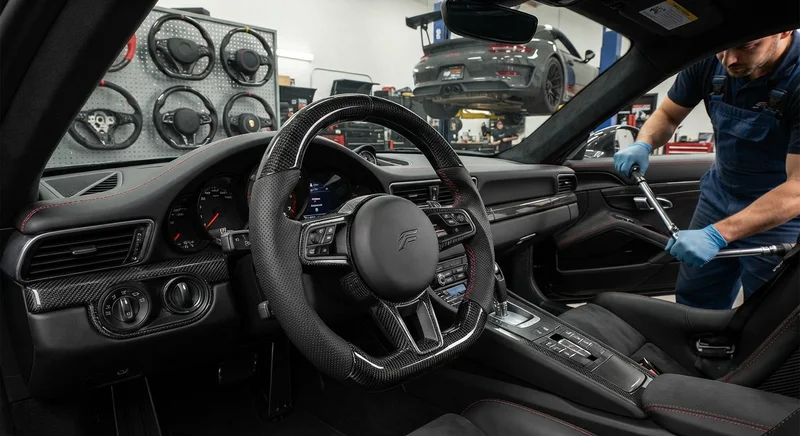
Carbon Fiber Steering Wheel — Custom Leather-Wrapped with CF Inlay
Custom carbon fiber steering wheel with genuine leather wrapping and carbon fiber inlay sections. Molded from T700 3K prepreg for maximum rigidity with a 30% weight reduction over OEM wheels. Available in D-shape (flat bottom) and round profiles. Direct bolt-on fitment for popular sports car and performance vehicle models. Custom stitching color and leather grade available.