
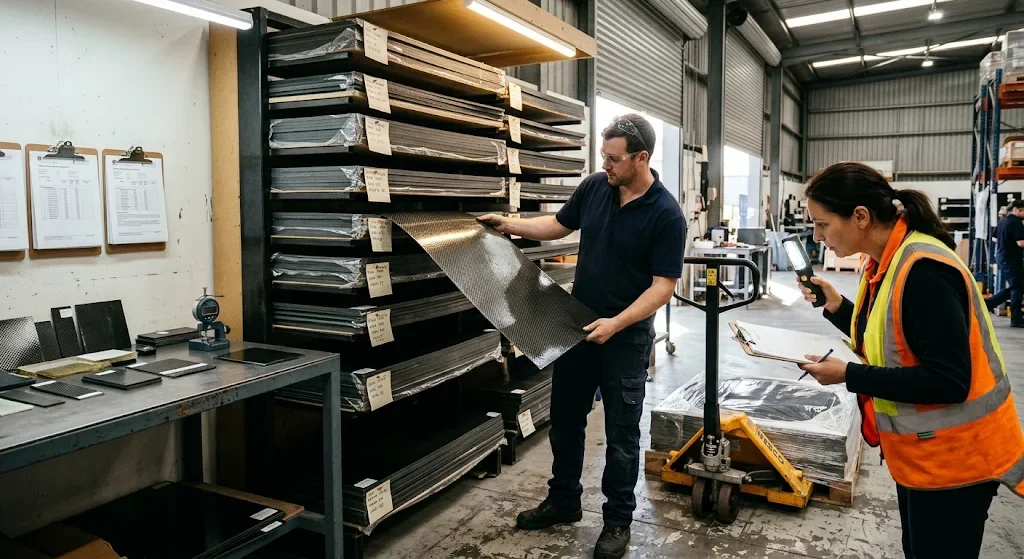
Carbon fibre sheet Australia buyers sit in an unusual position: demand is spread across marine, automotive, drone, and industrial workshops, yet almost no domestic manufacturing of the base laminate exists — the flat stock that arrives in Sydney and Melbourne warehouses was laid up overseas, almost
Introduction
Carbon fibre sheet Australia buyers sit in an unusual position: demand is spread across marine, automotive, drone, and industrial workshops, yet almost no domestic manufacturing of the base laminate exists — the flat stock that arrives in Sydney and Melbourne warehouses was laid up overseas, almost always in Asia. That means every purchase decision is really two decisions stacked together: what specification the project needs, and whether the cheapest path to that specification is local stock or a direct import.
This guide walks through the channels available to an Australian buyer, the specs that actually matter for sheet work, how to read a landed cost quote, and how to qualify a supplier whether you are ordering one prototype panel or a production pallet.
Where to Buy Carbon Fibre Sheet Australia: Three Channels
The Australian market splits into three supply channels, and understanding which one a given distributor occupies tells you a lot about price and lead time. The first channel is local stockists: a handful of resin and composites suppliers in New South Wales, Victoria, and Queensland hold cut sheets of woven carbon fibre — typically 3K twill or plain weave in 2 to 5 millimetre thickness — on the shelf for same-week pickup. These are convenient but carry a retail margin, and the sheet in the rack was still manufactured overseas. The second channel is direct import from Chinese or Japanese mills, which is where the real volume pricing lives: buyers ordering full sheets of 1000 by 2000 millimetres or container quantities negotiate directly with the factory and absorb freight, customs, and GST instead of a distributor markup. The third channel is kit specialists who cut panels to order for marine and motorsport customers; they add CNC cutting and edge finishing on top of imported stock.
- Local stockists: fastest access, small quantities, premium per-kilogram pricing, limited thickness range.
- Direct import: lowest unit cost at volume, full spec control, but you manage freight, quarantine checks, and import documentation yourself.
- Cut-to-size services: pay for nesting and edge work; sensible when the project needs many small panels from one sheet.
Most workshops start in the first channel and migrate to the second once monthly consumption passes a few tens of kilograms — the price gap between a Sydney shelf sheet and a factory-direct pallet easily reaches two to three times at the same grade.
Carbon Fibre Sheet Specs That Matter: Weave, Thickness, and Grade
Catalog listings for carbon fibre sheet Australia buyers see usually describe three variables — weave style, sheet thickness, and fibre grade — but the numbers behind those labels decide whether a panel performs. Weave style controls surface appearance and drapability more than strength: 3K twill is the standard cosmetically visible weave, plain weave is flatter and slightly stiffer in shear, and unidirectional lay-up maximises in-plane stiffness along the fibre direction. Thickness ranges from 0.5 millimetre decorative laminates up to 10 millimetre structural plates, with 2 to 3 millimetre the working range for most brackets, templates, and marine furniture.
Fibre grade is where budget buyers get tripped up. A sheet built on T300-class carbon will pass a visual inspection and hold up in non-structural parts, but its tensile modulus sits around 230 GPa — fine for a cosmetic panel, marginal for a load-bearing chassis part. T700-class fibre raises tensile strength meaningfully at a modest price step, and for structural work the upgrade usually costs less than a redesign after a failure.
| Spec | Entry grade | Structural grade | What it changes |
|---|---|---|---|
| Fibre class | T300 equivalent | T700 equivalent | Tensile strength and fatigue margin |
| Weave | 3K plain | 3K twill or UD | Surface finish, shear behaviour |
| Typical thickness | 2 mm | 3 - 5 mm | Stiffness, weight, fastener bearing |
| Resin system | Standard epoxy | Toughened epoxy | Impact tolerance, service temperature |
| Sheet size | 1000 x 1000 mm | 1000 x 2000 mm | Nesting efficiency, scrap rate |
Ask every supplier for the datasheet tied to the actual roll of fabric used, not a generic product sheet — a factory that switches between mill sources without telling you will produce sheets with different stiffness batch to batch.
Landed Cost of Carbon Fibre Sheet Australia Orders
A carbon fibre sheet Australia quote in Australian dollars is not the number that matters; the landed cost is. Three components sit between the factory invoice and your workshop door. Freight: sea freight for a pallet of sheets is modest per kilogram, but air freight for a rush sample order can triple the unit cost. Duty and GST: carbon fibre laminates generally attract the standard import duty rate plus 10 percent GST applied to the customs value including freight and insurance. Compliance paperwork: an import declaration, and for some end uses a materials safety datasheet for the resin system.
Worked example: a pallet of T700-class 3 millimetre sheets quoted ex-factory at a given per-kilogram rate will land roughly 15 to 25 percent higher once ocean freight, marine insurance, customs clearance, duty, and GST are stacked — and that stack looks very different from an air-freighted sample box, where the freight line can exceed the material line. The table below shows how the stack builds at two order scales.
| Cost component | Sample box (air) | Pallet (sea) | Notes |
|---|---|---|---|
| Material ex-factory | baseline | baseline | Lower per-kg at pallet scale |
| Freight | 40 - 60% of material | 8 - 15% of material | Air dominates small orders |
| Customs clearance | fixed fee | fixed fee | Broker fee, largely scale-independent |
| Duty + GST | ~10% + duty | ~10% + duty | GST on customs value incl. freight |
| Effective uplift | 60 - 90% | 15 - 25% | Why samples should be consolidated |
The practical takeaway: qualify a supplier with one small order, then consolidate your production buys into scheduled pallet shipments instead of chasing each panel as it runs out.
Qualifying a Carbon Fibre Sheet Australia Supplier
Whether the counterparty is a local stockist or a carbon fibre sheet Australia import contact at a Chinese mill, the qualification steps are the same. Request a certificate of conformity and a batch traceability code with the first order. Order a test coupon in the target thickness and run a simple flex check against a known reference panel. Confirm the tolerance on thickness and flatness in writing — a sheet out of flatness by more than a millimetre per metre will fight every CNC fixture you put it in. And check the edge: a properly trimmed and sealed edge delays delamination far longer than a raw cut.
For structural applications, ask whether the factory runs interlaminar shear testing on each production batch, and whether they can supply the results. A supplier unwilling to share batch data is telling you something about their process control.
Frequently Asked Questions
Is it cheaper to import carbon fibre sheet to Australia or buy locally?
Per kilogram, importing is almost always cheaper once order size justifies a pallet — local stockists carry inventory and retail margin that a direct factory order skips. The crossover typically sits around a few tens of kilograms: below that, the fixed costs of import documentation and freight eat the savings; above it, factory-direct pricing wins clearly.
What thickness of carbon fibre sheet should a marine workshop keep in stock?
Most marine workshops standardise on 2 and 3 millimetre woven sheets for brackets, hatch surrounds, and repair patches, with 5 millimetre held for structural stiffeners. Keeping two thicknesses in the common sheet size reduces scrap more than stocking five thicknesses in small odd cuts.
Does GST apply to carbon fibre sheet imported from overseas?
Yes. Australian GST at 10 percent applies to the customs value of the imported goods, which includes the cost of freight and insurance up to the Australian border. The GST is claimed through your business activity statement, so it is a cash-flow item rather than a true cost for registered businesses — but it must be budgeted.
Conclusion
Buying carbon fibre sheet Australia comes down to matching the supply channel to your order scale: local stock for prototypes and one-off panels, factory-direct pallets once consumption justifies the paperwork, and cut-to-size services when nesting efficiency matters more than raw sheet price. Spec discipline — fibre class, weave, thickness tolerance — protects the project long before the invoice does, and a qualification step with batch data separates a reliable mill from a catalogue reseller.
YongXian supplies T300 and T700-class carbon fibre sheet in standard and custom sizes to Australian importers and workshops: woven and unidirectional laminates from 0.5 to 10 millimetres, batch-traceable, with interlaminar shear data available on request. Review sheet specifications or send your cutting list for a landed-cost quote.
Part of topic
Related Articles
- Carbon Fiber Sheets in South Africa: Import and Stock Guide
- How Much Is Carbon Fiber Fabric: Price per Square Meter
- Best Carbon Fiber Sheets: Weave, Grade, and Thickness Selection
- Carbon Fiber Manufacturing Companies in India: Landscape 2026
- Where Is Carbon Fiber Made: From Precursor Plants to Carbonization Hubs
- Carbon Fiber Sheet Price in Bangladesh: Landed Cost and Sourcing Guide
Interested in Our Products?
Contact our team for competitive pricing and technical specifications.
Get a QuoteRelated Products

Round Carbon Fiber Tube — 3K Plain Weave T700
Standard round carbon fiber tube manufactured from Toray T700 grade fiber with 3K plain weave. Offers balanced strength and stiffness for general industrial applications including robotics, automation, sports equipment, and aerospace structures.
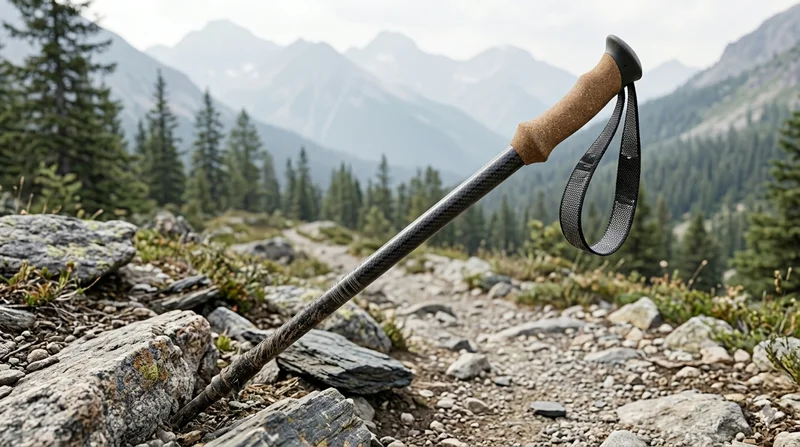
Carbon Fiber Trekking Pole
Lightweight carbon fiber trekking pole manufactured from high-grade carbon fiber tube. Weighs only 160g per pole while providing superior shock absorption and durability for hiking, trail running, and backpacking.

Carbon Fiber Pickleball Paddle
High-performance pickleball paddle with Toray T700 carbon fiber face and polypropylene honeycomb core. Delivers excellent power-to-weight ratio, spin generation, and vibration dampening for competitive play.

Square Carbon Fiber Tube — 3K Twill T700
Square cross-section carbon fiber tube manufactured with 3K twill weave for torsional strength. Preferred for structural frames, trusses, and support columns where rectangular geometry offers design flexibility.

Round Carbon Fiber Tube — 3K Twill
Lightweight and ultra-stiff round tubes ideal for drone frames, robotics, and structural applications.