
The short answer to where is carbon fiber made is that the industry is concentrated in a handful of countries on both ends of one continuous process line: polyacrylonitrile precursor is spun and oxidized in one place, then the oxidized tow is carbonized, surface-treated, sized, and wound in another.
Introduction
The short answer to where is carbon fiber made is that the industry is concentrated in a handful of countries on both ends of one continuous process line: polyacrylonitrile precursor is spun and oxidized in one place, then the oxidized tow is carbonized, surface-treated, sized, and wound in another. Japan, China, the United States, and Germany account for most nameplate capacity, with Turkey, Korea, Taiwan, and India running smaller lines. Understanding that split explains pricing, lead times, and why two fibers with the same tensile spec can arrive from very different places.
This guide walks the process from precursor to finished tow, shows where each stage actually sits geographically, estimates how capacity is distributed today, and closes with practical guidance on where to buy carbon fiber tubes, sheet, and cut parts from each hub — including how carbon fiber how it's made questions map onto the factory that will actually quote you.
Where Is Carbon Fiber Made: The Precursor Stage Decides
Precursor is the expensive, slow part. Polyacrylonitrile polymer is wet-spun into filaments, washed, stretched, and then oxidized on a hot-air line that runs for hours to convert the fiber into a stable ladder polymer. Only after that does carbonization happen, at 1,000 to 1,500 degrees Celsius in inert gas, followed by graphitization near 2,500 degrees Celsius for high-modulus grades. Because precursor can represent roughly half to three-fifths of total production cost, the map of precursor plants is effectively the map of the industry.
- Japan: integrated producers — Toray, Toho, and Mitsubishi Chemical — run precursor and carbonization in-house and lead high-performance small tow.
- China: the largest precursor buildout of the past decade, centered in Jilin, Jiangsu, and Shandong, feeding both domestic carbonization lines and export markets.
- United States and Europe: precursor capacity is comparatively limited, so carbonization plants there consume a mix of domestic and imported oxidized tow.
- Turkey and Korea: industrial-grade lines that compete mainly on price inside their regional markets.
This is why a shortage of precursor in one country can stall a plant on another continent even when that plant has idle carbonization ovens: the line cannot run on ovens alone.
Carbon Fiber Precursor Supply and Carbonization Hubs
Industry estimates put global nameplate carbon fiber capacity above 250,000 tonnes per year in the mid-2020s, against annual demand closer to 130,000 to 150,000 tonnes — meaning utilization, not raw capacity, is the real constraint. Capacity is weighted toward China for standard-modulus industrial fiber, while Japan and the United States hold the high-performance segments used in aerospace and pressure vessels.
| Region | Precursor position | Carbonization position | Typical output |
|---|---|---|---|
| Japan | Integrated, in-house | High-performance lines | Small tow, aerospace grades |
| China | Largest capacity, expanding | Widest range of grades | Standard modulus, industrial tow |
| United States | Limited domestic supply | High-value carbonization | Aerospace, pressure vessel tow |
| Germany | Import dependent | Industrial and prepreg lines | Industrial tow, prepreg |
| Turkey | Partial domestic | Regional supply | Industrial grade, cost focused |
Demand shape reinforces the geography. Wind blades, pressure vessels, automotive structures, and sporting goods consume most standard-modulus tow, which tracks Chinese capacity; aerospace consums small tow with qualification paperwork, which tracks Japanese and US lines. When a new application arrives from a sector with strict certification, it almost always lands on an established high-performance hub first, then migrates toward lower-cost regions once the grade is routine. That migration is why standard grades keep moving east while the top of the grade ladder stays where the precursor integration is.
Transport matters too. Oxidized precursor is shipped as lightweight tow with strict handling, while finished fiber ships as dense creels; a hub that carbonizes near where precursor is spun saves a full transoceanic leg on the heaviest variable-cost input.
Where to Buy Carbon Fiber Tubes, Sheet, and Cut Parts
Knowing where is carbon fiber made should change how you source. Japanese and US lines dominate small-tow aerospace grades, Chinese suppliers dominate standard-modulus industrial fiber and fabricated goods, and European converters add prepreg and finishing. Price follows that split: standard industrial tow commonly lands around US$12 to 20 per kilogram at volume, while Japanese small-tow performance grades run roughly US$25 to 40 per kilogram, and tubes or sheet add the cost of fabrication on top of the fiber.
- Finished tubes and plate: buy where fabrication is integrated with carbonization — China and Taiwan supply the bulk of machined tubes, roll-wrapped stock, and plate at industrial lead times.
- Prepreg and laminate: Japanese and European converters, for certified material with traceable lot numbers.
- Cut parts and prototypes: the fiber origin matters less than the process control, so shortlist shops by inspection practice rather than by mill.
- Verification: ask for the fiber grade, tow size, areal weight, and cure system — suppliers who answer only with a country name are describing geography, not material.
Frequently Asked Questions
Where is carbon fiber made for aerospace grades?
Primarily in Japan and the United States, with European capacity alongside. Aerospace-grade carbonization is concentrated at plants that run tightly controlled small-tow lines with full lot traceability, and precursor for those lines is largely integrated in Japan.
Does precursor location affect the price of finished carbon fiber?
Yes. Precursor accounts for roughly half to three-fifths of production cost, and energy, inert gas, and shipping add the rest. A region importing oxidized precursor carries a structural cost premium over one that polymerizes, spins, and carbonizes locally.
Where to buy carbon fiber tubes at industrial quantities?
From fabricators close to carbonization hubs in China and Taiwan, where roll-wrapping and mandrel wrapping run alongside fiber production. Specify grade, wall thickness, and tolerance, then request a first-article measurement report before releasing a production order.
Conclusion
Where is carbon fiber made turns out to be a two-stage question: precursor plants set the economics, carbonization hubs set the availability of specific grades. Match your supplier to the stage your spec depends on — mill-integrated Japanese or US lines for critical small tow, Chinese capacity for standard industrial fiber and fabricated tubes — and ask questions that describe material rather than geography.
YongXian fabricates tube, plate, and cut parts from sourced fiber with documented grade and areal weight, serving buyers who need consistent laminate rather than a mill story. Review the tube and plate range or send your drawing for a quote.
Part of topic
Related Articles
- Carbon Fiber Manufacturing Companies in India: Landscape 2026
- Carbon Fiber Sheet Price in Bangladesh: Landed Cost and Sourcing Guide
- Cost of Carbon Fiber: Fiber, Fabric, and Part Cost Breakdown
- Custom Length Carbon Fiber Tube Cutting: Tolerances, Pricing, and Lead Times
- Price of Carbon Fiber per Pound: What Drives the Cost in 2026
- Carbon Fiber Plate Price Philippines: 2026 Buyer Guide
Interested in Our Products?
Contact our team for competitive pricing and technical specifications.
Get a QuoteRelated Products

Round Carbon Fiber Tube — 3K Plain Weave T700
Standard round carbon fiber tube manufactured from Toray T700 grade fiber with 3K plain weave. Offers balanced strength and stiffness for general industrial applications including robotics, automation, sports equipment, and aerospace structures.

Carbon Fiber Pickleball Paddle
High-performance pickleball paddle with Toray T700 carbon fiber face and polypropylene honeycomb core. Delivers excellent power-to-weight ratio, spin generation, and vibration dampening for competitive play.
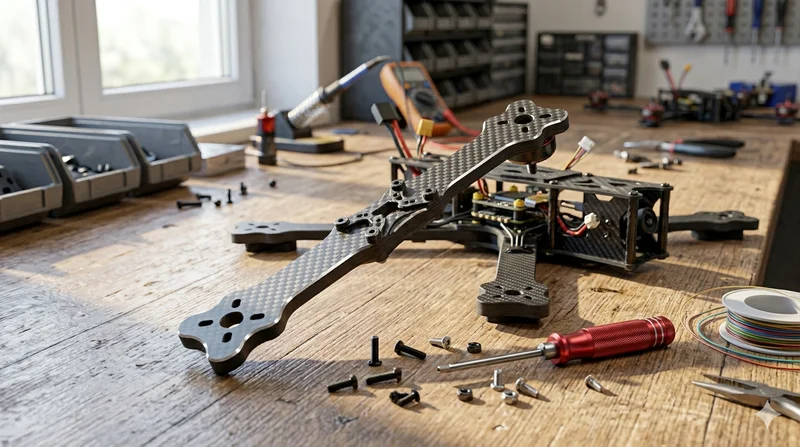
Carbon Fiber Drone Arm
Precision-molded carbon fiber drone arm combining unidirectional fiber for stiffness and woven layers for torsional strength. Designed for FPV, photography, and industrial drone platforms. Each arm is CNC-machined to exact specifications.

Square Carbon Fiber Tube — 3K Twill T700
Square cross-section carbon fiber tube manufactured with 3K twill weave for torsional strength. Preferred for structural frames, trusses, and support columns where rectangular geometry offers design flexibility.

Carbon Fiber Plate — 3K Twill T700 3.0mm
Medium-thickness 3.0mm carbon fiber plate offering significantly higher load capacity while maintaining attractive 3K twill finish. Suitable for structural brackets, reinforcement plates, and load-bearing panels.